September – 2012 – St. Thomas Libraries Blog - Page 2
Monthly Archives

September 2012

Database Highlights & Trials

Core Curriculum – Natural Science and Mathematical and Quantitative Reasoning

Let’s say you barely made it through high school biology and now you’re faced with college biology.  Well, have no fear!  We got sources that’ll explain science things for non-science majors.

These sources cover ALL sciences and will most likely be useful for any of he natural science or mathematical or quantitative reasoning classes you may have:

But for specific classes I offer…

BIOL 101 General Biology

BIOL 102 Conservation Biology (also good for GEOL 1xx classes)

BIOL 106 Women, Medicine & Biology

CHEM 100, 101, 111, 112, 115

  • Lange’s Handbook of Chemistry Lange’s Handbook of Chemistry includes data for each compound including name, structural formula, formula weight, density, refractive index, melting point, boiling point, flash point, dielectric constant, dipole moment, solubility in water and relevant organic solvents, thermal conductivity and electrical conductivity.
  • SciFinder SciFinder provides easy access to information in Chemical Abstracts Services resources: journal citations and abstracts, substance data, chemical reactions, regulatory data, chemical suppliers, and biomedical literature. Sign up for an individual account.

Now I realize there are probably many, many other classes that fulfill the natural science, math and quantitative reasoning requirement. I’ve missed more than a couple of them I am sure. If you are in a class that meets the core requirement and don’t see anything here that would help you, see if you can find related resources on our SCIENCE pages.  If those don’t work, check out the research guides in the various disciplines.


News & Events

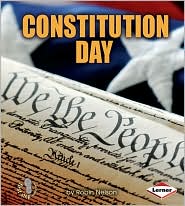
Celebrate the Birth of Our Government


September 17 is Constitution Day! (It’s also known as Citizenship Day.) On this day in 1787, the US Constitution was ratified in Philadelphia, PA. The Constitution is the highest law in the US. It’s the framework for our government, outlining the powers and duties of the legislative, executive and judicial branches. It has been amended 27 times. The first ten amendments are known as the Bill of Rights. But here are some facts you may not know…


Constitutional Fun Facts:
• The original document was handwritten by Jacob Shallus for $30 ($728 today).
• The original is on display at the National Archives and Records Administration in Washington, DC., behind protective glass framed with titanium and filled. To preserve the document, the cases contain argon gas and are kept at 67° F with 40% humidity.
• The US Constitution is the oldest Constitution written in any major government in the world.
• The US Constitution is the shortest Constitution written in any major government in the world – it’s only 4,400 words!
• The US Constitution contains a few spelling errors – one being “Pensylvania” written above the signatures.

Libraries, News & Events, O'Shaughnessy-Frey Library, Uncategorized

Telos Project Noon lecture series begins Sept 13: Hear Dr. John Boyle, Theology Professor

Theology Professor, Dr. John Boyle

This Thursday, September 13, marks the first in a semester-long series of open discussions between St. Thomas faculty and students. This inaugural meeting features Dr. John Boyle of the theology department. Sharing with students the importance of his area of expertise, Dr. Boyle will also give his perspective on why a liberal arts education is important.

The Telos Project is an effort to bring a renewed focus on a crucial aspect of the University of St. Thomas’ commitment to the pursuit of truth: the integration of knowledge across disciplines. It is the purpose of The Telos Project to re-introduce to the St. Thomas community the dialogue and discussion that is essential for any intellectual community.

Meetings are scheduled to take place on Thursdays, from Noon to 1pm, in the O’Shaughnessy-Frey Library. Each week a professor from a different department will give a brief but provocative presentation on (a) what his/her discipline is, (b) what attracts him/her to it, and (c) why the larger UST community should care. The meetings will take place in the O’Shaughnessy Room, (Leather Room/Rm 108) and will follow this format:

•12:00 – 12:15: Introduction by professor to his/her discipline and area of expertise.
•12:15 – 1:00: Discussion and conversation among/between students and faculty.
All students, staff, and faculty are invited to participate in discussion this Thursday, September 13 at Noon.

Database Highlights & Trials

Core Curriculum – Moral and Philosophical Reasoning

The next core curriculum on the list is moral and philosophical reasoning.  You do not need to be a  Socrates or Nietzsche  to fulfill this requirement.  You only need to be taking PHIL 115 Philosophy of the Human Person and check out some of the resources below.  The course is described as:

An examination of fundamental conceptions of the human person in ancient, medieval and modern philosophy. Possible topics include: the existence and immortality of the human soul, free will and determinism, the immateriality of the intellect, the relationship between mind and body, and the relevance of different conceptions of the human person for ethics and religion. Attention is given to relevant issues of human diversity. The development of logical and critical thinking receives special attention.

The Gale Virtual Reference Library has a really good, basic Encyclopedia of Philosophy that gives just enough information without making your head swim.  As always, if you’re looking for more info, go to a complete list of philosophy resources. Or check out a research guide.

Database Highlights & Trials, Uncategorized

Core Curriculum – Literature & Writing

Everyone here who gets a bachelor’s degree has to first get through the core curriculum.  Think of it as spinach.  Remember how as a child you hated spinach but your mom said you had to eat it cuz it’s good for you?  And now as an adult you willingly eat spinach.  Well, when you’re sitting through that class that you had to take cuz it fulfills your core curriculum requirement, just remember that it’s good for you.  And that down the road you’ll appreciate it.  UST is just like your mom.  It wants what’s best for you – and in this case, it’s taking a few courses that will make you a well-rounded, educated individual.  Trust me, it’s good for you.

That said, I’m going to offer up a few blog posts devoted to helping you through those core classes.  I know not everyone forced to take biology is interested in it (trust me, I remember linguistics.  No. Interest. Whatsoever).   So for the next few posts I’ll give some short-cuts to resources in each of the core curriculum requirement starting with Literature & Writing.

For most of your literature needs, you can use Literature Resource Center.  It offers

  • overviews of works (in case you’re not sure what you just read or prefer spoilers before you start)
  • topic overviews (which are themes across several works – i.e. racism in literature, motherhood in 19th century literature)
  • literary criticism (which are articles written by other people about a work that will lend ideas or weight to your paper)
  • author biographies

Blackwell Literature is a collection of hundreds of encyclopedias, both broad and specific, about all things literature: fiction, poetry, literary criticism, theater, theory,short stories, novels, it goes on and on.  This is for background info – gives you idea of what to expect on a topic.

If it’s just articles you want – and you didn’t find them in Literature Resource Center, use MLA.

We have many, many more resources used for all English and writing classes.  Or check out the research guides.

Political Science, Uncategorized

Facts on File World News Digest

I’ll admit it, I’m a geek. I love data and Facts on File World News Digest provides me with mounds of data. By the time you read this, the 2012 London Olympics will be in the history books – or in the World News Digest chronological timeline which gives you such data as the number of visitors – from 380,000 in 1896 (not too shabby) to 6.5 million in Beijing.  I could calculate the increase but you can tell it was a big increase.  It also tells you how many countries participated – from 14 at the Athens olympics in 1896 to 204 in Beijing. The feminist in me wanted to see what percentage of the athletes were women. The change is astounding. In 1896, the first modern olympiad, there were only 241 athletes – none of them were women. In 2008 there were 10,946 athletes and 42% were women.  For the US, title 9 changed everything for women’s sports. I wonder if that has spurred other countries to change their funding mechanisms too so that they can be competitive with the U.S. women.

But this is a scintilla of the information available. There is a searchable encyclopedia and almanc and then in depth articles and information on elections. The curriculum tools will help you choose a subject for a paper and then provide timelines to use to follow your topic. The research topics go from Abortion to Supreme Court nominations. 

There are country profiles, too. And the information goes back to the 1940’s. 

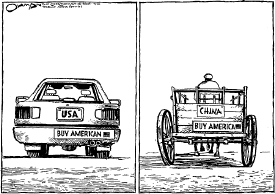
 And includes editorial  cartoons like this one. But not only the cartoon, oh no. It includes discussion questions on the cartoon. Try it out. Worth your time. From Universal


Business & Economics, Database Highlights & Trials

Renaming Frenzy

Hello Business Researchers!

Welcome to Fall Semester 2012! As we all gear up for a great semester, are you looking for a database you’ve used before, but can’t find it?

Have no fear; you’re not going crazy! Our vendors just had a bit of a renaming frenzy this summer. Here are the changes:

You can find these, along with all of our wonderful business databases, in both our A-Z List of Databases and our list of Databases by Subject.

————————————————————-

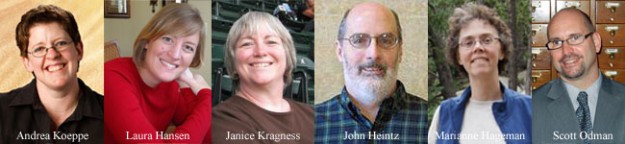
Recognize these faces?  We UST Business Librarians have been busy all summer making sure we’re all set to provide you the best service we can this fall.

We hope to use this blog to help share news and information that will be of interest to you.

Do you have any questions you’d like answered? An idea for a blog post?  Anything fun to say about how awesome the UST librarians are?  For any of those – and more! – please feel free to contact any business librarian or consult the faculty resource guide on the UST Libraries website.


Database Highlights & Trials

Welcome students

Whether you are a new or returning student I want to give a hearty welcome – we’re glad you’re here (makes things livelier. The summers get a little too quiet for my taste).  In this little corner of the blog you will hopefully find helpful information about the libraries’ electronic resources.  You’ll also find out about outages, technical difficulties and system downtime.

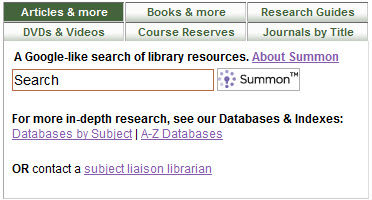
I’m gonna start this year out by highlighting Summon, which is a Google-like search of many library resources – not just ereources, but print as well.  Summon finds stuff we own –

  • books
  • ebooks
  • journals and newspapers
  • journal and newspaper articles
  • encyclopedias and dictionaries
  • country economic forecasts
  • movies and music
  • industry reports

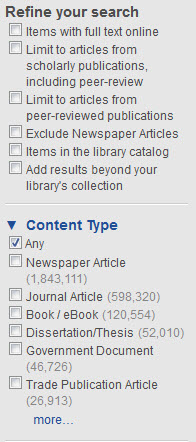
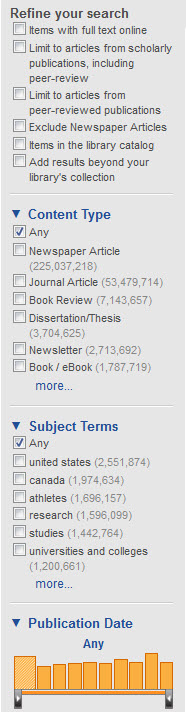
The best way to use Summon is to do a search and then limit the results.  You can limit to –

  • full-text only
  • peer-reviewed or scholarly articles
  • reference (which means content in encyclopedias and dictionaries)
  • books/ebooks (combine books/ebooks with full-text only to get only ebooks)
  • reports (that’s where you find industry, company and economic reports)
  • videos
  • audio recording
  • dissertation

-and many, many other limits.

Give it a spin. And remember, if you don’t find what you’re looking for, ASK US!  We’re here to help.

News & Events, Uncategorized

“I Love My Librarian” Awards 2012


Is there a librarian in your life that made a big difference? Well, now you have a chance to nominate that person for the “I Love My Librarian” award. Make your day brighter and a librarian’s too!
Nominations for the 2012 Carnegie Corporation of New York/New York Times “I Love My Librarian” Awards are open through September 12.
10 librarians each will receive a $5,000 cash award, a plaque and a $500 travel stipend to attend an awards reception in New York. In addition, a plaque will be given to each award winner’s library.
Recognize the accomplishments of your exceptional public, school, college, community college, or university librarian. http://atyourlibrary.org/ilovemylibrarian
I remember very clearly the librarian who gave me my first library card. She wanted to make sure I had my mom’s approval so I had to get a hand written note from Mom. The librarian gave me the card and told me to print my name very carefully. She smiled at me very kindly. Now, as a librarian who has worked in public libraries I too have given out library cards to children and I only hope I smile as sweetly as that first librarian did for me.

Libraries, News & Events

Welcome (or Welcome Back)!!

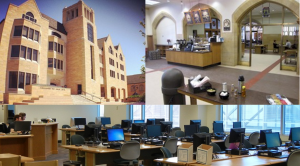
Libraries are usually considered quiet places, but no place is quieter on campus during the summer months than us. We missed you!! Welcome back and we assure you that your special study spot in the library is waiting for you to get down to business.

And now, to all of you new to St. Thomas, a special welcome! We want you to know that the libraries are here to help you succeed. Also, we know that sometimes libraries can be overwhelming places, but that doesn’t mean you need to feel overwhelmed. Once those assignments start rolling in and papers are needing to be written, don’t hesitate to make your first stop your closest UST librarian–whether you’re in Minneapolis or St. Paul. We WANT to help you! Even if you are not at the library and can’t make it in person to one of our libraries’ reference desks, we can be reached by phone, email, or text or can be reached via chat 24 hours a day!

Some other great (or important) things to note about our biggest library, the O’Shaughnessy-Frey Library–or as we usually call it–OSF:

  1. Coffee Bené is back on the first floor for another season of delicious coffees, espresso drinks, teas, smoothies, and “to die for” baked treats. With plenty of tables and chairs to relax or get down to business in, it is a great place to meet with friends for a break or a study group for some business. Also, conveniently, they accept eXpress cards, debit or credit cards, and, of course, cash.
  2. Under the “important” category, especially after a visit to our beloved Coffee Bené, there are no bathrooms on the first floor. There is a ton of stuff there–computers, a leisure reading collection, reference, copiers, an awesome DVD collection–but no bathrooms.
  3. The higher you go up in the building, the quieter the study space should be. This means, of course, that scheduling group work to take place on the 3rd or 4th floors of the library might get you a floor full of dirty glares and a request to relocate–unless, of course, you are in one of our handy dandy study rooms that you book online.
  4. This one actually relates to everyone, no matter what library, dorm, apartment, or coffee shop you are in. Starting your research is easier than ever with Summon–our Google-like search of library resources. This means of search is our default search on our homepage (under Articles & more), and will get you started finding online articles, print books, streaming videos, e-books, music scores, and more for your next research assignment. Use it as you would Google but then easily limit to full text, scholarly, and peer-reviewed library content using the facets found on your results page.

There is a ton of other cool stuff to discover, so we can’t wait to see you, either in person or online!