Subjects/Topics – St. Thomas Libraries Blog - Page 12
Browsing Category

Subjects/Topics

News & Events, Science

Comet PanSTARRS: Coming Soon to a Sky Near You!

Attention all UST sky-watchers:  If you haven’t heard of it yet, a new comet will soon be making its debut in the Northern hemisphere!

Called Comet PanSTARRS, it was discovered back in June 2011 by the Panoramic Survey Telescope & Rapid Response System (Pan-STARRS) based at the University of Hawaii’s Institute for Astronomy.

Since its discovery, the comet has been slowly heading toward the inner solar system on its way to reaching its closest point to the sun, known as perihelion, which will occur on March 10.

In early February,  people in Australia started taunting us with their great pictures as it was seen for the first time with a naked eye from the Southern Hemisphere.  It has continued on its way north, though, and on March 12, comet PanSTARRS will pass into Northern Hemisphere skies.

The best times to look will be on the evenings of March 12th and 13th.  On those evenings you can use the crescent Moon as a guide to help you find PanSTARRS. On the 12th the comet will be to the Moon’s upper left. On the 13th, the comet will be to the Moon’s lower right.  If the skies are clear, you should be able to see it with a naked eye somewhat close to the horizon, although binoculars will definitely help to see the tail more clearly.

Busy those nights? No worries: if you miss it, you will only have 110,000 years to wait for its next appearance!

(Or you can wait a few months to see another comet; Comet ISON, predicted to be even brighter, is hot on its heels in November. We’ll be sure to keep you posted when it comes near!)

Want to read more?  Check out some great coverage in our library databases and at Sky and Telescope.com
News & Events, Political Science

Mike Wallace 1957-1958 Interviews Made Public

What a wonderful resource! Whether you liked Mike Wallace or not, or you are too young to have even heard of him, the people he interviewed were fascinating. He bequeathed his papers, etc. to the Harry Ransom Center at the University of Texas. Even the advertising is fascinating. Philip Morris – the best natural smoke you have ever tasted! These interviews include the Imperial Wizard of the Ku Klux Klan and Senator Eastland (nearly the same thing); Abba Eban, ambassador from Israel to the US 10 years after the founding of the State of Israel; comedian, Steve Alan, actors (Kirk Douglas)  and actresses (Gloria Swanson), artists (Dali), musicians (Hammerstein), architects (Wright). Eleanor Roosevelt, Aldous Huxley, William O. Douglas! Oh my, the list goes on. One can hope that they will continue to make more available here.

Higher Education, Recently Read, Uncategorized

Starting from Scratch – What Would Your University Look Like?

The Chronicle of Higher Education is having a bit of a contest.  What a 21st Century College would look like if we were starting from scratch. What’s missing below is why each person who submitted their vision would set it up that way. Read the article to get that.  I’d be interested in knowing if YOU would go to school there or if you would work there?

These are the different kinds with the high points indicated:

Costco University

  • Faculty own the institution, and administrators work for faculty
  • No dining halls, residence halls, athletics programs, or libraries (sigh)
  • Each professor makes $80,000 a year and teaches four courses per semester, or eight courses a year.
  • If 10 students take each course, each needs to pay $2,000 a course. Everything is rented (including classrooms).
  • No Scholarships
  • No R&D. If you want that you go to the sister institution, Costco Research and Development ALL professors expected to create intellectual property.

Let’s Go Monk! The 21st-Century Monastery, Reinvented

  • Strict vows of poverty, charity, and abstinence from social media.
  • Identical robes woven from the same fabric as sweatpants (decorative belts are permitted.)
  • Mobile devices are confiscated may be reclaimed by their owners only upon going into town
  • Communication takes place with quill, ink, and parchment.
  • Single-sex classes no larger than 15 (college is co-ed).
  • Academic year is 12 months with two six-week vacations and two months spent in a foreign country.
  • Pursues multidisciplinary answers to one Big Question, such as the clean-water crisis.
  • First two years. Courses in philosophy, world religion, the Great Books, mathematics, biology, chemistry, and the history of China, Russia, India, and Britain.
  • Must study Arabic, Chinese, Spanish, or Hindi.
  • Third year matches each student with a faculty mentor who guides him or her through a multidisciplinary capstone project.  Students are forbidden, upon risk of expulsion, to create résumés or start the job search until the fourth year.
  • Fourth year Leave the university and the robes for full-time internships with alumnae.
  • Grow wine and make beer,  grow and cook all of your own food. (lowers tuition costs and complaints about the quality of cafeteria food.) Students chill out in one of the many dance halls on campus.

College of the Global Village

  • Multidisciplinary investigation of varied meanings and practices of the good life
  • Immersion into new languages Acquisition of an additional spoken and written language
  • First year in which students participate in four immersive blocks of study, each eight weeks long: research and writing
  • Matched with experts in their chosen field, including those from academia as well as nonteaching professionals with whom students collaborate on a research-and-writing project
  • The History of Science and Ecology, Engagement with great books,
  • Second and third years a fulfill eight additional learning blocks
  • Fourth year is spent in a guided internship overseen by a professor or community leader

The Mobile University

  • Four-year “mobile college,” whose “home” is defined not by place but by just four faculty mentors—one each in the social sciences, the humanities, the sciences, and the arts—who move from institution to institution over four years with a cohort consisting of no more than 40 students.
  • First-year liberal arts.
  • Second year placed in an American college or university in the social sciences: focus is on the meaning of citizenship in a democratic society, studied in interdisciplinary fashion.
  • Third year sciences and the humanities.
  • They continue studying the second language.
  • Final year, complete their studies at a university in the same nation where they began their studies. Four faculty members each is paid $25,000 per year, plus room, board, and travel expenses. One of the faculty members earns an additional stipend of $25,000 for arranging Cost estimate of four years for the mobile college is $1.5-million, with each of the 40 students paying $37,500.

The Reinvention Poem – a poem that I can’t do justice to so you should just read it!

  • Diversity
  • Open to the world
  • The future is embraced
  • Green studies
  • Just pay when you can,
  • Or  work off your dues,
  • As our admins are alumni in cooperative education
  • Emphasis on technology, creating, and sharing,


Libraries, News & Events, O'Shaughnessy-Frey Library, Political Science, Recently Read, Uncategorized

Where do you get your news?

It seems like, increasingly, we live in bubbles populated by people who agree with us.  Our friends post their opinions on our Facebook pages and, if we’ve picked our friends carefully, it turns out we like everything they have to say.  Most Americans say that they want to get their news from a source that has no political bias, though our sources for news and information tend to be from those who we’ve grown to trust, and the political slant of any publication is a matter of opinion.  My “objective” source might be your “big liberal media.”  Curious to know where OSF library users get their political information, we used our “white board conversation” method,  and asked OSF Library users about their news diet last week. Our question was “Where do you get your political news?” and about 75 library users posted their answers on Post-it notes on the board. Obviously this is not a scientific survey, but interesting, nonetheless. (For more scientific data on this question, you should look at the Pew Research Center’s recent report on the news landscape.  In fact, our results were very similar to what Pew found, especially for the young demographic of our library.)

Popular answers included:

– Fox News (13 mentions, though two people specifically said “Not Fox”)
– MPR/NPR/BBC: 12
– Daily Show/Colbert Report/SNL: 10
– Reddit: 6
– MSNBC or Today Show: 3
– CNN: 3
– Huffington Post: 3
– Wall Street Journal: 3

Other sources mentioned: New York Times, Washington Post, Drudge Report, GoogleNews, MinnPost, Facebook and Twitter.

Let us know where you get your news!


Political Science, Uncategorized

Facts on File World News Digest

I’ll admit it, I’m a geek. I love data and Facts on File World News Digest provides me with mounds of data. By the time you read this, the 2012 London Olympics will be in the history books – or in the World News Digest chronological timeline which gives you such data as the number of visitors – from 380,000 in 1896 (not too shabby) to 6.5 million in Beijing.  I could calculate the increase but you can tell it was a big increase.  It also tells you how many countries participated – from 14 at the Athens olympics in 1896 to 204 in Beijing. The feminist in me wanted to see what percentage of the athletes were women. The change is astounding. In 1896, the first modern olympiad, there were only 241 athletes – none of them were women. In 2008 there were 10,946 athletes and 42% were women.  For the US, title 9 changed everything for women’s sports. I wonder if that has spurred other countries to change their funding mechanisms too so that they can be competitive with the U.S. women.

But this is a scintilla of the information available. There is a searchable encyclopedia and almanc and then in depth articles and information on elections. The curriculum tools will help you choose a subject for a paper and then provide timelines to use to follow your topic. The research topics go from Abortion to Supreme Court nominations. 

There are country profiles, too. And the information goes back to the 1940’s. 

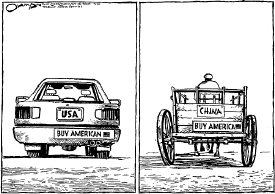
 And includes editorial  cartoons like this one. But not only the cartoon, oh no. It includes discussion questions on the cartoon. Try it out. Worth your time. From Universal


Business & Economics, Database Highlights & Trials

Renaming Frenzy

Hello Business Researchers!

Welcome to Fall Semester 2012! As we all gear up for a great semester, are you looking for a database you’ve used before, but can’t find it?

Have no fear; you’re not going crazy! Our vendors just had a bit of a renaming frenzy this summer. Here are the changes:

You can find these, along with all of our wonderful business databases, in both our A-Z List of Databases and our list of Databases by Subject.

————————————————————-

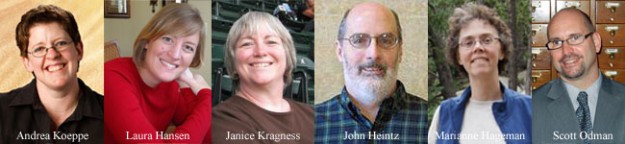
Recognize these faces?  We UST Business Librarians have been busy all summer making sure we’re all set to provide you the best service we can this fall.

We hope to use this blog to help share news and information that will be of interest to you.

Do you have any questions you’d like answered? An idea for a blog post?  Anything fun to say about how awesome the UST librarians are?  For any of those – and more! – please feel free to contact any business librarian or consult the faculty resource guide on the UST Libraries website.


English, Uncategorized

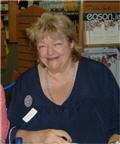
Maeve Binchy, Irish author, in Memoriam

Maeve Binchy is among my favorite authors.  She died  July 30, 2012.

From Wikipedia

I’m sure that many would put her in the chick-lit category,  but I would not. While romance often plays a part in her books, more important is the character development.    She introduces her characters as they are both to themselves and to others. They will not be perfect, but you love them because they are not perfect.  Often, when I finished one of her books, I would sit and simply miss the characters or wonder what they were doing in their next chapter. Sometimes she continues their stories in her later books, not necessarily as the main characters, more often as cameos, and you get a glimpse of what they are doing now. 

She spends time on place of action. Most of her books take place in Ireland, although sometimes the main characters are traveling elsewhere. She presents Ireland one of the characters. Not perfect, but getting better and aspiring to be better. 

You don’t need to start back and go forward. Her first published book was 1982 and in 1990 she published Circle of Friends, ultimately made into a charming movie (1995).  My favorite book is Glass Lake. Scarlet Feather and Quentins are well connected. I understand that she had a completed book with her editor so we can hope that we will ‘hear’ from her again. Seldom has an author touched me like Binchy, I will miss her.

Business & Economics, Database Highlights & Trials, News & Events

Emerald Management is the new Dr. Frankenstein

It’s alive!  IT’S ALIIIIIIIIIVE!!!!  Emerald Management sent me an email today that reads,

Emerald Business and Management content is supported with a range of FREE videos and podcasts that bring to life the topics from Emerald’s peer-reviewed journals.

So the whole “bring to life” thing got me thinking about that sweet scene in the original Frankenstein where the good doctor goes all nutso. (As an aside I just want to say how much I enjoy the acting in old movies.  So subtle.  So nuanced).   And just because everything about this movie is HILARIOUS, I give you that same scene in Young Frankenstein.

I may have wandered slightly off-topic, but my point is Emerald Management is a collection of peer-reviewed management and business journals.  They’ve now supplemented their collection with free videos and podcasts to animate what’s being written about.  So if you like your management articles acted out, you might want to check out this new free resource.

Political Science

CQ Researcher and Archives

Looking for original, comprehensive reporting and analysis on issues in the news? Look no further –well, of course, you should look further than just one resource, but this is a great place to start. There is content back to 1923 and as recent as last week BUT not in every topic. Birth control’s most recent entry is 2005 and high speed train’s is 2011. The CQ Researcher provides in-depth, unbiased coverage of  lots of topics across many disciplines: health, education, economy, etc.

Reports, researched and written by journalists, are substantive, but not too long: they do not fall into the TLDR category (oh yes, we’re on to you!) at about 12,000-words. Each report follows a consistent format with overview and background, chronology and an assessment of the current state of affairs. Pro and con statements will help you look at the positions offered from ‘both sides,’ although most issues have more than two sides and some have only one side. Maybe after reading the content YOU can think of the third or ninth side. There may be maps and charts depending on topic.

Ways to navigate include browsing by topic; using tracker to see when the most recent content on your topic was updated oryou can go directly to the pros and cons section.