News & Events – St. Thomas Libraries Blog - Page 44
Browsing Category

News & Events

Database Highlights & Trials, News & Events

Hunger Games

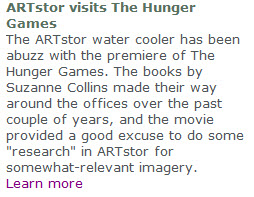
ARTstor, a great image resource, has joined in the Hunger Games frenzy.  Their blog post of art images from major museum collections helps illustrate the Hunger Games.

Yeah, I know the movie also helps illustrate it, but theirs is really a great blog post.

I just flew through the Hunger Games and Catching Fire books this past weekend.  Good reads.  The books reminded me of Spartacus (the violent TV show, not the tame Kirk Douglas movie) and Where the Lilies Bloom.  It’s got the gladiator thing happening with the games themselves and Katniss collects wild foods for her family just like Mary Call Luther does in Where the Lilies Bloom.

Where ARTstor illustrates the Hunger Games, Films on Demand animates it (again, I know the movie is out and animates it just fine, but bear with me).  So if you’re interested in blood sports, take a look at these movies from our streaming collections:

Blood Sacrifice

On the day of the ceremonies, Balinese villagers stage bloody cock fights. Each bird has razor-sharp blades attached to the feet. This brutal blood sport has sacred significance. Some demons desire a sacrifice of blood.

In Search of History: The Bloody History of Human Sacrifice

Human sacrifice was once considered the greatest offering that could be made to the gods. This program seeks to understand why ritualized killing was acceptable in certain ancient cultures.

The Real Olympics

The ancient Greeks tolerate a level of violence in sport that is, by modern standards, horrifying. Their Games are a world of combat that has few limits or restraints. Athletes wear their scars with pride, and many games end in death.

Act I: Thirst for Blood

In Eastern Europe 300 years ago vampire is first encountered; professionals record these accounts. A report from Serbia in 1732, states that 17 villagers die from vampire attacks. They trace them back to Arnold Paole.  (I threw this one in for the TwiHards.)

Libraries, News & Events, O'Shaughnessy-Frey Library

Electronic books in the academic library – a complicated and dynamic phenomenon

Dan Gjelten      Linda Hulbert
By Dan Gjelten and Linda Hulbert

It is hard to avoid news of the growth of the electronic book – between announcements of the latest technologies in e-book readers, we learned recently that Amazon is now selling more e-books than print. (July 2010 more e-books than hardcopy and as of May 2011 more ebooks than paperbacks.)  The percentage of U.S. adults with e-book readers nearly doubled between mid-December and early January, 2012. 

E-books are also making a splash in academic libraries. Nearly all academic libraries now include e-books in their collection and the number of titles is growing rapidly:

  • 95 percent of academic libraries offer e-books
  • From 2009 to 2010 the average number of e-books per library went up 93 percent
  • Most reading of e-books happens on personal computers (72 percent)
  • The preferred format is PDF
  • Reference and scholarly monographs are the primary types of books offered in academic libraries
  • 56 percent of academic libraries report an increase in the use of their e-books
  • Nationwide academic libraries expect to spend nearly 20 percent of their materials budget for e-books. (At this time, the UST Libraries spend about 5 percent of our material budget for e-books.)

While e-books are clearly a rapidly growing phenomenon, they are also very complicated. Comparing digital books to digital music is only partially correct – digital music was primarily a new form of distribution, while digital books can be a fundamental change in the basic reading process. A further complication is the problematic interactions between reader technologies, reading software from numerous providers and the varieties of content contained in books, from text to audio and video.

UST Libraries are quickly developing electronic book collections. This short white paper is intended to shed some light on the complex world of e-books.

What is an e-book? 

Broadly defined, e-books are books delivered electronically, either to a reader (Kindle, Nook, iPad, etc.) or to your computer. UST libraries have purchased more than 100,000 titles in a variety of formats, including:

  • Titles for the libraries’ Kindles
  • Major Reference Works (MRW) now in digital form that used to be in print and housed in the reference areas
  • Titles from a number of vendors: ebrary, EBSCO books and others:
    • These books may be purchased one at a time and are accessed through the library catalog and read on a computer.
    • As selectors identify the titles they want, they must decide whether it will be for one user at a time or for multiple users to read at the same time.  
  • The entire collection of Early American Imprints (17th- and 18th-century primary sources).

The University of St. Thomas libraries own eight Kindles that are available for checkout. We are constantly adding new titles to these devices and the list of what is available can be found here. If you want the library to add something to one of its Kindles, fill out the request form. We bought our first five readers in August 2009 and added three more in August 2010. Since then, they have been checked out nearly 300 times.

Major Reference Works include titles from Gale Virtual Reference, Oxford Reference Online and Blackwell Reference Online. These titles are also in the catalog and many are searchable via our Summon search engine.

The libraries own nearly 115,000 e-books in addition to our Kindle titles, and the collection is growing; however, the use of e-books in the academic library is hindered by publishers who are still working on a pricing model for these titles.

Restricting the use of the book to one user at a time is an option – but in the 21st century that doesn’t make sense. From a technological standpoint, an e-book can easily be used by more than one person at a time – but the publishers then require the library to purchase a multiple-user license for the title, raising the cost substantially. CLIC, our eight-member library consortium, has negotiated an e-book purchasing license that will allow an individual library to buy a title and have it be useable by students and faculty from other schools. We believe this is the best model. As member libraries purchase more e-book content, we want to be able to share these electronic collections with our consortium partners. Since UST borrows more than 20,000 books each year from the other CLIC libraries, if publishers won’t allow us to share them, all of us in CLIC will be affected.

We also have negotiated the right to download some of our ebooks to user’s preferred portable readers. EBSCO e-books are available that way – we are still working with other vendors to obtain the same rights and functionality.

The libraries do not purchase adopted textbooks in any format, and e-texts are no exception; however, we are providing some alternatives via this Library Guide.

Electronic book collections

Beyond the UST Libraries, there is an even larger collection of electronic books – a phenomenal (and rapidly growing) wealth of content available from Project Gutenberg, Google books, and the Hathi Trust.

Project Gutenberg has 36,000 books available for downloading to personal devices. Since they are all in the public domain, there are no copyright restrictions on their use.

Google books is a cooperative initiative by several large academic research libraries, and Google is dedicated to making available full-text and fully searchable online editions of millions of scholarly books.

Hathi Trust is an international partnership of academic and research institutions dedicated to ensuring the preservation and accessibility of the vast record of human knowledge. While the Hathi Trust includes some of the content of Google Books, it also includes other items not chosen for the Google books project; most importantly, Hathi has made the entire content of items still under copyright fully downloadable by their partners. (UST is not a Hathi partner.)

Using Google Books and Hathi Trust search engines allows anyone to do keyword research in the contents of millions of books. While it won’t be possible to download all of those books, many of which are still protected by copyright, retrieving the printed book from the UST libraries or from somewhere else via interlibrary loan is an alternative once it is discovered.

A recent conference paper (“Ebooks, the new normal,” Library Journal, 2011) reported that there are several barriers to the use of e-books in academic libraries:

  • Users who are unaware of the availability of e-books and who find them hard to discover
  • Users who prefer print
  • Users who don’t like to read large parts of books online
  • Rights management issues, which make printing and downloading impossible or cumbersome
  • Titles that are not available for download or use on preferred devices
  • Lack of training either given or taken
  • Limited access to reading devices
  • User resistance to new technologies

While some of these barriers probably exist at UST, library staff will continue to monitor developments in the world of electronic books as we work to allocate our budget on the type of content our users want, at the time they want it and in the format they prefer.

If you want to recommend the purchase of any item in any format, this is where you can do it.
Charles J. Keffer Library, News & Events

Welcome to Keffer 2.0!

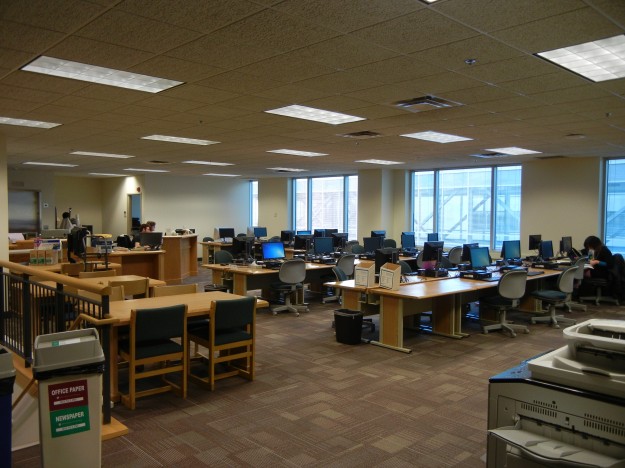
As many of you have noticed, on Monday, February 6th, Keffer Library moved up the stairs into our new space!

The last few weeks have been ones of excitement and transition as we unpack boxes and find new homes for the many people and things that make Keffer tick.

The new library space now contains:

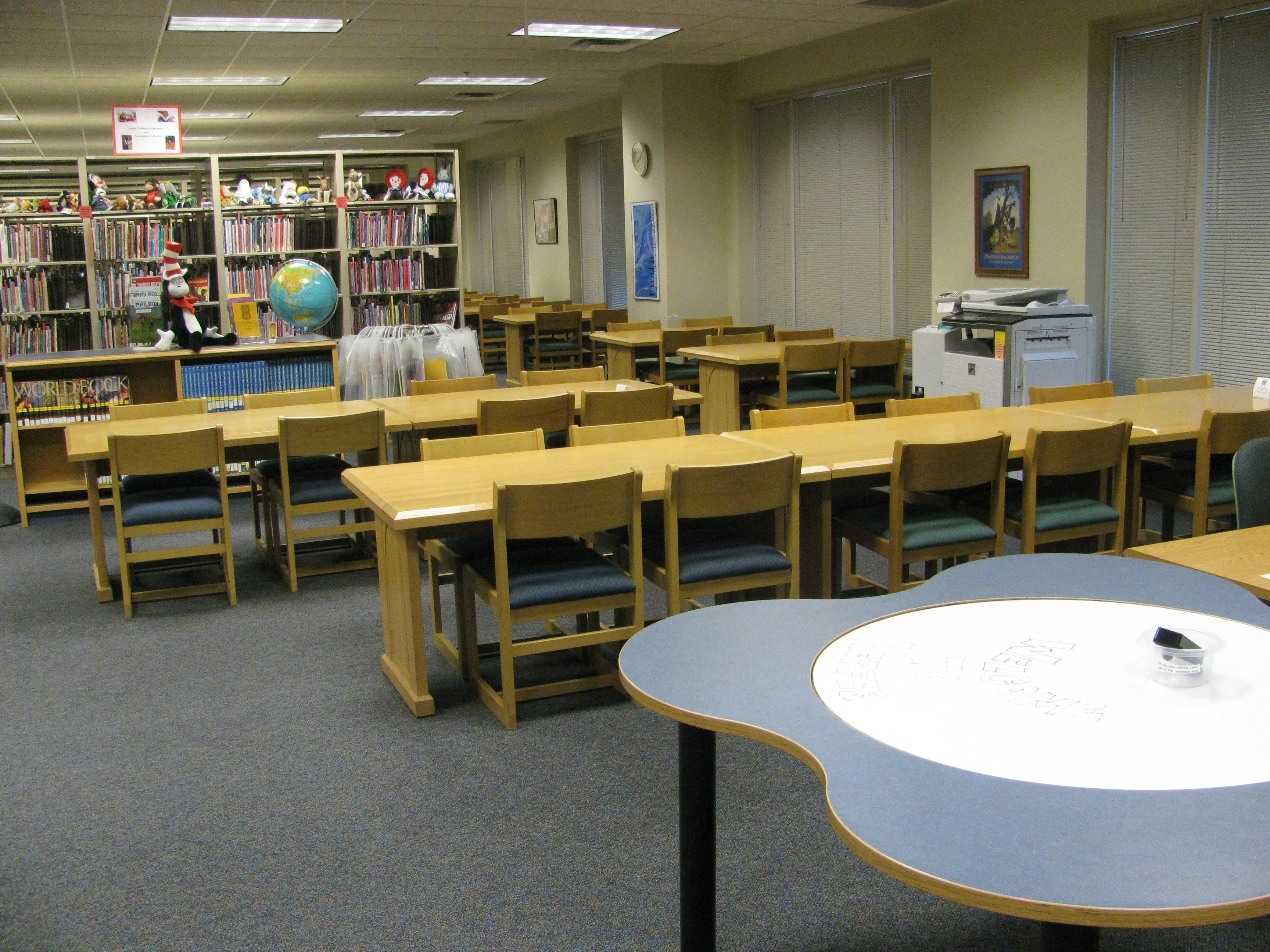
  • Curriculum and Children’s book collections (moved back already thanks to the dedication of some of our amazing student workers)
  • over 30 public computers, including two Mac stations and four computers with specialty software.
  • two study rooms, each able to be reserved with an online reservation system
  • a one-point service desk – staffed by a librarian and both technology and circulation assistants
  • sunlit reading lounge


Look for the following additional changes in the next few weeks and months:

  • wall shelving for the reference collection
  • a lower-level quiet study area
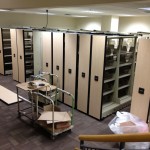
  • the return of the rest of the collection from its temporary housing at the Law Library.  It will be housed on compact shelving on the lower level (currently being installed).

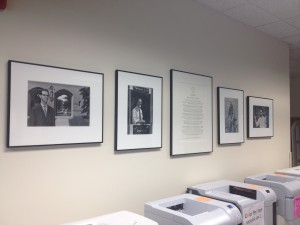
We’re happy to say that it’s starting to feel like home!  Our beloved Charles Keffer dedication display has been hung back on the walls, and things are starting to feel settled.  Thanks again for all of your patience as we continue to transition into our new space.

Charles J. Keffer Library, Libraries, News & Events

Keffer 2.0 Update: Where are the books?!

As Spring semester starts and progress is affecting other parts of campus, we’ve  been getting many more questions about what’s going on with the construction project here at Keffer.

If you missed them, feel free to view my earlier posts about the start of the project and a mid-way update.  Here are answers to the questions we’ve been getting frequently:

Q: Where are all the books?

A: The Charles J. Keffer Library collections (books, journals, children’s books and curriculum materials) have been moved temporarily to the lower level of the Schoenecker Law Library.

Materials can be checked out at the circulation desk of the Law Library or requested from Keffer staff.  A paging system will be provided so that retrieval of needed materials is as convenient as possible; requested books should be delivered to the Keffer Library on the same day.

Q: What about my InterLibrary Loans and Course Reserves?

A:  Items put on hold and course reserves will remain at the current Keffer Library circulation desk. A paging system will be provided so that retrieval of needed materials is as convenient for users as possible; requested books will be delivered to the Keffer Library on the same day. This move will not affect interlibrary loan requests.

Q: Are librarians still available? 

A: Yes!  We are all available and happily helping students and faculty alike gear up for this new semester.  We are all available as usual for consultations, classroom instruction sessions, and more!  Do you have a research or reference question?  Check out the many ways available to contact a librarian here at UST Libraries.

Q: When will you be in the new space? 

A: Soon! Carpet was laid this week, and the “big move” should be taking place in the next week or so.  Library staff will be stationed at the new desk on the skyway level by Monday morning, February 6th, and we’re hoping to have at least some of the public computer stations moved and available by that date, as well.

Q: What about the computer classrooms? 

A: Computer classrooms are no longer housed in the Keffer library.  They have  been moved to academic classrooms TMH253  and TMH254  and can be reserved via the standard UST event scheduler.   If you are having trouble making a reservation or accessing a room, please contact campus security.

News & Events, O'Shaughnessy-Frey Library

Group Study Scheduling at OSF Library is Now Online

Effective immediately the group-study rooms in the O’Shaughnessy-Frey Library are changing to an online, mobile-friendly, self-service scheduling system. The old paper sign-up sheets on the door of each room will no longer be used; instead, users will be directed to an online system for sign-up.

This group-study room sign-up link also can be found:

Users will fill out a simple online form to reserve the room, indicating date and time, name, email address, group nickname for the public calendar display, and number of persons. Once the form is submitted the user will get a confirmation email with a link to cancel the reservation if plans change.

A few simple rules apply:

  • Two hours per day maximum room use is allowed per person.
  • Priority is given to groups of two or more.
  • Users can reserve a study room up to two weeks in advance.
  • A UST email address is required to reserve a room.

Note that people who have reserved the room in the online system have the right to use it during their scheduled time; anyone present at that time can be asked to leave if they haven’t reserved the room.

The system is self-explanatory but there is an instructions Web page available that takes the reader through the process step-by-step. This change is being made for a variety of reasons, but primarily because students have asked for the ability to sign up online. The system also will allow the library to find out who actually has the room reservation in the event of occasional conflicts in scheduling and to compile data on room usage more readily.

For more information contact John Heintz, (651) 962-5018.

Charles J. Keffer Library, Libraries, News & Events

Keffer Construction Update – Moving Quickly!

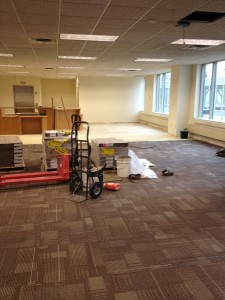
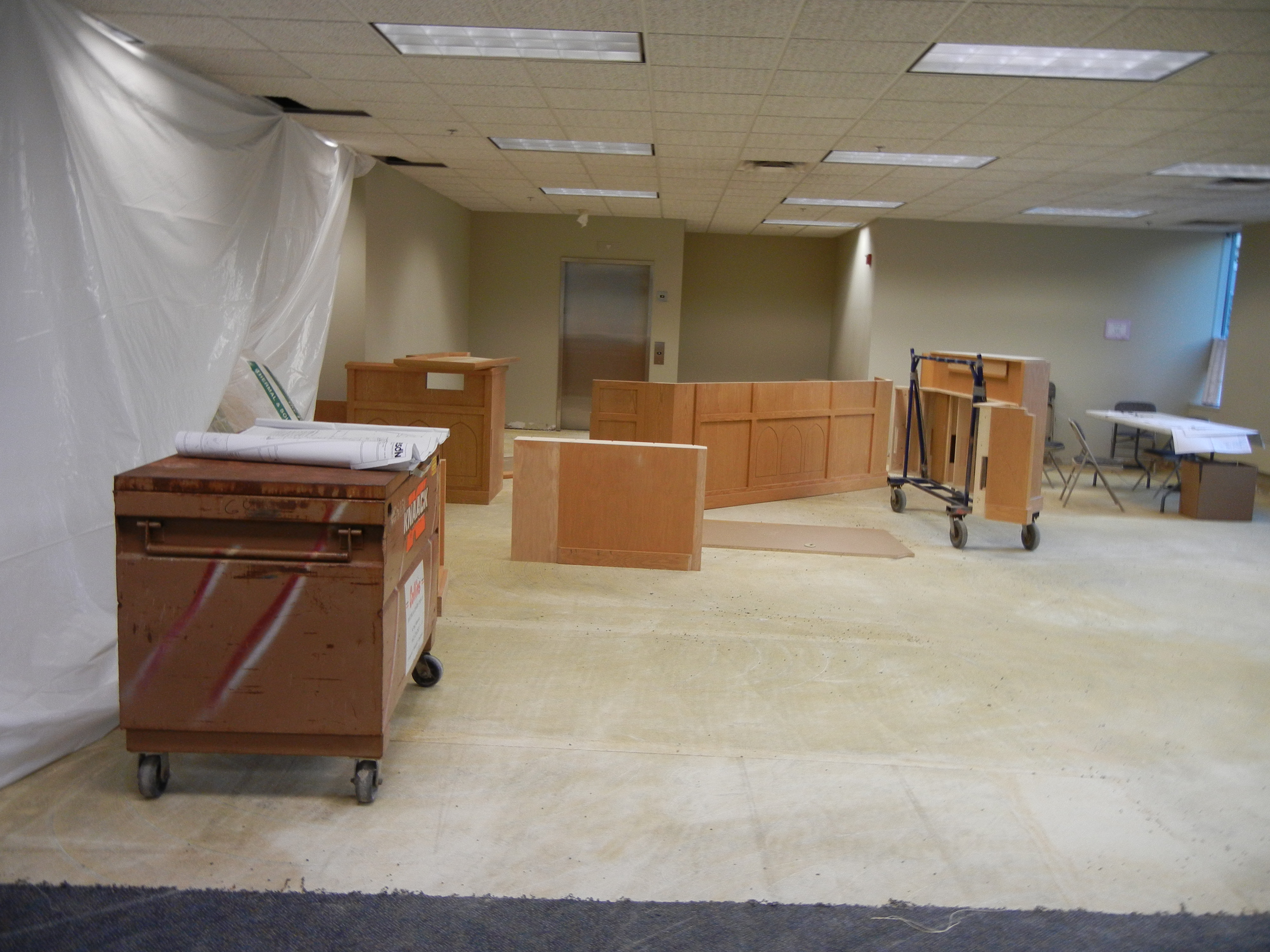
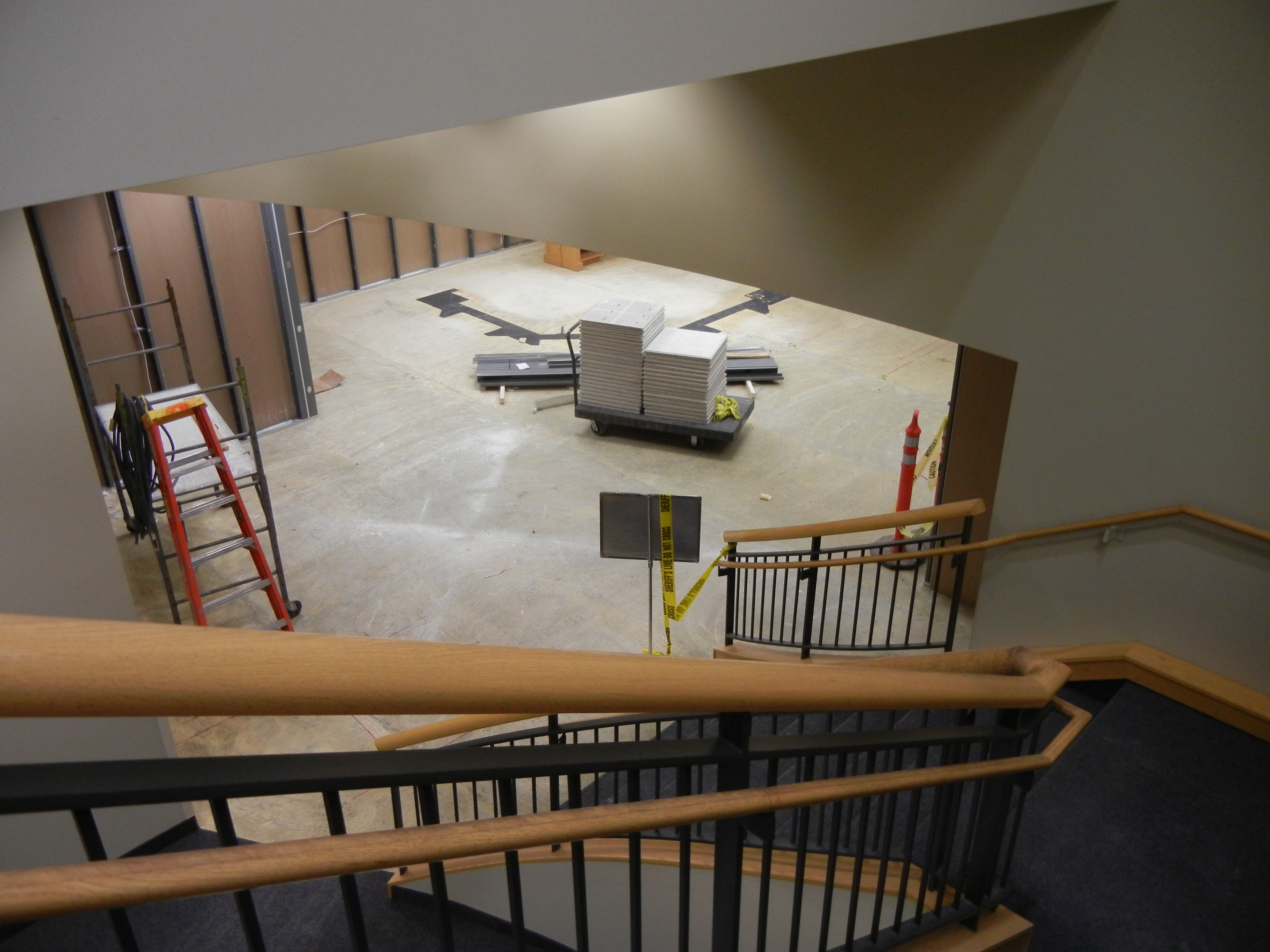
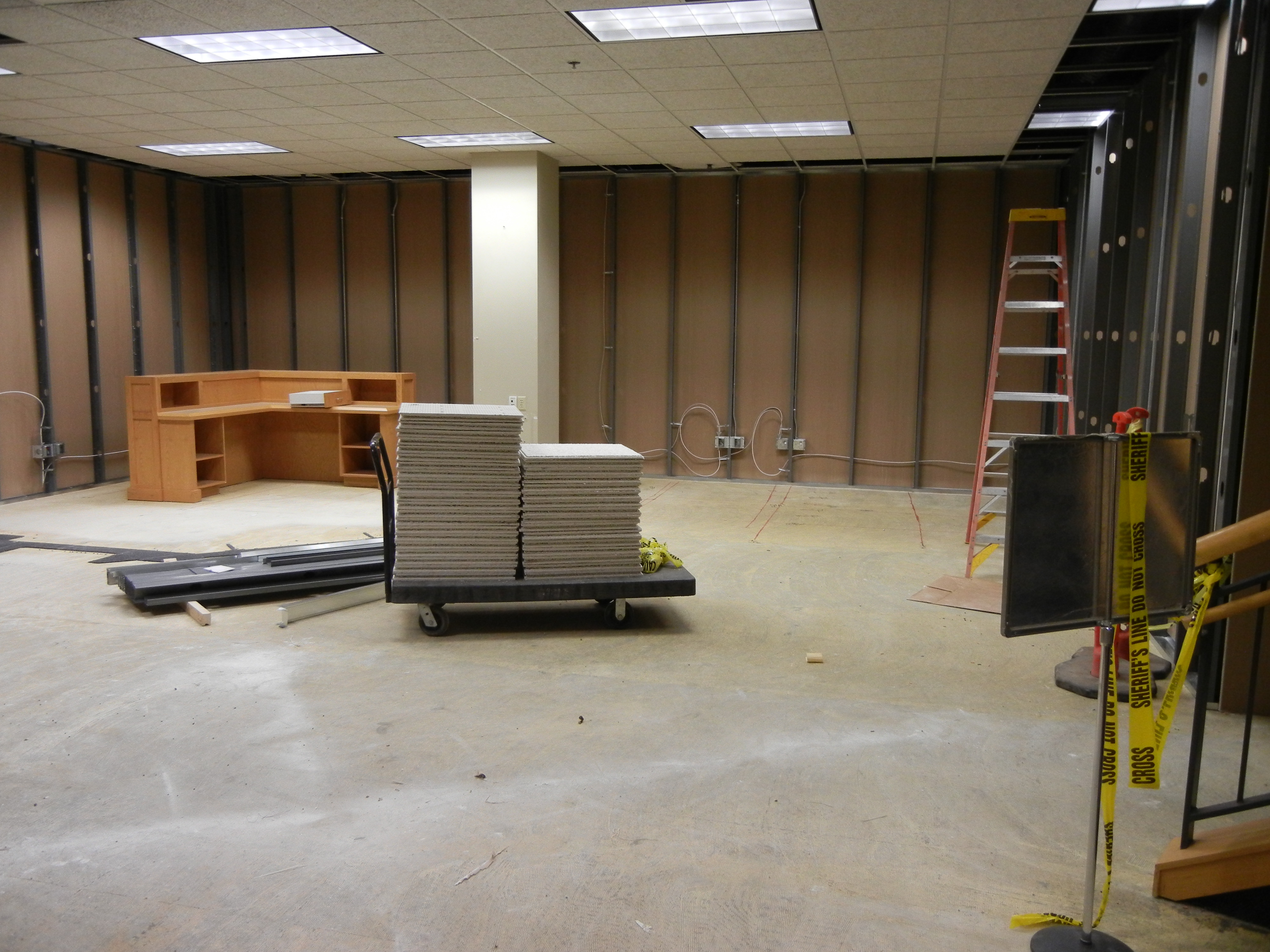
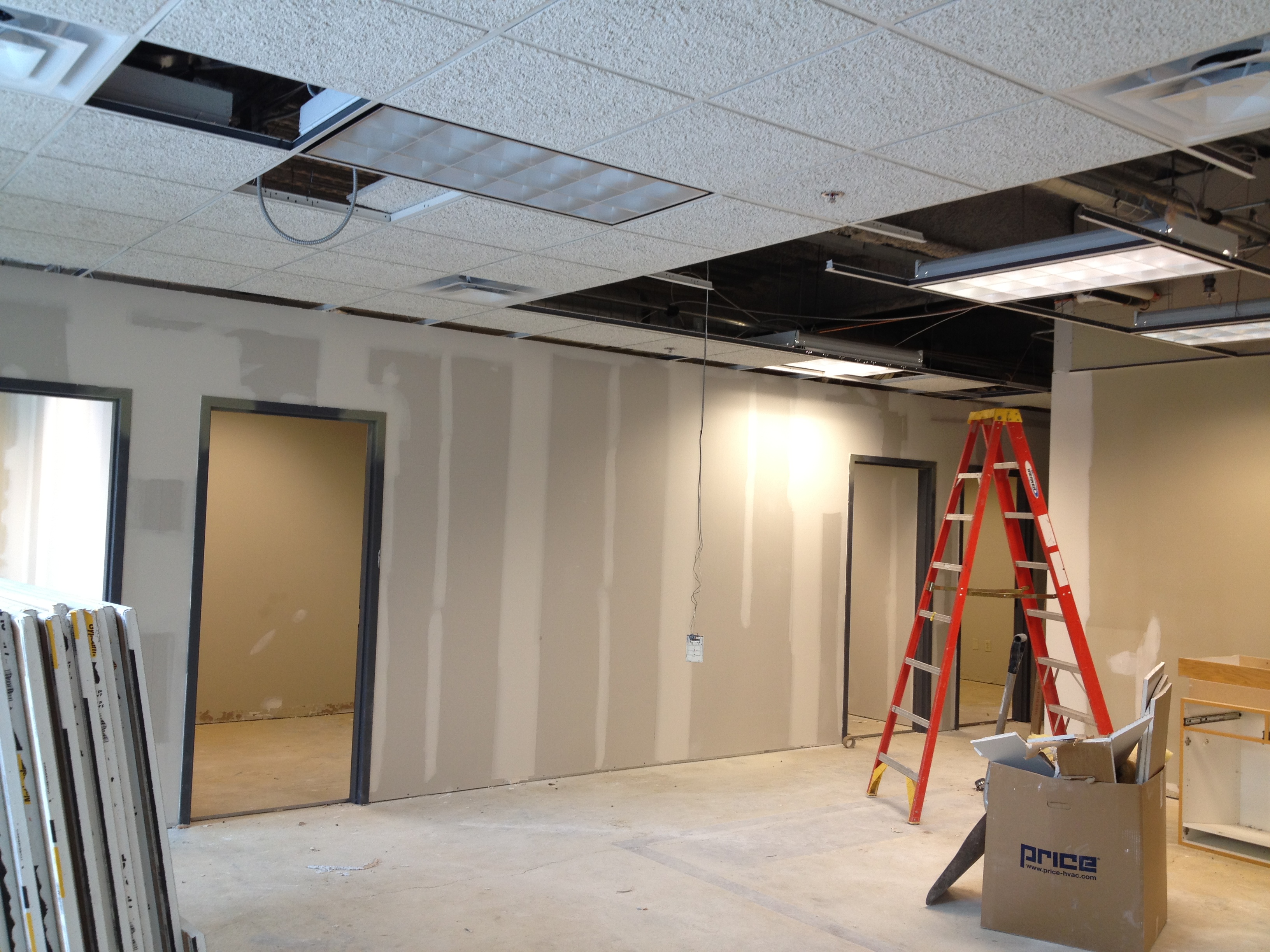
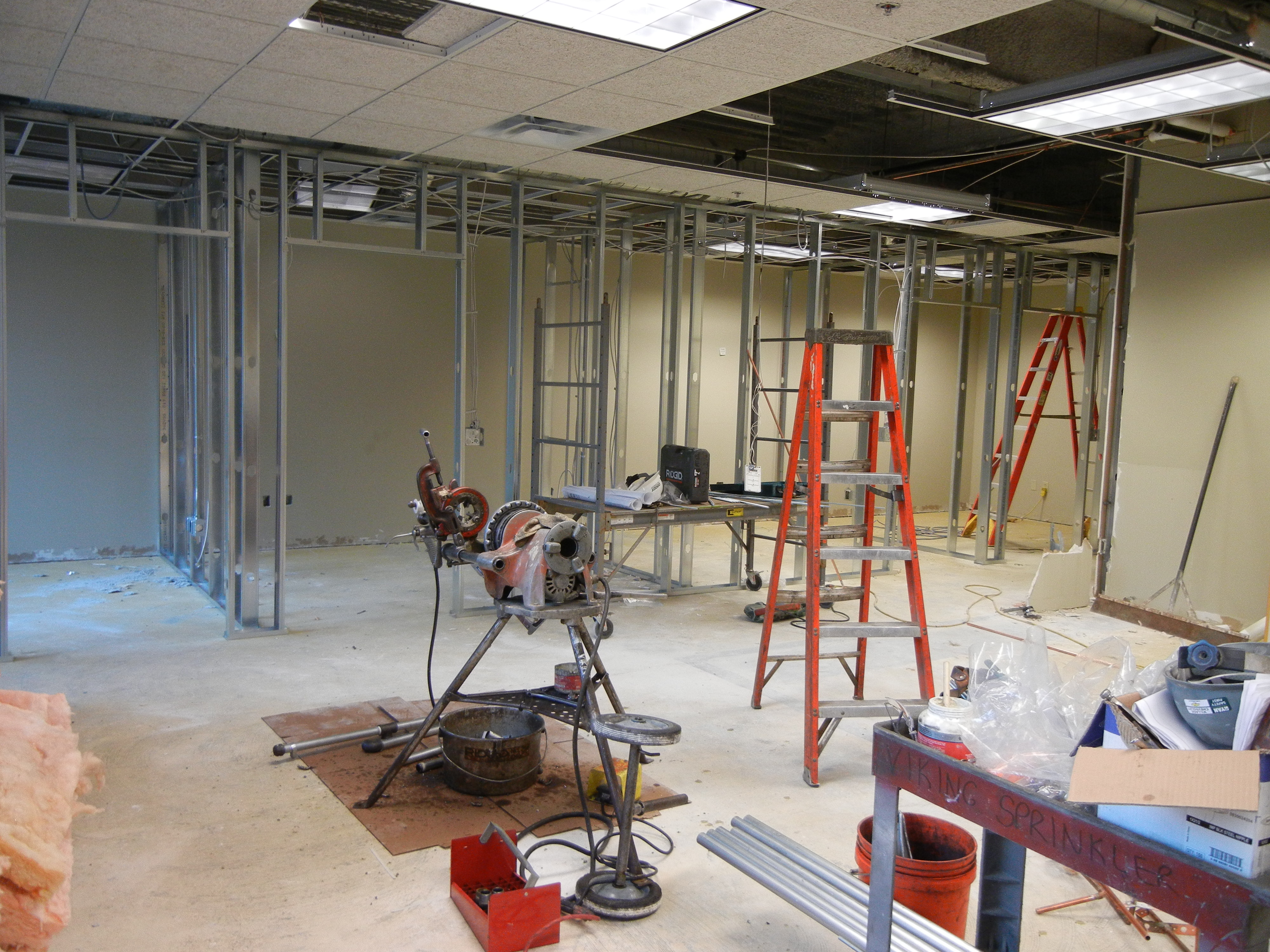
The last week has brought a lot of change to the Keffer Library!  As the sounds of drills and the displaced furniture can attest, construction has been moving swiftly. The new upstairs space is taking shape before our eyes –  and ahead of schedule!

Highlights this week: 

  • A newly designed one-point service desk has been installed by combining parts of the former circulation and reference desks.  In the future, both circulation and reference services will be available here.
  • Walls and door frames have been put into place for the future librarian offices.
  • The walls for the lower level collection space have been finished.

In the next few weeks, look for many more changes (and updates!) as the upstairs areas are finished and we start  moving out of the current space and into our new home.

Thank you, as always, for continuing to bear with us throughout all of this project.  We’re happy to see so many of your faces and hope you’re having a wonderful J-term.

Database Highlights & Trials, News & Events

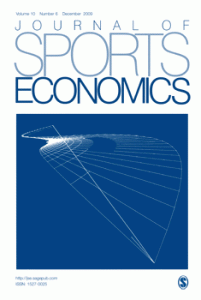
Journal of Sports Economics now available

This journal is now available.  You’ll also be able to link to full-text via the “Get It” buttons in the Econlit database (and others), as well as via our Summon search.

This title will be useful for research projects in Econ, Business, Sociology, and other areas. Some recent popular articles include:

The New NBA Collective Bargaining Agreement, the Median Voter Model, and a Robin Hood Rent Redistribution
Performance Under Pressure in the NBA
The Performance-Enhancing Drug Game
Competitive Balance and Revenue Sharing in Sports Leagues With Utility-Maximizing Teams
Competitive Balance in Sports Leagues: An Introduction

Check it out!

Database Highlights & Trials, News & Events

RefWorks Access UPDATE

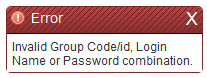
A few weeks ago RefWorks updated its list of usernames in order to bypass the group code.  You may have received an email saying your username has been changed.  Please check your St. Thomas email to see if you received an email like this.  If so, login with your old username and password.  If you receive this error message,refworks_error

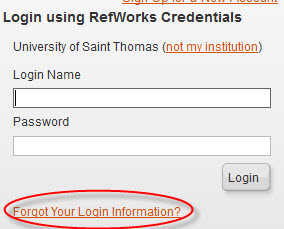
click on FORGOT YOUR LOGIN INFORMATION?

Refworks will then send an email to the account you registered with (probably your UST email) telling you your username/password.  You can then click on UPDATE PROFILE on the upper right of the screen (once you’ve logged in) to set an easier username/password.  As always, ask us if you have problems.

Database Highlights & Trials, News & Events

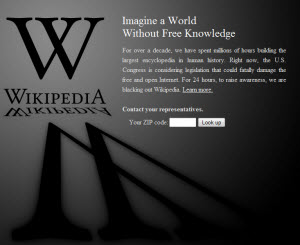
Why the Blackouts? Info on SOPA; alternatives to Wikipedia

wiki_black
Have you noticed that Wikipedia and other sites are “blacked out” today?

Many tech companies have decided to go dark for 24 hours on January 18, 2012 as an advocacy move to fight against adoption of the Stop Online Piracy Act (SOPA) and a related act dubbed PIPA that seek to regulate online piracy and copyright infringement.  These opponents are concerned about potential threats to privacy and the open-ness of the internet.

For more on the issue, here are some resources:

For usable, every day quality information as an alternative (or in addition to) Wikipedia, try some of these UST Libraries subscription resources:

Ask a Librarian if you’d like some help.

google_black

Libraries, News & Events, O'Shaughnessy-Frey Library

Crash! Bang! What’s Happening in the Library?

You may have noticed some really loud pounding and sawing noises in the O’Shaughnessy-Frey Library over the past few weeks and perhaps have seen some recent crane activity used to move heavy pieces of equipment up and out through the roof.   The crane will be back in a week or so to help load in the new equipment, too.

All of this is related to an aggressive heating and cooling project that is now underway.  The large air handlers that were a key part of the HVAC system that served the older part of the library are being removed and replaced with new.   When the project is complete we can expect increased comfort and greater consistency of temperatures throughout the seasons.  The loudest part of the project has been completed and by the end of March we hope to be finished.  We thank you for your patience.