St. Thomas Libraries Blog - Page 3
Yearly Archives

2013

Libraries, News & Events, O'Shaughnessy-Frey Library

Werewolf anthology editors to speak in Library: 2pm, Oct 30

Are werewolves for real?  Two authors who have researched and written about the creatures will discuss them in a Halloween Eve lecture and you are all invited to attend!

Dr. Alexis Easley and Shannon Scott will read from their anthology, Terrifying Transformations: An Anthology of Victorian Werewolf Fiction, 1838-1896, from 2 to 3:00 p.m., Wednesday, Oct. 30 in Room 108 in the O’Shaughnessy-Frey Library.  This lecture is free and open to the public.  Refreshments will be served and copies of the anthology will be available for sale and signing following the reading.  The anthology features vividly written stories, some taken from the pages of rare 19th century periodicals.
alexis

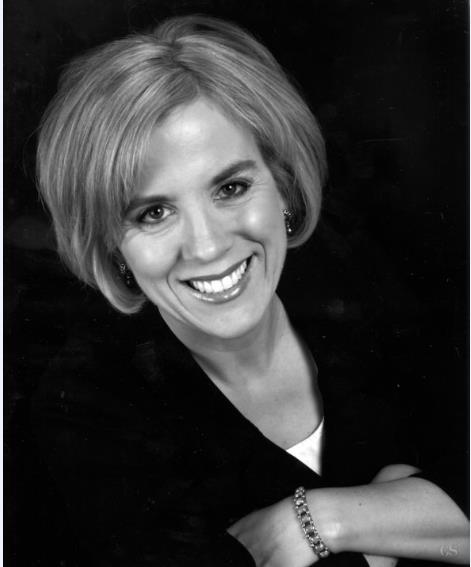
Alexis Easley

 Alexis Easley is an Associate Professor of English at the University of St. Thomas in St. Paul, Minnesota.  Her first book, First-Person Anonymous: Women Writers and Victorian Print Media, was published by Ashgate in 2004.   Her second book, Literary Celebrity, Gender, and Victorian Authorship, was published by Delaware UP in 2011.    She is a scholar of Victorian journalism and last year became editor of Victorian Periodicals Review, published by the Johns Hopkins University Press.  

Her most recent publications appeared in two 2012 essay collections, Women Writers and the Artifacts of Celebrity (ed. Ann Hawkins and Maura Ives) and Women in Journalism at the Fin de Siécle  (ed. Elizabeth Gray).   She also serves as editor of Victorian Periodicals Review.
 

shannon

Shannon Scott

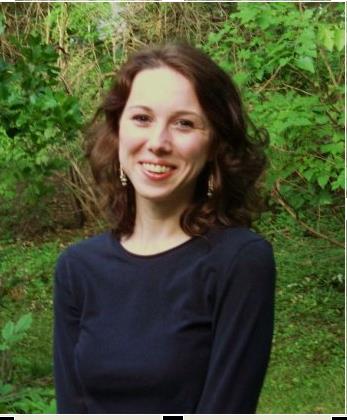
Shannon Scott  is an adjunct Professor of English at the University of St. Thomas and St. Catherine University.  She teaches an eclectic range of courses—from the literature of film noir to werewolf literature to circus literature to the literature of food.  She has been published as a regular columnist in the Minnesota Women’s Press and The Minnesota Daily, and she has a chapter in the forthcoming anthology, She-Wolf: A Cultural History of Female Werewolves, published by Manchester UP. She is currently completing her MFA degree in Creative Fiction at Hamline University.

Scott has long been fascinated with werewolf stories, especially “the transformative nature of their bodies, the shift to an animal mind, to instinct and physical power.”

While Scott was working on her master’s degree in English, she took a Gothic novel course from Easley. A class paper Scott wrote on Clemence Housman’s The Were-Wolf was expanded to become her master’s essay.  Later, the two decided to team up as co-editors for the anthology, which was published a year ago by Valancourt Books. 

“In some stories, werewolves are a violent and terrifying emanations of the ‘beast within,’” Easley said, “and in others they are benevolent creatures who have been unfairly marginalized by mainstream society.

“Whether male or female, demonic or misunderstood, werewolves tell us a great deal about our own anxieties and fears, both past and present.”

Some of the werewolf stories in their anthology were written by familiar writers such as Arthur Conan Doyle, Bram Stoker, and Rudyard Kipling. Others were accessible only through archival research at the University of Minnesota’s Wilson Library and the British Library in London.

We hope you will join us – 2pm – Wednesday, October 30 – O’Shaughnessy-Frey Library, Room 108!   

Ho-o-o-o-o-wl!
News & Events

UST libraries celebrate International Open Access Week

Oct. 21 through 27 is Open Access Week at the University of St. Thomas.

OA Week is an effort to promote open access publishing as a new norm in scholarship and research. The UST Libraries will take advantage of this week to provide information to the community on the concept of OA publishing and related issues on the UST libraries Open Access information guide.

What is Open Access?

OA publishing allows unrestricted access to scholarly, peer-reviewed research on the Web. ‘Unrestricted’ here means, free of charge, without a password, without a subscription, without anything that prevents a user from getting to the content.

Why should you care?

Research is remarkably discoverable through library databases and discovery systems, Google and Google Scholar, and open repositories. But most often immediate access to the content is limited by whether the searcher or the searcher’s library has a subscription to the journal in which it was published. (In 2008, only about 20 percent of peer-reviewed content was available in open-access journals.) Therefore, others who would like access to your paper are turned away. This shrinks your potential readership and diminishes the impact of your article and your research.

In addition, if you retain the rights to your content, you can do more with your content (beyond just loading it to our local repository, UST Research Online). You can hand out copies to your students, you can post to your own website, and you can reuse charts and graphs in other papers and presentations.

Different levels of Open Access:

If you decide to publish in the OA environment, you must consider various levels of “openness.” At one level, Green Open Access, the publisher allows the author to post a peer-review post-print to a local repository, or into a central repository such as PubMed Central. This is not a new phenomenon, and many disciplines have been doing this for 20 years: High-energy physicists, for example, have been publishing their research in arXiv.

At the highest level, in Gold Open Access, the publisher provides immediate access to all of its articles on the publisher’s website. Public Library of Science is an example of this level of access.

There are hybrid alternatives between Green and Gold, including charging the author or the author’s institution to provide access to articles. To discover the openness of a journal to which you are considering submitting your important paper, check SHERPA/RoMEO to view the self-archiving and copyright policies of many publishers.

Recently, Britain’s Wellcome Trust and the U.S. National Institutes of Health have created policies around Open Access and their funding. Essentially, they require that the recipients of their grants be able to post their articles in an open access environment within six to 12 months of publication. Many prestigious universities, such as Harvard, Princeton and Duke, require their publishing scholars to choose publishers that embrace open access policies.

This is the time for you to choose, with intention, author-friendly journals that make your content open and available with few, if any, restrictions on access and permit you to retain your rights. This is the time because of the high level of discoverability of content regardless of where it is published.

Benefits of open access publishing

OA increases the availability of scholarship to the widest possible audience and encourages the proliferation of new research and new ideas among the academic community.

OA makes it possible for libraries and universities to provide content at a reasonable cost, thus lowering budgets and, by extension, tuitions and need for public support.

English, Libraries, News & Events, O'Shaughnessy-Frey Library

Poets Kirsten Dierking and Tracy Youngblom to read poetry on Wednesday, October 23 at 3pm

Anoka-Ramsey Community College instructor and former O’Shaughnessy-Frey library staff member, Kirsten Dierking has published her third book of poetry and will read at the University of St. Thomas, O’Shaughnessy-Frey Library on Wednesday, October 23, 2013 at 3:00 pm.  Joining Kirsten is friend and colleague, Tracy Youngblom, who has recently published her first book of poetry and also teaches at Anoka-Ramsey Community College.  Book signing will follow the reading.

Kirsten Dierking

Kirsten Dierking

 About Kirsten:

During a writing residency at Banfill-Locke Center for the Arts near the Mississippi River, Kirsten Dierking, a poet and humanities instructor at Anoka-Ramsey Community College, thought a lot about water and the changeable nature of time.  The result is “Tether,” her third volume of poetry, published recently by Spout Press, a Minneapolis publisher.
“I’m trying to capture those moments when time seems to slow and still; the spaces between waking and sleeping, the middle of a long, hot season, the feeling of floating on water,” she said. “But I’m also trying to understand those parts of our lives that flash by and how we face the relentless onrush of the future.”

The poems are grounded in “Minnesota” topics – winter, a vacation week at the cabin and the Mississippi River. Water is a strong theme in the book.
“I have poems about rivers, streams, lakes, the ocean,” Dierking said. “Part of this probably just comes from living in the land of 10,000 lakes. But I was particularly inspired by a writing residency and by working at Anoka-Ramsey. Both of these places sit right on the banks of the Mississippi. And I often get writing ideas when I’m out on the water paddling a kayak.”
Being an active artist helps Dierking bring a creative dimension into the classroom and demonstrates to students that contemporary art is being created now. “They see that poetry is not just something they are reading about in a textbook,” she said.   Dierking has taught humanities courses at Anoka-Ramsey Community College since 2004.   In 2011, Kirsten received the NEA’s Excellence in the Academy Award for the Art of Teaching, and in 2009 she received the Building Bridges Award in Education from the Islamic Resource Group of Minnesota.

Kirsten Dierking is the recipient of a 2010 McKnight Artist Fellowship, a Minnesota State Arts Board grant for literature, a Loft Literary Center Career initiative grant and a SASE/Jerome grant.

Dierking’s two other books of poetry are “Northern Oracle,” (Spout Press, 2007), and “One Red Eye,” (Holy Cow! Press, 2001). Her poems have been heard on public radio’s The Writer’s Almanac and have appeared in numerous journals and anthologies, including Garrison Keillor’s Good Poems, American Places and To Sing Along the Way: Minnesota Women Poets from Pre-Territorial Days to the Present.   “Tether” is available online through Small Press Distribution, Spout Press, at local bookstores or any bookstore, which can order it.
An interview with Kirsten Dierking:

Kirsten's 3rd book: Tether

Kirsten’s 3rd book: Tether

What is the title of your book?
K: Tether

What is the one-sentence synopsis of your book?
K: Tether revolves around the changeable nature of time in our lives.

Where did the idea for the book come from?
K: Time, and the passing of time, becomes more important the older you get! I’m trying to capture those moments when time seems to slow and still; the spaces between waking and sleeping, the middle of a long, hot season, the feeling of floating on water. But I’m also trying to understand those parts of our lives that flash by, and how we face the relentless onrush of the future. These ideas are grounded in very “Minnesotan” topics – poems about winter, a vacation week at the cabin, the Mississippi River.

How long did it take you to write the first draft of the book?
K: It took about 4 years to write the book, including early drafts and many subsequent revisions.

Who or what inspired you to write this book?
K: Water is a strong theme in the book, I have poems about rivers, streams, lakes, the ocean. Part of this probably just comes from living in the land of 10,000 lakes! But I was particularly inspired by a writing residency at the Banfill-Locke Center for the Arts, and also by working at Anoka-Ramsey Community College – both these places sit right on the banks of the Mississippi. And I often get writing ideas when I’m out on the water paddling a kayak. Some of the varied things that inspired specific poems: standing on the prime meridian in Greenwich, thunder, the French Revolution, watching a boy fish Rice Creek.

Will your book be self-published or represented by an agency?
K: The publisher is Spout Press, they are a non-profit literary press headquartered in Minneapolis. Their books are distributed by Small Press Distribution (SPD).

What other works would you compare this book to within your genre?
K: I think one of the great things about poetry is that good poets have strong, unique voices, so comparisons are difficult. I do love Linda Pastan’s work, her connection to nature and time, and the succinct quality of her poems.

**********************************************************************

Tracy Youngblom

Tracy Youngblom

 About Tracy:

Tracy Youngblom earned an MA in English from the University of St. Thomas and an MFA in Poetry from Warren Wilson College. Her first full-length collection of poems, Growing Big, was published in September 2013 by North Star Press. A chapbook of poems, Driving to Heaven, was published in 2010 (Parallel Press) and was reviewed in The Georgia Review.
Individual poems, stories, and book reviews have appeared or are forthcoming in journals including Shenandoah, New York Quarterly, Briar Cliff Review, New Hibernia Review, Slate, North Stone Review, Aethlon, Potomac Review, Poetry East, Ruminate, Weave magazine, Emprise Review, Frostwriting, and others.
Tracy teaches English full time at Anoka-Ramsey Community College, lives with her husband and dog, and spends as much time as possible with her three grown sons.

More about Tracy:
Please visit these links to publisher pages with little blurbs about the books Tracy will be reading from:

http://parallelpress.library.wisc.edu/poetry/titles/author.shtml?Youngblom

https://ourbooks.myshopify.com/collections/poetry/products/growing-big-1

All are welcome — reading is free and open to the public — refreshments will be provided.
We hope to see you Wednesday – October 23 – 3:00 – 4:00 pm — Great Hall on 2nd floor!
Questions? Please call Julie Kimlinger, 962-5014

Libraries, News & Events

Finding Census Statistics during the Government Shutdown

I blogged last week about government sites that are down because of the partial government shutdown.

If your assignment can’t wait any longer, and you’re scratching your head about where to get government data and stats when so many websites are shut down, we do have some ideas for you!  (We’ll keep this list updated as we hear more, too – so check back!)

  • The Wayback Machine (waybackmachine.org) has done a great job archiving in-depth versions of government sites –  as opposed to just screenshots of homepages – so a lot of data can still be found via their site.  It will not be the most up-to-date, nor will it be complete, but it is better than nothing!

These and some other great hints are published by the Pew Research Center – and more are continually being added by researchers across the country.

As always, if you have specific research questions, please don’t hesitate to ask an UST librarian – we are happy to help out!

Archbishop Ireland Library, News & Events, Theological Libraries Month, Theology

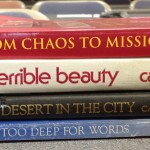
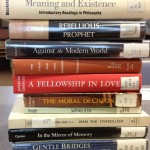
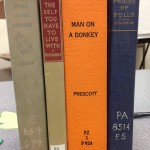
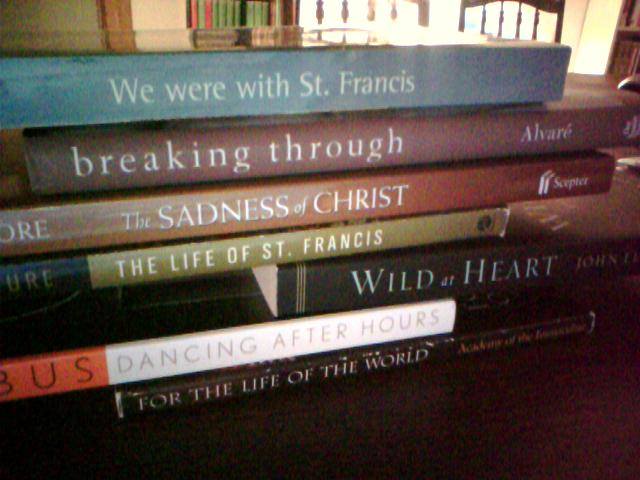
Vote for Staff Book Spine Poetry!

No one sent us any book spine poetry last week.  We are sad, but know you are hitting the books hard*, so it’s okay.  In a couple of weeks we know you’ll be looking for a study break preparing for mid-terms and this will be the perfect little distraction.

In lieu of announcing a winner from last week, we are inviting YOU to judge the book spine poetry that our student staff created last week.   The entries are below.  Vote early and often at our Doodle polling site.

* Or perhaps you are not digitally inclined?  Or maybe you’re on a break from social media?  Good news!  You can still participate in the Book Spine Poetry Contest!  Swing by the library and put together a few books into a winning poetic combination.  Then bring it up to the circulation desk — we’ll take the picture and post it for you!

Libraries, News & Events, O'Shaughnessy-Frey Library

It’s Love Your Technology Week!

1267155_10152208556699338_1124303975_o

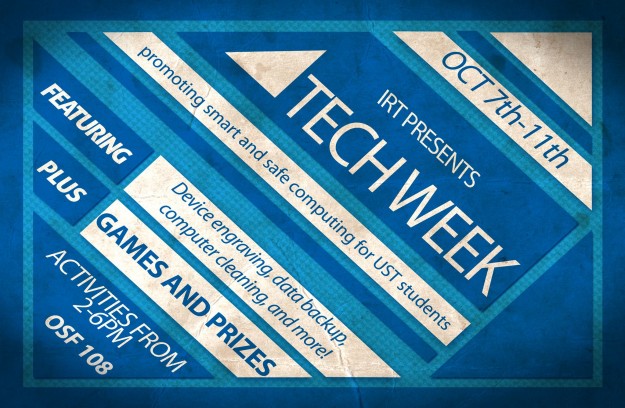
Sponsored by IRT, the library’s technology students will be hosting events all week to help promote safe computing and general computing knowledge. Stop by for some info or to get your personal device engraved – all for free!

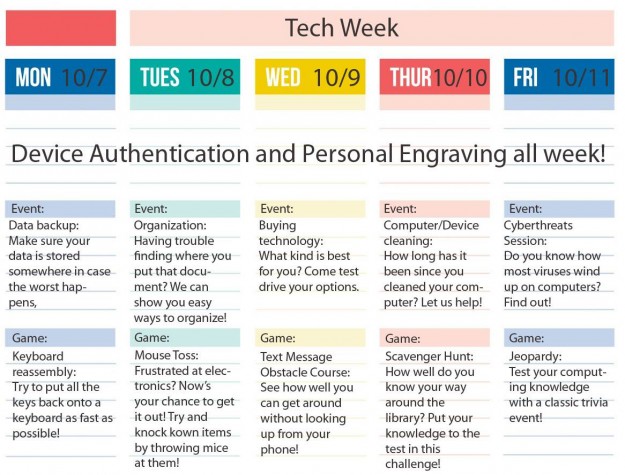
There will be a game hosted each day, and winners will get prizes like Davanni’s gift cards! Also personal engraving, computer cleaning service, and much more. Check out the calendar below for a schedule of events.

All events will take place in OSF Room 108.

1073310_10152196378514338_323494824_oCan’t wait to see you there!  Get any updates, and let your friends know you’re going, too, by checking out the Tech Week Facebook event page!

Database Highlights & Trials, Libraries

Trial – Brill Encyclopaedia of Islam Online

A trial is now being offered to Brill’s Encyclopaedia of Islam Online.  The goal of this resource is to set out the present state of our knowledge of the Islamic World.  It is a key resource to understanding the world of Islam, and is the authoritative source not only for the religion, but also for the believers and the countries in which they live.   This resource includes articles from the Second Edition, the Glossary and Index of Terms and the Third Edition of the Encyclopaedia.

The trial runs through the end of October and can be accessed through this link.

Please send your comments to  Ann Kenne (amkenne1@stthomas.edu) or leave a comment to this post.

Libraries, News & Events, Services

Federal Government Shutdown affects Research

It’s happened: the Federal government has shut down.

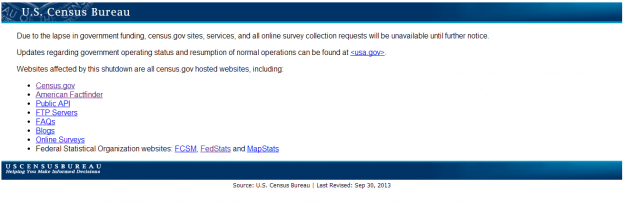
For those of you doing research today, you may start to encounter a screen that looks a lot like this one:

census.gov

Because of the shutdown, many websites funded by the federal government are currently also down, including statistical organization websites, public sites, blogs, online surveys, and more. Many of them are used by UST researchers on a regular basis.

Below is a list of websites linked to on our subject guides that we currently know of that have been affected; we will try to keep it up-to-date with anything new we discover. 

If you would like assistance finding alternative resources for your research, please feel free to contact any UST Librarian.

Resource Status
American Community Survey Shutdown
American Factfinder Shutdown
Bureau of Labor Statistics (including Consumer Expenditure Survey) Up, but not being updated
Census Bureau Shutdown
Department of Energy Up, but not being updated
Educational Resources Information Center (ERIC) Website is down, but content is still available via the ERIC database (EBSCO-owned). No new data is being uploaded to EBSCO.
Fedstats Shutdown
Library of Congress Shutdown – Interlibrary Loan will also NOT be available from any federal library, which could potentially cause delays
National Center for Education Statistics Shutdown
PubMed Up, but not being updated
United States Department of Agriculture (USDA) Shutdown
United States Geological Survey (USGS) Main site shutdown; some critical subsites still live

Archived versions of these websites can all be viewed on the WayBack Machine (waybackmachine.org).  Other options for alternative sources of information can be seen on this list compiled by the Pew Research Center.

More information about the shutdown and available government services can be found at USA.gov.