News & Events – St. Thomas Libraries Blog - Page 58
Browsing Category

News & Events

Archbishop Ireland Library, News & Events

Las Posadas

Las Posadas (“The Inns”), a nine-day (novena) celebration with origins stretching back to Spanish colonial times, begins December 16 and ends December 24.

An annual tradition for many Mexican Catholic and other Latino communities — in El Norte notably New Mexico and California — the musical drama enacts the rejection Mary and Joseph posada_burroendure trying to find a place where they can stay and the Child can be born. Each evening a procession is led by children portraying Mary and Joseph. Even a burro can have a role, as at left, in bearing the Virgin Mary, when the procession arrives before different houses in the neighborhood. The couple pleads in song to be allowed in but are refused. For eight successive nights, they are turned away (the Devil often playing his part), until finally on Christmas Eve the doors are thrown open. The festivities move inside to the joyful smashing of the pinata, the singing of Christmas carols and feasting on seasonal delicacies.

Of course, we imagined such a celebration would generate the easy path to untold Internet riches.” Not so, as we discover, surprisingly, and confirm in this article’s very first sentence (below), published in 1980, but, still, matters have only modestly improved in our digital realm.

Villarreal, Mary MacGregor. “Celebrating Las Posadas in Los Angeles.” Western Folklore, 39.2 (April, 1980): 71-105.
UST affiliates see: http://www.jstor.org/stable/1500067posadas01

As with almost any conceivable topic, we come across numerous ‘hits’ here and there, but little to make much of. Even the Wikipedia article gets tagged as in dire need of expert revision. On the other hand, the persistent searcher does find a link to a new master’s thesis.

 Patrick Cox. “Ecclesiology of Las Posadas.” [Master’s thesis]. St. Norbert College (De Pere, WI), 2007.
http://www.eifm.info/ThesisPapers/CoxPatrick/CoxPatrickThesis.doc

Finally, for the curious, here is a link to words and music. As expected in folk performance, there are many variations in traditional Las Posadas. Below is an image of one written down version.
http://www.hospitalidadnc.org/pdf/posadas.pdf. posadas_music09


News & Events

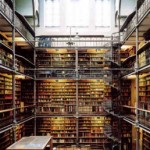
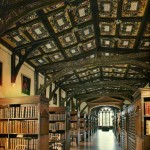
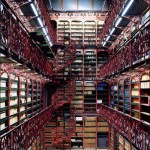
Visit the world’s most beautiful libraries

People can speculate about the demise of physical libraries and print collections but as of right now a room full of Kindles can not inspire this kind of beauty.   Not that the UST libraries are so shabby, but if you would like to view some truly spectacular photos of libraries from around the world click here

library1

bodlein

library2

Archbishop Ireland Library, News & Events

Advent Notes

adventskranzHistory of the Advent Wreath

The Advent wreath is a fine example of domestic rituals which while outside ecclesial practice are nonetheless – by their widespread adoption – sometimes interpolated into Church services even though clearly not part of ordinary rubrics.

As with the Christmas tree, the Advent wreath appears to be this kind of broadly adopted Germanic custom. At least on the web, there is considerable variety in representing its origins. Wikipedia has a fair summary (some detection reveals that most ‘data’ below originates from less than authoritative sites).

The ring or wheel of the Advent wreath of evergreens decorated with candles was a symbol in northern Europe long before the arrival of Christianity. The circle symbolized the eternal cycle of the seasons while the evergreens and lighted candles signified the persistence of life in the midst of winter. Some sources suggest the wreath–now reinterpreted as a Christian symbol–was in common use in the Middle Ages, others that it was established in Germany as a Christian custom only in the 16th century, and others that the Advent wreath was not invented until advent309o845the 19th century. This last theory credits Johann Hinrich Wichern(1808-1881), a Protestant pastor in Germany and a pioneer in urban mission work among the poor, as the inventor of the modern Advent wreath. During Advent, children at a mission school founded by Wichernwould ask daily if Christmas had arrived. In 1839, he built a large wooden ring (made out of an old cartwheel) with19 small red and 4 large white candles. A small candle was lit successively every weekday during Advent. On Sundays, a large white candle was lit. The custom gained ground among Protestant churches in Germany and evolved into the smaller wreath with four or five candles known today. Roman Catholics in Germany began to adopt the custom in the 1920’s, and in the 1930’s it spread to North America[1]. In Medieval times advent was a fast during which people’s thoughts were directed to the expected second coming of Christ; but in modern times it has been seen as the lead up to Christmas, and in that context Advent Wreathserves as a reminder of the approach of the feast. More recently, some Eastern Orthodox families have adopted an Advent wreathwith six candles symbolizing the longer Advent season in Orthodox tradition.
For this out of the ordinary instance of East adopting a Western tradition,
see http://www.orthodoxytoday.org/articles6/ReardonAdvent.php

Those cursed with wanting to know more, in an appreciably more academic vein, may feel compelled to consult the folllowing:

The People’s Work: a Social History of the Liturgy. Frank C. Senn. Minneapolis: Fortress Press, 2006.
Irland Library BV178 .S46 2006

The Liturgical Year. Prosper Guéranger. Wesminster, Md: Newman Press, 1948-50. 15 volumes.
Ireland Library BT4207 .G7. Volume 1 (Advent)

Original French edition: L’Année liturgique (Paris, 1841-1901), completed by Lucien Fromage. T.1 L’Avent.

Archbishop Ireland Library, News & Events

NEW Biblical Research Database

BIBL Index – Biblia Patristica Online

For advanced researchers working in the areas of Biblical hermeneutics and the Early Church, we call your attention to a new database tool on the web. BIBL Index is the online version of the well known, if incomplete, Biblia Patristica.

Just as Biblia Patristica, BIBL provides a working index of Biblical quotations and allusions in Early Christian literature, Greek and Latin. Used as a Scripture index to early church writings, researchers can trace the cited passage(s) to a critical edition like SourcesChrétiennes (at Ireland Library) or within TLG Thesaurus Linguae Graecae (online) and Library of Latin Texts, formerly CETEDOC (online access on the way)

bibl1The search interface is quirky, to say the least, but BIBL should prove a valuable tool for advanced users. Please note that as the index itself is not nearly complete, some major figures are NOT included (St. Augustine for one!) as well as some major works by included authors.

Here is a bare bones video to get you started

The sponsors, the folks behind Sources Chrétiennes, do plan further indexing but it appears that their “funding has been suspended” and so this worthy project must be deemed endangered, to say the least. Although BIBL is completely free, and in spite of a funding freeze, registrations are still accepted. Individual registration is required. Those concerned with personal online security (all of us) might consider a separate “dummy” email account (Yahoo, Gmail, Hotmail, etc.) for your registration, as a foil to the spammers.

Enjoy!

Database Highlights & Trials, News & Events

Free H1N1 portals

Concerned about H1N1?  Writing a paper about it or looking for more information on its history?  Three of our  resource vendors (Ebsco, Gale and Ebrary) have put together free portals.  Ebsco’s portal is for health care providers and patients.  Gale’s portal focuses more on the history, world-wide impact, current media coverage, and the science behind the flu.  And Ebrary‘s portal is a repository of government documents pertaining to H1N1.

h1n1EbscoDue to the global outbreak of Pandemic H1N1 Influenza (formerly known as Swine Flu) and concerns about the 2009/2010 flu season, Ebsco has made the pertinent influenza information available for free. This site includes more than 50 evidence-based topics including patient education information in 17 languages.

h1n1GaleScienceGet scientific and historical information about the virus through dozens of eBooks (encyclopedias). You’ll find hundreds of authoritative articles about the swine flu, other strains of influenza, emerging diseases, pandemic preparedness and other issues related to public health.

h1n1GaleGlobalGlobal Issues in Context from Gale is updated daily. This portal offers an in-depth expert overview; 279 perspectives (editorials) from international publications; 191 podcasts; 17,000+ news articles; and a link to the World Health Organization’s pandemic alert status. If this one doesn’t work the first time around, use your browsers back button and click it again.

ebraryH1N1ebrary has created a publicly available research center featuring a highly interactive, searchable database of documents pertaining to the H1N1 influenza pandemic. It contains a growing selection of reports, papers, newsletters, posters, and other important materials from government agencies and other trusted sources.

Archbishop Ireland Library, News & Events

Holy Card exhibit at Ireland Library

Holy cards are small, devotional pictures mass-produced for the use of the faithful. They typically depict a religious scene or a saint in an image about the size of a playing card or collectible card. The verso typically contains a prayer, some of which promise an indulgence for its recitation. The circulation of these cards is an important part of the visual folk culture of Catholics. [Wikipedia]

cards999999For the next couple of months, Ireland Library will be highlighting our (growing) collection of holy cards. Both display cases in the Reference Room are exhibiting selections, from different eras, countries, and styles, of some of the interesting holy cards that have come to the library (or were found in returned books) over the decades.
Since this essentially uncollected collection was written up in the UST Daily Bulletin and especially the St Paul Pioneer Press in February and March, several dozen more cards have been given to the library, many of them fine examples from the 19th and early 20th centuries. Some of these choice “new additions” are in the display cases right now — the rest will eventually become part of the online exhibition mounted on the web (a way of displaying the cards that has turned out to be quite popular).

To find out more about holy cards, we recommend this fascinating web article (from the Religion News Service) about collecting the cards. It presents a concise, informative “survey” of this popular pious art form as well as profiling one of the serious collectors.

Be sure to come by Ireland Library and enjoy seeing the cards “in the flesh.”

Database Highlights & Trials, New Materials, News & Events

Streaming Videos available at the Libraries

A reminder that the Libraries have subscribed to a database of streaming videos as a pilot project.

Films on Demand is the name of the database that hosts these films.  Current subjects represented include psychology, history, literature, languages, engineering, business, art, sociology, sciences and more.

These videos are streamed over the internet in several formats, and are available for individual or classroom viewing via the computers’ browser.  You can locate these films from the link above, via the Libraries catalog, or on the Media Resources Collection home page. If you have questions or feedback about whether this service should be expanded, please contact our Media Resources Librarian, Cindy Badilla-Melendez, at cbadillame@stthomas.edu, or 651-962-5464.

News & Events

Yasmin Levy in concert as part of the Sacred Arts Festival

levy 7:30 p.m. Monday, Nov. 2, in O’Shaughnessy Educational Center auditorium.  Yasmin Levy follows the trail of Sephardic Jews on their journey from medieval Spain to Morocco and the Ottoman Empire.  Joining her on this journey are Ishay Amir on darbuka (goblet drum) and Vardan Hovanissian on flute and clarinet.

For background information on the Jews in the Middle Ages, take a look at this essay from the Companion to the Medieval World in Blackwell Reference Online.

The concert will feature, among other instruments,  a darbuka.  Learn more about it from Oxford Music Online or listen to it being played using Smithsonian Global Sound.

For those unfamiliar with  Sephardim, the Encyclopedia Judaica offers a nice essay.

More about the Sacred Arts Festival.

News & Events

Novelist Ron Hansen to read for Sacred Arts Festival

Novelist Ron Hansen will read from his works on Thursday, October 22 at 7:30 pm in Room 126 (auditorium) at the John R. Roach Center for the Liberal Arts, as part of the UST Sacred Arts Festival.

Ron Hansen is the Gerard Manley Hopkins, S.J., Professor in the Arts and Humanities at Santa Clara University. His novels frequently pair history with morality tales as well as Catholic themes of unconditional love, redemption and resurrection.

His novels include The Assassination of Jesse James by the Coward Robert Ford (finalist for the National Book Award and PEN/Faulkner Award), Mariette in Ecstasy (adapted for film and stage), and Exiles. Hanson has received fellowships from the National Endowment for the Arts, the Guggenheim Foundation and the Lyndhurst Foundation as well as the Award in Literature from the American Academy and Institute of Arts and Letters.

In 2007 Hansen was ordained a permanent deacon of the Catholic Church, and in May he was inducted to the College of Fellows at the Dominican School of Philosophy and Theology in Berkeley, Calif.