professional formation – Holloran Center Professional Identity Implementation Blog - Page 3
Browsing Tag

professional formation

Rosa Castello

Helping Students Uncover Their Identities as Lawyers

By: Rosa Castello, Associate Dean for Assessment and Accreditation &
Professor of Legal Writing, St. John’s Law School

Last summer I started reading “Covering: The Hidden Assault on Our Civil Rights” by Kenji Yoshino. I wanted to read the book because I teach a course about perspectives on civil rights, and I thought it would be helpful and interesting. I didn’t think about it in the context of professional identity formation, but I couldn’t help but think about how some of the things Yoshino discussed were intimately connected with forming a professional identity. Through a personal narrative, Yoshino explains two sociology concepts about identity: passing and covering. Relying on work by Erving Goffman, he explains that passing is about the visibility of a trait while covering is about its obtrusiveness. When one attempts to keep a trait invisible from others, that person is “passing.” However, if the trait is visible or known, when the person attempts to downplay the trait then that person is “covering.”

When I read this part of the book, I thought about how these concepts come into play in the professional identity formation of our students. Who are our students when they enter law school? Are there parts of themselves that they cover? Do they attempt to “pass” as something other than what they are? If they don’t enter law school that way, does law school in some way make them feel that they must “pass” as a lawyer (with all the heteronormative androcentric whiteness that usually indicates) or “cover” parts of themselves to be a law student and lawyer?

As I was teaching Law & Literature for the first time last fall, these thoughts came back to me during discussions we had in class about how some of the characters in the books we read felt they had to hide parts of themselves from society, from loved ones, and even from themselves at times. It made me think about Yoshino’s discussion about passing and covering, and I wanted to incorporate parts of his work into our discussions. But I also wanted to broaden the discussion and have students reflect on their own professional identity formation. Thus emerged the PIF Venn Diagram exercise.

I assigned students portions of Yoshino’s book to read before class and asked them to think about Yoshino’s story and his explanation of passing and covering. I asked them to think about how the characters in some of the novels we had read so far might have been “passing” or “covering” and to reflect on their own identity traits and whether they ever felt they had to pass as something or cover an aspect of themselves. I told them we would discuss this in class the next time we met.

I began class by having the students break into small groups and discuss what I had asked them to prepare before class. Then we regrouped as a larger class and students shared thoughts from their discussions and from their own reflections. I then told students that I wanted them to take 10 minutes and think about their identity – who they were, what their traits were, how they identified themselves, what values they had, anything like that – and make a list.

Considering that list, I asked them to think about their identities in law school, outside law school, with their families, with their friends, and in any other setting or situation that was relevant to them. I distributed 8.5×11 paper and asked them to make a circle for each setting they identified and then within each circle list the different traits, values, etc., from their master list that they demonstrated and fully embodied in that setting and omit the ones that they covered. I then told them to draw a Venn diagram where the intersection of the circles would be the traits and identities they fully demonstrated and embodied in each setting and outside the intersection would be traits and identities they fully demonstrated in a particular setting.

We regrouped after students completed their Venn diagrams, and students had the opportunity to share thoughts about their identity inside and outside school and “the law.” Students discussed how their identity might be consistent or different and what they realized, felt, or knew that they covered in law school or attempted to “pass” as. This conversation was voluntary; students did not need to share their thoughts or diagrams. But most students did and were eager to discuss the parts of themselves that they didn’t bring to law school and why and whether after this exercise that might change. It led naturally to a conversation about being a lawyer, who is “a lawyer,” and what is expected from lawyers in the profession. We talked about the importance of authenticity and how being yourself would serve clients and justice and make you a happier lawyer.

For example, one Muslim student who wore a hijab discussed how she could not cover her ethnic and religious identity, but she did feel pressure to “pass” in law school by not openly discussing and sharing aspects of that part of herself that were an important part of her identity outside law school. Several students shared stories about passing or covering aspects of their identity connected to their culture or race. Some students talked about the pressures they felt to pass or cover their identity as a parent or older student. An openly gay woman shared how law school is actually an environment where she didn’t feel the need to cover her sexuality, but she has in other environments and experiences outside law school.

I would love to do this exercise again in other classes. What I learned from my students enlightened me. We make assumptions sometimes as professors about who our students are and what they should be like to enter the profession. This exercise showed me more clearly who our students actually are and what they cover or think they must cover to be law students and lawyers. It was an intentional and thoughtful way to think about and explore with them why we cover parts of ourselves or feel we need to “pass” in the legal profession. I shared with them my own reflections on what I covered in my identity as a law professor. They shared with me thoughts about what they valued in law professors. In the end, the exercise reframed my own professional identity, and I hope it helped students on their journey to developing their professional identity.

Please feel free to contact me at castellr@stjohns.edu if you have any questions or comments.

Rosa Castello

Rosa Castello is Associate Dean for Assessment and Accreditation and Professor of Legal Writing. She has presented at several conferences on topics including integrating skills and doctrine and assessment and law school culture, and her scholarship focuses on legal writing pedagogy and assessment.

Jamie Abrams

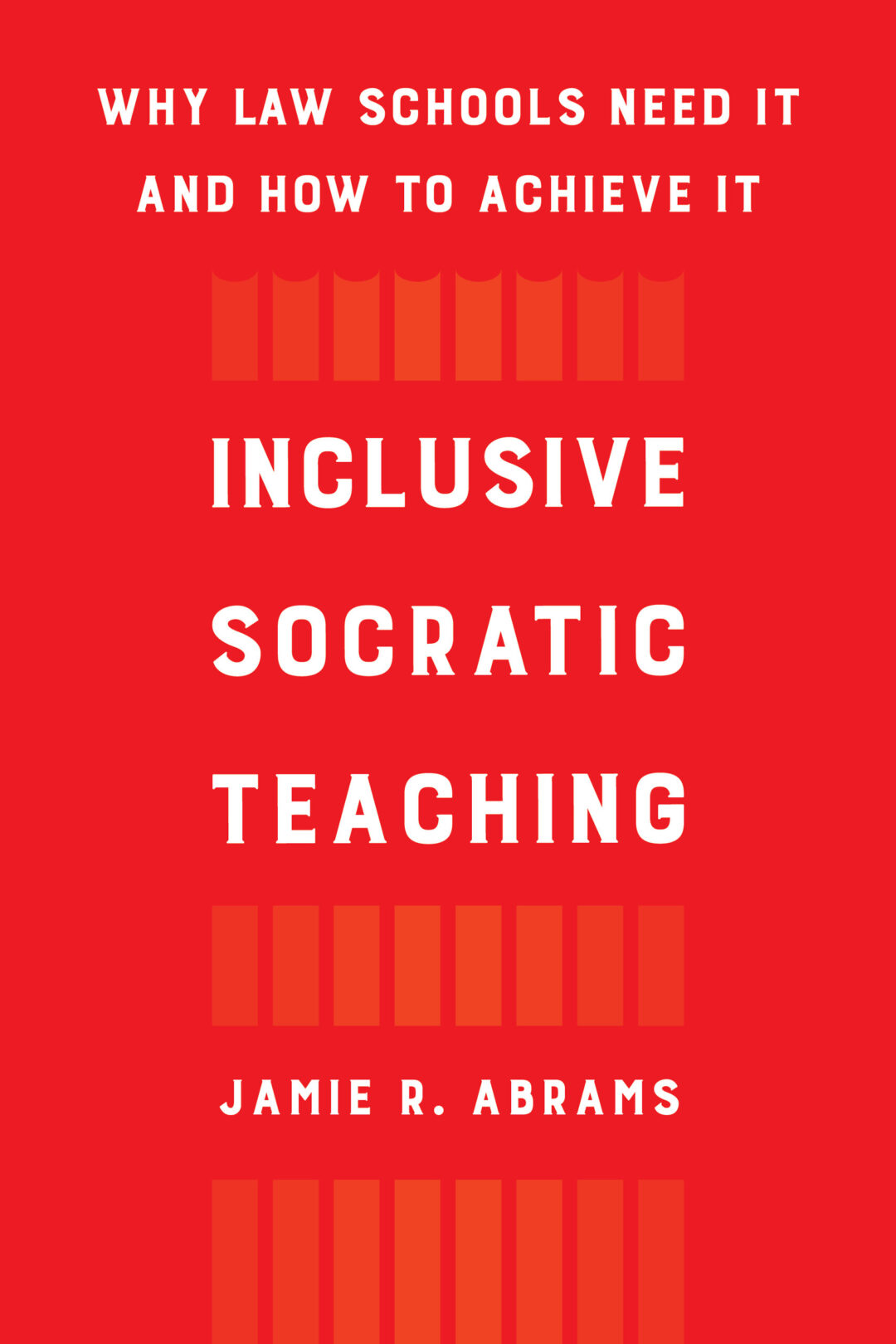
Inclusive Socratic Teaching: Why Law Schools Need It and How to Achieve It

By: Jamie R. Abrams, Professor of Law & Director of Legal Rhetoric Program,
American University, Washington College of Law

As scholars and teachers working in professional identity formation, blog readers may be interested to check out my recent book, titled Inclusive Socratic Teaching: Why Law Schools Need It and How to Achieve It, published by the University of California Press. The book issues a call to action squarely centered in the Socratic classrooms that still dominate so much of legal education’s curricular core. The book’s premise is that existing legal education reforms, including ABA Standard 303(b) governing professional identity formation, are happening around the architectural and structural core of Socratic classrooms.

The book traces enduring scholarly critiques over the past fifty years of Socratic teaching’s professor-centered and power-centered approaches. It layers onto these critical perspectives the alarming wellness concerns facing modern law students and lawyers that scholars, such as the Holloran Center’s Co-Director Jerry Organ, have been documenting for years. With this body of literature outlined, the book ponders why we continue to innovate in legal education around the dominant Socratic classrooms. It notes how these traditional classrooms are often in tension with professional identity formation to the extent they put students in competition to be racked and stacked against each other, skewing students’ self-efficacy and creating a narrow band of skills and values rewarded in the classroom.

Notably, the book does not abandon the Socratic method, though, for reasons of pragmatism, economics, and institutional will. Rather, it seeks to build shared pedagogical values that catalyze these classrooms to align with other institutional reforms. The book therein proposes a set of concrete pedagogical values that can govern Socratic classrooms: student-centered, skills-centered, client-centered, and community-centered teaching techniques.

It then provides a roadmap of how to implement these shared pedagogical values. Simple techniques, like shifting from “what are the facts of the case?” and “what was the holding?” to an exploration of who hired a lawyer, why they hired a lawyer, and the skills and values deployed by that lawyer can transform the Socratic classroom to be more skills, student, client, and community focused. The book sketches out techniques, using existing student-teacher ratios and casebooks, to position students as professionals navigating a string of cases on behalf of a host of diverse clients in a range of communities. While Socratic classrooms might not be the primary site for cultivating professional identity formation, these pedagogical techniques sensitize students to professional skills and values in ways that align with deeper dives into professional identity formation happening in specialized classes, professional responsibility classes, experiential courses, simulations courses, and clinics. I warmly invite this community’s ongoing dialogue with these ideas. I hope this book offers a springboard into holistic institutional discussions about the pedagogical values that shape our institutions and the arc of student development from first year to graduation.

Please feel free to reach out to me at jamieabrams@wcl.american.edu if you have any questions or comments.

Jamie R. Abrams is Professor of Law and Director of the Legal Rhetoric Program at American University Washington College of Law. She has published scholarly articles about legal education pedagogy and won numerous awards for pedagogy innovations.

Sarah Beznoska

Lessons Learned from PIF Course Year One as a Career Services Advisor

 By: Sarah Dylag Beznoska, Assistant Dean for Student and Career Services,
Cleveland State University College of Law

2023-2024 was the first year that Cleveland State University College of Law launched our one credit, required-for-graduation professional identity formation (PIF) course for all in-person first-year students. I was the primary instructor and, at the end of the year, it became clear to me that themes of resilience, growth mindset, resourcefulness, and curiosity had emerged from the experience.

Resilience, growth mindset, resourcefulness, and curiosity for the instructor, of course.

As a career advisor and having served in a wide variety of student, academic, and career services roles during the course of my career, I went into 2023-2024 with the assumption that teaching this course would be straightforward. Panel discussions about career paths, small group work about lawyering skills, and one-on-one coaching about values and goals were things I had done repeatedly while working with law students. It did not seem, in my mind, a huge stretch to bring that to the classroom and I thought myself to be something of an expert, ready to share what I knew.

To say that it did not go quite as pictured in my mind is an understatement. My 2023-2024 students spent the year teaching me how to create a more meaningful classroom experience for the next cohort, and for that I am grateful and also humbled.

A few things I learned, which might be obvious to seasoned instructors in the classroom, but which were new to me:

Be as clear as possible from the outset and stick to it!

Make your expectations clear from the start, both in how you open the class and create your community of learners and in the little things, such as how you outline the course on your syllabus or track student progress in the course.

My recollections of the syllabi when I was a law student were that the documents required me to figure out what the assignments were, by reading dense blocks of text in paragraph format. I remember highlighting the syllabi to figure out what I was supposed to be doing, and when.

I thought that the structure and syllabus I created was better than what I had experienced myself. Still, I learned that you can never be too clear and concise when it comes to setting forth expectations and requirements, and repeating them in a variety of ways so that all students in the classroom receive the information. This is a cohort of students who have grown accustomed to using tools like PowerSchool and Google Classroom, where they can always know exactly which assignments are due and when, and where they stand in terms of points/grades.

I want students to learn organizational and project management skills. At the same time, I should not disregard the importance of using the organizational and project management skills myself in presenting the material to them.

Limit the career services panel discussions and give students options

In my experience, traditional career services offerings are built on a model of panel discussions, where experienced attorneys share their own experience and advice, followed by student questions. For a generation of students who have grown up with all of that content available online and who frequently learn better by actively engaging in exercises or activities, these kinds of panels are sometimes painful and repetitive. Worse, even with the most carefully crafted panel, you’re likely leaving someone out – at least one of your students will look at the panel and think “I don’t see anyone like me.”

Some panel discussions are necessary and helpful. However, at a recent Holloran Center workshop, a colleague suggested that I also try giving students a menu of options for meeting certain requirements of the course. She suggested that autonomy has an impact on the student experience and there are a lot of ways to create at least some autonomy within a PIF course.

This makes a lot of sense. We know that students bring wide ranging goals and experiences to the classroom – that’s part of what we’re helping them to incorporate into their law school experience when we are doing PIF work! What one student finds meaningful, another finds unhelpful. Allowing students to tailor their learning to their personal circumstances not only aligns with PIF goals in general, but it also enables students to feel more engaged.

Therefore, try to be strategic about how and when you use a panel. There are a lot of other ways to get your experienced alumni and attorneys involved and to expose students to lawyers. Use alumni as facilitators for small group discussions and exercises, or for informational interview assignments. Create different ways for your students to learn the content, and be creative with student ideas. For example, is there something interesting happening on Instagram Live through one of the national law student networks that you could incorporate? Is there a student organization event that aligns with a course topic that could be helpful?

Be kind to yourself too.

I recently read Katie Arnold’s Brief Flashings in the Phenomenal World, which has nothing to do with lawyering, the law, or PIF, and everything to do with life and living and going on through difficult challenges. She reminded me that what I try to teach my students is what I also need to know myself.

Be kind to yourself, lean into the reasons why you started doing PIF work in the first place, re-assess and try again. With that mindset, I am certain that, if nothing else, year two of my course will be another adventure.

Please feel free to reach out to me at s.beznoska@csuohio.edu if you have any questions or comments.

Sarah Dylag Beznoska is the Assistant Dean for Student and Career Services at Cleveland-Marshall College of Law at Cleveland State University.

Sara Berman

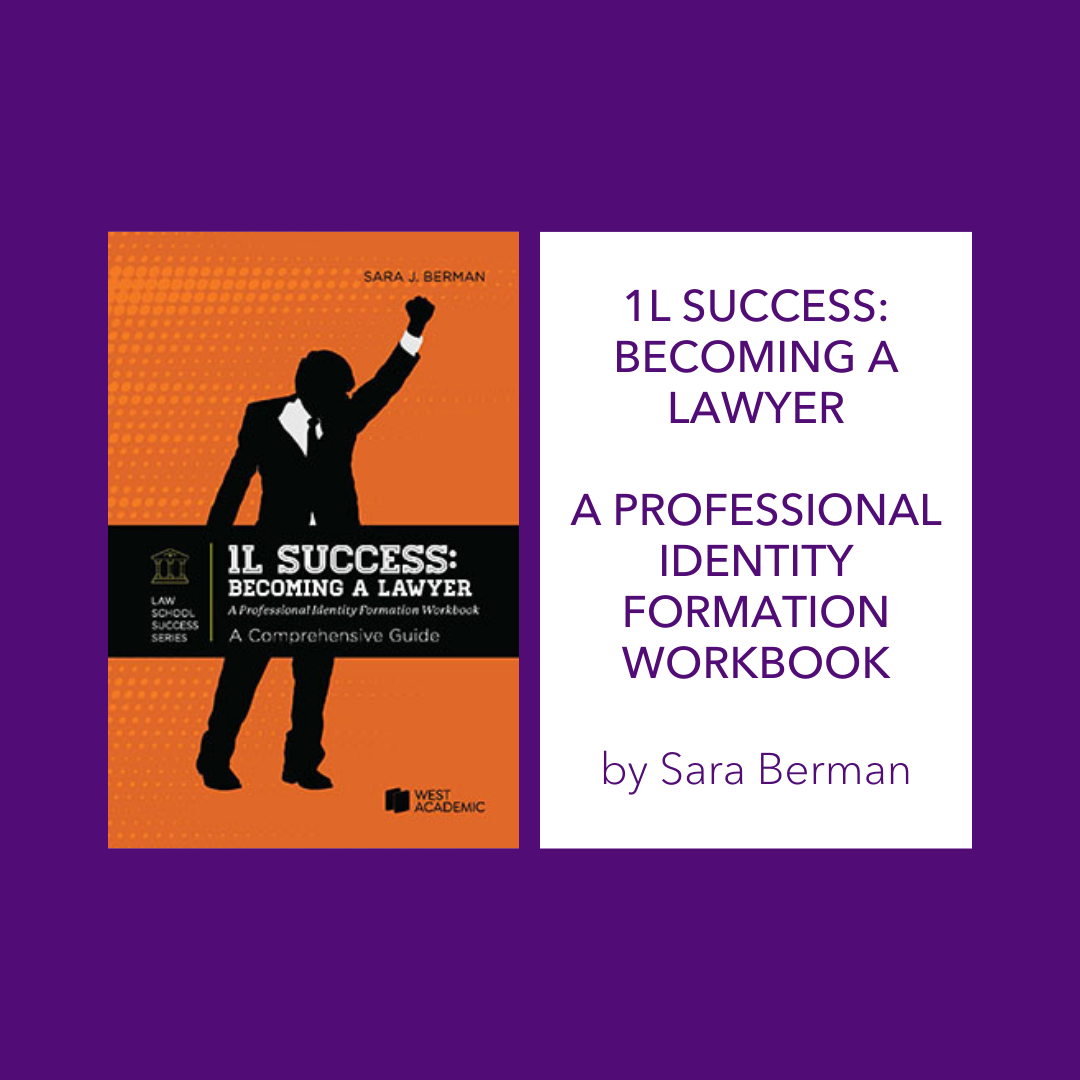
1L Success: Becoming a Lawyer, a Professional Identity Formation Workbook

By: Sara Berman, Professor of Lawyering Skills &
Director of the Academic Success Program, USC Gould School of Law

1L Success: Becoming a Lawyer, a Professional Identity Formation Workbook (West Academics, 2024) is an interactive workbook designed to infuse professional identity formation (PIF) content and an array of reflection opportunities for law students in a variety of settings including, but not limited to, orientations, ABA Standard 303(b) workshops, doctrinal courses (such as Professional Responsibility), skills classes, Academic Success Programs (ASP), and individual student counseling.

1L Success was intentionally created as a brief volume and written in straightforward language to promote accessibility. In schools with West Academic subscriptions, your students may access the electronic version for free with their West login.

If you are working with 1Ls –in a faculty or administrative position– or you’ve been tasked with programming on professional identity formation to satisfy ABA Standard 303(b), then this book is for you –well, for your students!  The reflection exercises in the workbook will help students find strategies, tools, and meaning as they move along their success journey and begin developing their identity as future lawyers.

The book’s Foreword, written by the Holloran Center’s Co-Director Jerry Organ, gives additional perspectives on how this volume will be useful to today’s law students.  It is with deep gratitude to Jerry, the Holloran Center, and everyone in legal education that I share information about this workbook. I hope that it will help us all in educating today’s and tomorrow’s lawyers.

Below is a chapter-by-chapter summary with ideas on where the content may fit into orientation, courses, workshops, and individual counseling of students. Because students can download the content for free, you can easily choose to use selected chapters or even selected reflections

Chapter 1 – Before Law School and Orientation – This brief content (7-pages) can help set a tone for discussion groups at Orientation.  In particular, it directly hits and encourages reflection about the imposter syndrome that many people, especially first gen students, feel starting law school. It also helps students focus on their “why” and on the great value of being a lawyer –a why that will help throughout the entire professional journey.

Chapter 2 – Start on a Positive Foot: Your Path is not Predestined – These pages contain an array of reflections that will be useful to set a growth mindset and positive tone.

Chapter 3 – Become a Critical Reader – This content focuses on the importance of critical reading for law school success. It provides strategies and food-for-thought reflections that include focus and meaning in the readings.

Chapter 4 – Find Your Why – This content dives even deeper into encouraging and motivating students by helping them to step back and reflect on their own why. The reflections in this chapter provide tools for individual and group reflection exercises; teamwork and collaboration are consistently deemed important parts of law practice but are often not emphasized in law school.

Chapter 5 – Hard Work is the Most Important Part of Success – This content seeks to “normalize” hard work and self-driven work. It helps dispel myths that there is something wrong with students when law school learning doesn’t come easily.

Chapter 6 – Visualize Yourself as a Lawyer – This section is useful in discussion groups and individual reflection opportunities, empowering students by encouraging them to see themselves as lawyers. With this framing, many of the other goals of educating lawyers comes more easily and becomes more meaningful and tangible. (I frequently speak with students about “their future clients.” The entire perspective seems to change when they move beyond their student identity and begin to see themselves as lawyers.)

Chapter 7 – Enhance Focus, Reduce Distractions – This pairs well with student affairs, ASP workshops, and individual meetings to assist busy law students fighting distraction and promoting focus, a critical skill for effective lawyers.

Chapter 8 – Active Learning – This chapter can be used in Orientation and in mid-semester workshops as a springboard for discussion and reflections about the payoff of doing one’s own work and not relying solely on commercial study aids. It speaks to grit,work ethic, learning science, and self-driven learning –topics you may want to weave into   orientation, courses, workshops, and student meetings.

Chapter 9 – Surround Yourself with Positive People – This is useful for Student Affairs and ASP and others working with first gen and other students who are struggling with finding a supportive community and tuning out overly competitive or negative peers.  This chapter is also helpful for those who need assistance explaining the demands of law school to family, friends, and partners. There are sample dialogues and simulations that can be used as role-plays during orientation, workshops, and individual counseling.

Chapter 10 – Turn Panic into Power, Anxiety into Adrenaline – Useful for Student Affairs, ASP, and others who address law student anxiety throughout 1L and in workshops that prepare students for midterms and finals.

Chapter 11 – What is IRAC? – Useful at Orientation and in ASP, skills workshops, and individual meetings to demystify the recommended logical template for writing and thinking in law school. This content includes practice exams that test IRAC skills but are based on non-law hypos so that students can use them as learning opportunities (and opportunities to freely make mistakes!) at any point before or during 1L. Sample outlines and answers are also included at the end of the workbook, after the Glossary.

Chapter 12 – Daily Habits– Useful at Orientation and in professional identity formation workshops and individual meetings to help students become more intentional about incorporating professional perspectives into their daily habits and being more accountable to themselves and others for their actions.

Chapter 13 – Exams– Useful at Orientation and in ASP workshops and individual meetings to prepare law students for exams and help them see how different law school exams are from exams in their previous educational experiences. This helps enhance belonging in the sense that many first gen students and others who feel like they are “outsiders” think that some of their classmates have an edge.

Chapter 14 – Second Semester, Work on Improving from First Semester – Useful in spring or second semester workshops, classes, and individual meetings as a springboard for reflection on growth mindset and how to improve going forward.

Chapter 15 – Draft Your Law School Success Plan – This provides an adaptable tool that can be viewed as a living document to promote planning and reflection for continuous improvement throughout law school.

Chapter 16 – Thinking Ahead to After 1L – Useful for Career Services, Student Affairs, and others who are helping students to think about their professional goals and transferable skills.

Glossary – Useful for Orientation and throughout 1L as a springboard for exercises and reflection re: fluency of terminology. Knowing “the lingo” is critical for law school success and helps students socialize and acculturate to law school and the legal profession.

Please access the workbook here and feel free to reach out to Sara Berman at SBerman@law.usc.edu if you have any questions or comments.

Sara J. Berman is a professor of lawyering skills and the director of the Academic Success Program at the University of Southern California Gould School of Law.

Uncategorized

A Student Reflection on Professional Identity Formation at Regent University School of Law

By: Diana McBride Bloomquist, 2L

Professional identity formation is discerning what kind of lawyer you want to be, what motivates you, and why you want to practice law. Coming into law school, I was unaware of how crucial it is to develop a strong professional identity, and I am so grateful for Regent University’s emphasis on it. From the first week of classes, our professors impressed upon us how easy it is for lawyers to make professional decisions that directly conflict with personal values and beliefs and how this can result in deep-rooted unhappiness. I did not know that cognitive dissonance flows from making decisions inconsistent with intrinsic values and that our moral compass keeps track of those—regardless of whether we are aware of it. I learned that this process is subtle and that seemingly minor compromises, where an action conflicts with our values, can lead one to integrate a new identity over time. Regent combats this moral drift by placing professional identity formation at the forefront of a student’s legal education. Establishing your purpose for practicing law and determining why you are being called to serve in this way should inform and influence the decisions you make during your time in school and beyond. I am now convinced that developing self-awareness and sensitivity to one’s moral compass—along with relying on trusted mentors—provides the best insurance of integrity (acting in accord with core values) versus disintegration of those values over time by seeking extrinsic motivations like money or prestige. I learned early that adhering to the Model Rules of Professional Conduct alone will not protect me from moral drift and the inevitable unhappiness that results from the pursuit of extrinsic values. Instead, forming an identity that prioritizes core values has already led me to anticipate practicing in a way that may be challenging but will be fulfilling.

Regent Law’s Center for Professional Formation focuses on ensuring that we, as students, are given many opportunities to form our professional identity and consider how it will impact our future practice. Through the Center for Professional Formation, students can receive an alumni mentor and access to programs that direct us on a path that keeps us focused on our intrinsic core values. In line with these goals, the law faculty has developed required 1L courses such as Foundations of Law and Foundations of Practice. Foundations of Law explores the nature of law by assigning readings of classical texts, including Aquinas and Blackstone, and more contemporary and contentious issues, then facilitating open discussion in class that returns to the core values foundational to our legal system. Foundations of Practice includes readings and discussions with lawyers in various practice areas, such as Virginia Attorney General Jason Miyares and Professor Robert Cochran, who believe in professional identity formation and help students connect the ethical and moral decisions inherent in law practice.

Additionally, the Center for Professional Formation ensures that each student has a faculty mentor with whom we must meet as part of the Foundations of Practice Curriculum to develop a “Discernment Plan.” The Discernment Plan is the primary product of our Foundations of Practice course, and we are told it is meant to function as a living document that we can regularly revise as we move through law school under the same faculty mentor. The Discernment Plan explores a student’s gifts, potential areas for growth, and ultimately, the areas of law in which they may be the most successful. Due to Regent’s focus on professional identity, my idea of success has shifted. I believe I will be most successful in a field where my gifts can help others through law. I have also learned that identifying my gifts can involve a willingness to face fears and explore whether I can do things I thought were not possible. For instance, when I told my faculty mentor of my fear of public speaking, he encouraged me to lean into the discomfort of participating in our 1L Moot Court Competition. I had mentioned this fear in my draft of the Discernment Plan and, in retrospect, I am glad my mentor challenged me rather than allowing my fear to keep me from exploring potential strengths.

Aside from its commitment to professional identity formation through the Center for Professional Formation, Regent has begun integrating professional identity formation into doctrinal classes. For example, in an exercise in Civil Procedure, we were assigned a reading and reflection response on a hypothetical professional identity scenario, which we then discussed in class. The exercise revealed the numerous interests beyond the client’s best interest that influenced a lawyer’s advice to a client on whether to file a suit in state or federal court. Before analyzing this hypothetical question and answering the reflection questions, I was unaware that a lawyer’s interests could override the client’s best interests. In many of our required 1L classes, professors remind us that the individuals in assigned cases are real people, not just fictional characters meant to illustrate a legal concept.

Regent has done an excellent job encouraging reflection on forming our professional identity—both in courses specifically designed to do so and in other doctrinal courses through purposeful exercises. Professional identity formation influences every aspect of the education Regent has to offer and has shown me that my primary goals in practicing law are to embrace growth, even through challenging myself to withstand discomfort as I did with oral advocacy, and to serve future clients without sacrificing core values.

Diana McBride stands in front of a brick wall.

I am a rising 2L at Regent University School of Law. I currently serve as a law school representative on the Council of Graduate Students and as the Vice-President of the Women’s Law Association.

Uncategorized

Embracing Professional Identity Formation

By: Ruwayda Issa, University of St. Thomas School of Law 1L

I was very nervous during the Muslim Law Student Association (MLSA) Iftar Dinner held at the University of St. Thomas School of Law this spring. My 1L year was full of twists and turns including a change of professors (my Torts professor accepted an appointment to the Minnesota Supreme Court in the middle of the semester). Leading up to the Iftar dinner, I volunteered to be the moderator for the career panel during the event. I sat as an audience member throughout the past year hearing from various panels’ moderator and attorneys at different law school events. Now that I had an opportunity to serve as a moderator, I was nervous and focused on asking the right questions and keeping the audience engaged.

The panel conversation had a focus on professional identity formation as both attorneys are Muslim and persons of color who have faced adversity. I enjoyed the panel, and it provided me with a sense of clarity. I am a Muslim woman wearing a hijab that has juggled showing my different levels of identities in law school and law settings. I didn’t have a Muslim female attorney to look up to who could teach me how I should dress in professional settings. One ironic moment during the panel involved panelist Amran Farah, a Muslim female attorney, when she spoke about how she makes sure to wear a neutral-colored hijab if she is wearing a bold color for her blouse or blazer. I realized that I had employed that exact same approach myself for years, and I was already forming my professional identity in a way very similar to other female Muslim attorneys.

This event put my entire year into perspective and reminded me that I was on the right path. I look forward to planning next year’s Iftar Dinner with the rest of the MLSA board. Forming a professional identity is a continuing process, and learning from those who have helped pave the way is part of that beautiful, complicated process.

Ruwayda Issa is a rising 2L at the University of St. Thomas School of Law.

Uncategorized

Integrating Our Personal Identities With Our Professional Identity

By Nazeefa Nezami, University of St. Thomas School of Law 1L

Reflecting on the recent Iftar dinner at the University of St. Thomas School of Law, I find myself deeply moved by the powerful impact of the speakers’ words. Hosted by the Muslim Law Student Association, the dinner was a beautiful event where school administration, faculty, staff, alumni, students, and members of the community gathered together to celebrate iftar, enjoy a meal, and engage in meaningful conversation. It was a gathering of diverse voices, each eloquently highlighting the profound significance of Islamic identity and its influence on our paths as legal professionals and law students.

For those unfamiliar, Ramadan is the ninth month of the Islamic lunar calendar, observed by Muslims worldwide as a month of fasting, prayer, reflection, and community. During Ramadan, Muslims fast from dawn until sunset, abstaining from all food and drink. Iftar is the meal eaten after sunset to break the fast, often starting with dates and water followed by a larger meal. As law students, navigating Ramadan can present unique challenges, but events like this dinner serve as a powerful reminder of the values our faith instills in us and how it shapes us as aspiring legal professionals.

In his opening remarks, Professor Thomas Berg of St. Thomas emphasized the inclusive nature of communal meals and the fundamental importance of caring for one another. Ramadan, he reminded us, teaches us empathy and compassion, urging us to recognize and alleviate the hunger of those less fortunate, support the vulnerable, and engage in acts of charity—a concept echoed across various faith traditions, including Christianity, Judaism, and others.

Augsburg University professor Najeeba Sayeed, the event’s keynote speaker, beautifully articulated the intersection of faith and professional life, portraying Ramadan as a symbol of discipline and resilience. Her message challenged us to confront injustice, even when it may strain our personal relationships, emphasizing that true justice requires standing up for what is right, regardless of the cost. Integrating our faith identity with our professional identity as lawyers isn’t just beneficial; it’s essential. These aspects of our identity aren’t separate but rather interwoven, enriching and guiding our actions in the legal realm.

As we reflect on the shared experiences of Lent, Passover, Ramadan, and Eid, we recognize the themes of discipline, sacrifice, resilience, and caring for others that unite us. The University of St. Thomas School of Law is committed to nurturing the holistic identity of its students, fostering an environment that values authenticity and embraces diverse faith traditions. It’s through this support that students remain grounded in their values as they embark on their legal journeys, equipped to make a meaningful difference in the world.


Nazeefa Nezami is a 1L at the University of St. Thomas School of Law. She serves as a class representative and is a research assistant for Professor Greg Sisk.


Uncategorized

A Student’s Reflection on Professional Identity Formation

By: Alena Stankaitis, University of St. Thomas School of Law

St. Thomas Law has done an especially incredible job at recognizing that professional identity formation is not a one-size-fits-all program. In particular, the school has integrated an intersectional approach to professional identity formation into our curriculum. As a neurodivergent, queer kid with dreams of becoming an attorney, I didn’t see any lawyers that looked like me in TV shows, movies, or books. Additionally, I’m a first-generation law student from a state other than Minnesota. Altogether, I felt like putting any effort towards substantively developing my professional identity was going to be futile, especially amid the rigors of law school coursework. St. Thomas Law and the Holloran Center helped break down these barriers.

First, we have time to recenter and reflect. Utilizing its robust connections to the Minnesota legal community, St. Thomas invests significant resources into our curriculum outside of our doctrinal courses. Programs such as first-year Roadmap Coaching and upper-level Mentor Externship classes afford us the opportunity to reconnect with our individual motivations for pursuing law school. Moreover, these initiatives connect us with like-minded professionals, allowing us to see our identities reflected within the legal field.

Second, St. Thomas Law invests in our experiential learning and community engagement. Through incredible externship placements, creating dedicated time in the middle of the day for student organization activities, and supporting intramural teams, the school helps us cultivate meaningful relationships with our peers. These connections not only enhance our emotional well-being throughout law school, but they also foster proactive engagement—the cornerstone of professional identity formation.

Alena Stankaitis is a JD candidate at the University of St. Thomas. They serve as Associate Editor of the Law Journal and are a Research Assistant for the Holloran Center.

Uncategorized

A Student’s Reflection on Professional Identity Formation

By: Jordan Bracewell, Mercer Law School

When I entered law school, my goal was to learn as much as I could so that I would make a great attorney. What I had in mind was learning the sort of knowledge gained from a textbook or by perfecting an oral argument, but being an attorney requires more. Law school has given me the tools to cultivate the intentional professional identity necessary to become a great attorney.

Mercer Law encouraged me to reflect on and form my professional identity starting 1L year with a required three-hour course, The Legal Profession. While cultivating a professional identity can include a constellation of virtues, Mercer emphasizes six necessary professional virtues: competence, fidelity to the client, fidelity to the law, public spiritedness, civility, and practical wisdom. The Legal Profession helps first-year law students learn the six virtues through various reading assignments, including The Formation of Professional Identity and Bryan Stephenson’s Just Mercy, listening to presentations on the virtues, participating in group discussions and exercises, and meeting practicing attorneys and judges.

Class exercises were particularly beneficial because they gave me an opportunity to be placed in hypothetical scenarios and see the importance of each virtue while recognizing the virtues can conflict with one another (such as fidelity to the client verses fidelity to the law). The hypotheticals were a chance to reflect on difficult situations within the profession and the values that I would use to help me respond. The discussions take place in small groups, and my classmates always had valuable insight that helped me develop the capacity to imagine alternatives. After we read and had discussion, the course also required weekly reflections. These reflections were an opportunity to slow down and be intentional in what I had learned during the week and throughout the course.

Additionally, the opportunity to hear from and interview attorneys and judges on their experiences broadened my understanding of the challenges and rewards of the legal profession. I appreciated how honest each person was in sharing with our class their insecurities and struggles, whether related to mental health, finances, family, job-searching, or being a woman or minority in the profession. I also appreciated how uplifting and encouraging each of our guests were. With no family or close friends who are attorneys, it was a valued chance for me to learn more about the different legal fields, get advice, and create connections. Several people who spoke to my 1L class have since been involved in my professional growth.

Now as a 3L approaching graduation, I am grateful that Mercer Law requires this class for all its students, and I enjoy telling others about what I have learned from Mercer. I have carried these professional virtues through other classes, interactions with students, leadership in student and community organizations, a judicial externship, and summer clerkships. Like many called to the legal profession, it has always been important to me to serve my community and to uplift others. This course was unique training in that it offered a new framework of values, problems, and guidance for upholding virtues while competently navigating the legal field. I hope the professional identity courses offered at law schools are creating a generation of future lawyers who are confident in themselves, know they can ask for help, and display the values we learned.

To me, professional identity means being intrinsically motivated to provide the best service to my future clients and to the legal profession. It is not possible to be an exceptional attorney without adhering to the virtues taught by Mercer, which should shape every professional interaction. I am thankful for professors like Patrick Longan, Daisy Floyd, and Timothy Floyd for the work they do to cultivate and instill these virtues in future attorneys through a safe environment to learn and grow. I am also grateful for the attorneys and judges who help law students and encourage new attorneys in their formation of professional identity. I look forward to continuing to develop my professional identity and to entering a field that has recognized the importance of teaching the virtues of competence, fidelity to the client, fidelity to the law, public spiritedness, civility, and practical wisdom from the very beginning of a legal career.

Jordan Bracewell Headshot

Jordan Bracewell is a 3L at Mercer University School of Law. During her time in law school, Jordan has served as Articles Editor for Mercer Law Review, Student Bar Association’s Honor Court Chief Justice, Vice President of Mercer Law Joshua’s Wish (a local nonprofit), judicial extern to Chief Judge Marc T. Treadwell of the U.S. District Court for the Middle District of Georgia, and as Mercer Law’s student representative for the State Bar of Georgia Committee on Professionalism.

David Grenardo

What About Us? How Law Schools Can Help Historically Underrepresented Law Students Develop Their Professional Identities

In a forthcoming article for Mercer Law Review, Holloran Center Associate Director David Grenardo presents a critically important perspective on the ways that historically underrepresented students face obstacles to their professional identity formation. Grenardo provides context around why these issues can seem insurmountable to staff and faculty, and explains why it is crucial to tackle them head-on: structural biases in law school stall the academic and professional development of historically underrepresented students. He closes with practical, solution-oriented suggestions around mentorship, academic support, and experiential learning that would create an environment in which all students are welcome.

The article abstract follows. You can also read a draft of the entire article on SSRN.

The revised ABA Standards require law schools to provide substantial opportunities for law students to develop their professional identity. An individual’s professional identity as a lawyer consists of one’s personal identities integrated into who they are as a professional. Gaining a professional identity means going from an outsider to an insider in that profession, and a law student’s professional identity formation refers to the process of evolving from law student to lawyer. Law schools must dive into the murky waters of race, ethnicity, gender, and sexual orientation because that is where our historically underrepresented law students are, trying to become professionals in a system that sees them as the other, different, and outsiders.

Part I of the Article briefly defines professional identity. Part II sets forth an overview of the many obstacles historically underrepresented law students face—including, but not limited to, the historical exclusion of underrepresented individuals from law school and the legal profession, imposter syndrome, bias, microaggressions, wealth and education disparities—in developing their professional identity. Part III provides a summary of tangible solutions that law schools may employ to address those obstacles and help those law students develop their professional identity. This Article concludes that it is critical for law schools to intervene to ensure historically underrepresented law students can properly develop their professional identity.

Please reach out to David Grenardo at gren2380@stthomas.edu with any questions or comments.

David Grenardo is a Professor of Law and Associate Director of the Holloran Center for Ethical Leadership in the Professions at the University of St. Thomas School of Law.