This past June and July, I was extremely fortunate to receive two travel grants that not only allowed me to attend my first academic conference with the Pacific Arts Association at the Wereldmuseum in Leiden, in the Netherlands, but also to visit London for research for my qualifying paper on the use of medieval imagery in propaganda and memorials of WWI in the United States and Britain.
The first part of my trip I spent in Leiden, where I attended the 14th International Symposium of the Pacific Arts Association entitled ‘Oceanic Blazing Forms: Memory, Place-making and Imagination’, alongside my fellow graduate student Rachel Chow and professors Dr. Amy Nygaard and Gretchen Wagener-Burau. Not only was this my first academic conference, but it was also my first time traveling internationally, making this trip especially memorable.
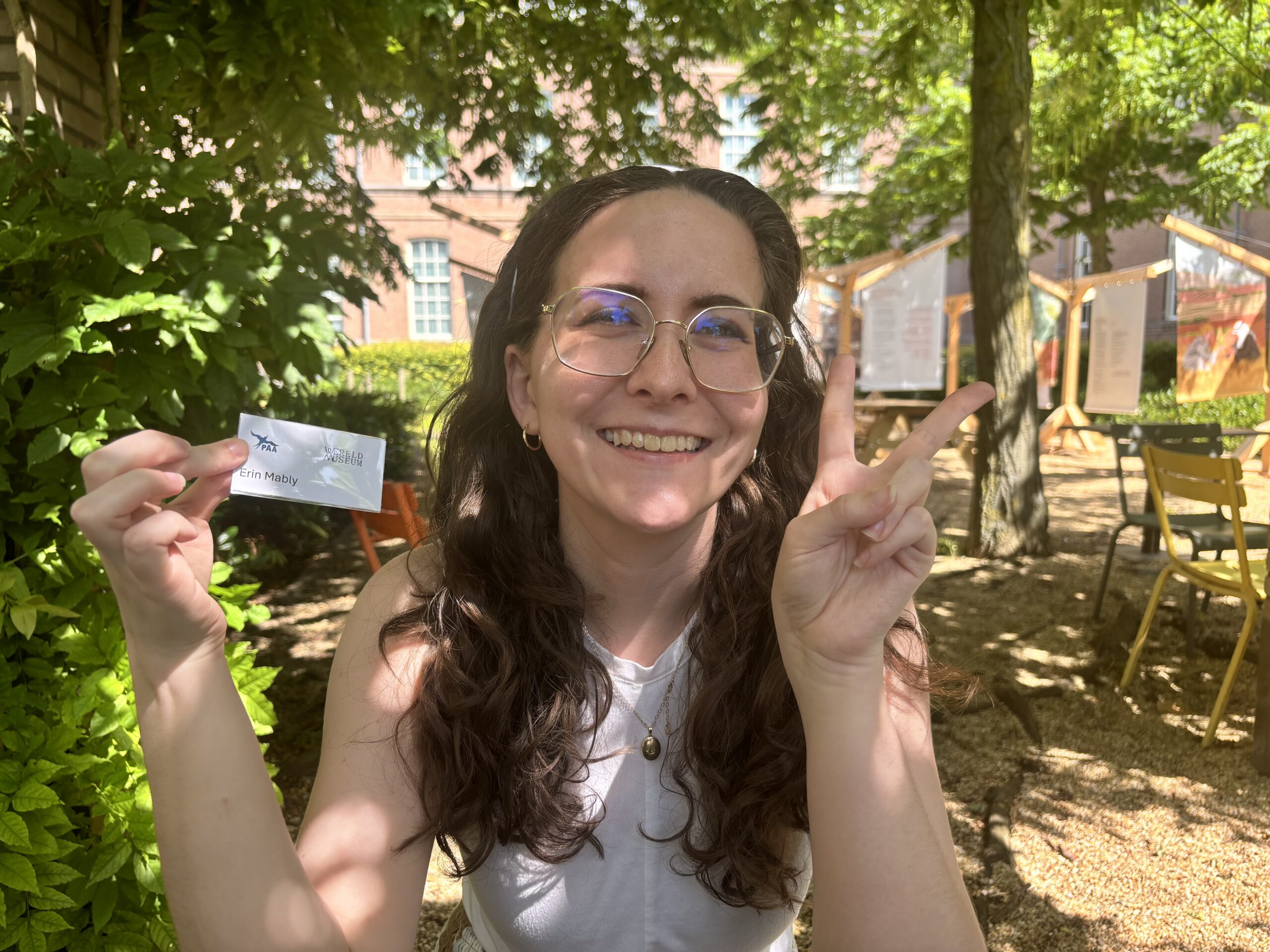
Erin with her conference name tag
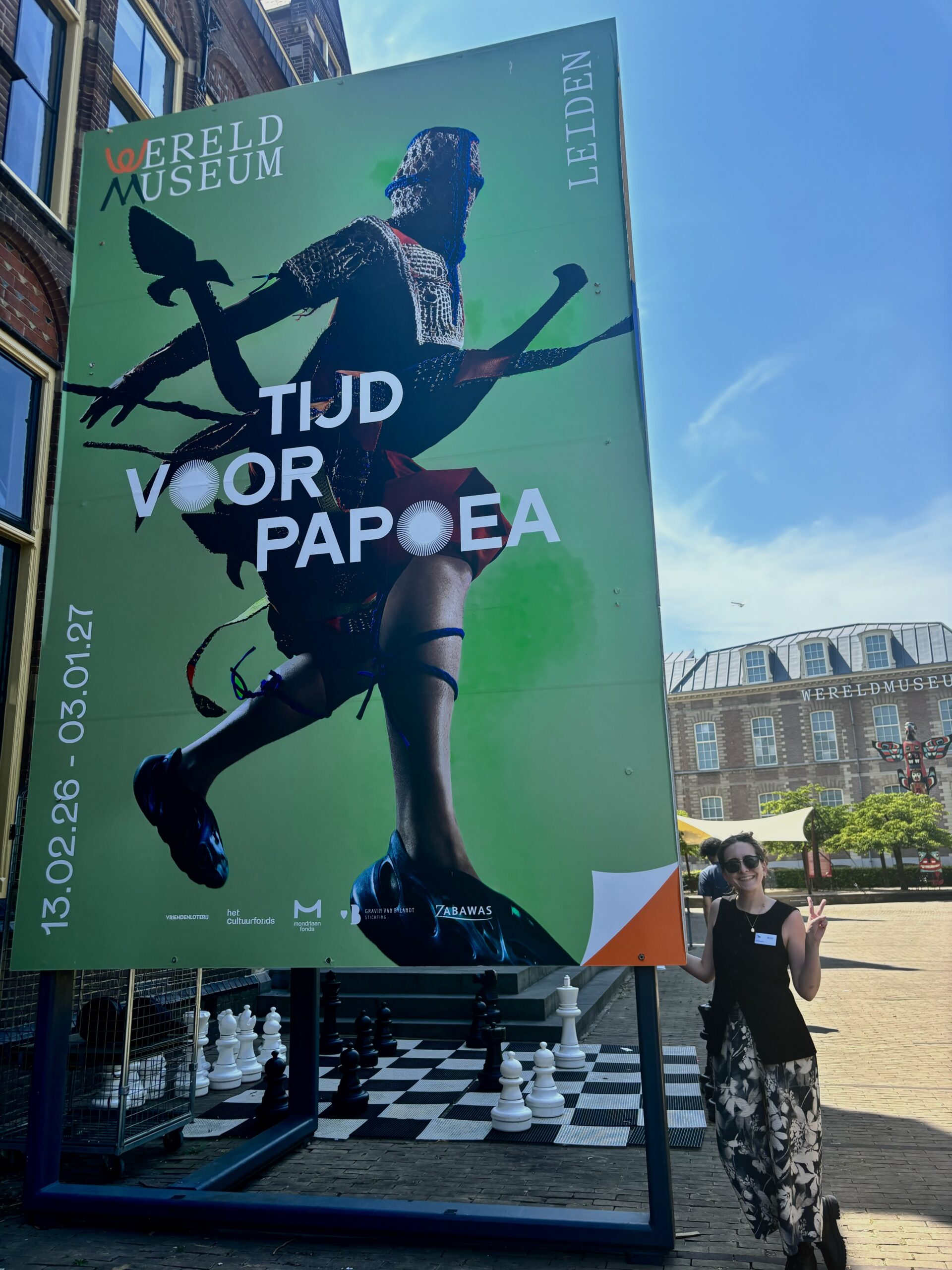
Erin in front of the Time for Papua exhibition sign at the Wereldmuseum in Leiden
While Gretchen and Amy were able to present on the work our Elevating the Arts team completed this past academic year for the American Museum of Asmat Art, I had the opportunity to support their presentation as well as attend other presentations and discussions from other scholars, museum professionals, and artists from around the world. The presentation on our work highlighted the digitization of archival records from the 1970s that were donated by Ursula Konrad from our sister museum in Asmat, the Asmat Museum of Culture and Progress in Agats, which was made possible by an Elevating the Arts grant to help preserve, increase access, and digitally repatriate important documentation related the museum’s history and Asmat culture.
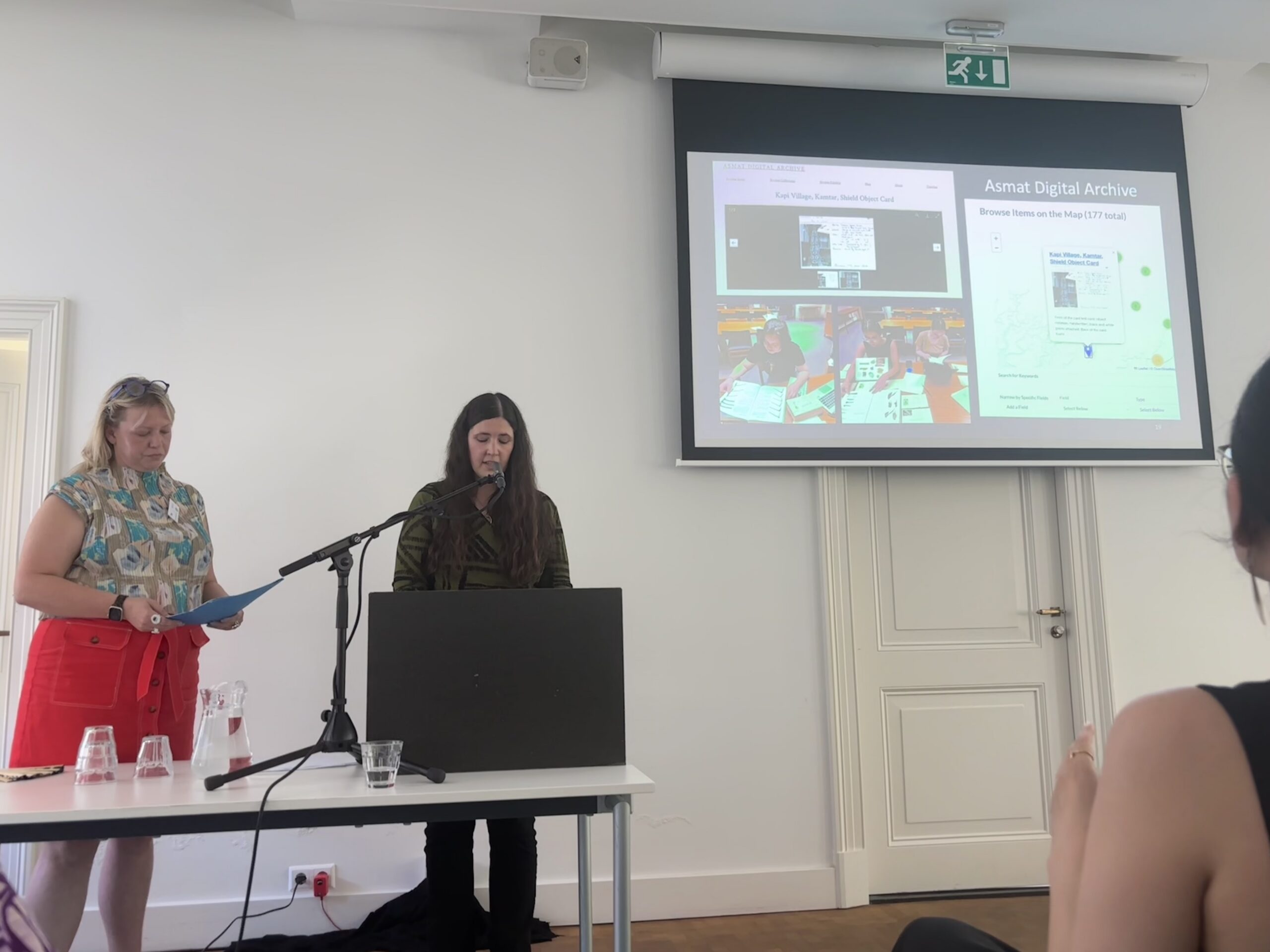
Director Wagener-Burau and Dr. Nygaard presenting on our Asmat Digital Archive project
Beyond our own presentation, the symposium featured a wide range of lectures, panel discussions, and performances exploring Pacific arts, culture, indigenous knowledge, and museum studies. As my first academic conference, this was an invaluable experience because I was able to see how experienced scholars communicate their research and engage in conversations with other professionals, while also building my own network. It was especially meaningful for me to meet and speak with Ursula Konrad during the conference about her experiences and connection to Asmat after spending the past year working with the materials she worked on and donated. Representing the University of St. Thomas in an international academic setting and traveling abroad for the first time was both rewarding and exciting, and I’m grateful for the opportunity this program has given me to be able to experience this.
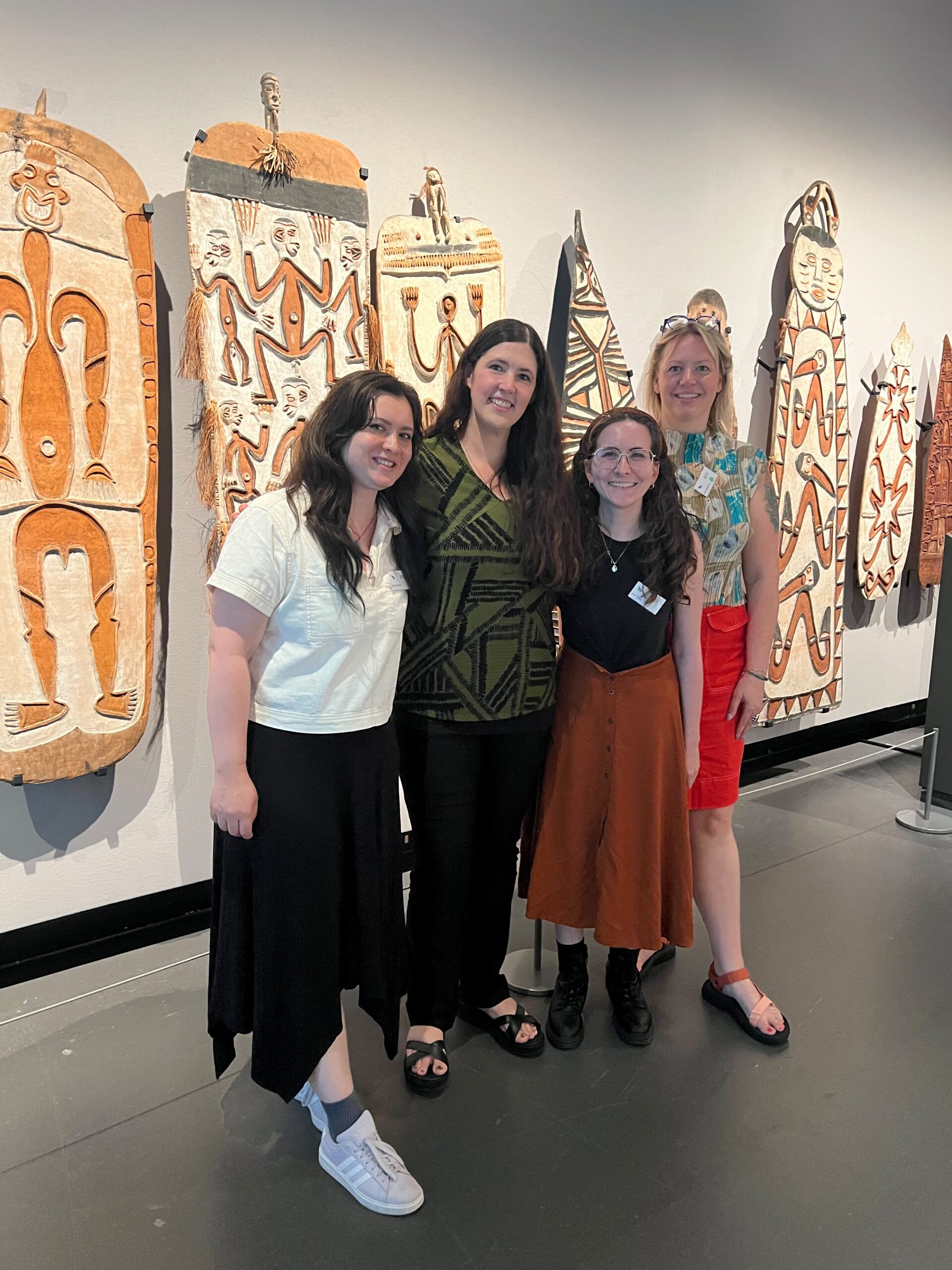
Rachel Chow, AMAA Director Gretchen Wagener-Burau, Erin, and Dr. Amy Nygaard in front of Asmat shields in the Time for Papua exhibition
For the second part of my trip, I spent about a week in London, where I conducted research for my qualifying paper examining the use of medieval imagery in First World War propaganda and memorials in the United States and Britain. Over the course of my stay, I visited a wide variety of museums, historical sites, churches, and memorials to better understand how medieval visual traditions were adapted and transformed in Britain to communicate ideas of sacrifice, heroism, memory, and national identity during and after the war.
One of the most rewarding parts of the trip was being able to study First World War posters from the Imperial War Museum’s collection in person. While many of these images are available digitally, seeing the original posters up close revealed details that are not easily transferred via a screen, giving me a better idea of the impact and effect they had on their original and intended viewers. My research also took me beyond museum galleries and into some of London historic churches and memorial spaces. One of the most memorable moments of the trip came at Westminster Abbey, where I was originally there to study the Tomb of the Unknown Warrior, but after becoming aware via a brochure of a Florence Nightingale Chapel on a second level available via appointment and asking a member of staff, they were kind enough to give me impromptu access to the chapel. Discovering and being able to access this beautiful lesser-known space and see the monumental medieval-inspired stained-glass window memorializing nurses and service workers during the World Wars up close was an amazing experience that will certainly become a central part of my paper and was also a reminder that valuable research and discoveries can happen through curiosity and simple conversation.

Stained glass window by Hugh Easton (1950) in the Florence Nightingale & Nurses Memorial Chapel in the upper Islip chantry chapel at Westminster Abbey, photo taken by Erin
Another highlight was visiting the National Maritime Museum in Greenwich near the Royal Observatory and seeing the WWI stained glass memorial designed by John Dudley Forsyth for the Baltic Memorial Exchange in London, which was moved and restored in 2005 after the glass memorial was damaged in 1992 by an IRA bombing. While it is regrettable that the glass memorial was damaged and not in its original intended location, its monumental size displayed at level with the viewer gave me invaluable close-up views of the piece and its depiction of the female personifications of the ancient virtues of Truth, Hope, Justice, Fortitude, and Victory and use of Red Cross symbolism and imagery, key aspects of my qualifying paper.
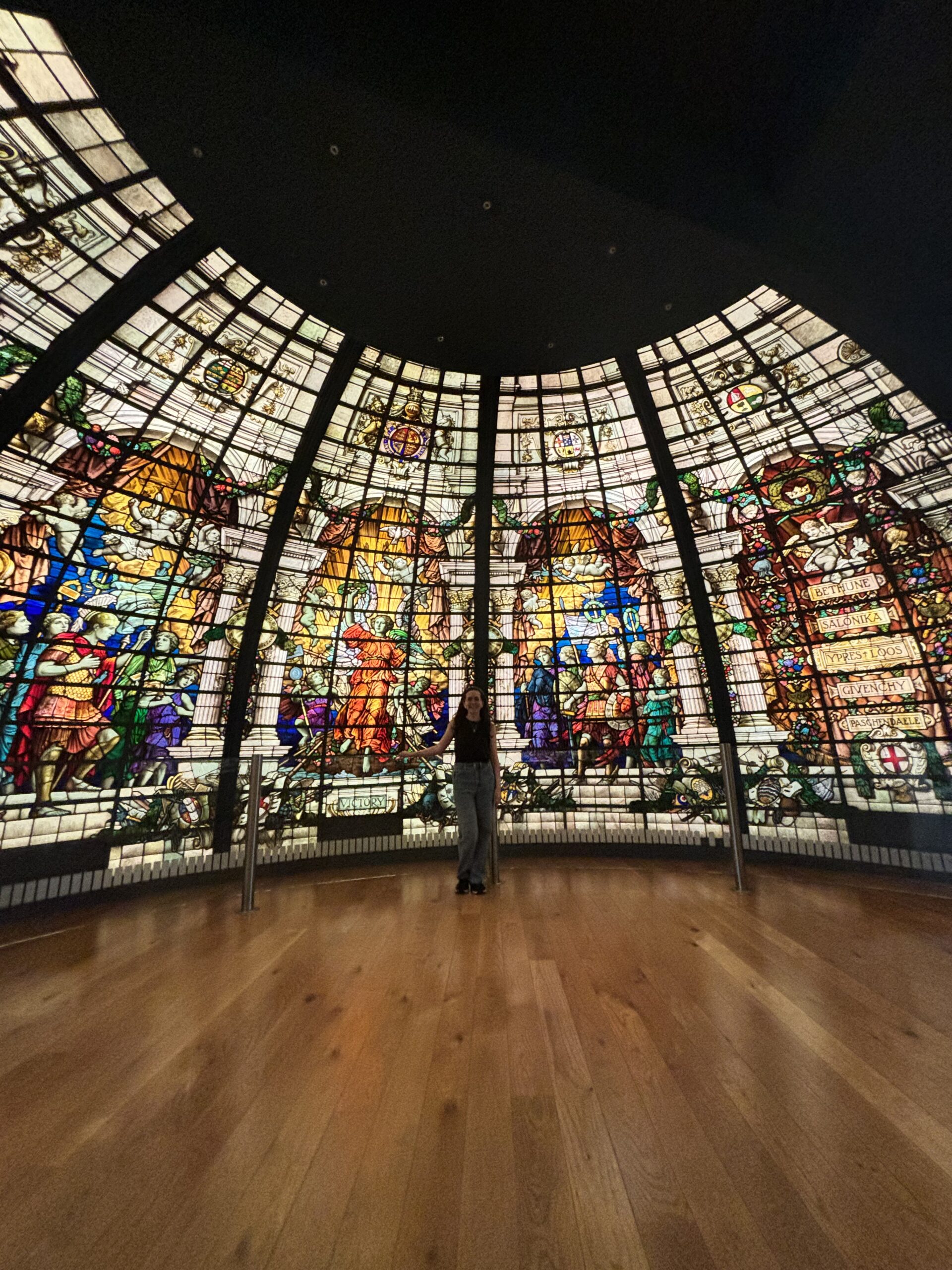
Erin in front of the Baltic Exchange Memorial glass, designed by English artist John Dudley Forsyth in 1922 for the commemoration of those of the Exchange who had died in the war, now in the National Maritime Museum in Greenwich since 2005
These symbols and topics appeared in many of the propaganda, monuments and works of art memorializing the First World War that I visited and viewed on my trip, showing how the war was sold and remembered by those in Britain, demonstrating how artists and patrons used medieval and religious imagery to express national ideals, heroism, grief, and remembrance during a time when warfare and its ideals were rapidly changing. Visiting and viewing these works of art gave me a much deeper appreciation and meaning in ways that photographs can’t fully convey.
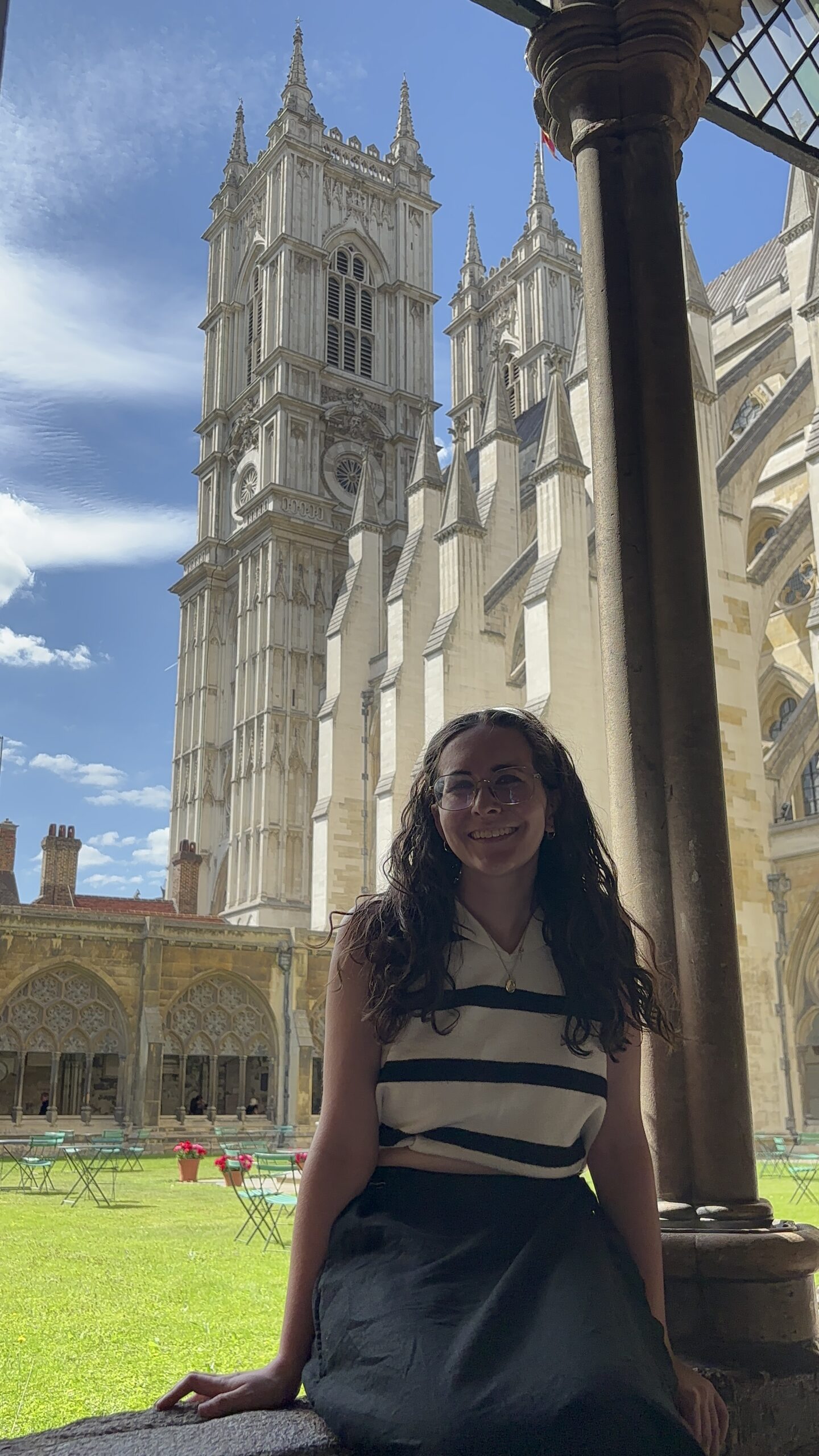
Erin at Westminster Abbey
The opportunity to conduct research firsthand in London as well as being able to visit sites and museums such as the V&A, the British Museum, the Imperial War Museum, etc. that I have always wanted to has been such a joy and wonderful learning experience for me. This trip and the research I conducted not only strengthened my research for my qualifying paper but has also given me invaluable experiences and perspective that will shape my future research.