Research – In Context
Browsing Category

Research

Conference Presentations, Graduate Qualifying Paper, Graduate Student, Research, Research Travel

Erin Mably attends the Pacific Arts Association Conference and examines First World War propaganda and memorials

This past June and July, I was extremely fortunate to receive two travel grants that not only allowed me to attend my first academic conference with the Pacific Arts Association at the Wereldmuseum in Leiden, in the Netherlands, but also to visit London for research for my qualifying paper on the use of medieval imagery in propaganda and memorials of WWI in the United States and Britain.

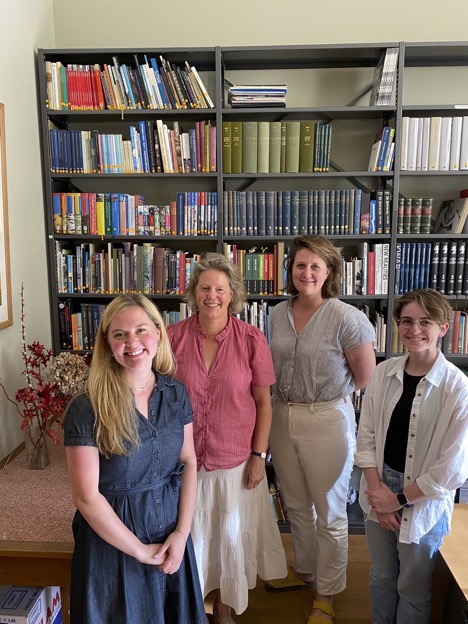
The first part of my trip I spent in Leiden, where I attended the 14th International Symposium of the Pacific Arts Association entitled ‘Oceanic Blazing Forms: Memory, Place-making and Imagination’, alongside my fellow graduate student Rachel Chow and professors Dr. Amy Nygaard and Gretchen Wagener-Burau. Not only was this my first academic conference, but it was also my first time traveling internationally, making this trip especially memorable.

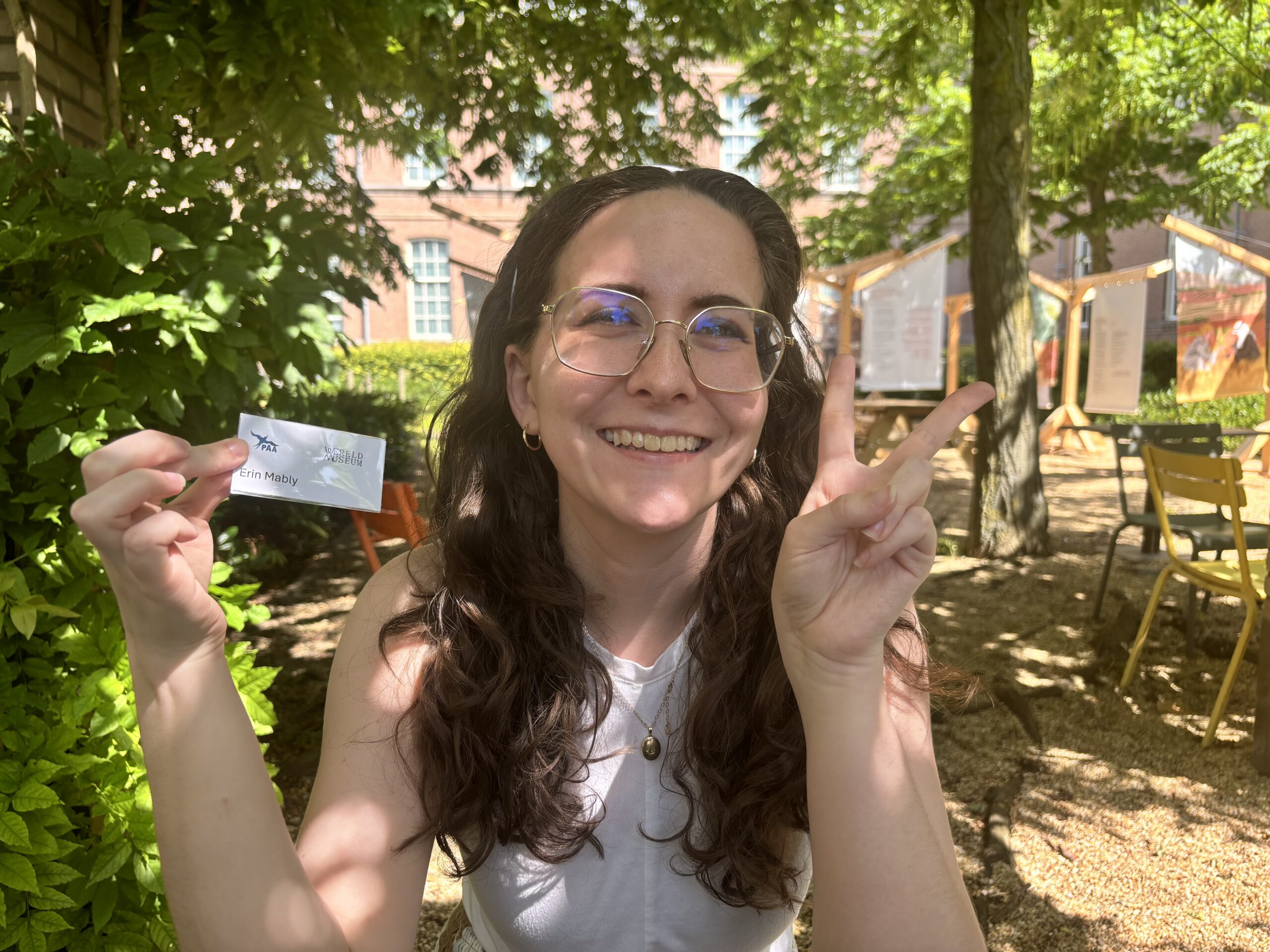
Erin with her conference name tag

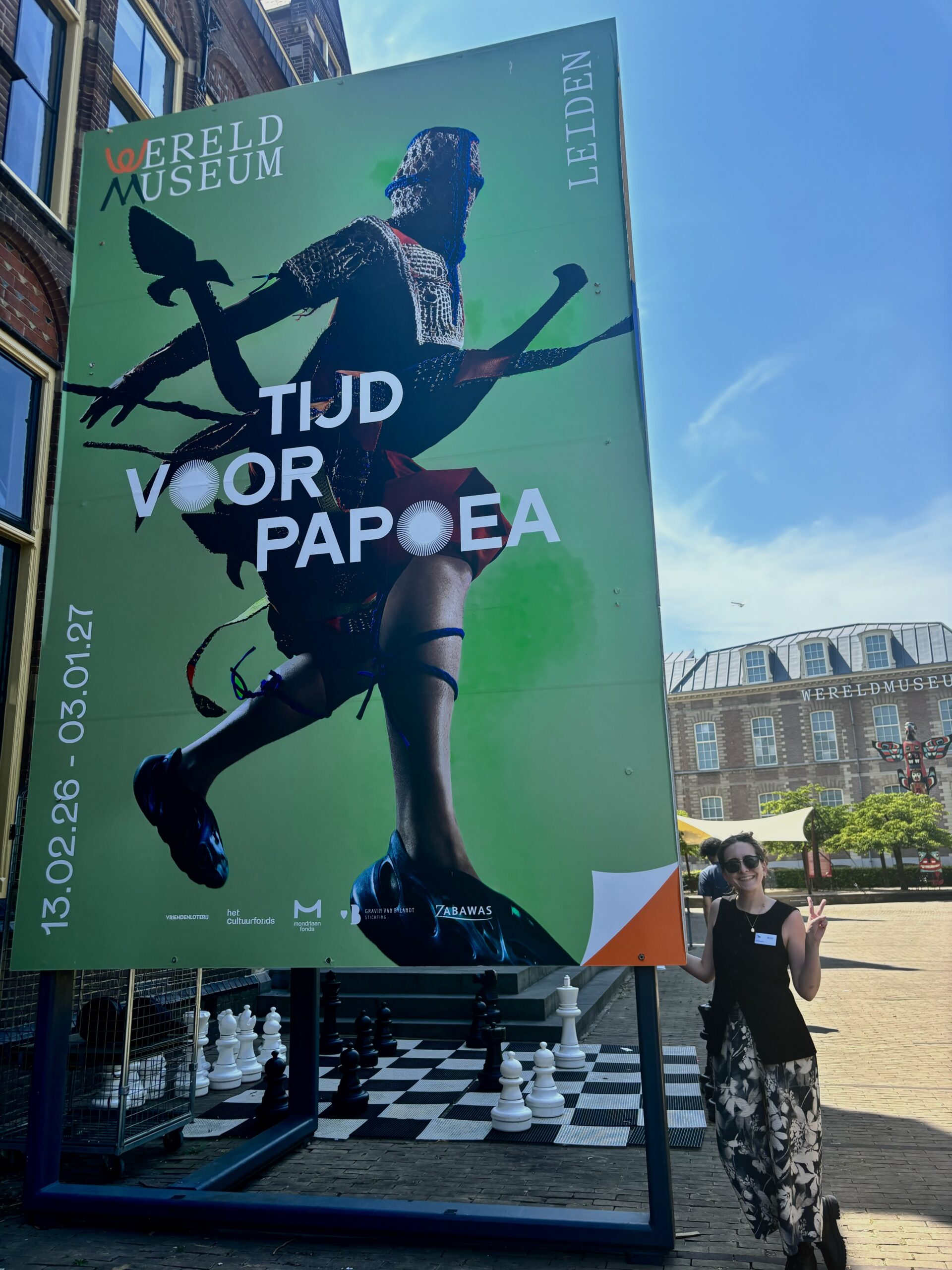
Erin in front of the Time for Papua exhibition sign at the Wereldmuseum in Leiden

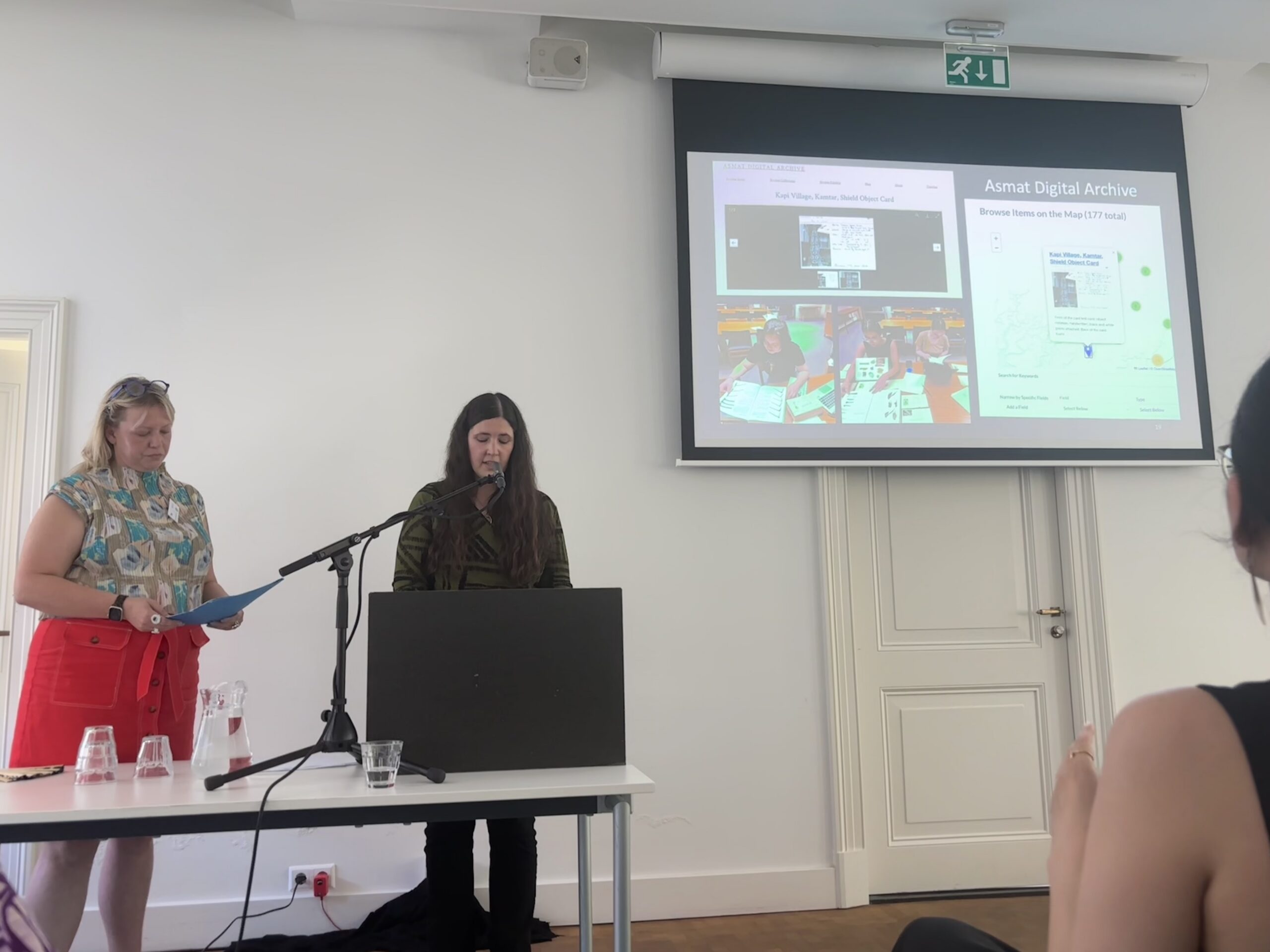
While Gretchen and Amy were able to present on the work our Elevating the Arts team completed this past academic year for the American Museum of Asmat Art, I had the opportunity to support their presentation as well as attend other presentations and discussions from other scholars, museum professionals, and artists from around the world. The presentation on our work highlighted the digitization of archival records from the 1970s that were donated by Ursula Konrad from our sister museum in Asmat, the Asmat Museum of Culture and Progress in Agats, which was made possible by an Elevating the Arts grant to help preserve, increase access, and digitally repatriate important documentation related the museum’s history and Asmat culture.
Director Wagener-Burau and Dr. Nygaard presenting on our Asmat Digital Archive project

Beyond our own presentation, the symposium featured a wide range of lectures, panel discussions, and performances exploring Pacific arts, culture, indigenous knowledge, and museum studies. As my first academic conference, this was an invaluable experience because I was able to see how experienced scholars communicate their research and engage in conversations with other professionals, while also building my own network. It was especially meaningful for me to meet and speak with Ursula Konrad during the conference about her experiences and connection to Asmat after spending the past year working with the materials she worked on and donated. Representing the University of St. Thomas in an international academic setting and traveling abroad for the first time was both rewarding and exciting, and I’m grateful for the opportunity this program has given me to be able to experience this.

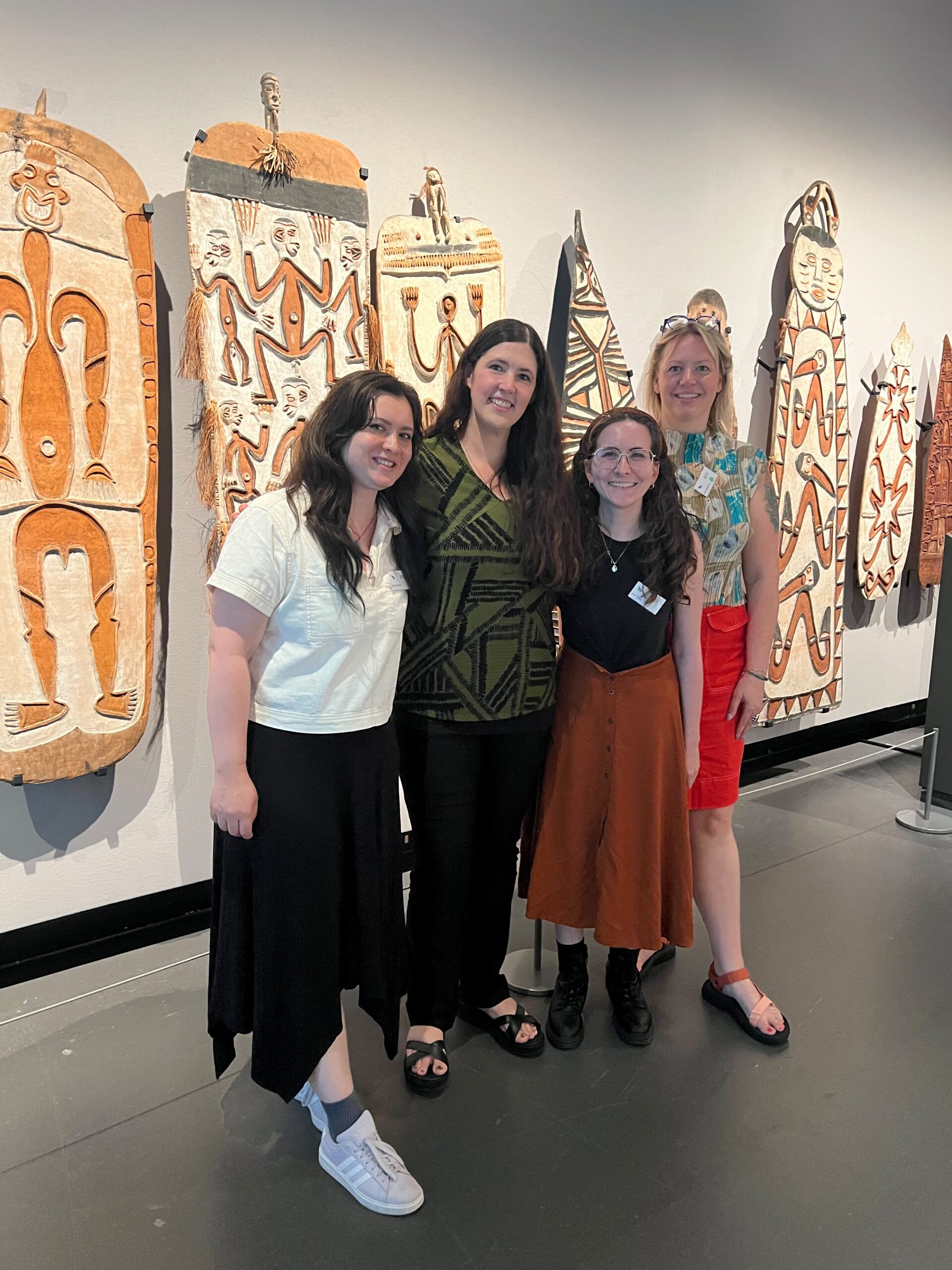
Rachel Chow, AMAA Director Gretchen Wagener-Burau, Erin, and Dr. Amy Nygaard in front of Asmat shields in the Time for Papua exhibition

For the second part of my trip, I spent about a week in London, where I conducted research for my qualifying paper examining the use of medieval imagery in First World War propaganda and memorials in the United States and Britain. Over the course of my stay, I visited a wide variety of museums, historical sites, churches, and memorials to better understand how medieval visual traditions were adapted and transformed in Britain to communicate ideas of sacrifice, heroism, memory, and national identity during and after the war.

One of the most rewarding parts of the trip was being able to study First World War posters from the Imperial War Museum’s collection in person. While many of these images are available digitally, seeing the original posters up close revealed details that are not easily transferred via a screen, giving me a better idea of the impact and effect they had on their original and intended viewers. My research also took me beyond museum galleries and into some of London historic churches and memorial spaces. One of the most memorable moments of the trip came at Westminster Abbey, where I was originally there to study the Tomb of the Unknown Warrior, but after becoming aware via a brochure of a Florence Nightingale Chapel on a second level available via appointment and asking a member of staff, they were kind enough to give me impromptu access to the chapel. Discovering and being able to access this beautiful lesser-known space and see the monumental medieval-inspired stained-glass window memorializing nurses and service workers during the World Wars up close was an amazing experience that will certainly become a central part of my paper and was also a reminder that valuable research and discoveries can happen through curiosity and simple conversation.

Stained glass window by Hugh Easton (1950) in the Florence Nightingale & Nurses Memorial Chapel in the upper Islip chantry chapel at Westminster Abbey, photo taken by Erin

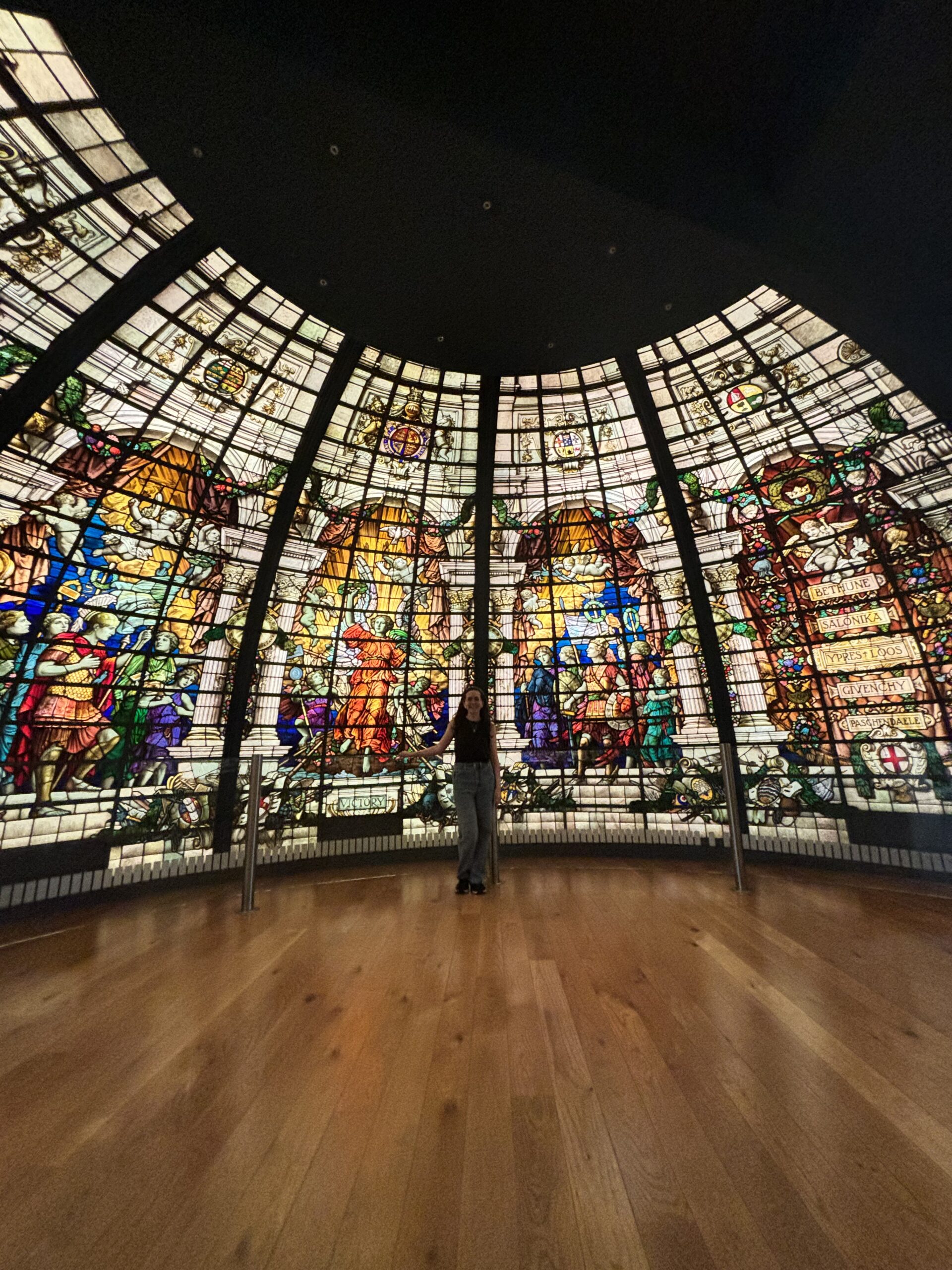
Another highlight was visiting the National Maritime Museum in Greenwich near the Royal Observatory and seeing the WWI stained glass memorial designed by John Dudley Forsyth for the Baltic Memorial Exchange in London, which was moved and restored in 2005 after the glass memorial was damaged in 1992 by an IRA bombing.  While it is regrettable that the glass memorial was damaged and not in its original intended location, its monumental size displayed at level with the viewer gave me invaluable close-up views of the piece and its depiction of the female personifications of the ancient virtues of Truth, Hope, Justice, Fortitude, and Victory and use of Red Cross symbolism and imagery, key aspects of my qualifying paper.

Erin in front of the Baltic Exchange Memorial glass, designed by English artist John Dudley Forsyth in 1922 for the commemoration of those of the Exchange who had died in the war, now in the National Maritime Museum in Greenwich since 2005

 These symbols and topics appeared in many of the propaganda, monuments and works of art memorializing the First World War that I visited and viewed on my trip, showing how the war was sold and remembered by those in Britain, demonstrating how artists and patrons used medieval and religious imagery to express national ideals, heroism, grief, and remembrance during a time when warfare and its ideals were rapidly changing. Visiting and viewing these works of art gave me a much deeper appreciation and meaning in ways that photographs can’t fully convey.

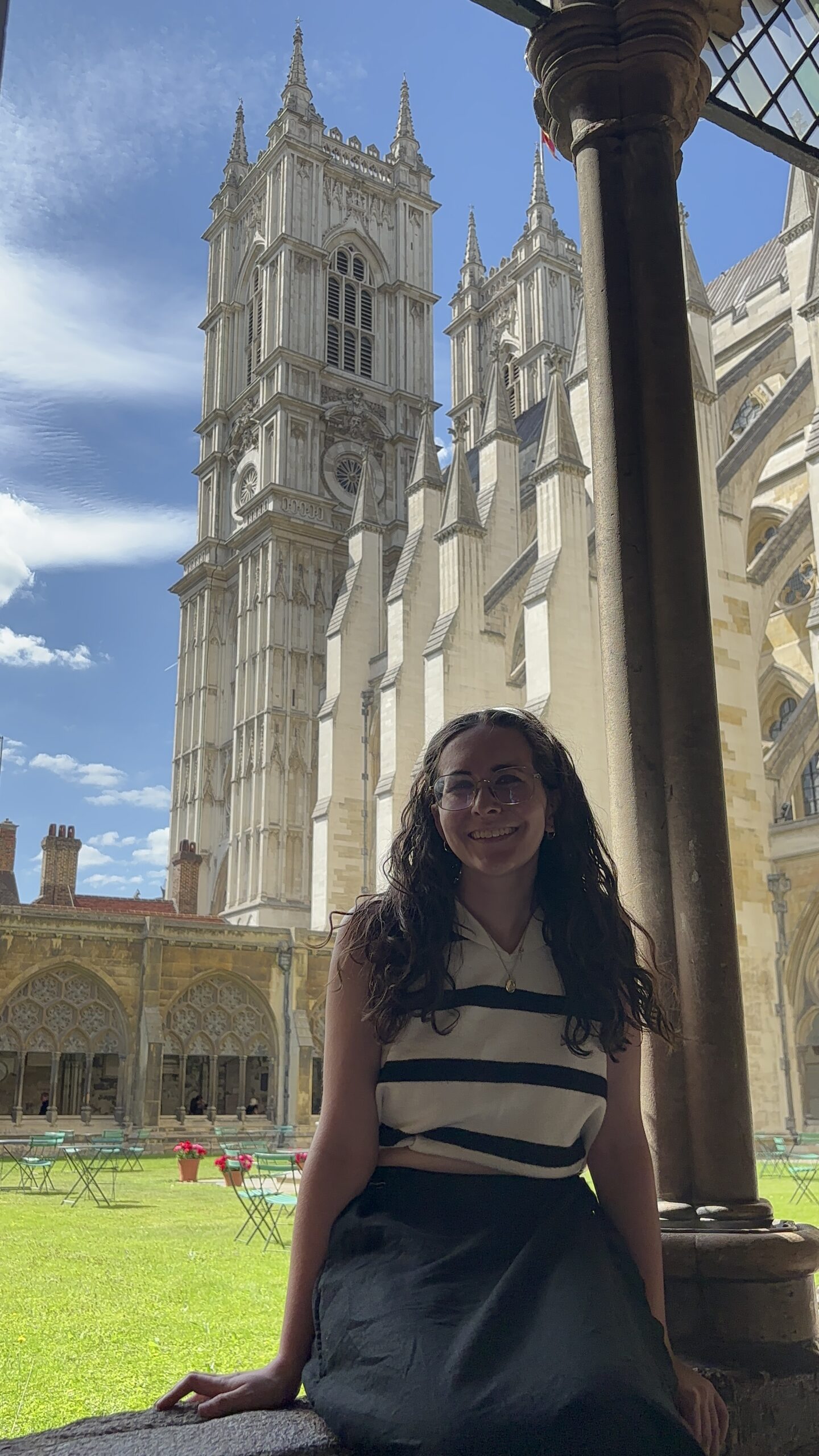
Erin at Westminster Abbey

The opportunity to conduct research firsthand in London as well as being able to visit sites and museums such as the V&A, the British Museum, the Imperial War Museum, etc. that I have always wanted to has been such a joy and wonderful learning experience for me. This trip and the research I conducted not only strengthened my research for my qualifying paper but has also given me invaluable experiences and perspective that will shape my future research.

Graduate Qualifying Paper, Graduate Student, Research, Research Travel, Uncategorized

Juli Hunt Rudzitis at Notre-Dame de Paris and Notre-Dame de Reims

Juli’s thesis centers on Notre-Dame de Paris as a case study in restoration and cultural resilience. Her research examines how the cathedral has been repeatedly damaged and rebuilt, and how each phase of restoration reflects the values of its time, from the nineteenth-century interventions of Eugène Viollet-le-Duc to the reconstruction following the 2019 fire. Traveling to France from November 28 to December 3, 2025 allowed her to encounter Notre-Dame not just as an object of study, but as a physical and living monument where questions of age, authenticity, and renewal are experienced in real time.

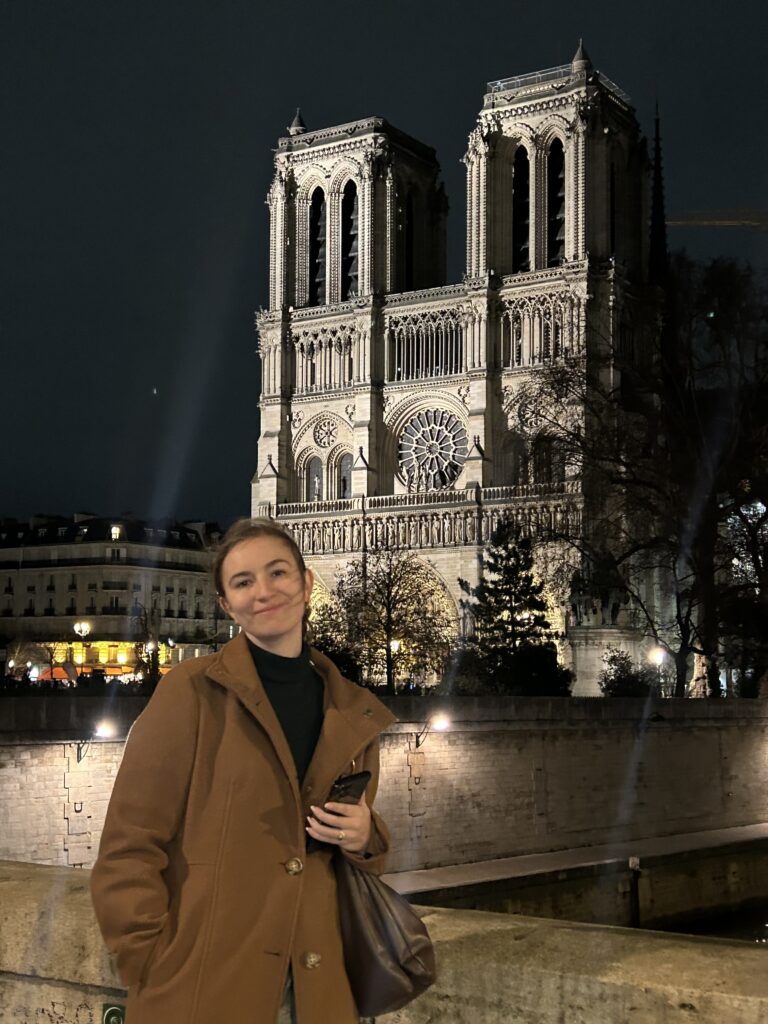
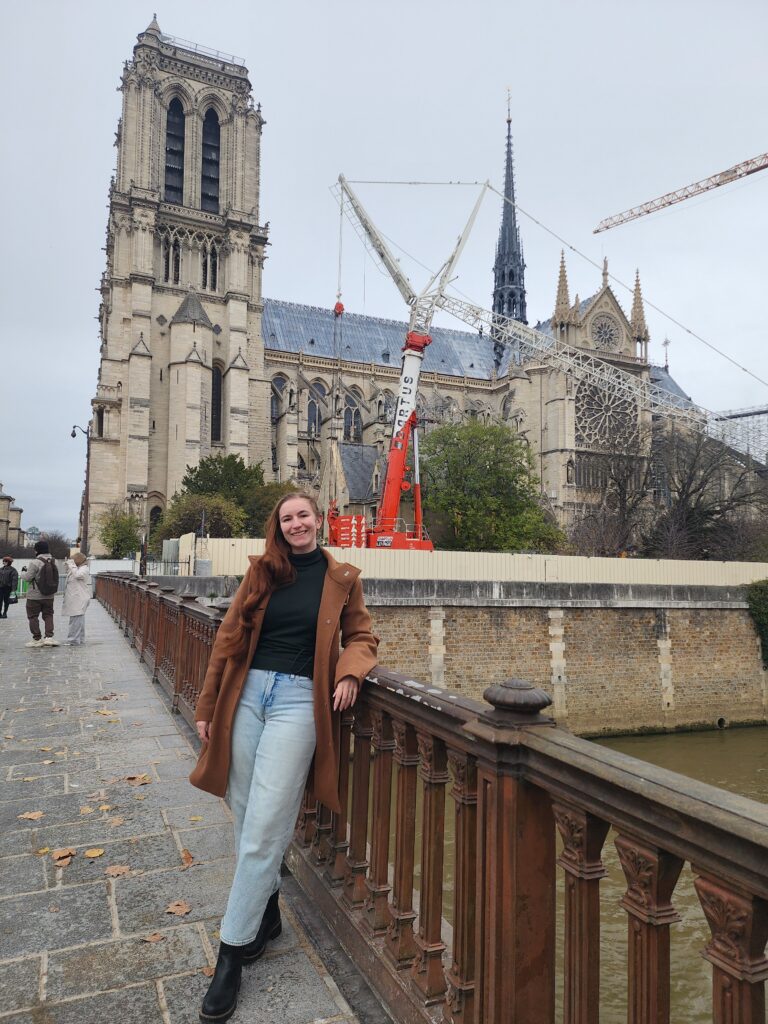
Juli in front of the West Façade of Notre Dame in Paris

At the center of the journey was Notre-Dame de Paris, which Juli visited multiple times: once to experience the interior, once to study the treasury, and once to climb the towers.

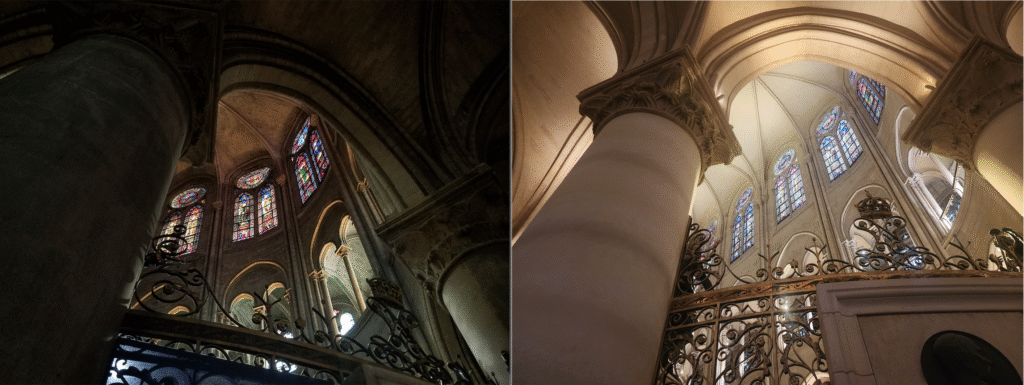
Inside the nave, the most immediate impression was the visible newness of the space. The stone has been cleaned, the surfaces are bright, and the effects of restoration following the 2019 fire are unmistakable. Yet despite this renewed clarity, the cathedral still feels old. The scale of the space, the acoustics of stone, and the vertical pull of the architecture communicate age in ways that cleaning cannot erase. Juli attended a Vespers service during this visit, and the sound of chant, moments of silence, and candlelight reinforced the cathedral’s identity as a living religious space rather than a purely historical site. The experience complicated any simple distinction between new and old and showed how age can persist within a restored interior.
Left: Image from Juli’s 2017 visit looking up from the apse of Notre Dame in Paris. Image shows the darkness of the stone prior to the restoration following the 2019 fire
Right: Image from Juli’s 2025 visit looking up from the apse of Notre Dame in Paris. Image shows the stone restored after the 2019 fire.

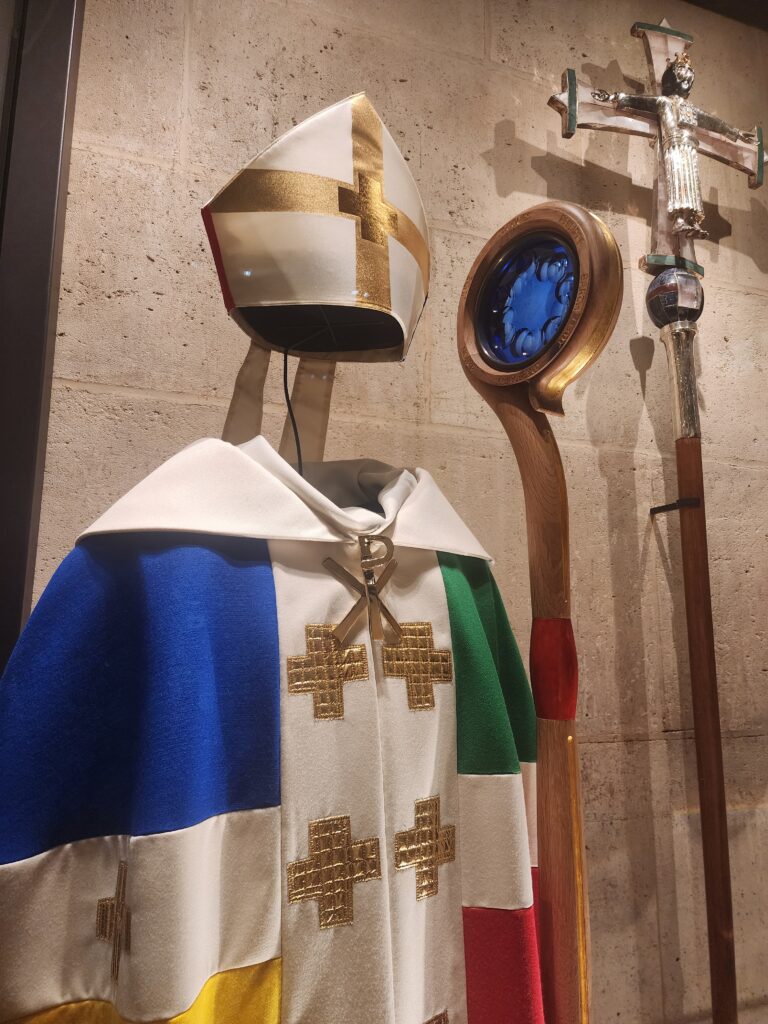
The treasury offered a quieter and more intentional encounter. Alongside sacred objects and reliquaries, Juli saw works created by Viollet-le-Duc, connecting directly to the nineteenth-century restoration that shaped how Notre-Dame is recognized today. She also viewed the clothing worn for the cathedral’s reopening ceremony, placing contemporary history next to earlier moments of renewal. Together, these objects demonstrated that restoration extends beyond architecture into ritual, symbolism, and public memory.

Liturgical objects used in the 2024 reopening of Notre Dame in Paris. Held in the treasury of the cathedral

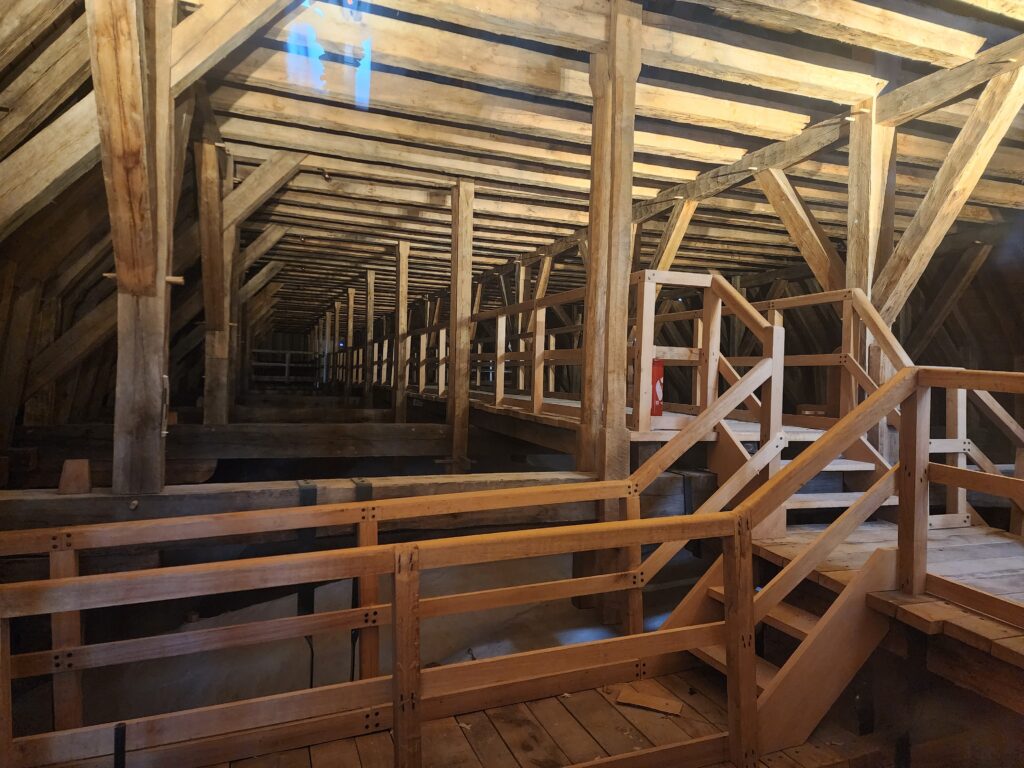
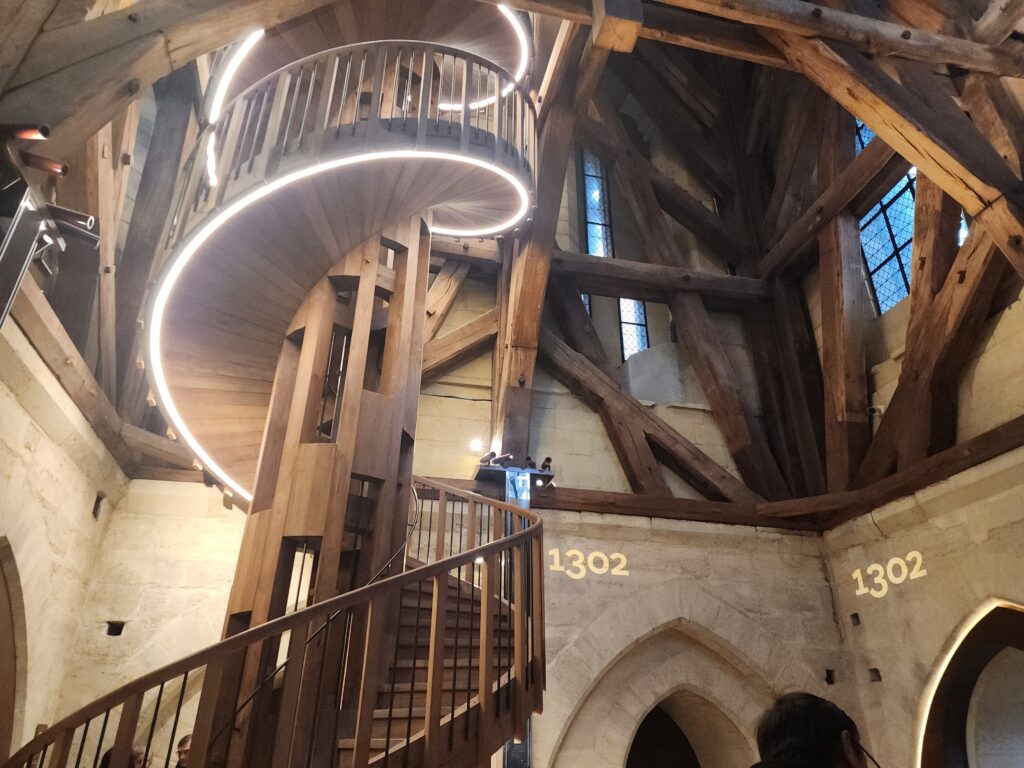
Climbing the towers provided a view into the most recent phase of reconstruction. From above, Juli could see the new timber roof frame, the rebuilt spire, and the updated exhibit and visitor experience that now shapes how people understand the cathedral. The towers revealed how modern interpretation and infrastructure are being layered onto a medieval structure, balancing historical form with present-day engagement.

The newly constructed timer frame of the roof of Notre Dame in Paris

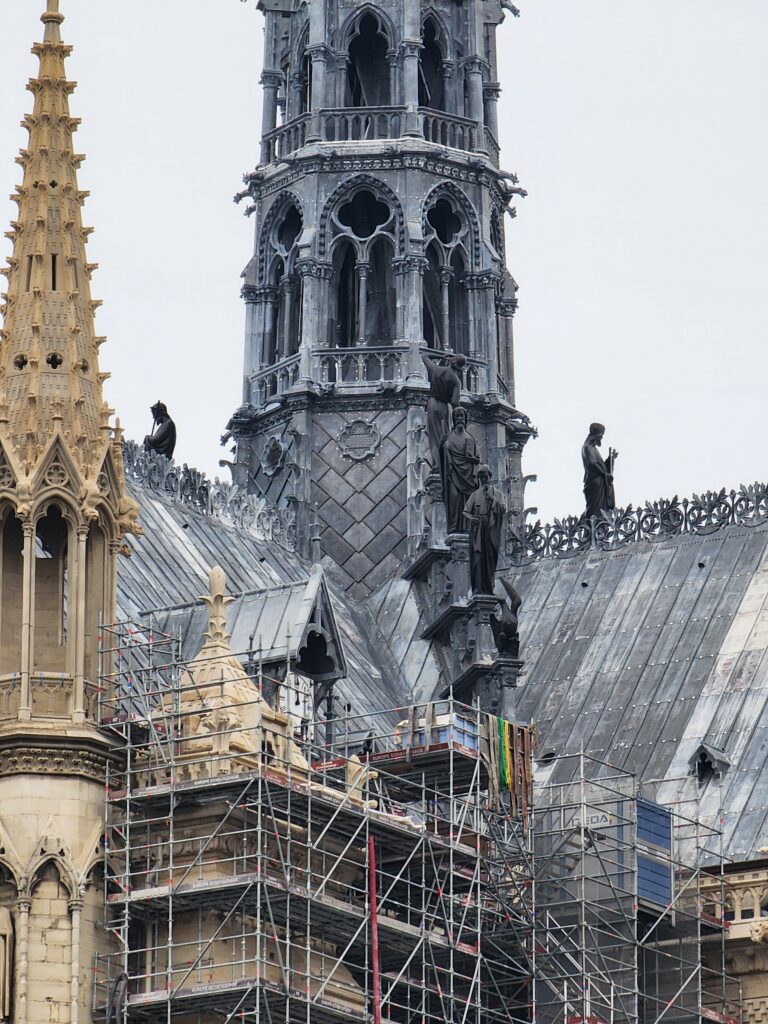
The restored spire and stone of Notre Dame de Paris

The new staircase placed in the towers to guide visitors

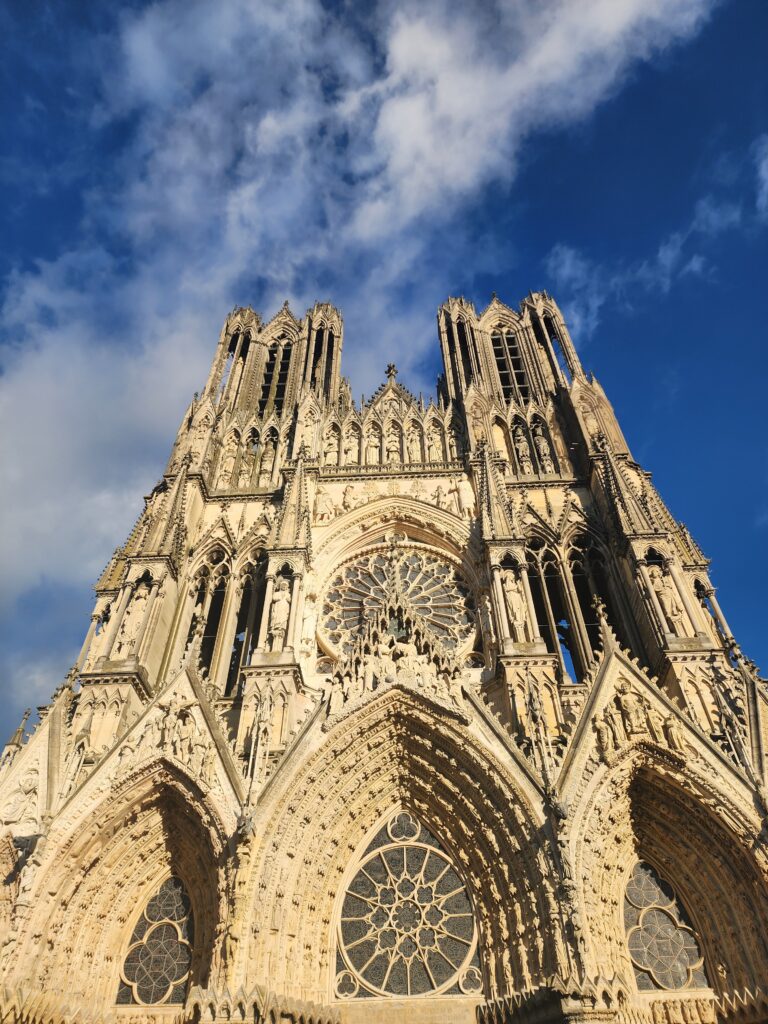
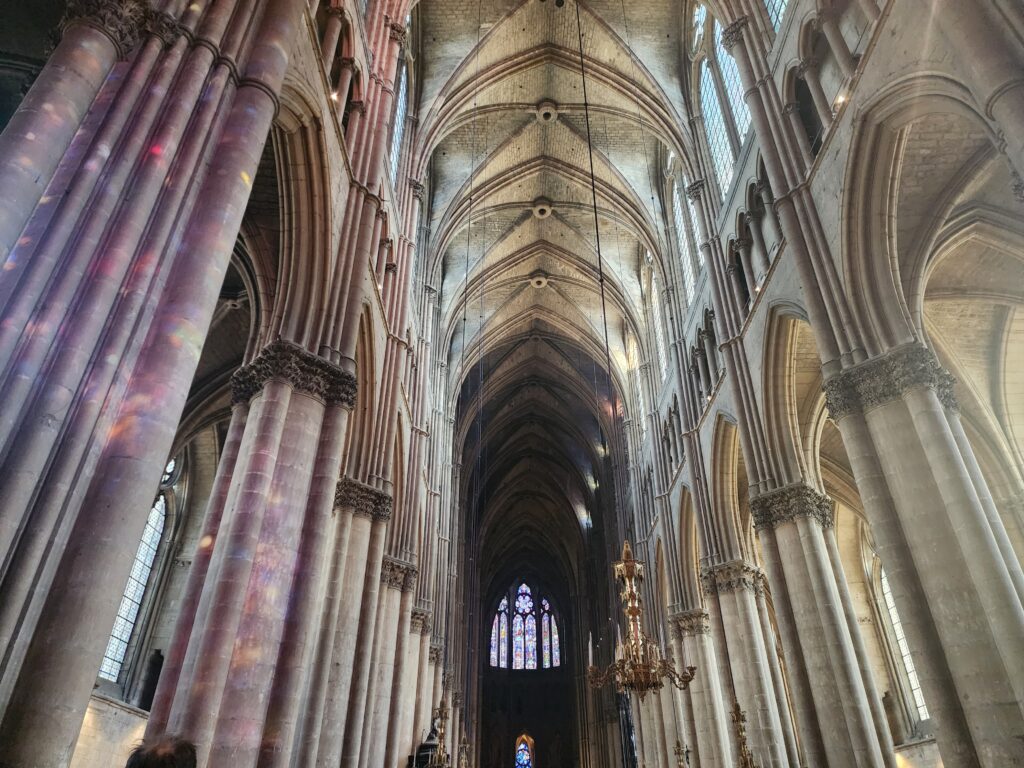
A visit to Notre-Dame de Reims added a critical comparative dimension. Reims, heavily damaged during World War I, reflects a more pragmatic approach to restoration. Hidden modern materials support the structure, yet the cathedral still feels deeply historic from the inside. For Juli, Reims reinforced the idea that material authenticity and sensory authenticity do not always align. Modern intervention can coexist with a powerful sense of age.

West façade of Notre Dame de Reims

The nave of Notre Dame in Reims

The visit to the Musée de Cluny was directly tied to Juli’s work on Notre-Dame de Paris. She went specifically to see the surviving heads of the kings from Notre-Dame’s west façade, beheaded during the French Revolution in 1793 and rediscovered nearly two centuries later. Encountering these sculptures outside the cathedral was striking. Once violently removed and misidentified as French monarchs, the heads now stand as evidence of revolutionary iconoclasm and shifting political values.

The beheaded kings of Judah in the Musée Cluny

Taken together, these visits reshaped Juli’s understanding of Gothic architecture beyond the page. Repeated encounters with Notre-Dame de Paris allowed its complexity to emerge gradually, while Reims and the Musée de Cluny offered essential contrasts in restoration philosophy, material survival, and historical rupture. Gothic monuments, the trip revealed, cannot be fully understood through images or texts alone. They demand movement, repetition, and physical presence.

Juli in front of the South façade of Notre Dame de Paris. Construction to restore the cathedral is still underway

Graduate Qualifying Paper, Graduate Student, Research, Research Travel

Erica Berglund in Kyoto
In January 2026, I was extremely fortunate to receive a travel grant from the Graduate Art History Department toward a trip to Japan so that I could research the topic of my upcoming qualifying paper: the triangle-patterned haori uniform of the Shinsengumi.

Costume Experience Advertisement at TOEI Kyoto Studio Park

The Shinsengumi were a pro-shogunate police force in 1860s Kyoto who were ultimately on the losing side of the brief civil war that led up to the Meiji Restoration, but who have had an immense impact on Japanese pop culture throughout the 20th and 21st centuries. One of the images continually associated with the Shinsengumi is their uniform: a haori coat, often blue, with a yamagata (mountain-shaped) pattern on the sleeves. This uniform appears in a multitude of media depicting them, including films, manga, anime, TV dramas, video games, merchandise, and more.
Miniature Shinsengumi coat and sword display souvenir

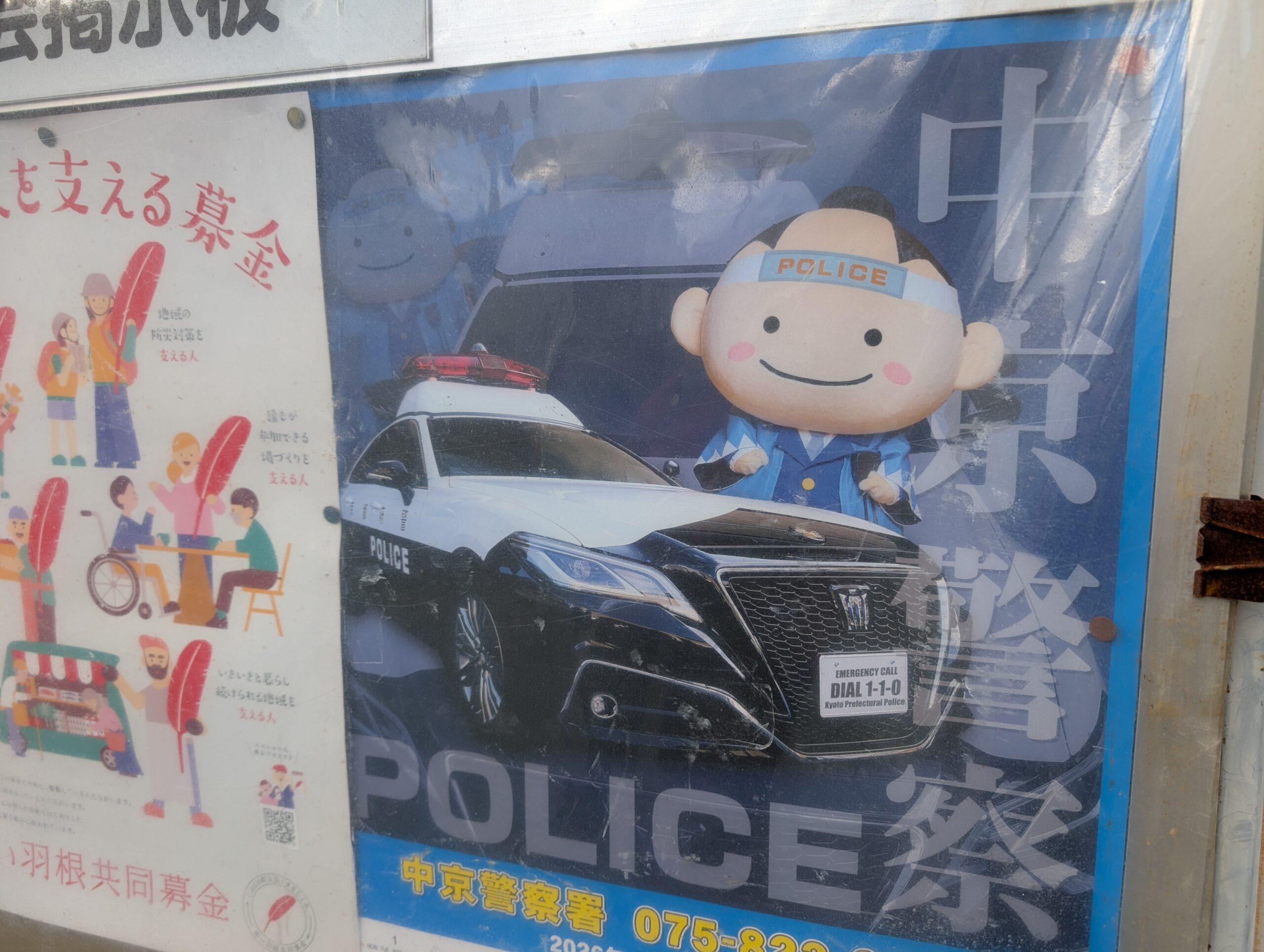
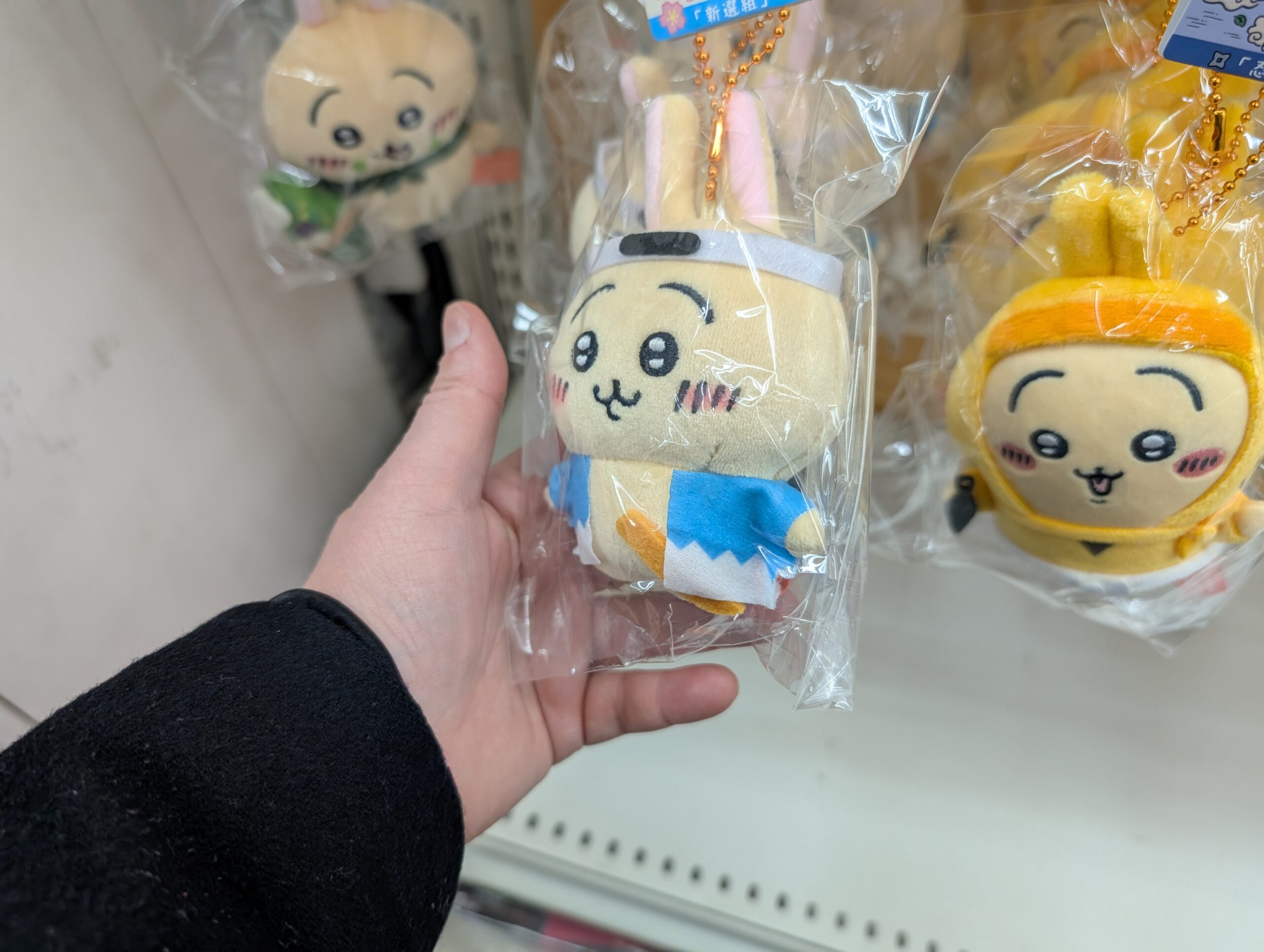
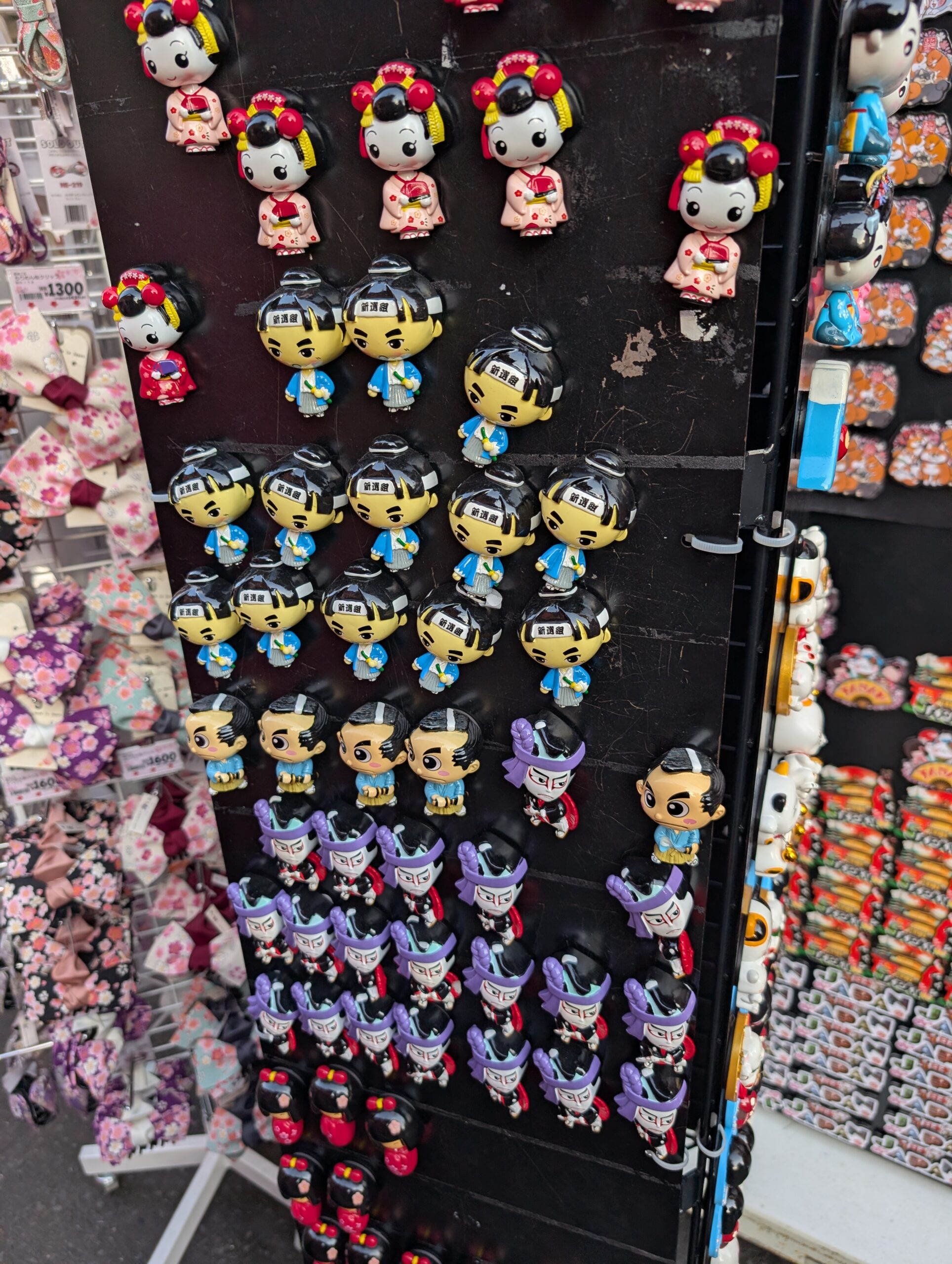
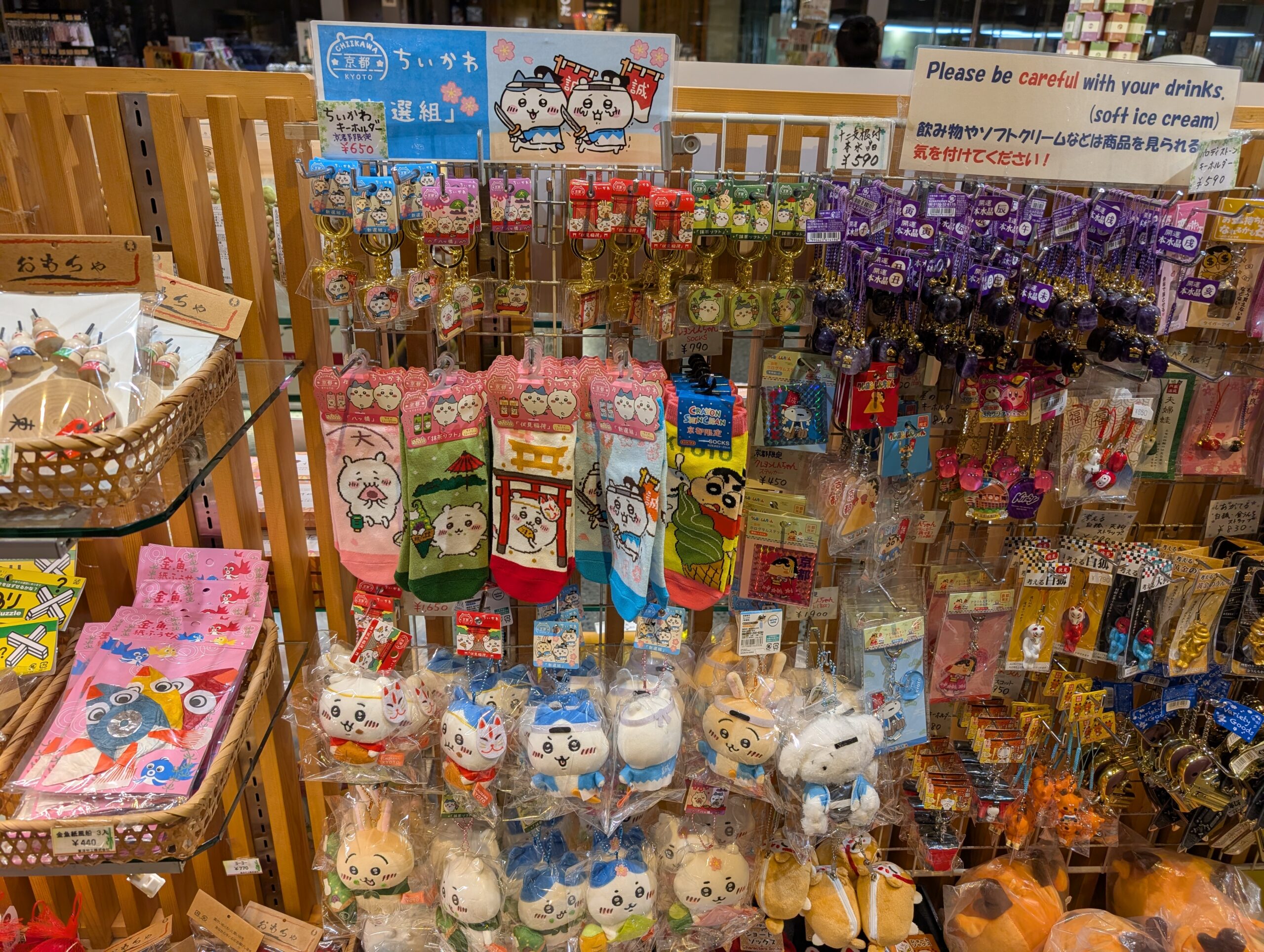
So, during my trip, I kept a keen eye out for where this uniform appeared and how it was used. The place it appeared the most was in Kyoto, where the Shinsengumi are an important aspect of heritage tourism. Most souvenir shops had figures wearing the uniform – stuffed animals, magnets, keychains, etc. – and one municipal poster near Mibudera (where the Shinsengumi were headquartered for a time) depicted a cartoon police officer wearing the yamagata haori. But this was not limited to Kyoto: plenty of souvenir shops in Tokyo also featured Shinsengumi merchandise, such as hand towels and miniature swords.

Poster near Mibudera – Police in Shinsengumi Haori

Little bunny in a Shinsengumi haori

In addition to searching out places where the uniform was used for tourism purposes, I was also able to visit some specialized museums and speak to the curators about the Shinsengumi’s yamagata haori, including the Ryozen Museum of History in Kyoto and the Shinsengumi Hometown History Museum in Hino. I also visited the Tsubouchi Memorial Theatre Museum at Waseda University and the library of the National Film Archive of Japan; in both places, the librarians were very helpful in tracking down various images that I could not otherwise have accessed.

Wobbly Shinsengumi Magnet Figures

Overall, the trip was fruitful and educational, and I’m grateful that I had the opportunity. As my first research trip, I learned a lot – not only about the Shinsengumi haori, but also about how to track down information in places outside the comfort of the internet and my own library!

Shinsengumi Cats – Stuffed Animals and More

Graduate Qualifying Paper, Graduate Student, Research, Research Travel, Uncategorized

Daniel Amstutz in Venice

For MA student Daniel Amstutz, art history is often best explored through relational, experiental, and first-person approaches. His current research seeks to add to the scholarship of late-nineteenth century American artists working in Venice, through a broader contextualizing of the influences that affected their work. Supported by a departmental research travel grant, he visited Venice and surrounding islands in November 2025 to gain first-hand experience of the city’s character and study the revival of glass art on the nearby island of Murano.

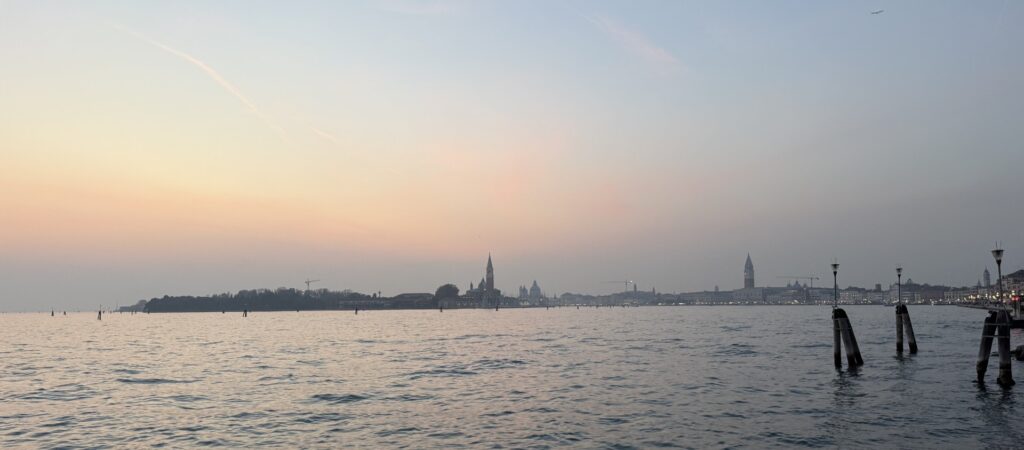
View across the Venetian Lagoon from Castello at dusk.

Artists like James McNeill Whistler and John Singer Sargent spent months at a time in Venice—depicting the city as they experienced it. An extended stay in the city allowed Daniel a chance to experience a depth of the city that would be impossible in a few days. In his words, “Encountering similar highs and lows to those of artists, writers, and thinkers of the time was powerfully compelling. I walked along the same paths that anthropologist Lewis H. Morgan claimed were spared from the cacophony prevalent in large cities. I also confronted the same crowds, mosquitos, and poor air quality that Henry James found so irksome.”

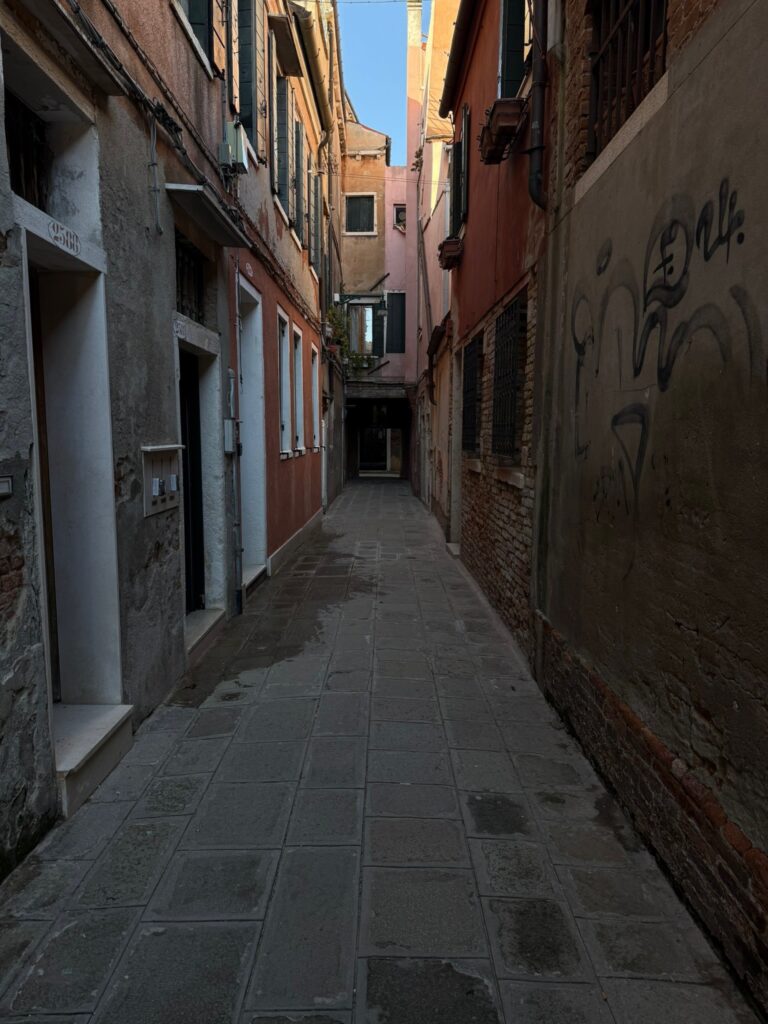
View of Calle de l’Anzolo, Venice.

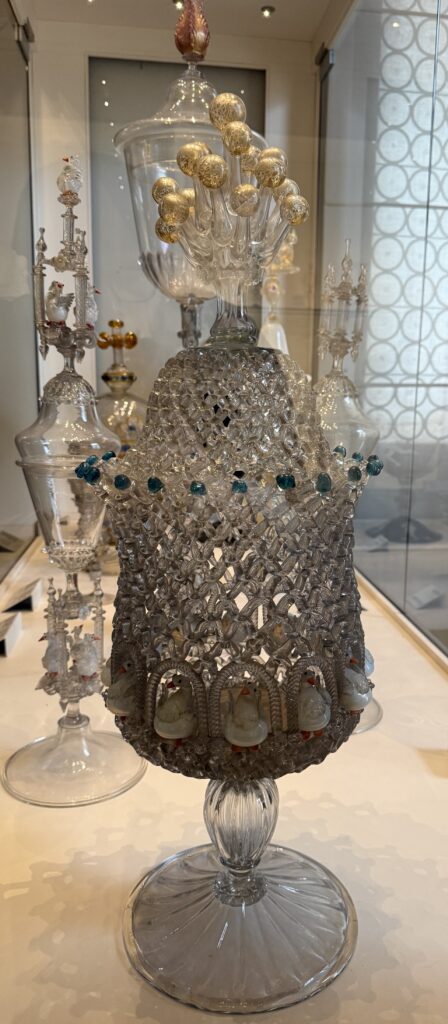
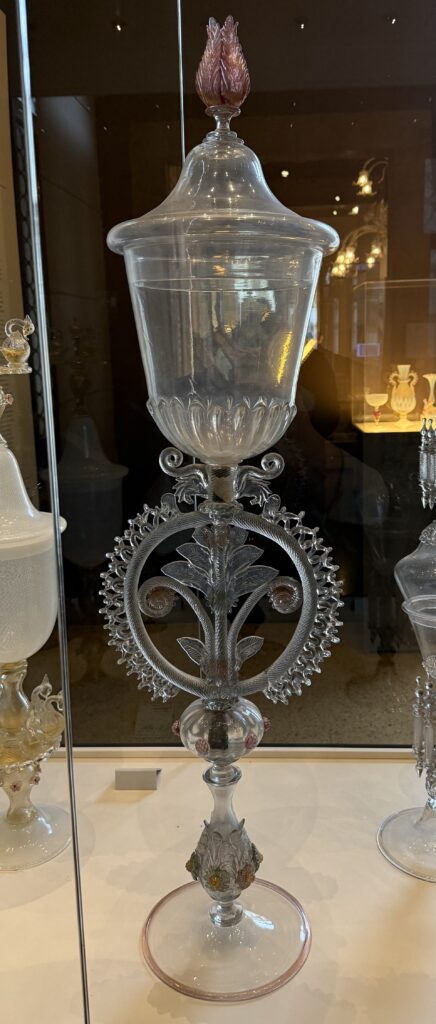
While visiting the Glass Museum on Murano, he was able to spend time combing through their library and chat with the curator, Mauro Stocco, about the history and future of Muranese glass art. “Venetian glass really is something that needs seen in person,” noted Daniel. The specific composition of the glass and the techniques developed in the lagoon allowed the glassworkers to create intricate, layered patterns and sculptural detail that cannot be truly rendered in a photograph or writing.

Crystal cross-linked goblet with geese by Fratelli Toso, 1864–1867.

Large cup with glass cover by Salviati & C.
(1872–1877) or Fratelli Toso (late-19th century)

The direct, immediate experience of and engagement with the city of Venice will be invaluable for Daniel’s qualifying paper as well as his ongoing interest in the intersections of art, art history, and philosophy.

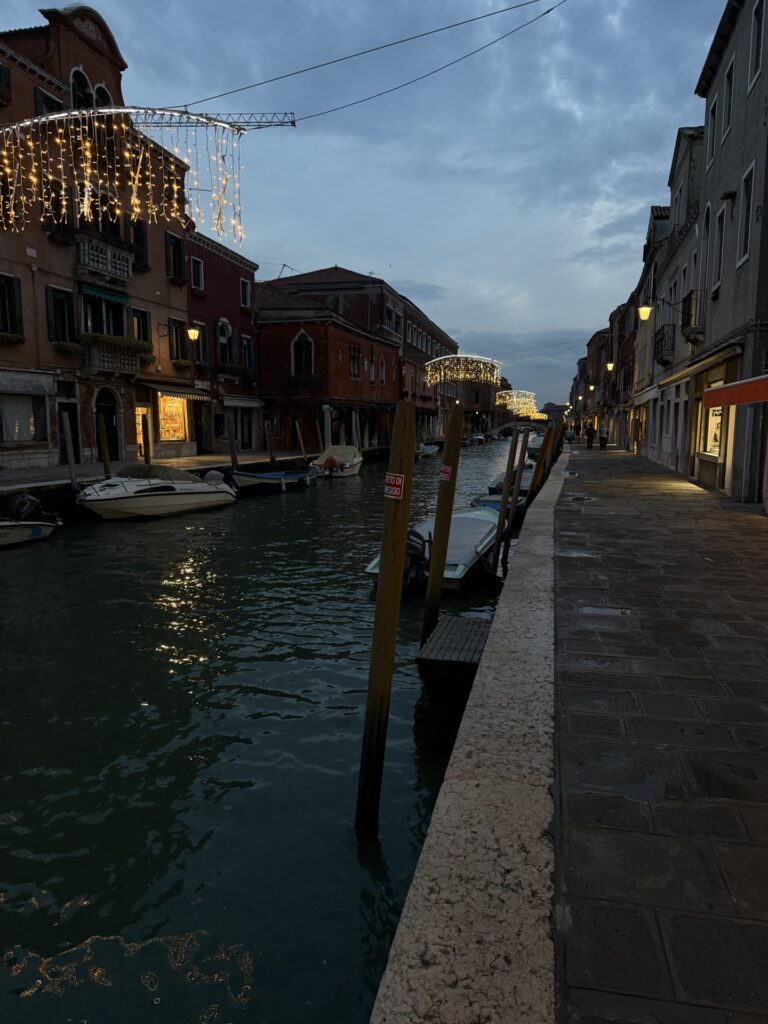
View along Riva Longa, Murano.

Graduate Qualifying Paper, Graduate Student, Research, Research Travel

Michaela Piene in Florence and Rome

In September of 2024, graduate student Michaela Piene of the Art History and Museum studies program at the University of St. Thomas received a departmental travel grant to complete her research in Italy in support of her qualifying paper. Michaela’s research focuses on quattrocento devotional art, specifically the usage of visual languages and sensory qualities within the work of Fra Angelico. 

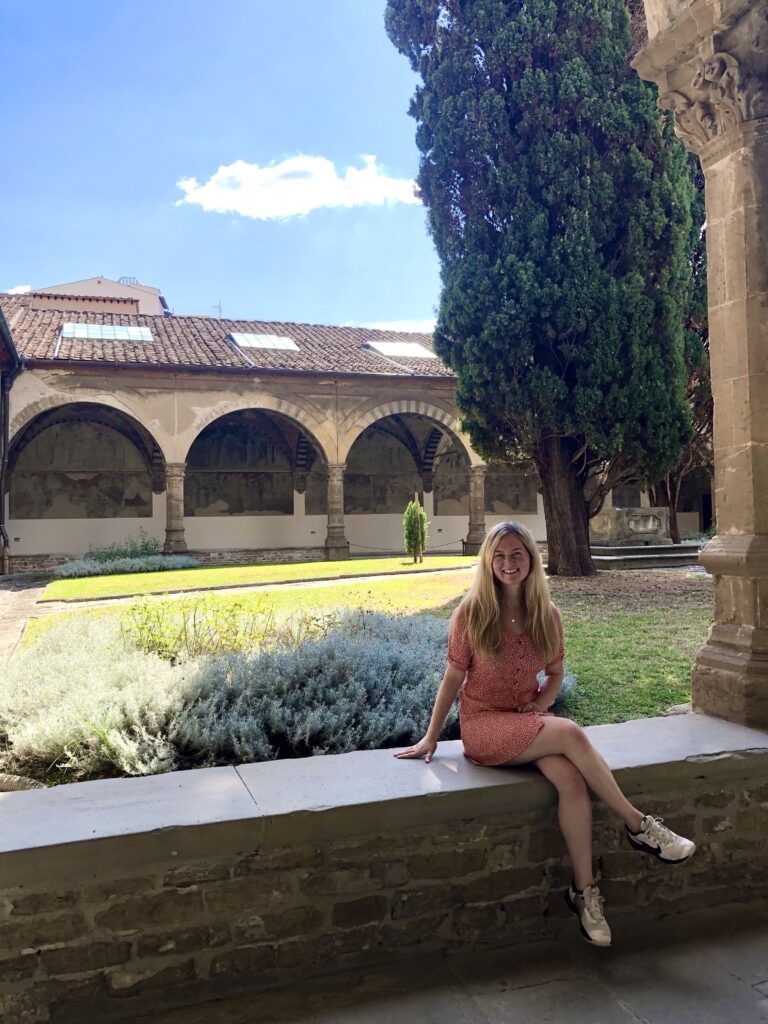
Michaela Peine in Cloister of Santa Maria Novella, Florence

The in-person experience of Renaissance art was key to her research, allowing her to study the material and formal qualities that activate these works of art up close and in a more personal way. She divided her time primarily between Florence and Rome, researching Fra Angelico’s work and hunting for contemporary examples of similar activation in art. A key element of her trip was a visit to the Niccoline Chapel, located within the Vatican Palace. The chapel, entirely frescoed by Fra Angelico, is typically closed to guests, however, Michaela was able to connect with Dr. Fabrizio Biferali, the curator of Renaissance art in the Vatican Museum. Dr. Biferali brought Michaela on a tour of the Niccoline Chapel and provided her with conservation reports, allowing her to study in-depth the architectural and material context of Fra Angelico’s work. The work Michaela did in Italy is key to the research for her qualifying paper, which is advised by Dr. Lois Eliason, and will be presented in December of 2024. 

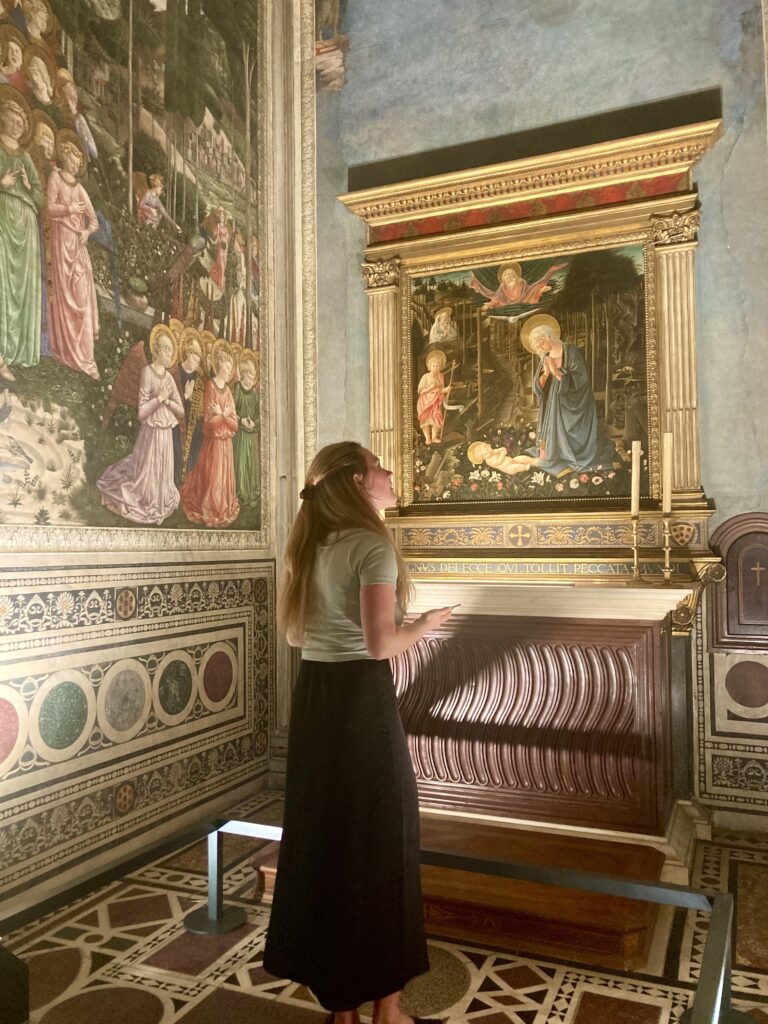
Michaela in Chapel of the Magi, Palazzo Medici Riccardi, Florence.

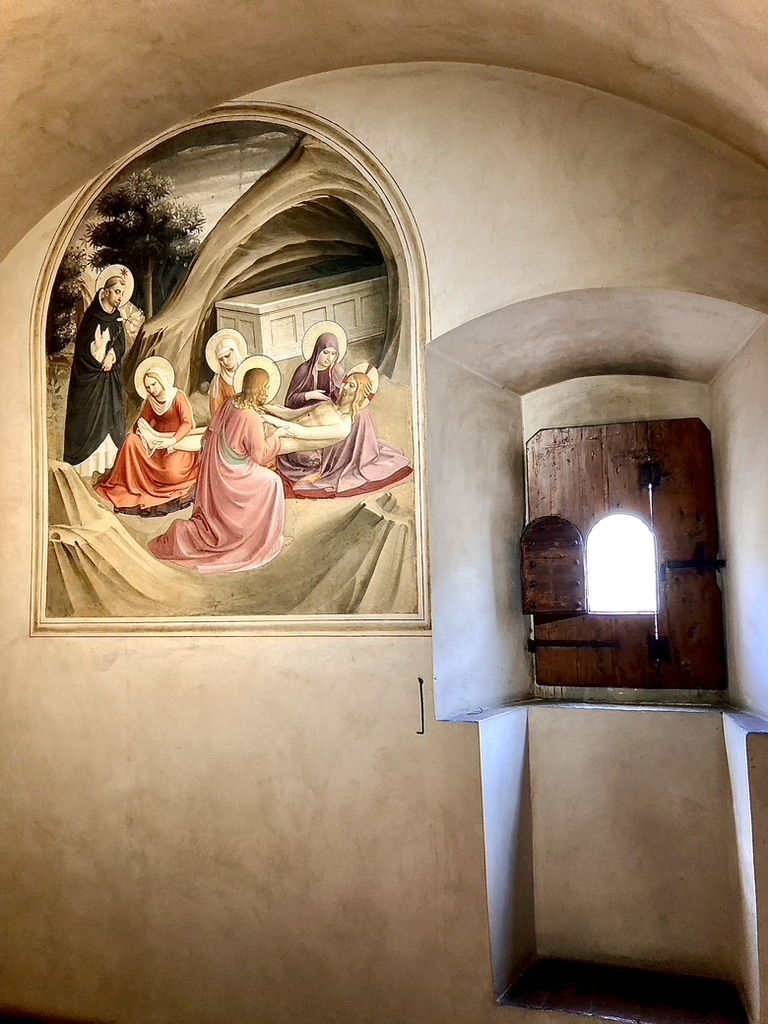
Fra Angelico painting in cloister of San Marco, Florence.

Graduate Qualifying Paper, Graduate Student, Research, Research Travel

Elsa Ballata in England

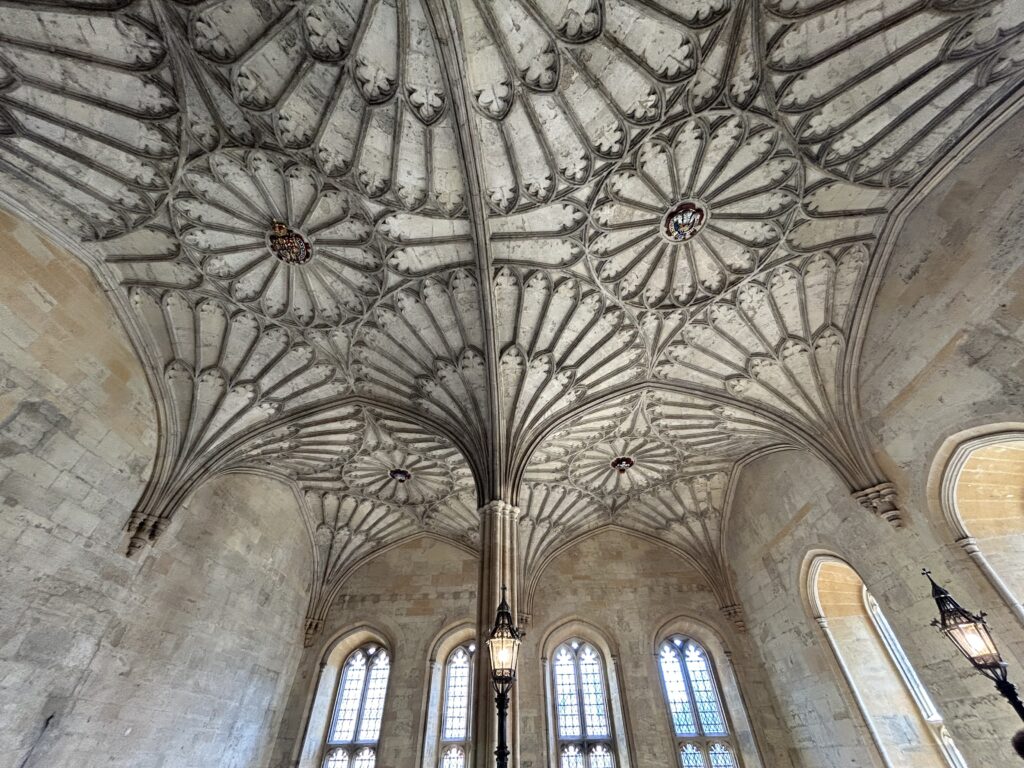
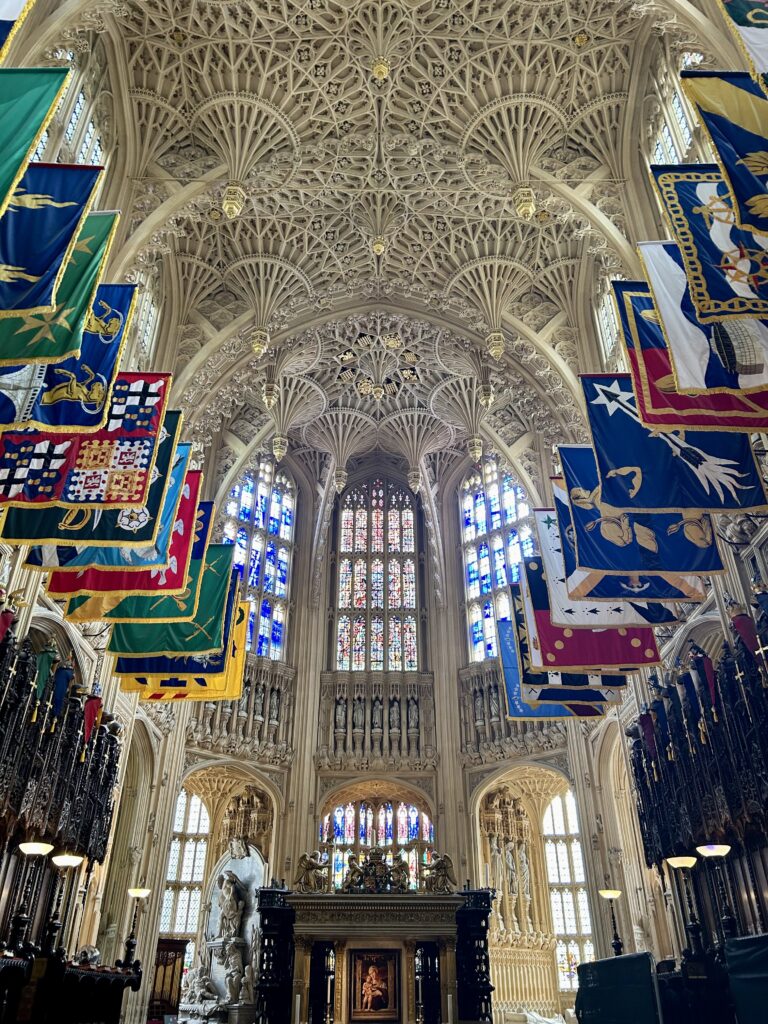
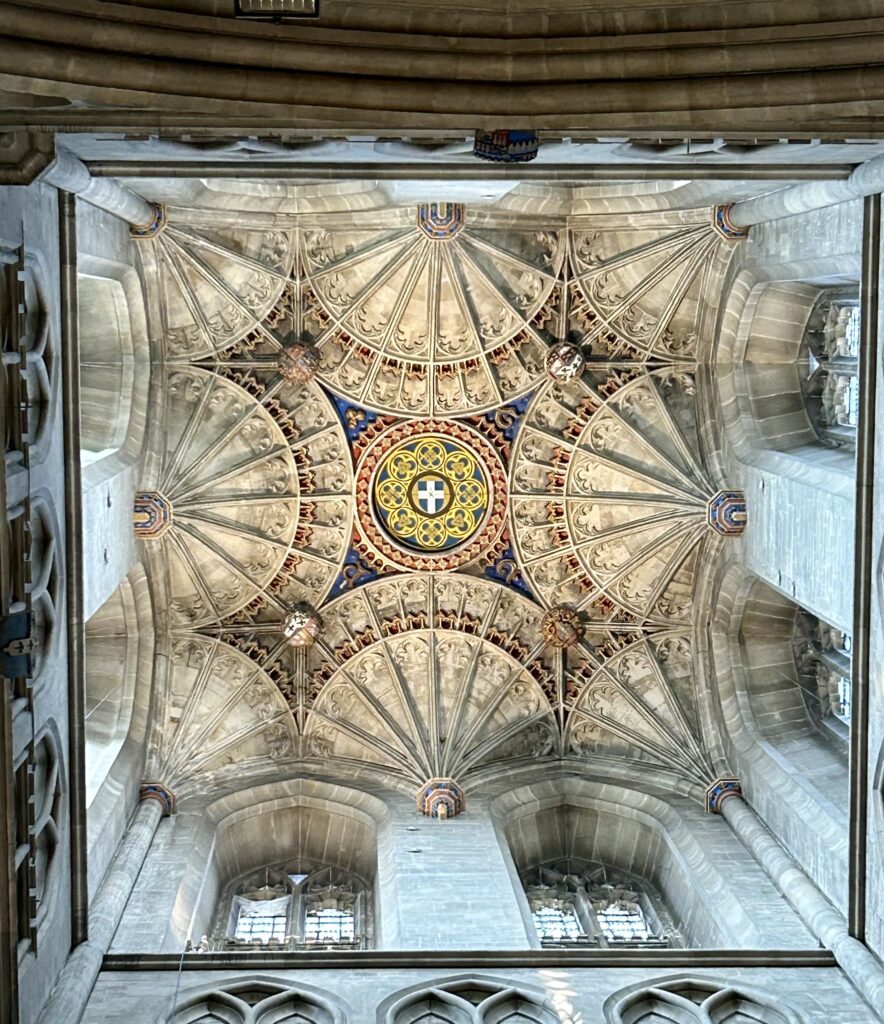
In September 2024, Art History graduate student Elsa Ballata traveled to England with her mother, who proclaimed herself Elsa’s research assistant, to research fan vaulting for her qualifying paper. Over the course of a week, Elsa visited six different sites around the country where she toured buildings and spoke with guides about the history of each location. She spent two days in the Oxford area visiting the staircase at Christ Church College in Oxford and taking a day trip to Gloucester to see the Cathedral and the famous cloisters. After finishing up her time in Oxford, Elsa took a train to London where she visited Westminster Abbey, the British Museum, and a number of other tourist attractions in the city. From London, she took days trips to Cambridge, Salisbury (and Stonehenge), and Canterbury. 

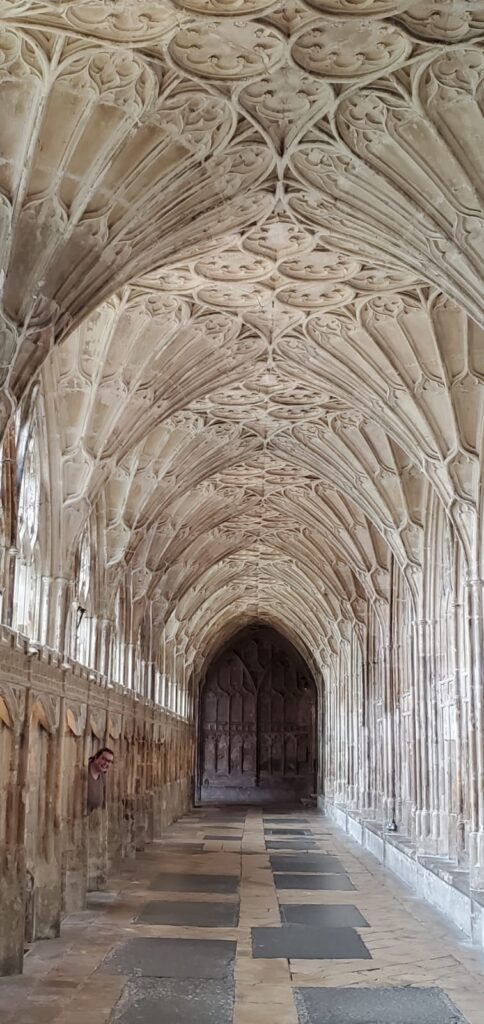
Photo of Elsa peeking out of a cloister stall at Gloucester Cathedral, her favorite fan vaults from the trip, built in the 14th century.

She spent time at each site she visited speaking with the staff about the vaults and history of the buildings, finding the staff to be as excited as her to be studying there. A couple of particularly memorable conversations she had were in Westminster Abbey, where she spoke to a priest before any other members of the public were allowed in the chapel, and with an amazing guide in Canterbury, who spent the week before her arrival researching fan vaults himself so she could ask more questions. It was an amazing experience for Elsa, allowing her to be in the spaces she was studying in person and take notes about details that photos online rarely manage to capture.  

Great Hall Staircase vaults, Christ Church College, Oxford, 17th century.

High vaults of Henry VII’s Lady Chapel, Westminster Abbey, London, early 16th century.

Bell Harry Tower vaults, Canterbury Cathedral, late 15th/early 16th century.

Faculty, Graduate Student, Museum Studies, Research, Research Travel

Research at the Rijksmuseum

In the summer 2023, Dr. Amy Nygaard and graduate students Michaela Peine and Madeleine DeGrace travelled to Amsterdam with the support of a Graduate Research Team Grant from the Center for Faculty Development at UST. Their research project titled, Decoloniality, Decentering, and Didactics: Close Analysis of Antiracism Methodologies in the Rijksmuseum, closely examined 77 gallery labels that were written to highlight each object’s connection to the human slavery for the museum’s 2021exhibition “Rijksmuseum & Slavery”. These 77 labels were juxtaposed with the existing object labels for that exhibition. When the research team visited the Rijksmuseum in 2023, many objects included in the “Rijksmuseum & Slavery” had new, what the team called “third label or reconciled” label that synthesized information from the previous two labels. With all of this text in hand, the research team set out to do a careful rhetorical analysis of labels.

Photo from interview of Rijksmuseum’s curators taken in August 2023 by Dr. Amy Nygaard, Assistant Professor of Art History and Director of Museum Studies.  From Left to Right: Michaela Peine, Graduate Student in Art History and Museum Studies Certificate; Eveline Sint Nicolaas, Senior Curator of History at the Rijksmuseum; Maria Holtrop, Curator of History at the Rijksmuseum; Madeleine DeGrace, Graduate Student in Art History and Museum Studies Certificate

Conference Presentations, Graduate Qualifying Paper, Research

Michaela Peine presenting at 40th Annual Art History Graduate Student Symposium

In the beginning of March, Michaela Peine was invited to present her paper, “Tangible Devotion: A Tactile Understanding of Fra Angelico’s Virgin Enthroned,” an excerpt from her QP research, at the Florida State University 40th Annual Art History Graduate Student Symposium. Presenting this paper gave Michaela an opportunity to hone her research and writing, presenting a facet of her work and receiving feedback that will contribute to her ongoing research.

Michaela’s paper focused on a small double-sided panel entitled Virgin and Child Enthroned with Saints Peter, Paul, and George, Four Angels, and a Donor, painted c. 1446 by Fra Angelico. This research argues that this panel shares many key similarities with deschi da parto—the trays presented to women upon giving birth—b​ut also that it also contains vital elements that mark it as a devotional object, not meant to be given to a new mother, but instead deliberately borrowing the iconography of birth trays in order to operate as an item of devotion for a male donor. Virgin Enthroned is not a static art piece; rather, the physical qualities of this panel reveal that this is an object that is meant to be held closely, turned over, and passed from hand to hand. By understanding the tactile qualities of this painting and imagining the spatial and physical environment it would have inhabited, it is possible to examine the psychological and spiritual narratives within Virgin Enthroned. Through this methodology she seeks to “embody” the piece, understanding its spiritual impact through its sensory qualities. Activated by the physical presence of the viewer, this tiny panel encapsulates the complex relationship between art, religious devotion, civic engagement, and the gendered gaze in quattrocento Italy.

Michaela was invited to submit her paper for publication with Athanor, the graduate publication of the Art History department at Florida State University. Her paper will be published in November, and she will present her QP in December.

Research, Research Travel, Students

Harrison Peck in Sveti Klement, Croatia (summer 2024)

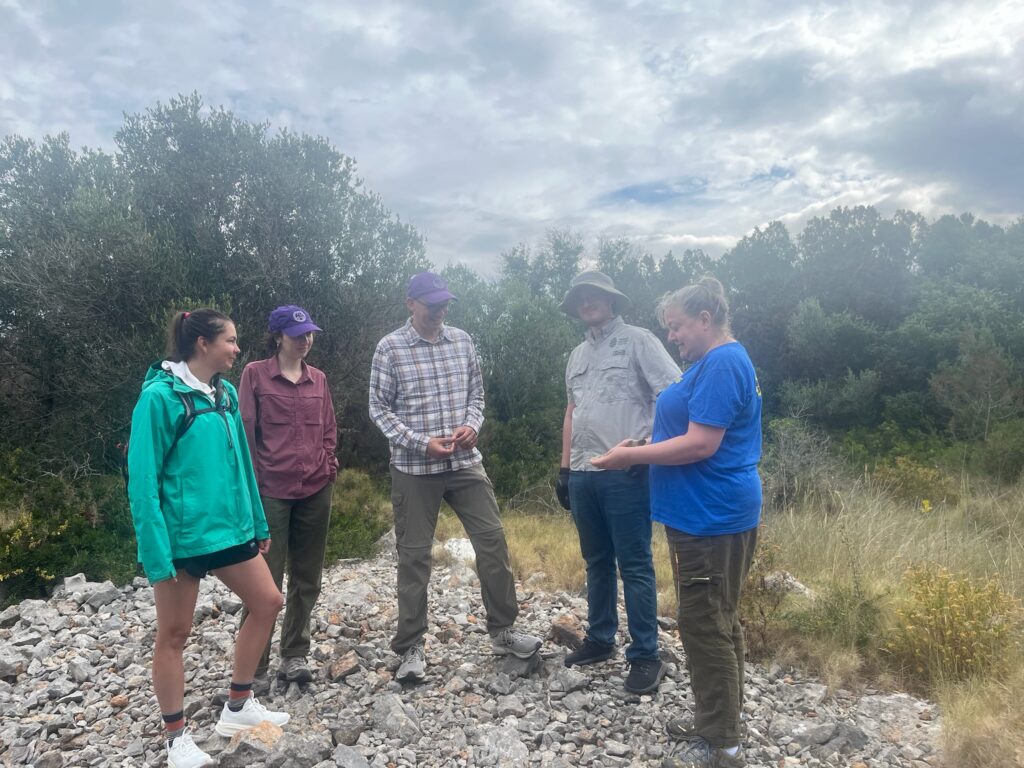
Harrison Peck is an Art History/Archaeology Graduate student at the University of St. Thomas. His work over the summer of 2024 in Sveti Klement, Croatia was focused on the archaeological site at Soline Bay under professors Ivancica Schrunk and Vanessa Rousseau. His areas of focus in academics are Republican Rome and Early America, and he is particularly interested in archaeology and museum administration.

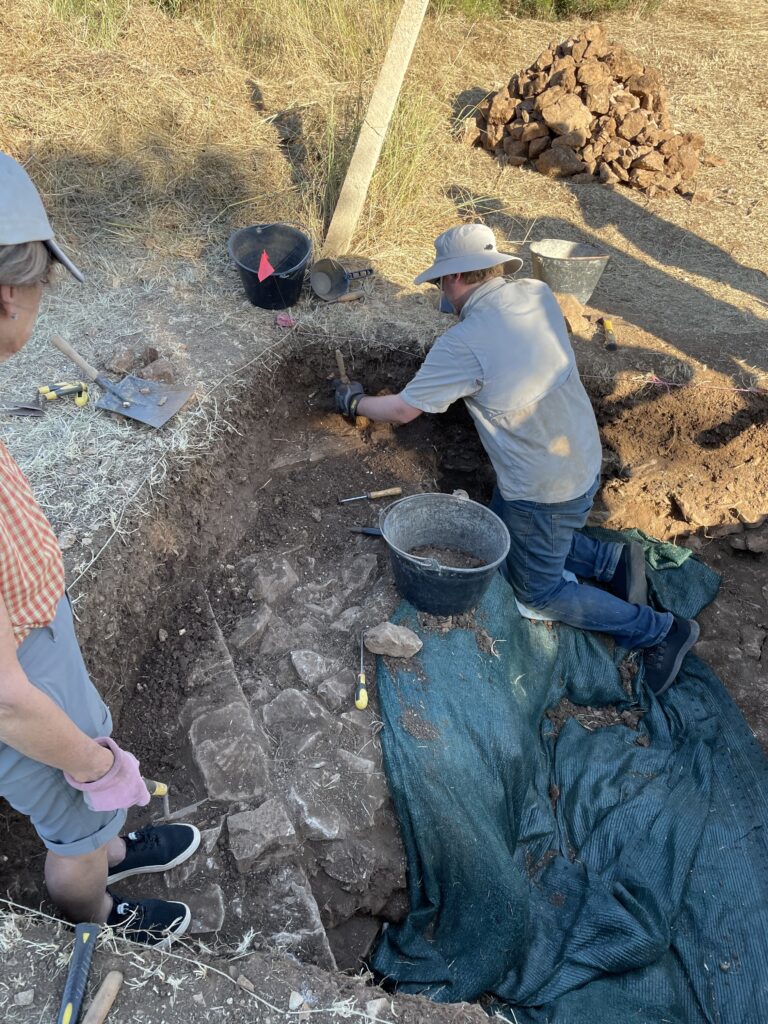
During the 2024 excavation at Soline Bay, Harrison worked with a Roman site that likely produced salt, wine, olive oil, and garum (a type of fish-sauce). He also assisted with both the actual excavation and the cleaning and organizing process afterwards on-site. This project followed an interdisciplinary approach through combined work from staff, faculty, and students with a variety of backgrounds in archaeology, history, geology, and art history. Harrison’s overall project focus for this season was the field of museum ethics and cultural heritage. Specifically, he analyzed museum methodology, cultural approaches toward history, and Croatian cultural property laws to identify how different countries both recognize and utilize historical and archaeological sites/objects.

The project’s initial stages involved setting up the excavation site and estimating the location of the old Roman wall. The located wall was in much better condition than expected – walls from the early Roman period are usually better cut than those from later periods and were almost always repurposed for other structures. Excavation continued to the lower layers where the digging ran close to bedrock and the wall’s foundation could be identified, which took most of the remaining time that had been allotted for the dig. The excavation team had other projects running alongside the primary excavation, which members of the crew assisted with as needed.
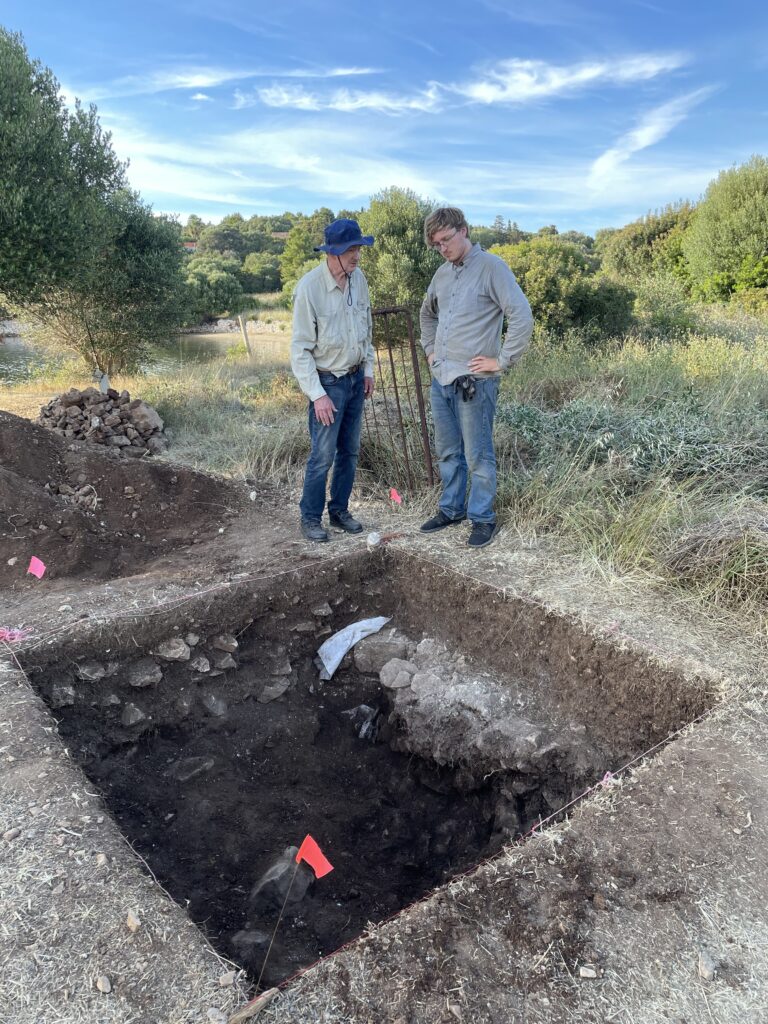
The geology team focused on core sampling and surveying, which added to the knowledge of the site’s geographic evolution; other areas of the site were cleared of brush and debris to allow for surface level examination. During the excavation, Harrison assisted Tom Schrunk with the archaeological photography of the site, taking photos and measurements of both the primary excavation and other areas. Toward the end of the excavation, the crew worked to clean and organize discovered pottery by layer, allowing future research to more easily examine the material and conclude roughly when and where it was deposited. The dig concluded with laying geocloth and backfilling the site to protect the old Roman wall. Discoveries from this year’s dig include a large number of tesserae (rectangularly-cut pieces of stone used to create mosaics), an ancient coin, and some fresco work. Additionally, they uncovered a great deal of different types of pottery; some retained slip, others were likely locally-made, and still others were imported, as they contained clay types identified as coming from the Levant and other areas.

At three points during the trip (before, during, and after the excavation), Harrison visited museums, archaeological archives, and local tourism-oriented sites of historical influence to investigate the cultural use of historical objects and their roles in modern Croatian culture. During these trips, he spoke with a number of experts including archaeologists, divers, museum managers, and curators to investigate Croatian cultural heritage laws and their application. The combined experience of the museum studies element and the excavation itself provided Harrison with a solid foundation for both museum-centric cultural heritage theory and hands-on archaeological experience.

Graduate Qualifying Paper, Research, Research Travel

Nicole Petersen in Siena

In September 2023 Art History graduate student Nicole Petersen (@nicole.etal_ travelled to Florence and Siena via a travel grant awarded by the department. They visited Italy to work on their Qualifying Paper project, which focuses on the hexagonal bowl in Pietro Lorenzetti’s “Birth of the Virgin” altarpiece (1335-1342) and how women experienced the work in its original placement in Siena Cathedral.


Detail of Pietro Lorenzetti’s Birth of the Virgin altarpiece in Siena

The first photo shows a selfie of them from the top of the Torre del Mangia with Siena Cathedral in the background. The second photo shows one of the many detail photos of “The Birth of the Virgin” they captured to utilize in their paper.

Nicole Peteresen on Torre del Mangia, looking toward Siena Cathedral