Graduate Student – In Context
Browsing Category

Graduate Student

Graduate Qualifying Paper, Graduate Student, Research, Research Travel, Uncategorized

Juli Hunt Rudzitis at Notre-Dame de Paris and Notre-Dame de Reims

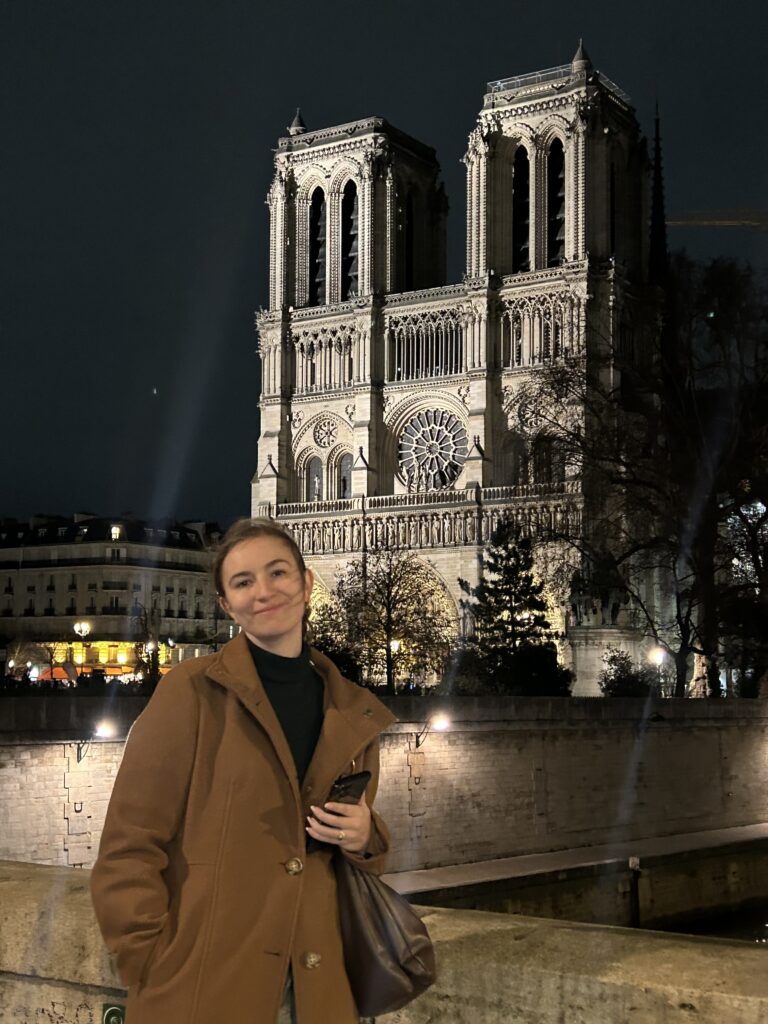
Juli’s thesis centers on Notre-Dame de Paris as a case study in restoration and cultural resilience. Her research examines how the cathedral has been repeatedly damaged and rebuilt, and how each phase of restoration reflects the values of its time, from the nineteenth-century interventions of Eugène Viollet-le-Duc to the reconstruction following the 2019 fire. Traveling to France from November 28 to December 3, 2025 allowed her to encounter Notre-Dame not just as an object of study, but as a physical and living monument where questions of age, authenticity, and renewal are experienced in real time.

Juli in front of the West Façade of Notre Dame in Paris

At the center of the journey was Notre-Dame de Paris, which Juli visited multiple times: once to experience the interior, once to study the treasury, and once to climb the towers.

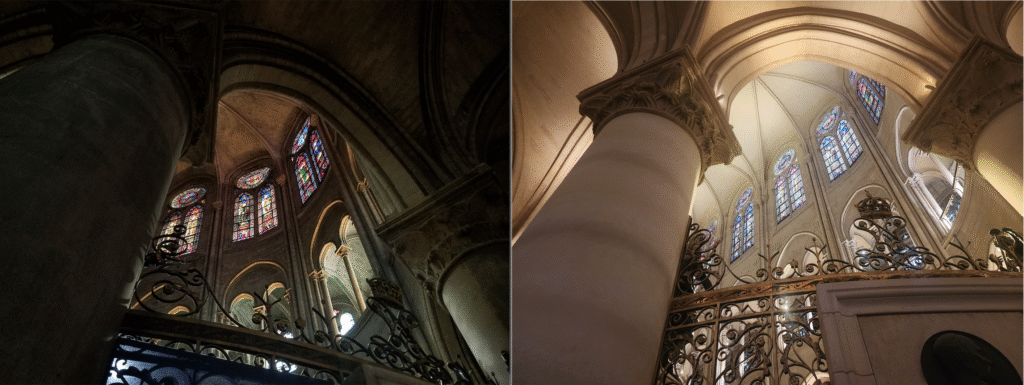
Inside the nave, the most immediate impression was the visible newness of the space. The stone has been cleaned, the surfaces are bright, and the effects of restoration following the 2019 fire are unmistakable. Yet despite this renewed clarity, the cathedral still feels old. The scale of the space, the acoustics of stone, and the vertical pull of the architecture communicate age in ways that cleaning cannot erase. Juli attended a Vespers service during this visit, and the sound of chant, moments of silence, and candlelight reinforced the cathedral’s identity as a living religious space rather than a purely historical site. The experience complicated any simple distinction between new and old and showed how age can persist within a restored interior.

Left: Image from Juli’s 2017 visit looking up from the apse of Notre Dame in Paris. Image shows the darkness of the stone prior to the restoration following the 2019 fire
Right: Image from Juli’s 2025 visit looking up from the apse of Notre Dame in Paris. Image shows the stone restored after the 2019 fire.

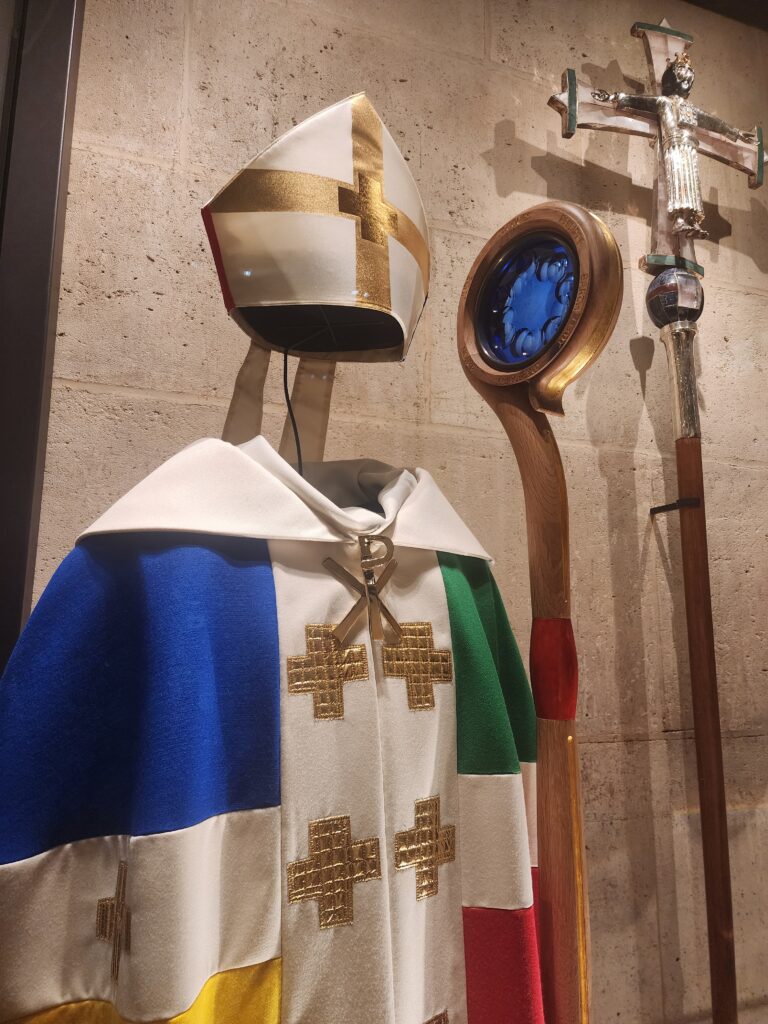
The treasury offered a quieter and more intentional encounter. Alongside sacred objects and reliquaries, Juli saw works created by Viollet-le-Duc, connecting directly to the nineteenth-century restoration that shaped how Notre-Dame is recognized today. She also viewed the clothing worn for the cathedral’s reopening ceremony, placing contemporary history next to earlier moments of renewal. Together, these objects demonstrated that restoration extends beyond architecture into ritual, symbolism, and public memory.

Liturgical objects used in the 2024 reopening of Notre Dame in Paris. Held in the treasury of the cathedral

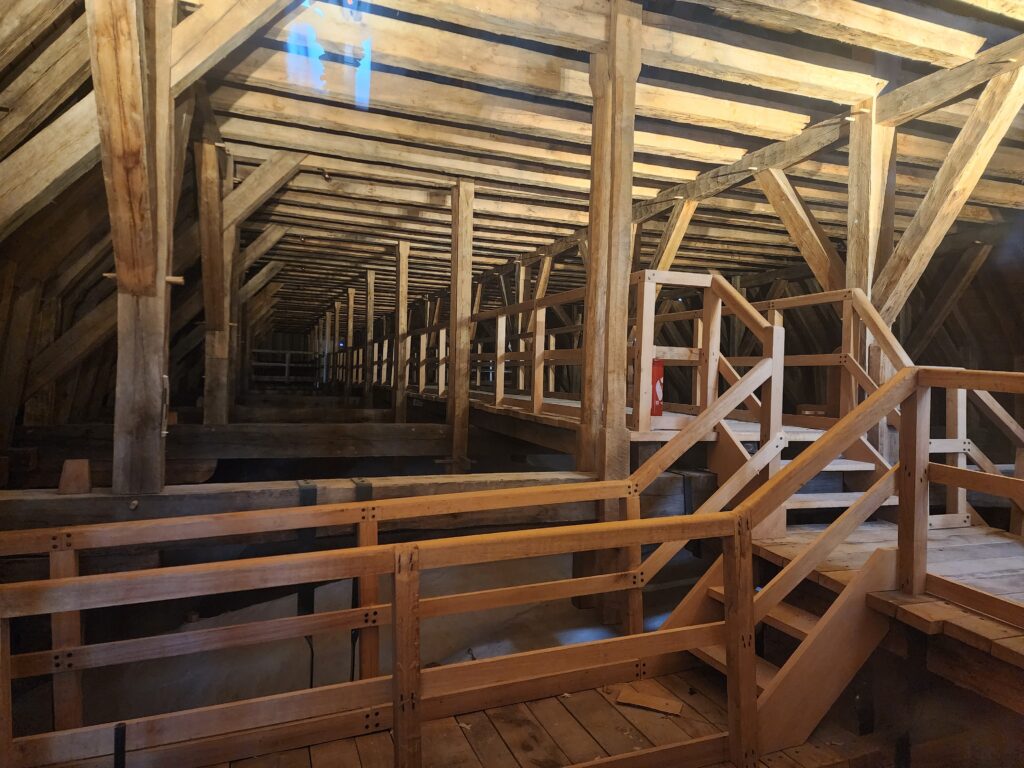
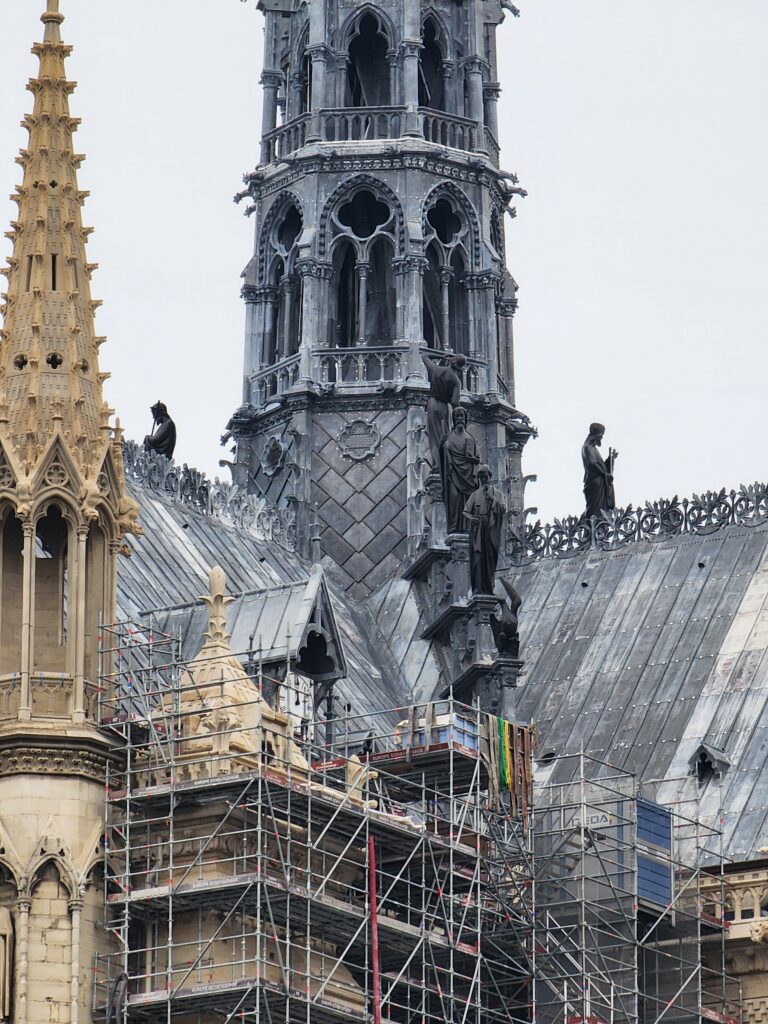
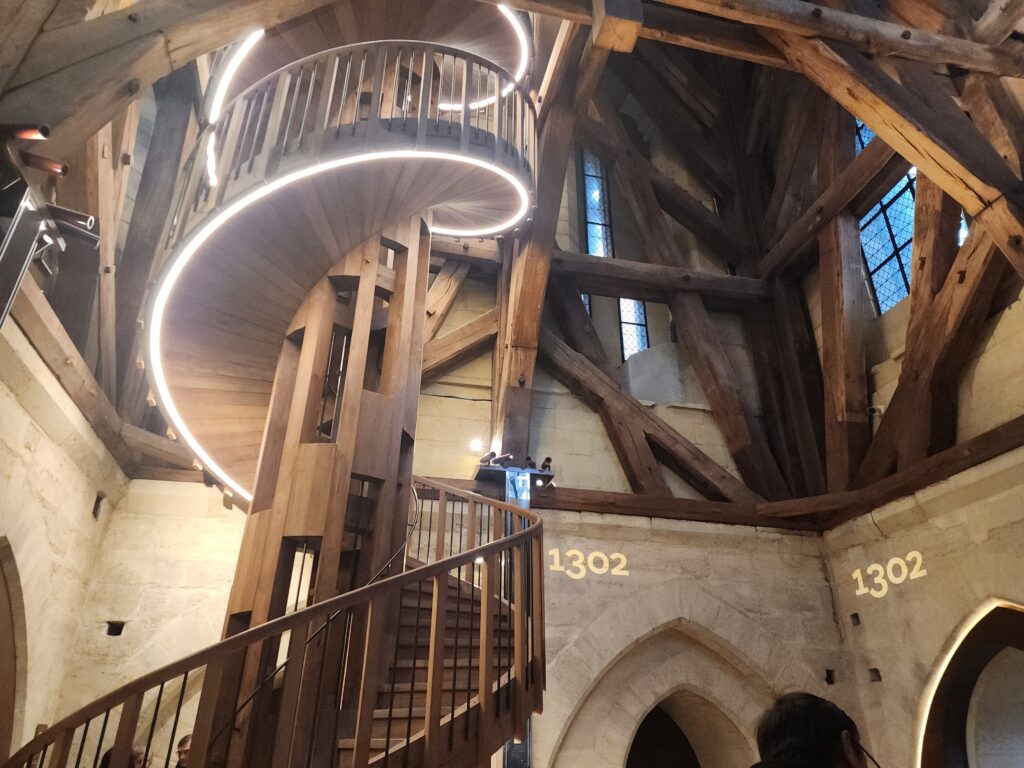
Climbing the towers provided a view into the most recent phase of reconstruction. From above, Juli could see the new timber roof frame, the rebuilt spire, and the updated exhibit and visitor experience that now shapes how people understand the cathedral. The towers revealed how modern interpretation and infrastructure are being layered onto a medieval structure, balancing historical form with present-day engagement.

The newly constructed timer frame of the roof of Notre Dame in Paris

The restored spire and stone of Notre Dame de Paris

The new staircase placed in the towers to guide visitors

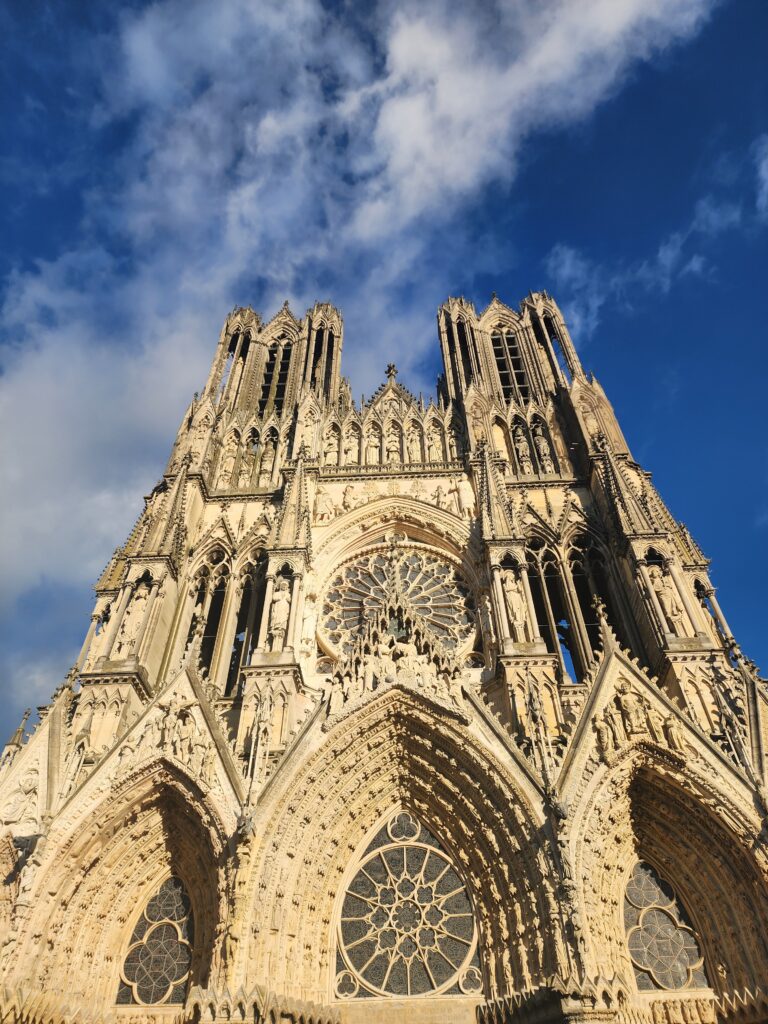
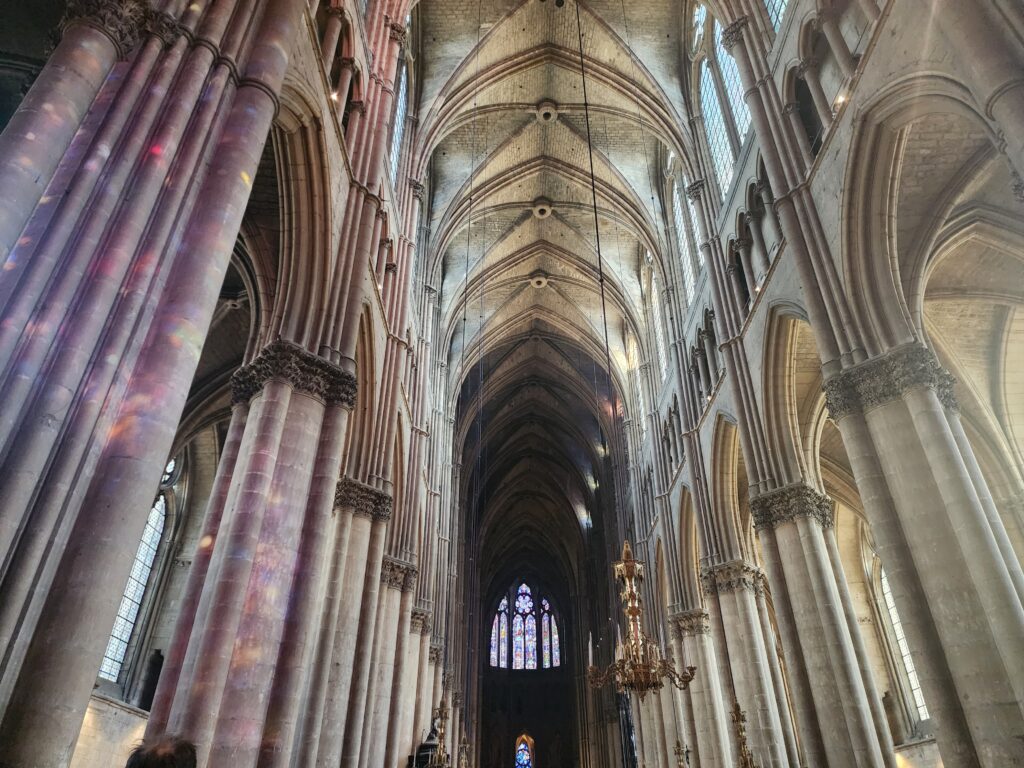
A visit to Notre-Dame de Reims added a critical comparative dimension. Reims, heavily damaged during World War I, reflects a more pragmatic approach to restoration. Hidden modern materials support the structure, yet the cathedral still feels deeply historic from the inside. For Juli, Reims reinforced the idea that material authenticity and sensory authenticity do not always align. Modern intervention can coexist with a powerful sense of age.

West façade of Notre Dame de Reims

The nave of Notre Dame in Reims

The visit to the Musée de Cluny was directly tied to Juli’s work on Notre-Dame de Paris. She went specifically to see the surviving heads of the kings from Notre-Dame’s west façade, beheaded during the French Revolution in 1793 and rediscovered nearly two centuries later. Encountering these sculptures outside the cathedral was striking. Once violently removed and misidentified as French monarchs, the heads now stand as evidence of revolutionary iconoclasm and shifting political values.

The beheaded kings of Judah in the Musée Cluny

Taken together, these visits reshaped Juli’s understanding of Gothic architecture beyond the page. Repeated encounters with Notre-Dame de Paris allowed its complexity to emerge gradually, while Reims and the Musée de Cluny offered essential contrasts in restoration philosophy, material survival, and historical rupture. Gothic monuments, the trip revealed, cannot be fully understood through images or texts alone. They demand movement, repetition, and physical presence.

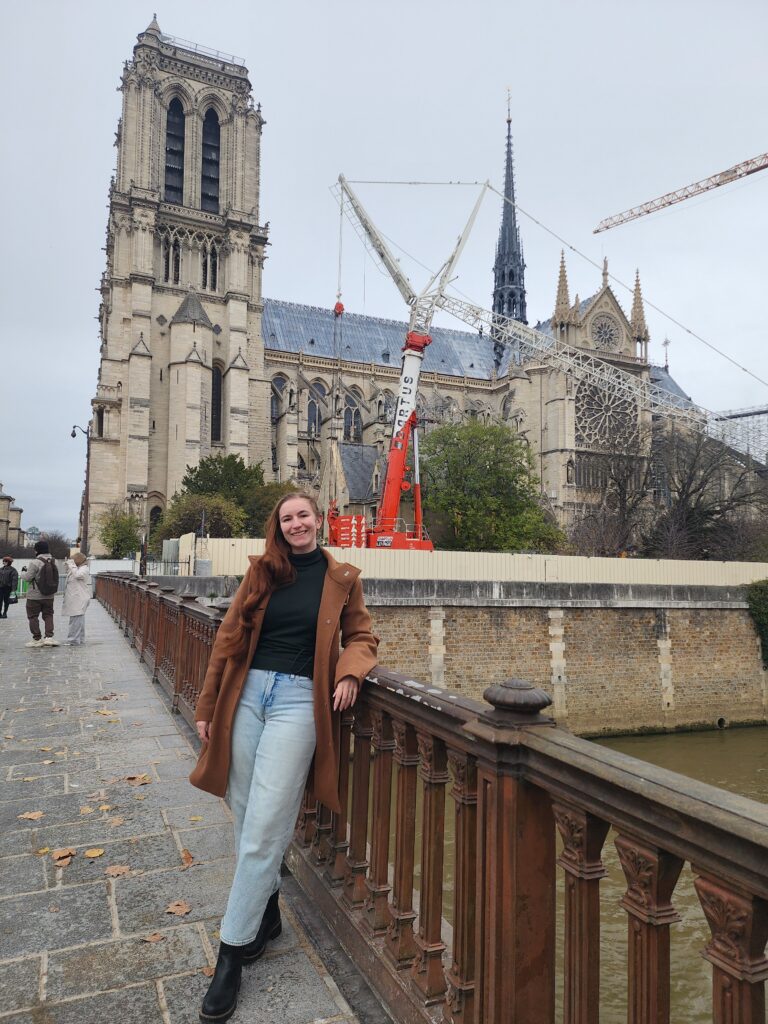
Juli in front of the South façade of Notre Dame de Paris. Construction to restore the cathedral is still underway

Graduate Qualifying Paper, Graduate Student, Research, Research Travel

Erica Berglund in Kyoto

In January 2026, I was extremely fortunate to receive a travel grant from the Graduate Art History Department toward a trip to Japan so that I could research the topic of my upcoming qualifying paper: the triangle-patterned haori uniform of the Shinsengumi.

Costume Experience Advertisement at TOEI Kyoto Studio Park

The Shinsengumi were a pro-shogunate police force in 1860s Kyoto who were ultimately on the losing side of the brief civil war that led up to the Meiji Restoration, but who have had an immense impact on Japanese pop culture throughout the 20th and 21st centuries. One of the images continually associated with the Shinsengumi is their uniform: a haori coat, often blue, with a yamagata (mountain-shaped) pattern on the sleeves. This uniform appears in a multitude of media depicting them, including films, manga, anime, TV dramas, video games, merchandise, and more.

Miniature Shinsengumi coat and sword display souvenir

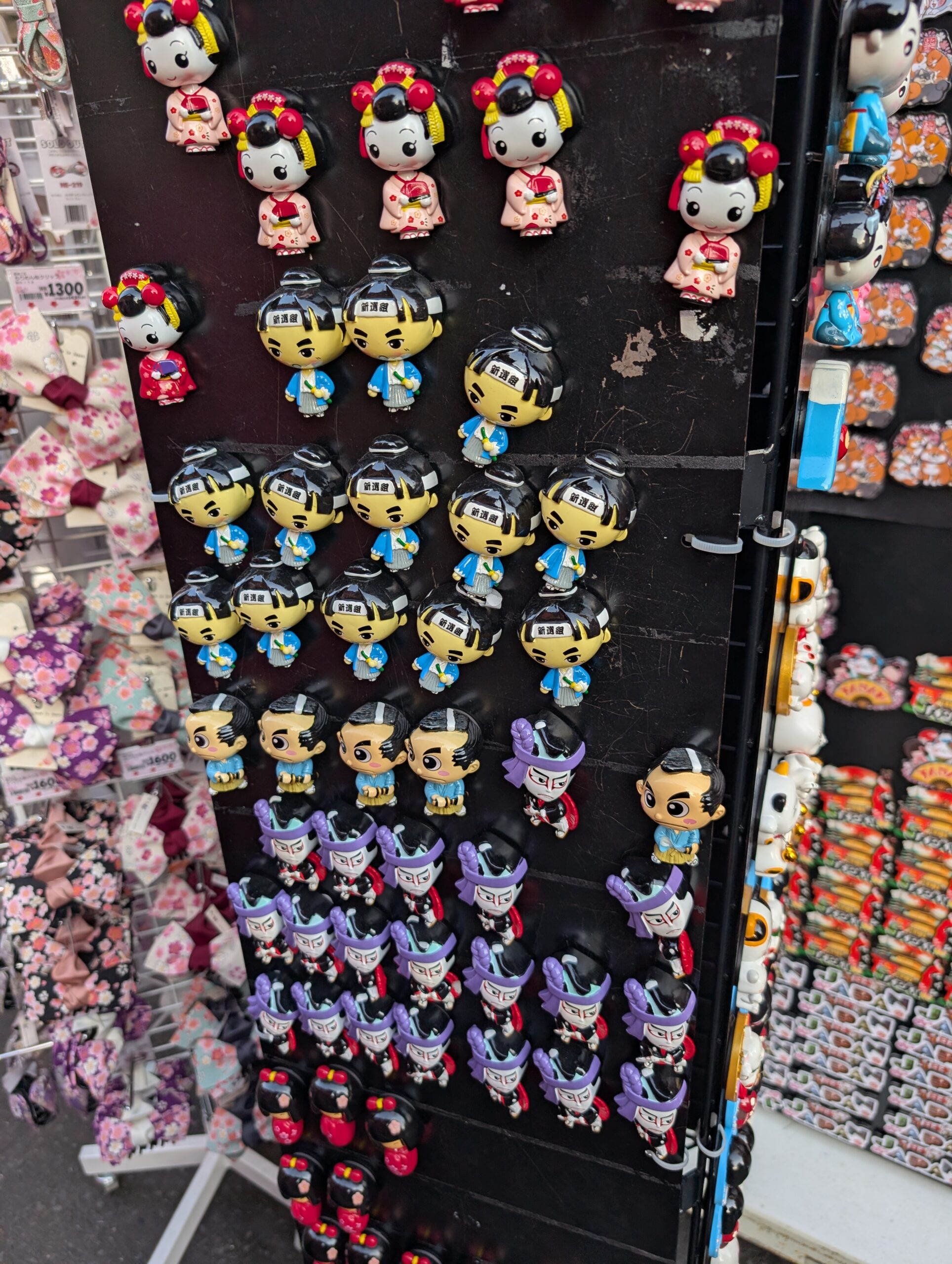
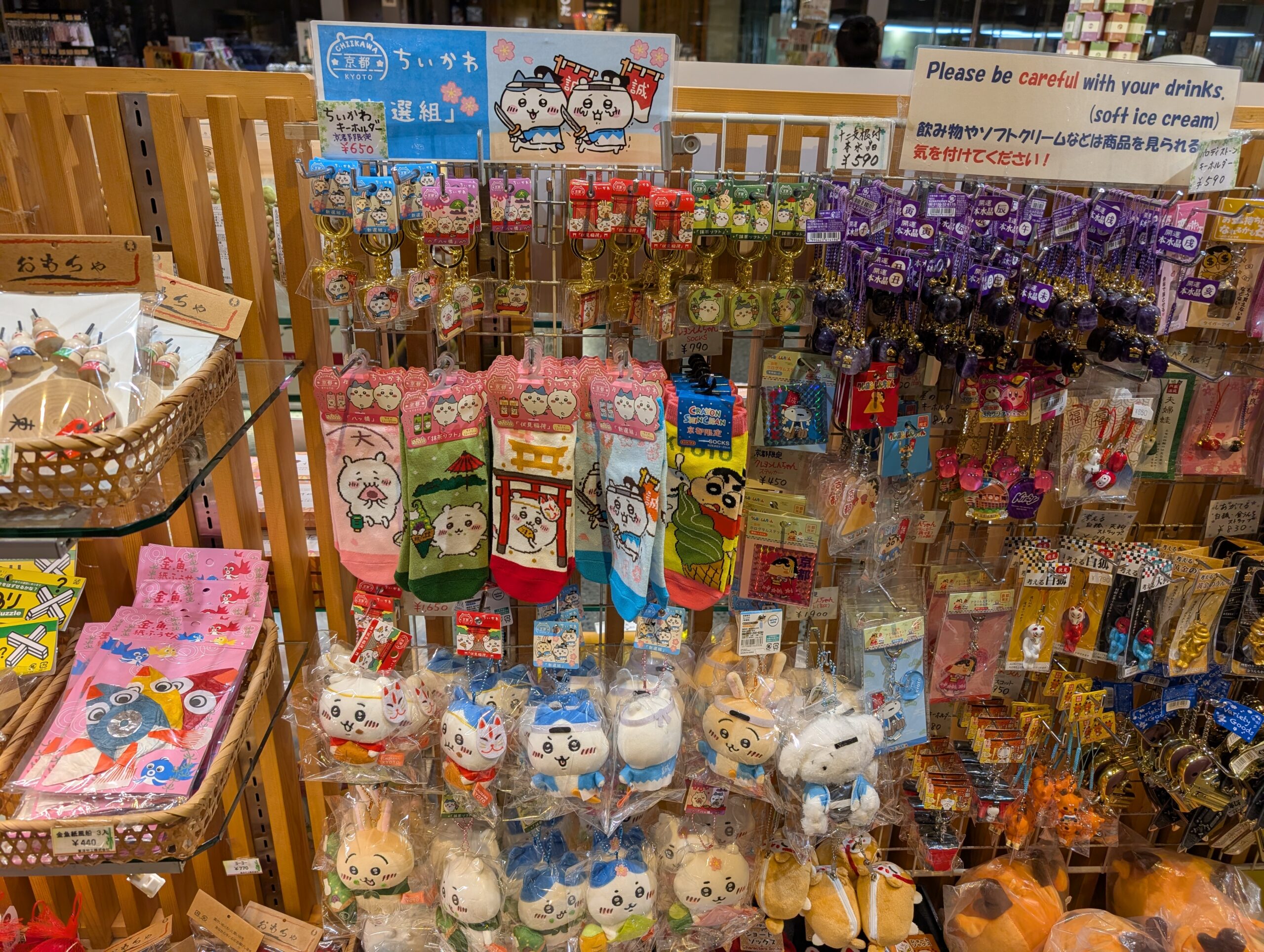
So, during my trip, I kept a keen eye out for where this uniform appeared and how it was used. The place it appeared the most was in Kyoto, where the Shinsengumi are an important aspect of heritage tourism. Most souvenir shops had figures wearing the uniform – stuffed animals, magnets, keychains, etc. – and one municipal poster near Mibudera (where the Shinsengumi were headquartered for a time) depicted a cartoon police officer wearing the yamagata haori. But this was not limited to Kyoto: plenty of souvenir shops in Tokyo also featured Shinsengumi merchandise, such as hand towels and miniature swords.

Poster near Mibudera – Police in Shinsengumi Haori

Little bunny in a Shinsengumi haori

In addition to searching out places where the uniform was used for tourism purposes, I was also able to visit some specialized museums and speak to the curators about the Shinsengumi’s yamagata haori, including the Ryozen Museum of History in Kyoto and the Shinsengumi Hometown History Museum in Hino. I also visited the Tsubouchi Memorial Theatre Museum at Waseda University and the library of the National Film Archive of Japan; in both places, the librarians were very helpful in tracking down various images that I could not otherwise have accessed.

Wobbly Shinsengumi Magnet Figures

Overall, the trip was fruitful and educational, and I’m grateful that I had the opportunity. As my first research trip, I learned a lot – not only about the Shinsengumi haori, but also about how to track down information in places outside the comfort of the internet and my own library!

Shinsengumi Cats – Stuffed Animals and More

Graduate Qualifying Paper, Graduate Student, Research, Research Travel, Uncategorized

Daniel Amstutz in Venice

For MA student Daniel Amstutz, art history is often best explored through relational, experiental, and first-person approaches. His current research seeks to add to the scholarship of late-nineteenth century American artists working in Venice, through a broader contextualizing of the influences that affected their work. Supported by a departmental research travel grant, he visited Venice and surrounding islands in November 2025 to gain first-hand experience of the city’s character and study the revival of glass art on the nearby island of Murano.

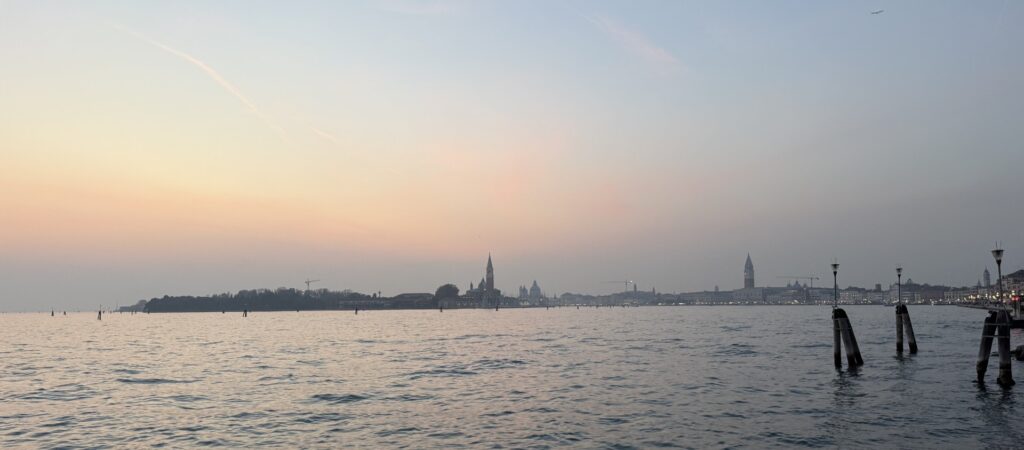
View across the Venetian Lagoon from Castello at dusk.

Artists like James McNeill Whistler and John Singer Sargent spent months at a time in Venice—depicting the city as they experienced it. An extended stay in the city allowed Daniel a chance to experience a depth of the city that would be impossible in a few days. In his words, “Encountering similar highs and lows to those of artists, writers, and thinkers of the time was powerfully compelling. I walked along the same paths that anthropologist Lewis H. Morgan claimed were spared from the cacophony prevalent in large cities. I also confronted the same crowds, mosquitos, and poor air quality that Henry James found so irksome.”

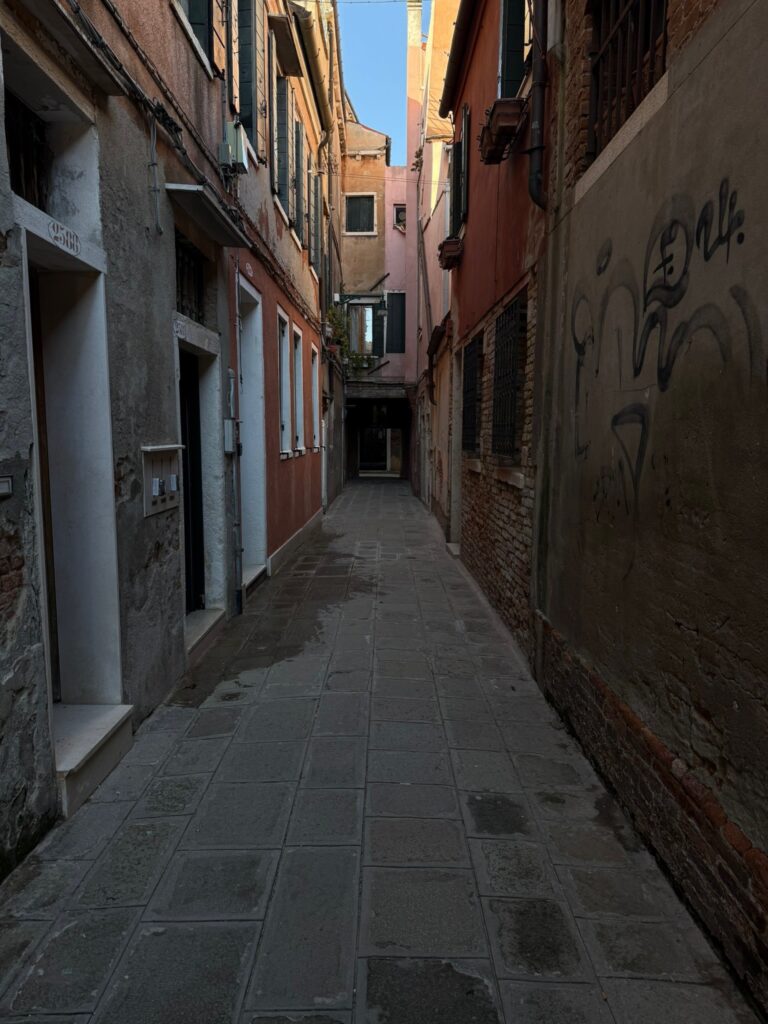
View of Calle de l’Anzolo, Venice.

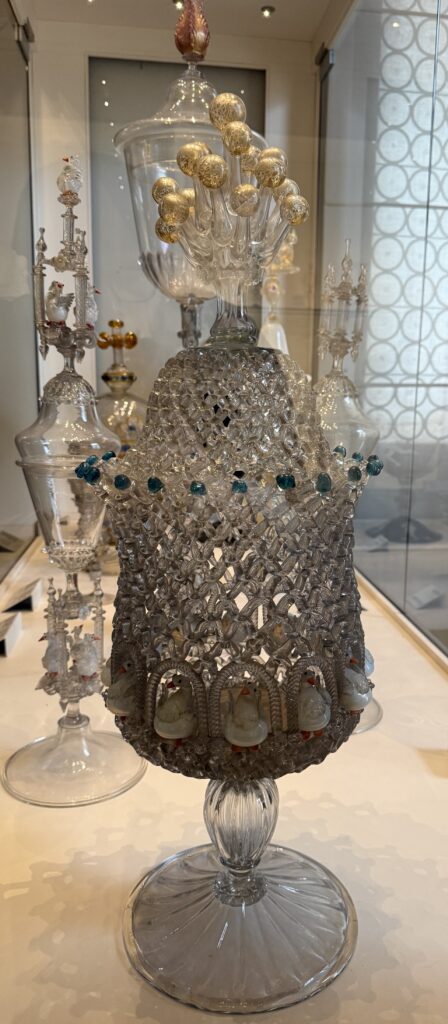
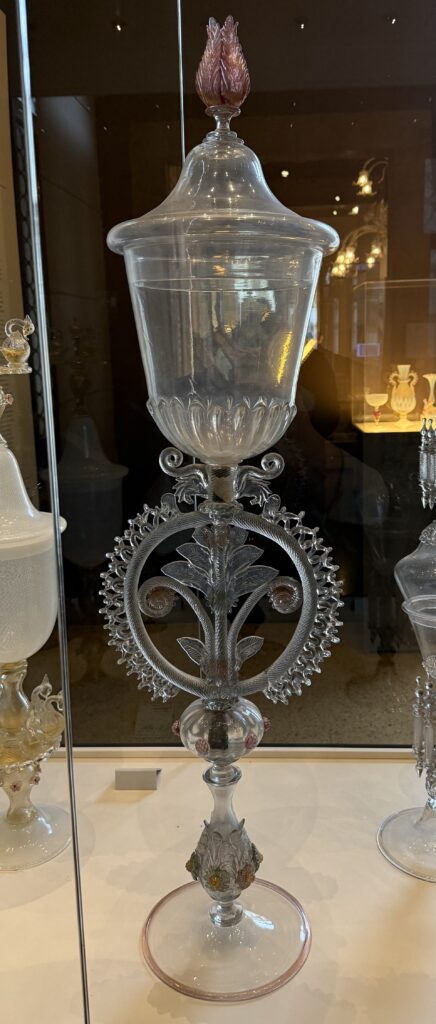
While visiting the Glass Museum on Murano, he was able to spend time combing through their library and chat with the curator, Mauro Stocco, about the history and future of Muranese glass art. “Venetian glass really is something that needs seen in person,” noted Daniel. The specific composition of the glass and the techniques developed in the lagoon allowed the glassworkers to create intricate, layered patterns and sculptural detail that cannot be truly rendered in a photograph or writing.

Crystal cross-linked goblet with geese by Fratelli Toso, 1864–1867.

Large cup with glass cover by Salviati & C.
(1872–1877) or Fratelli Toso (late-19th century)

The direct, immediate experience of and engagement with the city of Venice will be invaluable for Daniel’s qualifying paper as well as his ongoing interest in the intersections of art, art history, and philosophy.

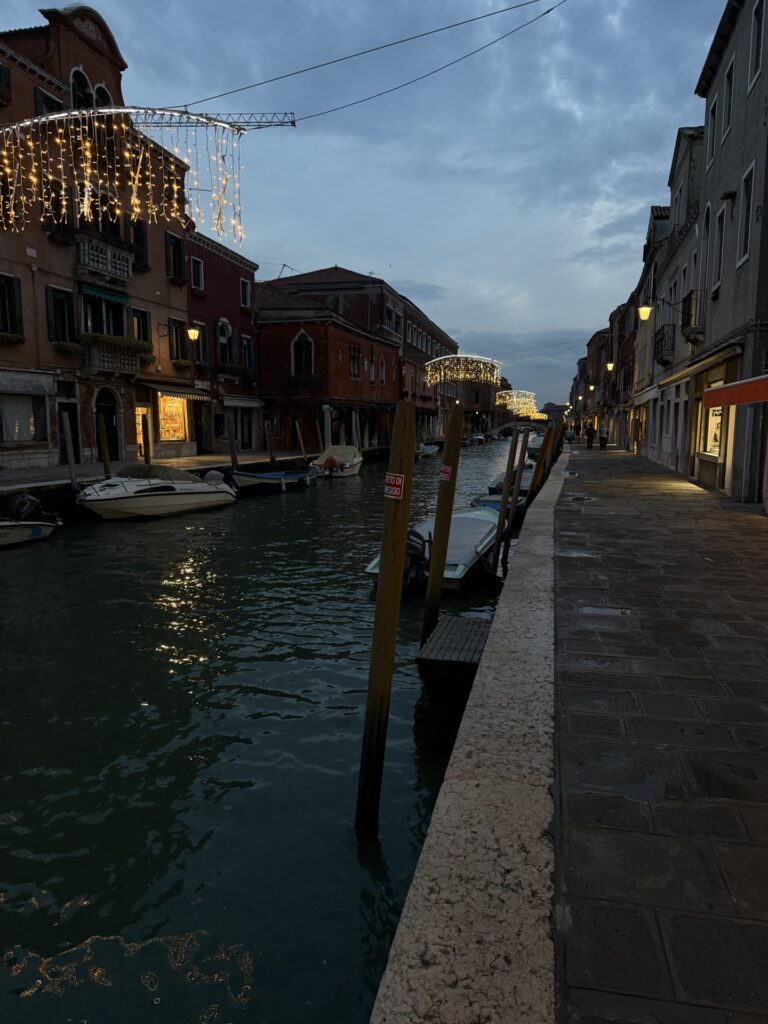
View along Riva Longa, Murano.

Graduate Qualifying Paper, Graduate Student, Research Travel

Archaeological Archive in Croatia

Harrison Peck, a graduate student in the University of St. Thomas’ Art History Program, spent his summer working on a continuing university project in Sveti Klement, Croatia. This project is centered around the annual archaeological excavations at the Soline Bay Roman Villa ruins, which he assisted in the summer of 2024. This year, his project focused on working with the archival collection at the church of St. Mark, on the nearby island of Hvar, where the objects recovered from the site of Sveti Klement are stored. He worked under professors Vanessa Rousseau and Ivancica Schrunk for this project.
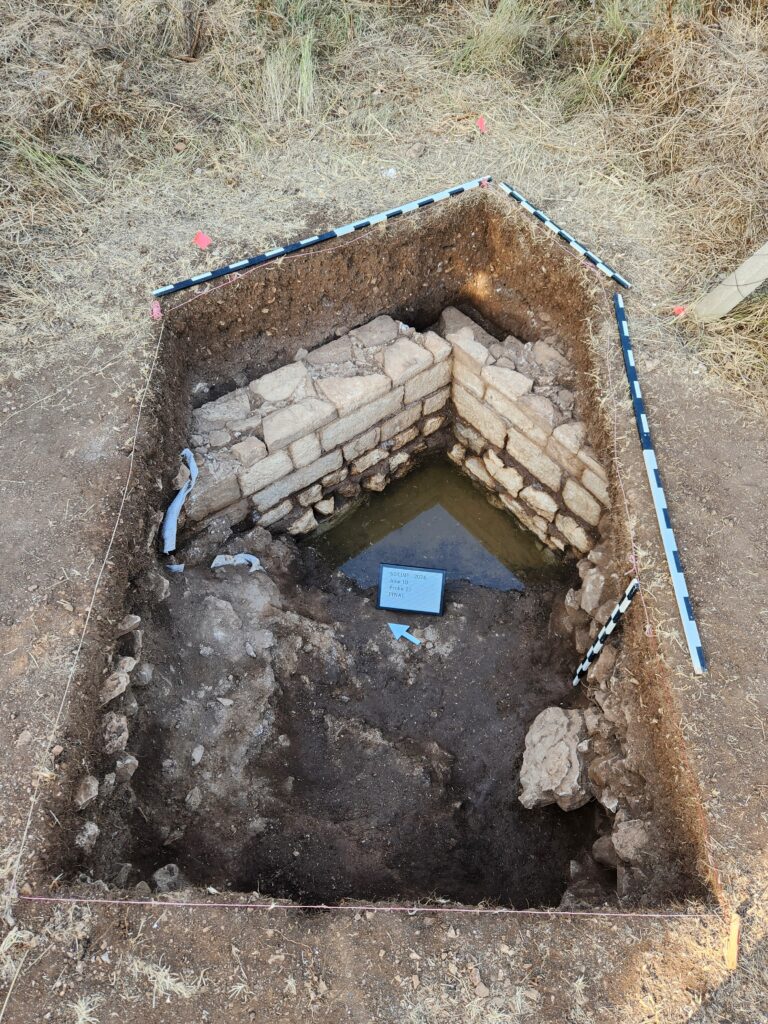
The final excavation photo from the 2024 excavation season


The collection of objects from the site ranges from the late Hellenistic to the Late Imperial Roman periods, although more modern objects have been found as well. His focus was on working with the objects held in storage by the Hvar Heritage Association, and included a number of coins, pottery, building materials, and other finds.
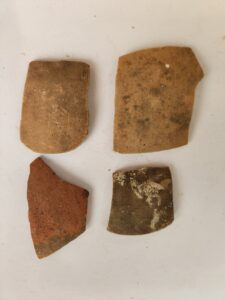
Pottery shards from the Soline Bay dig site

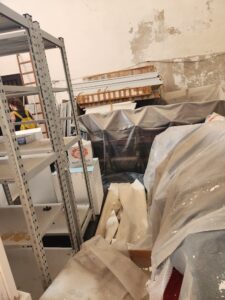
The storage area in the Church of St. Mark for the Soline Bay


The information on the Villa site is mostly located in annual reports, national and international publications, and a few different databases of content. The majority of the work done this summer focused on both working with the collection in person to analyze and create photographs of the items, but also to work through these different publications and resources, only some of which are publicly accessible, to create a document that can function as a publicly-available guide to the excavations, with some work in other languages translated into English, for use by the Croatian state and internationally as a historical resource.

The project began with the intention to make the information gathered on the site publicly accessible, and grew into a full publication that creates a history of the site, an analysis of its finds and the nature of the site, and some translation and resource creation work. Alongside this project will be work in creating a fully rendered 3-D map of the site and all previous annual excavations, allowing the public to use the document to more fully understand not just this site and Croatian archaeology and history, but to educate the public on the methods and nature of archaeological work with a dynamic visual guide as well, to aid in education on the field to the wider public.

The project is ongoing, and will culminate with the graduate thesis of Harrison Peck in a full published document that is accessible to the public. Harrison has a number of focuses academically that support this project, including his historical and archaeological focus on the Roman provinces, his work in museum education, and his focus on making historical, archaeological, and academic publications more accessible to the public. This project will conclude in the fall of 2025.

Harrison Peck, UST Graduate Student at the excavation site

Graduate Qualifying Paper, Graduate Student, Research Travel, Uncategorized

Emily Ross in Edinburgh

This January, MA student Emily Ross travelled to Edinburgh in Scotland to study the murals by Phoebe Anna Traquair in what is now the Mansfield Traquair Center – a former Catholic Apostolic Church. While in Edinburgh the building had an open day to the public, and on all other days, Emily was in the National Gallery and National Museum of Scotland to see Traquair’s embroidery, enamel work, and paleontological illustrations, and at the National Library of Scotland to read Traquair’s letters and page through her smaller scale work illustrating Elizabeth Barrett Browning’s Sonnets from the Portuguese.

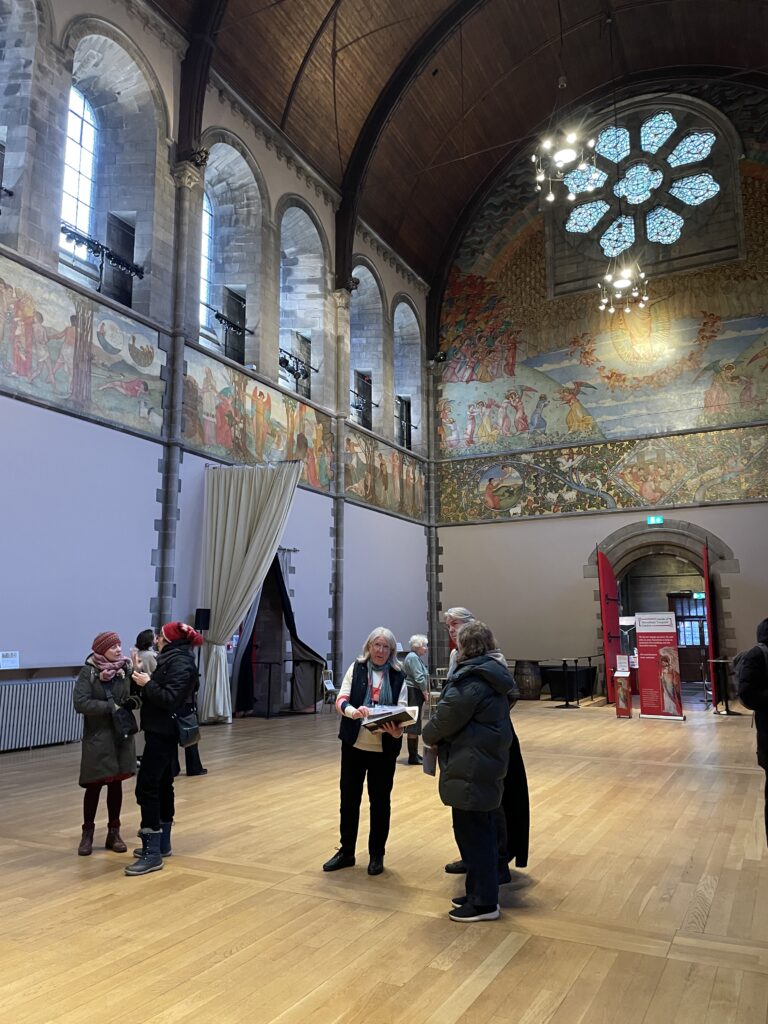
The chancel arch at the Mansfield Traquair Centre, decorated by Phoebe Anna Traquair. This was the first section of the church that Traquair painted, meant to depict worship in Heaven, and in line with the particular beliefs and structure of the Catholic Apostolic Church that commissioned her.

View of South and West walls at Mansfield Traquair Centre. Open only once a month, the open days for the Mansfield Traquair Centre are one of the few ways to get inside, short of booking the entire building for an event. Remarkably, the West Wall is not the usual Last Judgment found on church walls across eras, but a Second Coming, the uplifting millennial doctrine that that Catholic Apostolic Church was founded on.

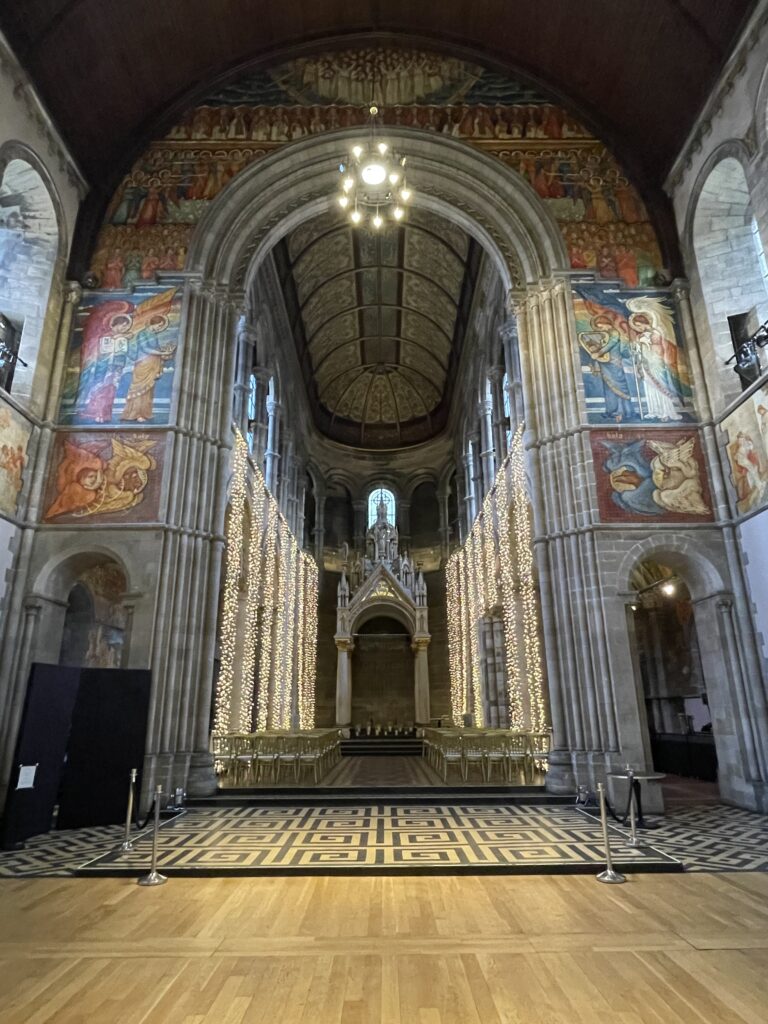
The murals are in grand scale, and contain much visual synthesis and quotation from other pieces and artists Traquair knew, mentioned in her letters or painted in portrait in her other works. They also include landscapes from where she and her family went on vacation together, making them personal murals. Emily will be writing about these murals for her Qualifying Paper this semester.

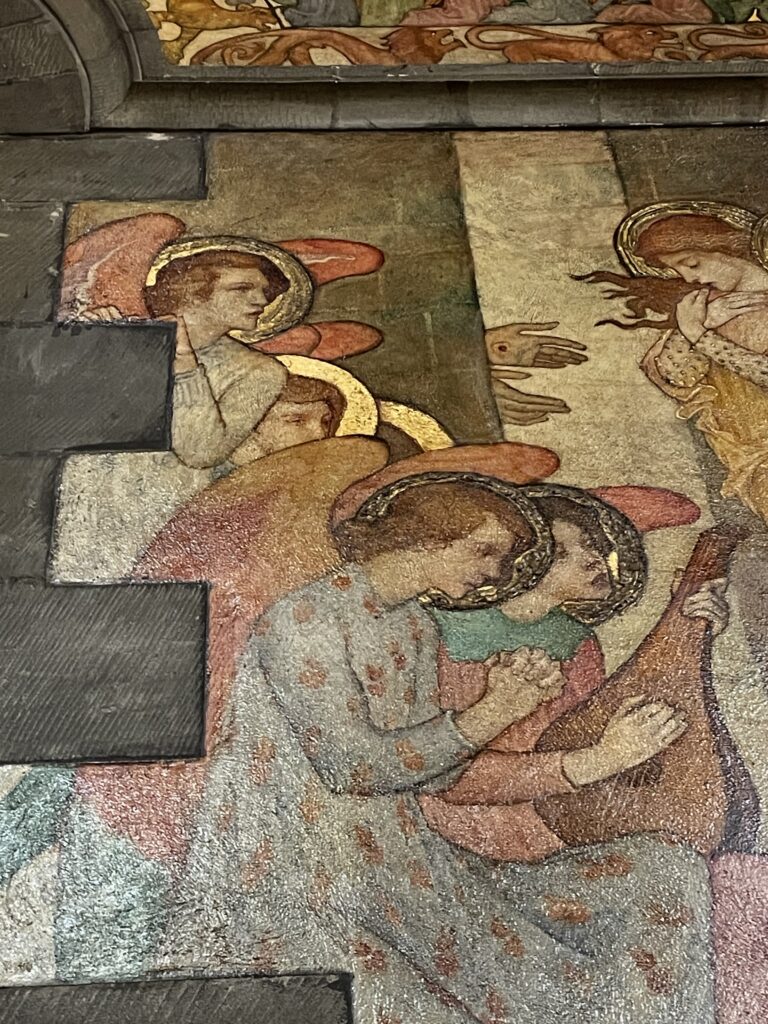
Detail of angels and hands of Christ in Parable of the Ten Virgins cycle, North Aisle of Mansfield Traquair Centre. Traquair worked in large scale and in minute illustration and marginalia, and was willing to take the playful interaction of picture to its frame that medieval marginalia did, letting an angel lean on a part of the building’s masonry.

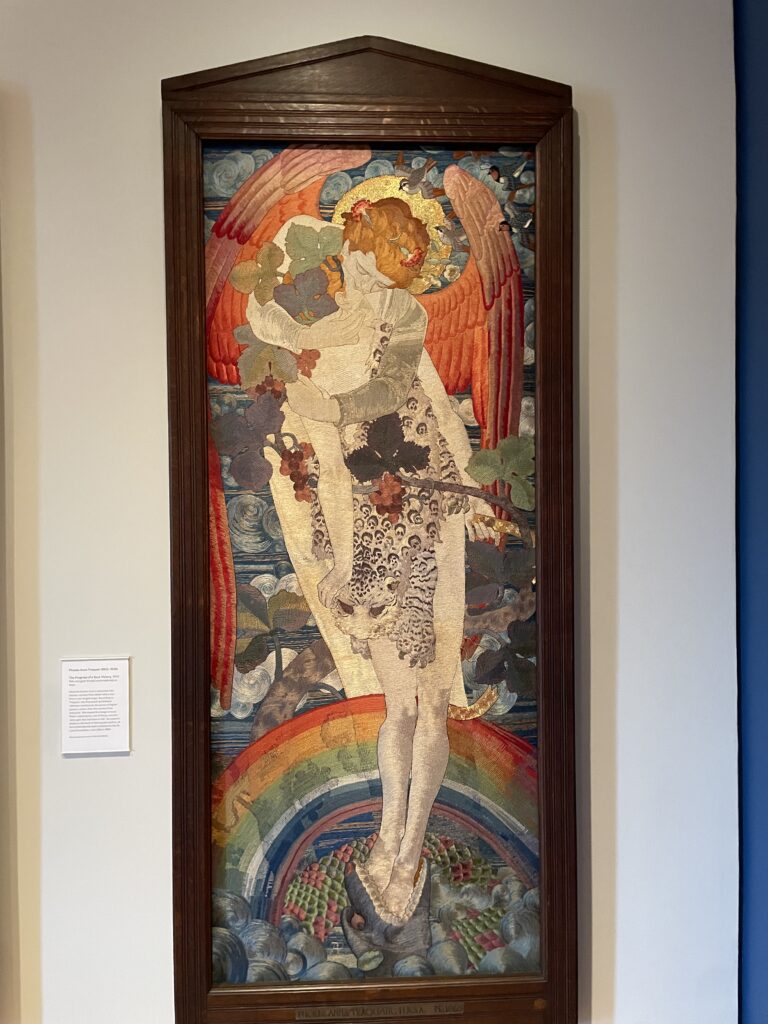
The Victory, embroidery panel by Phoebe Anna Traquair. This part of a series of four, called The Progress of a Soul, which Traquair was embroidering in the same time frame as she was making the murals in the church that is now the Mansfield Traquair Centre.

She also got to meet with Dr. Elizabeth Cumming, the first real scholar of Traquair’s work, who spearheaded the National Gallery of Scotland exhibition in 1993 that brought Traquair back to the attention of the Scottish art world.

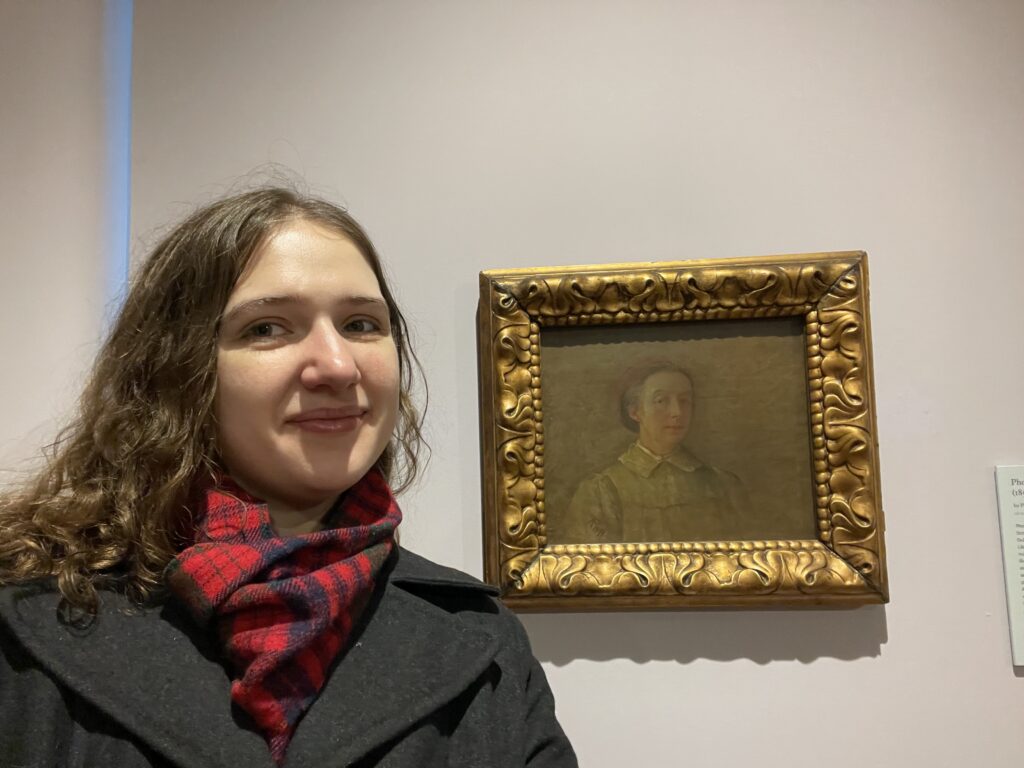
Emily Ross, with the self portrait of Phoebe Anna Traquair in the National Portrait Gallery of Scotland.

When she wasn’t doing scholarly visits, Emily was enjoying haggis with neeps and tatties.

Graduate Qualifying Paper, Graduate Student, Research Travel

Erin Bourget in Northern Ireland

This was my second trip to Belfast, Northern Ireland to see the International Wall murals, so I knew the neighborhood I wanted to go to and what I wanted to document while there.  Due to some issues with my flights, a short trip was even shorter, and I ended up having only one full day in Belfast which provided a great opportunity to get the photos I wanted.  Belfast recently opened their brand new Grand Central Train Station, so my train from Dublin arrived at the new station.  I went to Mass at St. Peter’s Catholic Cathedral in the West Belfast neighborhood, which was not only a beautiful place, but also historically important to the Catholic community in Belfast, and the famed Divis Flats were built next to the church.  I spoke with some of the local residents about the International Wall mural project, and got names of contacts to interview for my project.  I was surprised and excited to find out just how small the West Belfast neighborhood is, despite being geographically a significant part of the city, it is a community that is well connected.

St. Peter’s Catholic Cathedral, Belfast. An integral part of the West Belfast neighborhood, the Cathedral was built in the early 1860s in a Gothic style. The Divis Flats complex was built next to the Cathedral in 1966 and was a stronghold for Irish Republicans during the Troubles. St. Peter’s is located just two blocks from the majority of political murals in the West Belfast area.

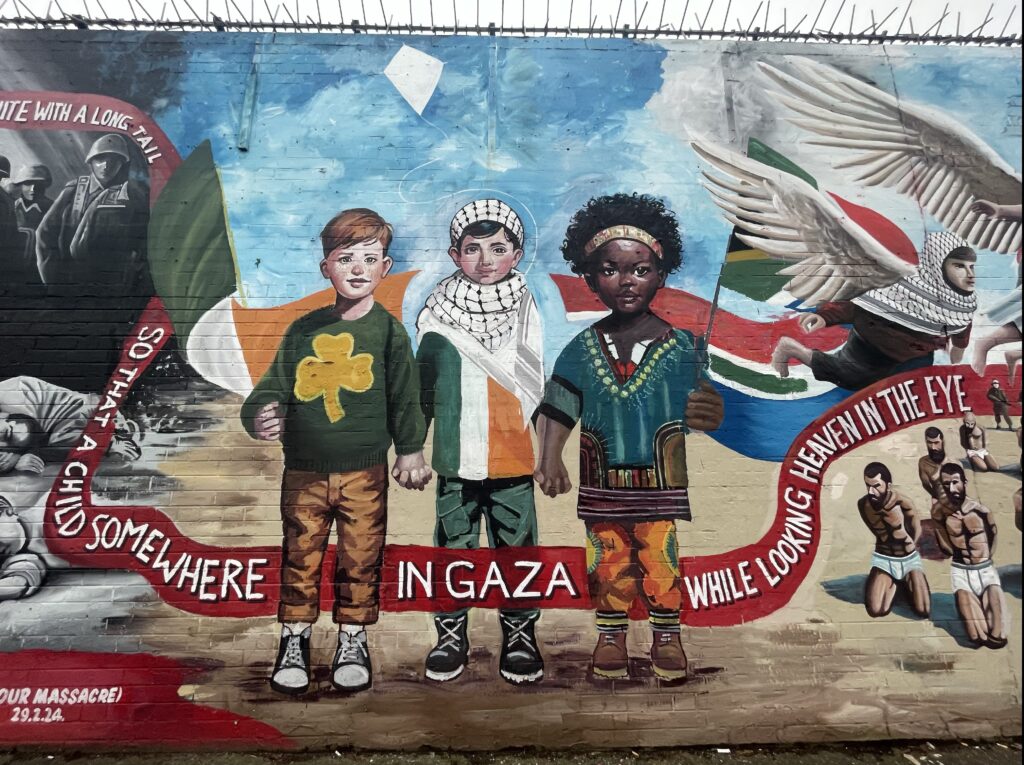
After Mass, I walked just two blocks to the Falls Road where I photographed the International Wall murals.  They were in nearly pristine condition, which was surprising since the weather in Belfast would lead me to expect some chipping and erosion of the paint, however they were in the same condition as when I saw them in June.  The wall is part of the “Peace Walls” in Belfast, that separate the Catholic and Protestant communities, and is  currently painted with a series of Palestinian solidarity murals.  I chatted with neighbors and tourists near the murals, the neighbors were particularly excited to hear about my research.  One man told me about Brendan Hughes (pictured in one of the murals), who grew up in the West Belfast neighborhood, and he pointed out his house—Hughes is famous for being a member of the Provisional IRA and while in prison leading the “dirty protest.”  On the Falls Road, I stopped at the Garden of Remembrance, looking for more Palestinian solidarity messaging.  I did find some on the walls leading up to the Garden.  My last major stop along the Falls Road was the famed Bobby Sands mural on the side of the Sinn Fein offices building, which is also in near perfect condition and is a common stop on the “Black Taxi Tour” route, which provides tourists with a guided and curated look at famous sites from the Troubles.

International Wall, Divis Street, Belfast. These children are the centerpiece of the International Wall mural series in West Belfast, organized by the “Painting for Palestine” community group in early 2024. They represent the children of Ireland, Palestine, and South Africa.

International Wall, Divis Street, Belfast. Painted from a digital graphic designed by Palestinian artist Said Hassan, this mural features Khaled Nabhan holding his granddaughter, Reem, age 3, who was killed in an Israeli airstrike in Nov 2023. Khaled was killed just over a year later.

International Wall, Divis Street, Belfast. This mural, a recreation of Palestinian artist Heba Zagout’s original work, shows the city of Bethlehem with fireworks.

I was successful in documenting the Palestinian solidarity murals, and I appreciated seeing them at a different time of the year, since I previously saw them at the beginning of the tourist season.  I also explored more of the neighborhood and talked with local residents at the church and around the murals.  The people of West Belfast are incredibly friendly, they love to tell tourists about their city, and they are happy to share their stories with those who have a genuine desire to learn more about their community.  I am truly blessed and thankful for the opportunity to travel to Belfast to see the murals, to meet the people, and to see the context for these pieces of art.  This is certainly an experience I will never forget!


Graduate Qualifying Paper, Graduate Student, Research, Research Travel

Michaela Piene in Florence and Rome

In September of 2024, graduate student Michaela Piene of the Art History and Museum studies program at the University of St. Thomas received a departmental travel grant to complete her research in Italy in support of her qualifying paper. Michaela’s research focuses on quattrocento devotional art, specifically the usage of visual languages and sensory qualities within the work of Fra Angelico. 

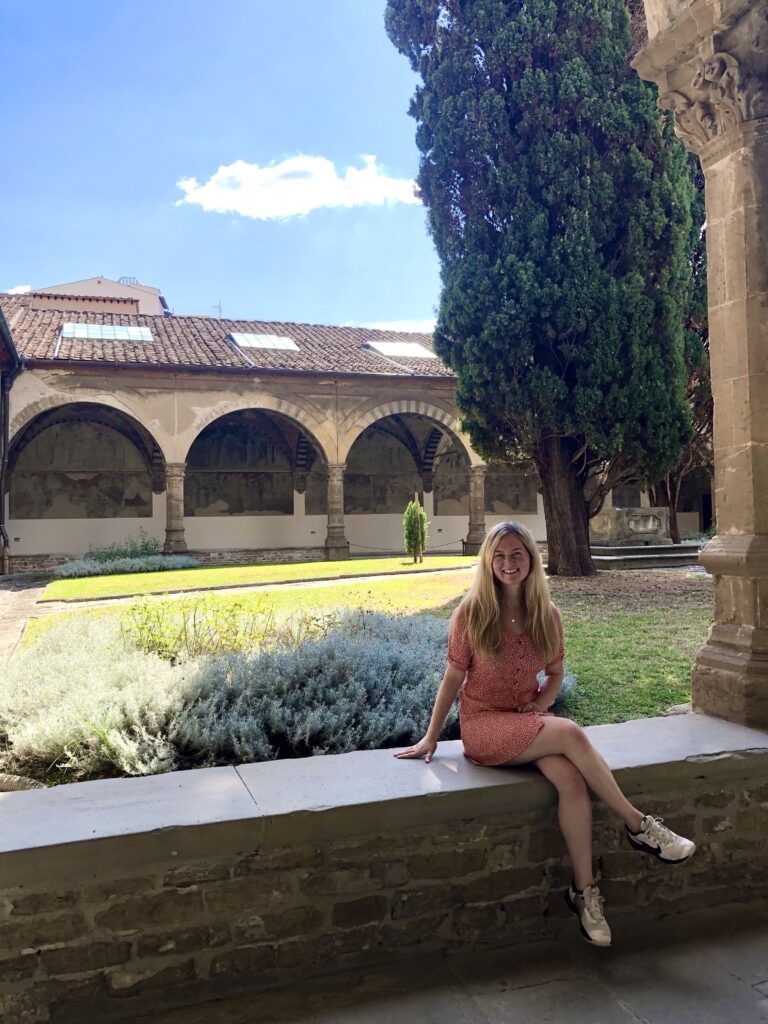
Michaela Peine in Cloister of Santa Maria Novella, Florence

The in-person experience of Renaissance art was key to her research, allowing her to study the material and formal qualities that activate these works of art up close and in a more personal way. She divided her time primarily between Florence and Rome, researching Fra Angelico’s work and hunting for contemporary examples of similar activation in art. A key element of her trip was a visit to the Niccoline Chapel, located within the Vatican Palace. The chapel, entirely frescoed by Fra Angelico, is typically closed to guests, however, Michaela was able to connect with Dr. Fabrizio Biferali, the curator of Renaissance art in the Vatican Museum. Dr. Biferali brought Michaela on a tour of the Niccoline Chapel and provided her with conservation reports, allowing her to study in-depth the architectural and material context of Fra Angelico’s work. The work Michaela did in Italy is key to the research for her qualifying paper, which is advised by Dr. Lois Eliason, and will be presented in December of 2024. 

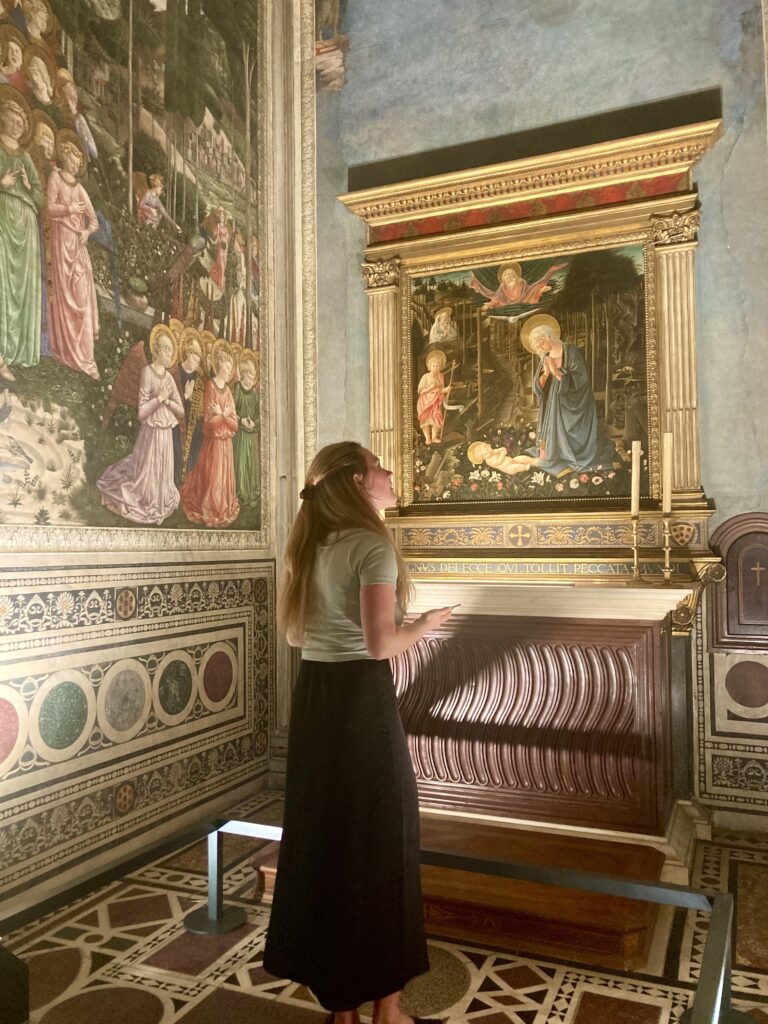
Michaela in Chapel of the Magi, Palazzo Medici Riccardi, Florence.

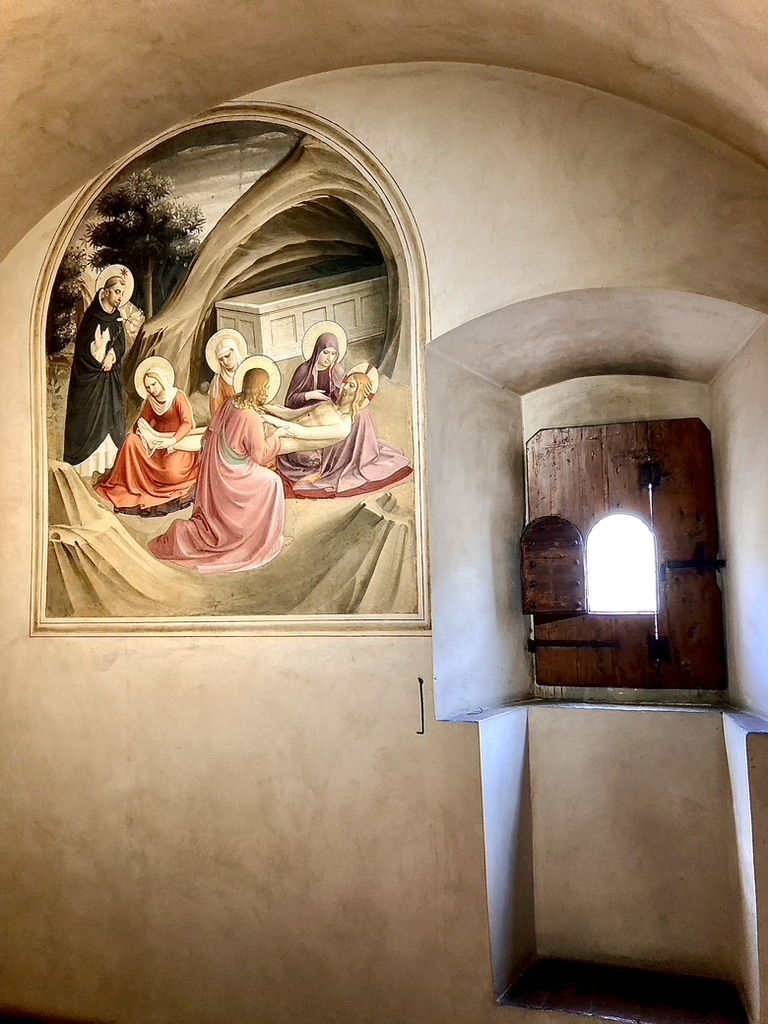
Fra Angelico painting in cloister of San Marco, Florence.

Graduate Qualifying Paper, Graduate Student, Research, Research Travel

Elsa Ballata in England

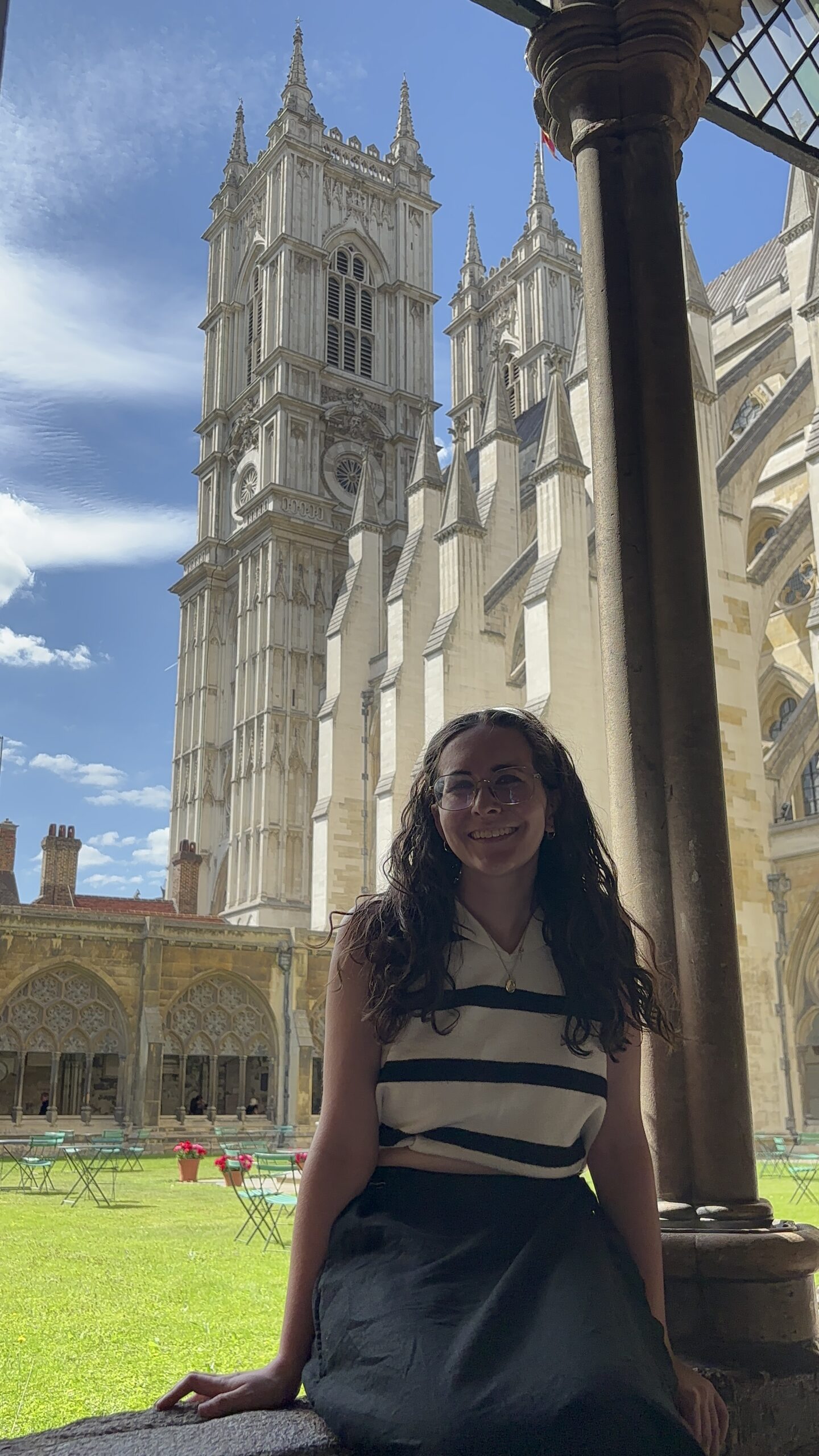
In September 2024, Art History graduate student Elsa Ballata traveled to England with her mother, who proclaimed herself Elsa’s research assistant, to research fan vaulting for her qualifying paper. Over the course of a week, Elsa visited six different sites around the country where she toured buildings and spoke with guides about the history of each location. She spent two days in the Oxford area visiting the staircase at Christ Church College in Oxford and taking a day trip to Gloucester to see the Cathedral and the famous cloisters. After finishing up her time in Oxford, Elsa took a train to London where she visited Westminster Abbey, the British Museum, and a number of other tourist attractions in the city. From London, she took days trips to Cambridge, Salisbury (and Stonehenge), and Canterbury. 

Photo of Elsa peeking out of a cloister stall at Gloucester Cathedral, her favorite fan vaults from the trip, built in the 14th century.

She spent time at each site she visited speaking with the staff about the vaults and history of the buildings, finding the staff to be as excited as her to be studying there. A couple of particularly memorable conversations she had were in Westminster Abbey, where she spoke to a priest before any other members of the public were allowed in the chapel, and with an amazing guide in Canterbury, who spent the week before her arrival researching fan vaults himself so she could ask more questions. It was an amazing experience for Elsa, allowing her to be in the spaces she was studying in person and take notes about details that photos online rarely manage to capture.  

Great Hall Staircase vaults, Christ Church College, Oxford, 17th century.

High vaults of Henry VII’s Lady Chapel, Westminster Abbey, London, early 16th century.

Bell Harry Tower vaults, Canterbury Cathedral, late 15th/early 16th century.

Faculty, Graduate Student, Museum Studies, Research, Research Travel

Research at the Rijksmuseum

In the summer 2023, Dr. Amy Nygaard and graduate students Michaela Peine and Madeleine DeGrace travelled to Amsterdam with the support of a Graduate Research Team Grant from the Center for Faculty Development at UST. Their research project titled, Decoloniality, Decentering, and Didactics: Close Analysis of Antiracism Methodologies in the Rijksmuseum, closely examined 77 gallery labels that were written to highlight each object’s connection to the human slavery for the museum’s 2021exhibition “Rijksmuseum & Slavery”. These 77 labels were juxtaposed with the existing object labels for that exhibition. When the research team visited the Rijksmuseum in 2023, many objects included in the “Rijksmuseum & Slavery” had new, what the team called “third label or reconciled” label that synthesized information from the previous two labels. With all of this text in hand, the research team set out to do a careful rhetorical analysis of labels.

Photo from interview of Rijksmuseum’s curators taken in August 2023 by Dr. Amy Nygaard, Assistant Professor of Art History and Director of Museum Studies.  From Left to Right: Michaela Peine, Graduate Student in Art History and Museum Studies Certificate; Eveline Sint Nicolaas, Senior Curator of History at the Rijksmuseum; Maria Holtrop, Curator of History at the Rijksmuseum; Madeleine DeGrace, Graduate Student in Art History and Museum Studies Certificate

Conference Presentations, Graduate Student, Presentations

2024 Travel Highlights: Emily Ross in Chicago

Emily Ross (she/her) is a graduate student in the Art History department. She works at the Minneapolis Institute of Art, and her focus of studies is on the reinterpretation of medieval art in later revival eras. 

In April of 2024, she presented her paper, “Adorning Mary: The Brooch in Latter Quattrocento Florence,” to the Midwest Art History Society (MAHS) annual conference in Chicago. The paper focused on the presence of brooches in Madonna and Child paintings in Florence, and their relative boom in the 1460s and 1470s, corresponding to the height of productivity for goldsmith-painters and sumptuary law prescribing and limiting the wearing of brooches for women at the time. Other papers in the panel discussed violence and sensuality in Florentine mannerist sculpture and the continuous motif of Mary revealing Christ from under a blanket in Paduan art. 

The conference was held at the Art Institute of Chicago, and at the various buildings that the School of the Art Institute owns, with keynote addresses surrounding the opening of the exhibition “Picasso: Drawing from Life.” There were also tours of the prints and drawings study room and of the Smart Museum’s Modern Meiji exhibition.

Emily’s talk was very well received, garnering compliments from those who had not even been in attendance but heard it was a highlight from those who did attend.