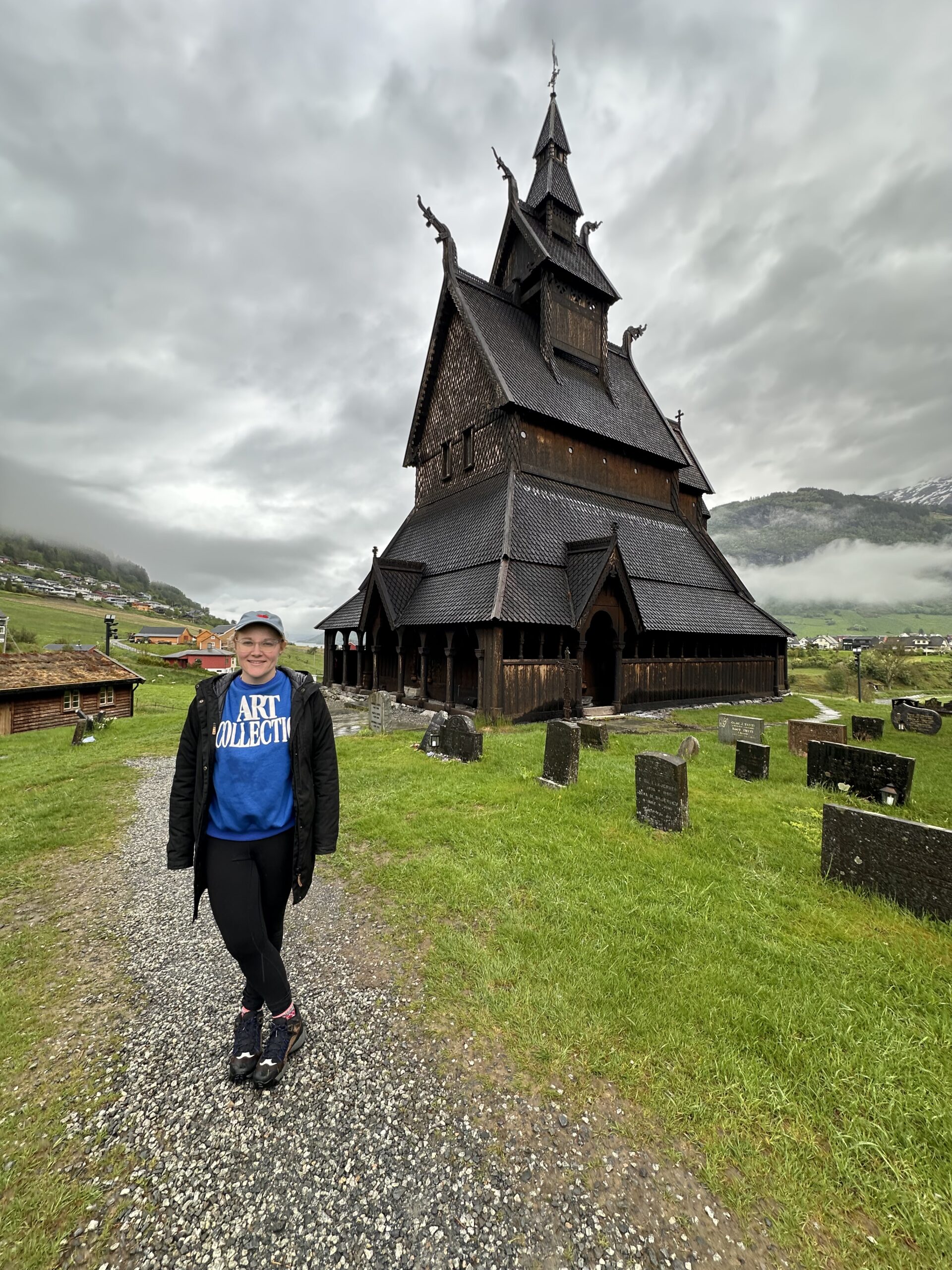
Hopperstad
The stave churches from the Middle Ages are Norway’s most important contribution to the world’s architectural heritage. It is estimated that over 1200 stave churches once existed in Norway, most of them dating from the first half of the 12th century until the Black Death in 1350AD. Today, however, only 28 of these beautiful churches still exist in the world. Made entirely out of wood, these churches have captured Norway’s history for over 900 years. They are admired by architects and engineers from all over the world, and feature Viking art styles combined with Christian motifs and imagery.
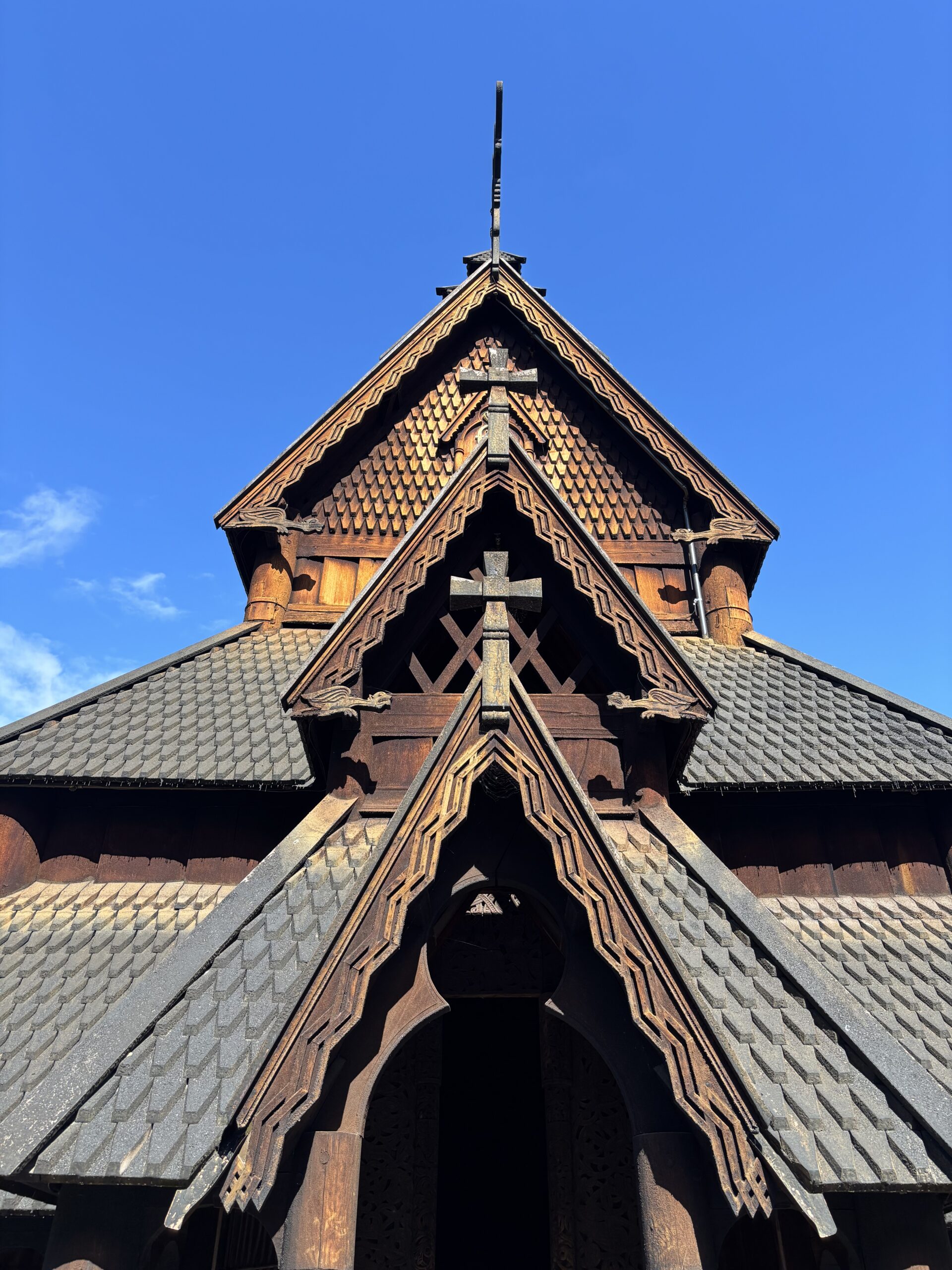
Gol Church roof
On my travels I was lucky to experience seven of these wooden marvels: Gol Stave Church, Torpo Stave Church, Borgund Stave Church, Kaupanger Stave Church, Undredal Stave Church, Hopperstad Stave Church and UNESCO World Heritage site Urnes Stave Church. Located deep in the fjords of Norway, these churches both capture the motifs and culture of the late Viking Age as well as represent and reflect the communities where they are located. I found that each church differed in size, appearance and cultural identity. Many narrowly escaped being torn down or destroyed as new churches and their modern amenities were preferred by the local parishes. Yet, the few that do survive today are either still active parishes or were sold/given to the Society for the Preservation of Norwegian Ancient Monuments. As for the stave churches that survive today, the medieval art they contain is unlike anything I have ever seen. It is intricate, beautiful, showcases exquisite craftsmanship, and oddly funny at times all while capturing Christianity’s beginnings in Norway.
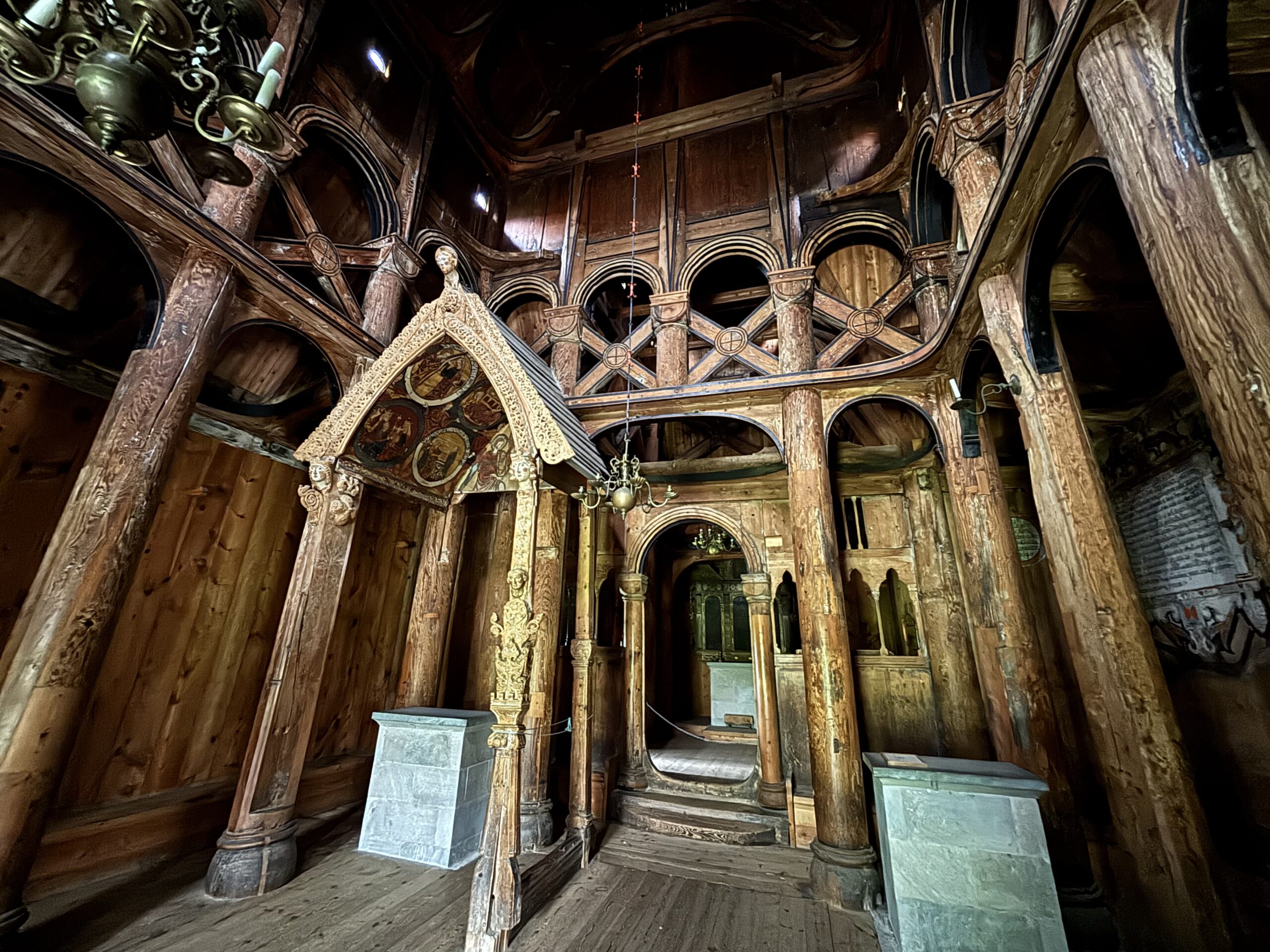
Hopperstad interior
Beginning in Oslo, I first saw Gol Stave Church. Originally located in Gol, it was disassembled and transported to Oslo after it was purchased by King Oscar II of Sweden, a loyal friend of Norway, who saved it from demolition. Today it is part of the Norwegian Folk Museum. From there we travelled north to see Torpo Stave Church. A small, somewhat amputated stave church without a chancel (that again narrowly avoided demolition in 1880) that features an exquisite painted barrel vault from the middle ages. One of only two such vaults left in Norway (the other is located in the Historical Museum in Oslo from the now gone Ål stave church – we saw this as well), this barrel vault depicts the somewhat gruesome story of St. Margaret of Antioch.Continuing northward we then stopped at Borgund Stave Church, the most authentic and best preserved stave church in existence. It is also the only stave church that still has its accompanying standing bell tower. Borgund Stave Church is often called the “stave church of all stave churches” as it is used as a guide for all stave church restorations. It smelled of tar and was located next to a river deep in the heart of the fjord. Behind the church was the ancient Kings Road you could walk on and friendly sheep would come up to you from the nearby farms. Its atmosphere and intricate small dark interior transported you back to medieval times. About an hour from Borgund Stave Church is Kaupanger Stave Church. Still an active parish, this church has a long history of renovation; however a restoration in the 1960s returned the church to its 1600s appearance. It is very well kept, in fact a local and our tour guide told me that he believes consistent use is what keeps the stave church alive and best preserved. Further north of Kaupanger is Urnes Stave Church. This UNESCO World Heritage Site, sits in a small town on the edge of the fjord. The most common way to get to the church is by ferry (as it was not until 1982 that a road was made to access the church) and then a one mile hike up the hill. Urnes Stave Church is where the Urnes style of Viking Art got its name. The northern portal is richly carved with intertwining vines and animals. It is dated to the second half of the 11th century. Inside the church it is richly decorated with 16th century decor however the bishop’s chair in the chancel and the viking ship candelabra on the altar are medieval amongst a few other things.
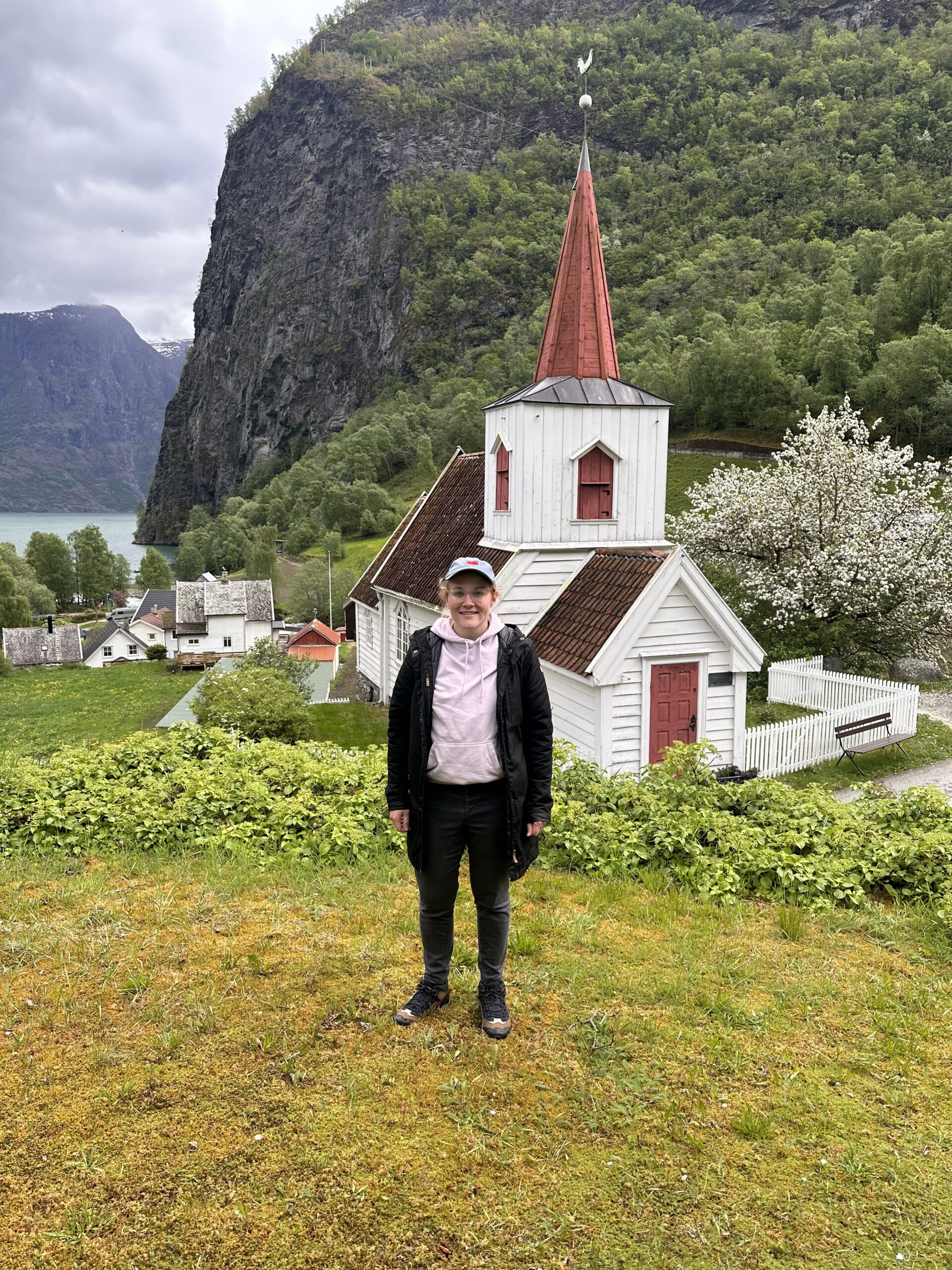
Undredal
Undredal Stave Church is considered the smallest church in Scandinavia. Located in the small town of Undredal with only 130 inhabitants (and 500 goats) this small church is still very active in the community. A community member said his family used to spend 3 hours every Sunday traveling the Sogn fjord to get to church. The inside of the church is filled with mismatched artwork, a deer chandelier and a blue starry ceiling featuring biblical figures. Undredal also still has and uses its medieval bell.
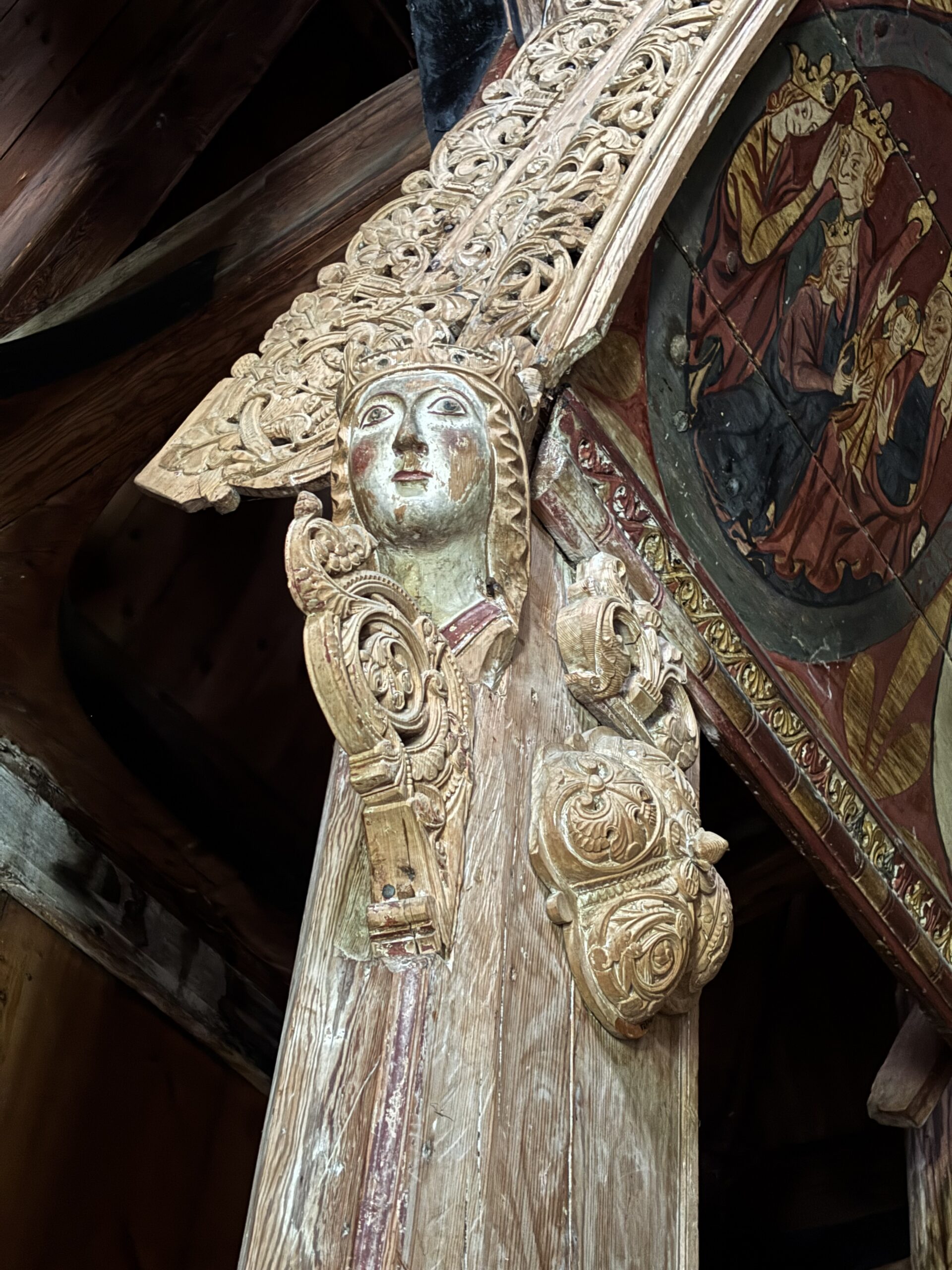
Hopperstad baldachin queen detail
The last church I visited was Hopperstad Stave Church. Located in Vik, this stave church was restored in the 1880s by architect Peter Blix. Its exterior now resembles that of Borgund Stave Church. Built on a hill, the Hopperstad Stave Church is home to the only remaining chancel screen left in any stave church. It also contains the only remaining side altar canopy or baldachin. Buried beneath the church is a woman whose large stone tomb is seen on the floor after one enters through the richly decorated west portal. It was common to bury bodies under the floor of the church, especially if they were someone of importance, however the use of stone is unlike any other stave church burial. The church has three portals, the large highly decorative western portal and two smaller, but rare portals.
Interesting facts:
- The churches are often very dark and smell of tar and wood
- In medieval times, people had to stand during service. Men and women were separated
- The portals are almost all richly carved with motifs of dragons, vines, snakes, flowers and other foliage or animals.
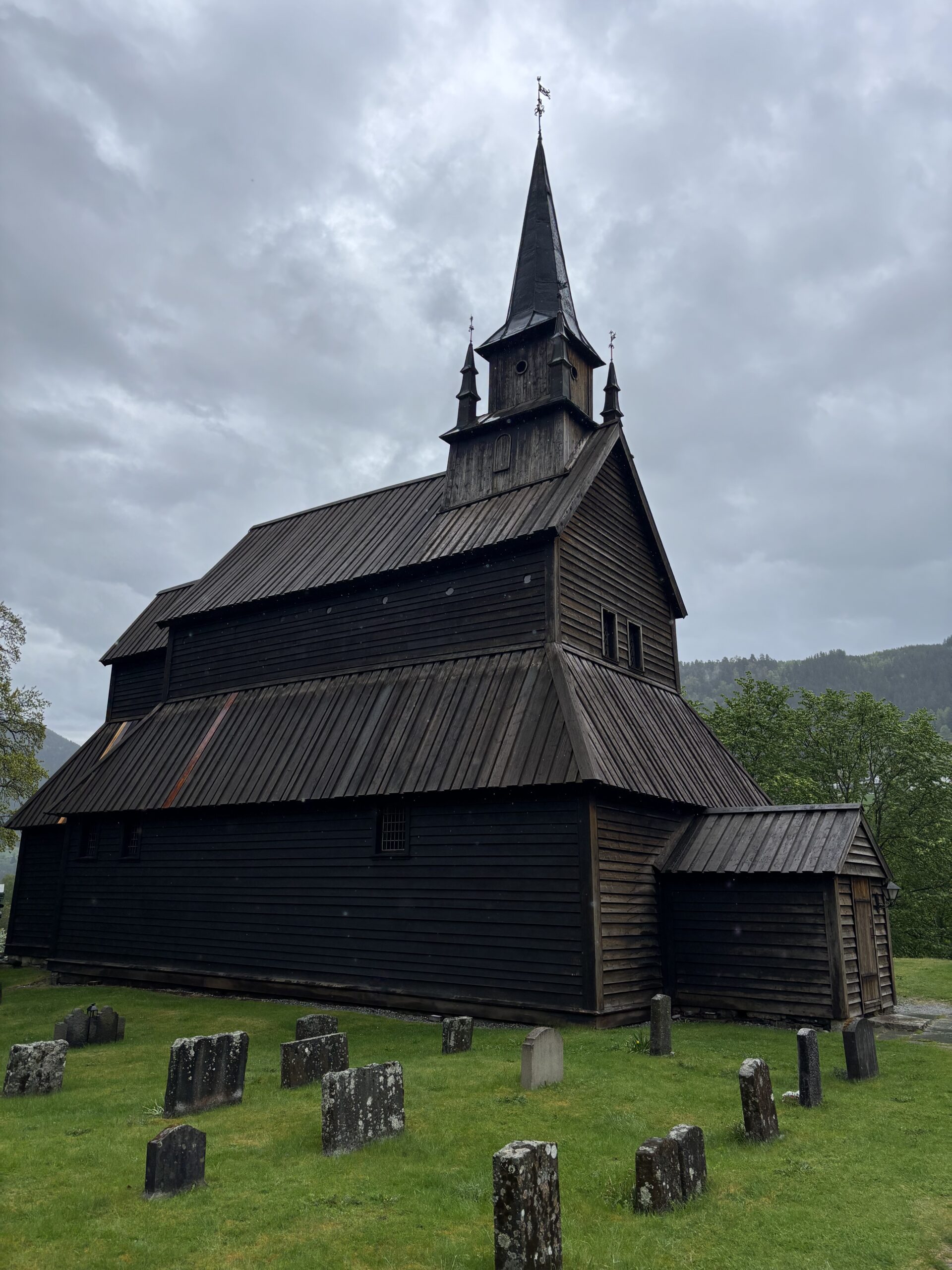
Kaupanger Stave Church
- The cemeteries at all of these stave churches are still active. For example, at Borgund bodies get 25 years to be buried into the ground and then they decompose and a new body is laid in its place.
- Each church still has at least one service a year. Often times on St. Olav’s day or around Christmas. They are also used by the communities for weddings and baptisms
- Many of the churches are built on the same site as former wood churches. In Urnes, for example, the current church is actually the 3rd or 4th church on the site
- Many people were buried under the churches. They also have found numerous coins, offerings, and even a game piece.
- There is medieval graffiti all over the interior of the churches often of animals, weapons, symbols or weapons as well as runic inscriptions