August – 2026 – In Context
Monthly Archives

August 2026

Conference Presentations, Graduate Qualifying Paper, Graduate Student, Research, Research Travel

Erin Mably attends the Pacific Arts Association Conference and examines First World War propaganda and memorials

This past June and July, I was extremely fortunate to receive two travel grants that not only allowed me to attend my first academic conference with the Pacific Arts Association at the Wereldmuseum in Leiden, in the Netherlands, but also to visit London for research for my qualifying paper on the use of medieval imagery in propaganda and memorials of WWI in the United States and Britain.

The first part of my trip I spent in Leiden, where I attended the 14th International Symposium of the Pacific Arts Association entitled ‘Oceanic Blazing Forms: Memory, Place-making and Imagination’, alongside my fellow graduate student Rachel Chow and professors Dr. Amy Nygaard and Gretchen Wagener-Burau. Not only was this my first academic conference, but it was also my first time traveling internationally, making this trip especially memorable.
Erin with her conference name tag
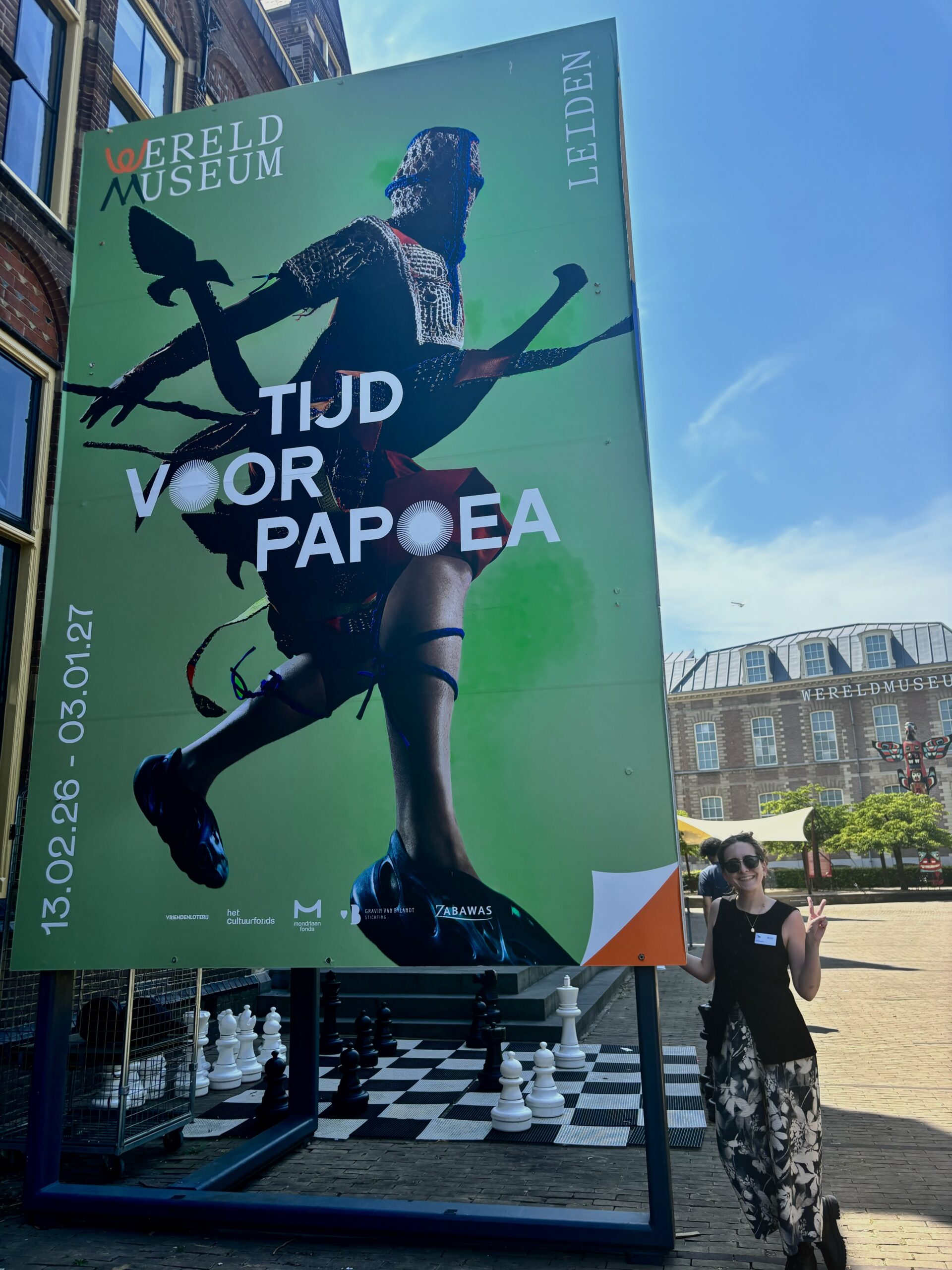
Erin in front of the Time for Papua exhibition sign at the Wereldmuseum in Leiden

While Gretchen and Amy were able to present on the work our Elevating the Arts team completed this past academic year for the American Museum of Asmat Art, I had the opportunity to support their presentation as well as attend other presentations and discussions from other scholars, museum professionals, and artists from around the world. The presentation on our work highlighted the digitization of archival records from the 1970s that were donated by Ursula Konrad from our sister museum in Asmat, the Asmat Museum of Culture and Progress in Agats, which was made possible by an Elevating the Arts grant to help preserve, increase access, and digitally repatriate important documentation related the museum’s history and Asmat culture.
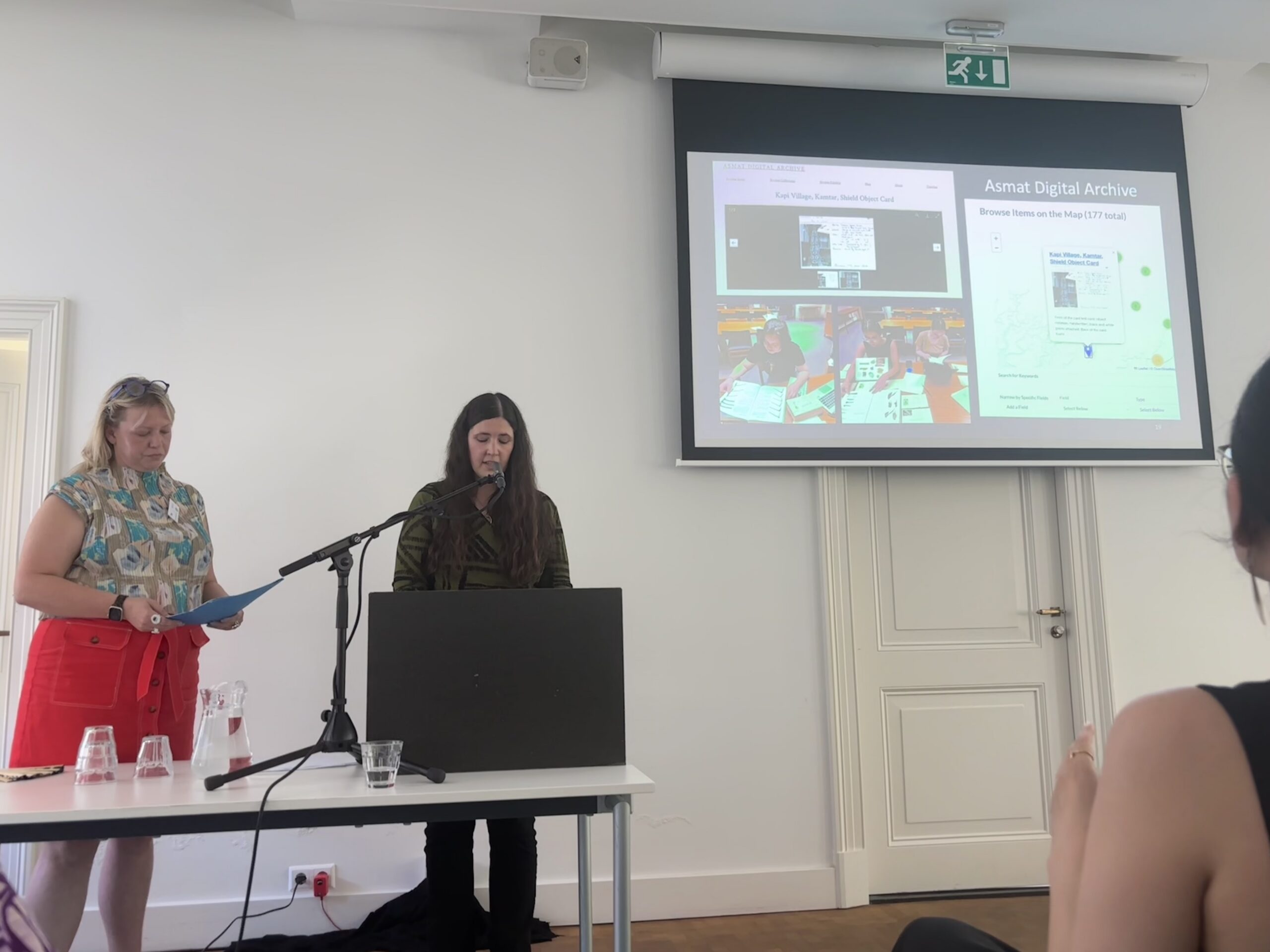
Director Wagener-Burau and Dr. Nygaard presenting on our Asmat Digital Archive project

Beyond our own presentation, the symposium featured a wide range of lectures, panel discussions, and performances exploring Pacific arts, culture, indigenous knowledge, and museum studies. As my first academic conference, this was an invaluable experience because I was able to see how experienced scholars communicate their research and engage in conversations with other professionals, while also building my own network. It was especially meaningful for me to meet and speak with Ursula Konrad during the conference about her experiences and connection to Asmat after spending the past year working with the materials she worked on and donated. Representing the University of St. Thomas in an international academic setting and traveling abroad for the first time was both rewarding and exciting, and I’m grateful for the opportunity this program has given me to be able to experience this.
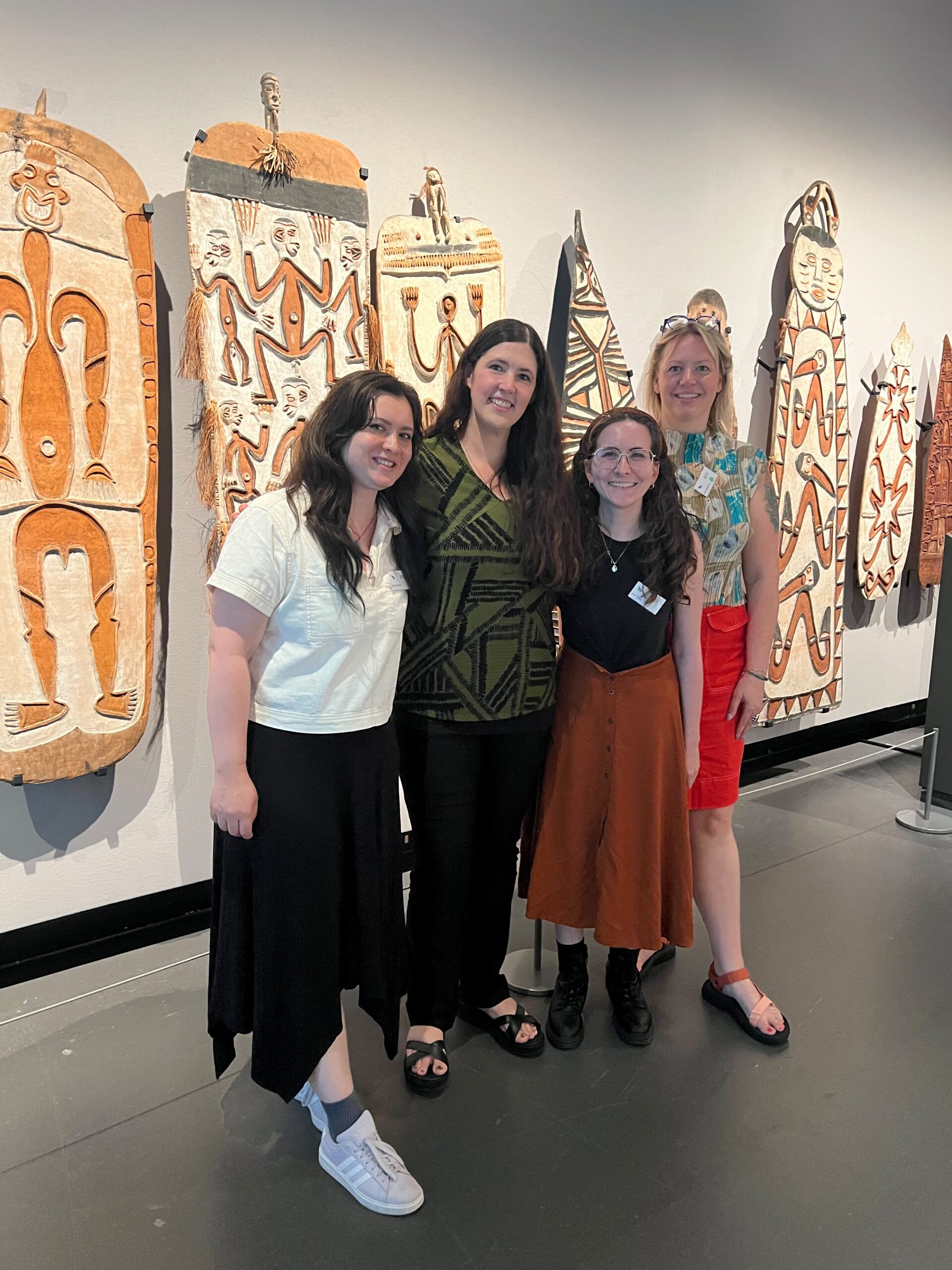
Rachel Chow, AMAA Director Gretchen Wagener-Burau, Erin, and Dr. Amy Nygaard in front of Asmat shields in the Time for Papua exhibition

For the second part of my trip, I spent about a week in London, where I conducted research for my qualifying paper examining the use of medieval imagery in First World War propaganda and memorials in the United States and Britain. Over the course of my stay, I visited a wide variety of museums, historical sites, churches, and memorials to better understand how medieval visual traditions were adapted and transformed in Britain to communicate ideas of sacrifice, heroism, memory, and national identity during and after the war.

One of the most rewarding parts of the trip was being able to study First World War posters from the Imperial War Museum’s collection in person. While many of these images are available digitally, seeing the original posters up close revealed details that are not easily transferred via a screen, giving me a better idea of the impact and effect they had on their original and intended viewers. My research also took me beyond museum galleries and into some of London historic churches and memorial spaces. One of the most memorable moments of the trip came at Westminster Abbey, where I was originally there to study the Tomb of the Unknown Warrior, but after becoming aware via a brochure of a Florence Nightingale Chapel on a second level available via appointment and asking a member of staff, they were kind enough to give me impromptu access to the chapel. Discovering and being able to access this beautiful lesser-known space and see the monumental medieval-inspired stained-glass window memorializing nurses and service workers during the World Wars up close was an amazing experience that will certainly become a central part of my paper and was also a reminder that valuable research and discoveries can happen through curiosity and simple conversation.

Stained glass window by Hugh Easton (1950) in the Florence Nightingale & Nurses Memorial Chapel in the upper Islip chantry chapel at Westminster Abbey, photo taken by Erin

Another highlight was visiting the National Maritime Museum in Greenwich near the Royal Observatory and seeing the WWI stained glass memorial designed by John Dudley Forsyth for the Baltic Memorial Exchange in London, which was moved and restored in 2005 after the glass memorial was damaged in 1992 by an IRA bombing.  While it is regrettable that the glass memorial was damaged and not in its original intended location, its monumental size displayed at level with the viewer gave me invaluable close-up views of the piece and its depiction of the female personifications of the ancient virtues of Truth, Hope, Justice, Fortitude, and Victory and use of Red Cross symbolism and imagery, key aspects of my qualifying paper.
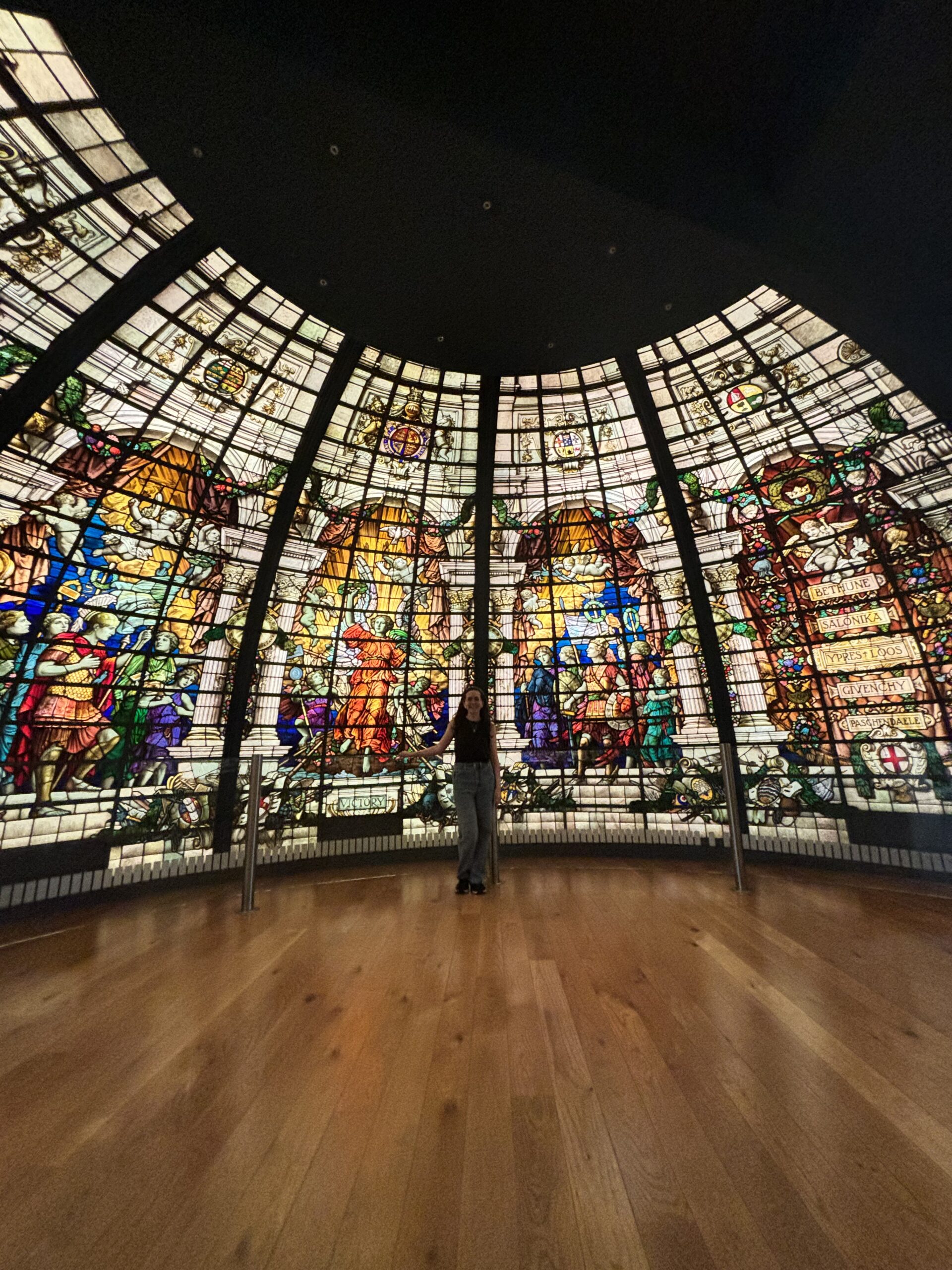
Erin in front of the Baltic Exchange Memorial glass, designed by English artist John Dudley Forsyth in 1922 for the commemoration of those of the Exchange who had died in the war, now in the National Maritime Museum in Greenwich since 2005

 These symbols and topics appeared in many of the propaganda, monuments and works of art memorializing the First World War that I visited and viewed on my trip, showing how the war was sold and remembered by those in Britain, demonstrating how artists and patrons used medieval and religious imagery to express national ideals, heroism, grief, and remembrance during a time when warfare and its ideals were rapidly changing. Visiting and viewing these works of art gave me a much deeper appreciation and meaning in ways that photographs can’t fully convey.
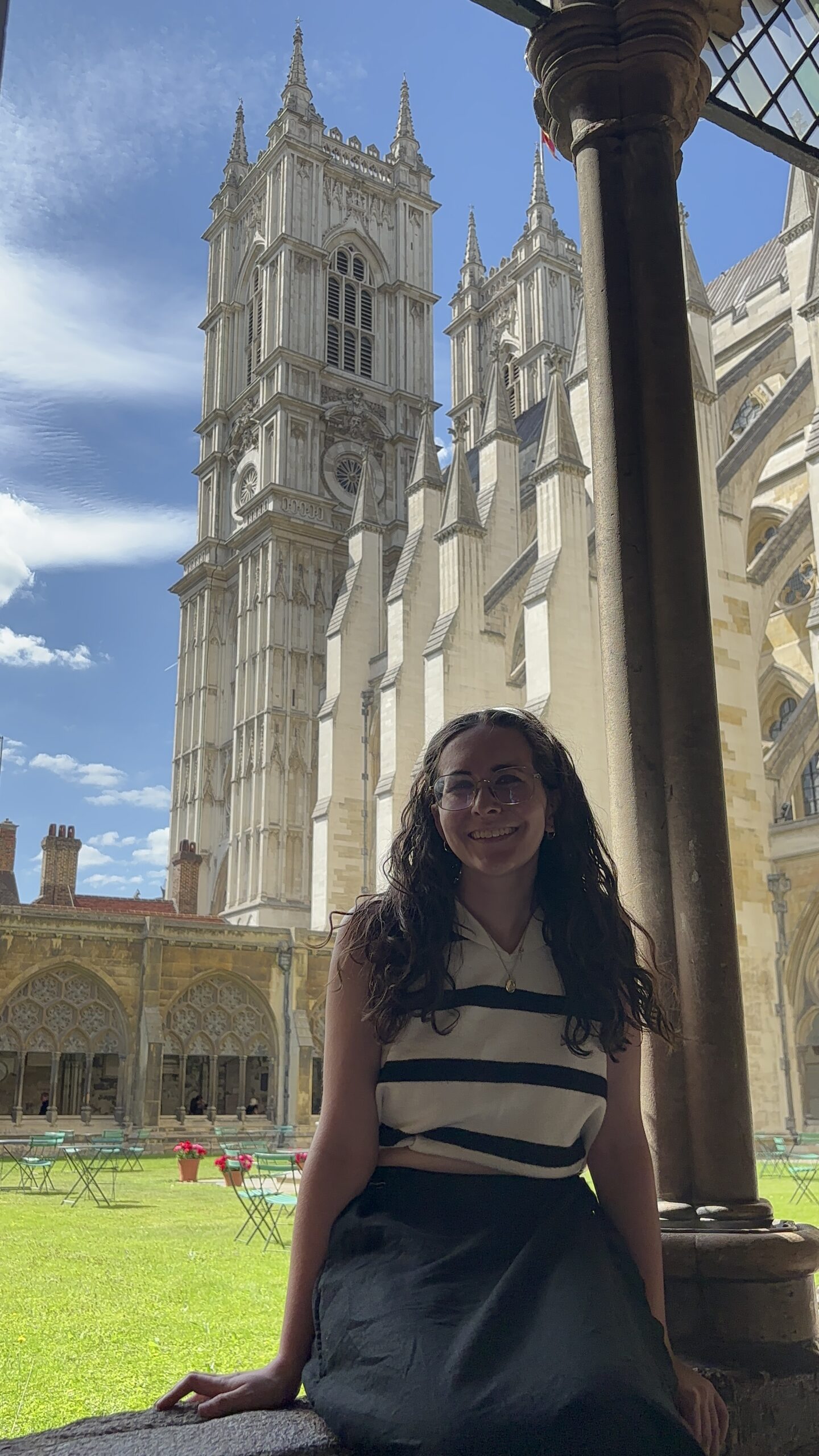
Erin at Westminster Abbey

The opportunity to conduct research firsthand in London as well as being able to visit sites and museums such as the V&A, the British Museum, the Imperial War Museum, etc. that I have always wanted to has been such a joy and wonderful learning experience for me. This trip and the research I conducted not only strengthened my research for my qualifying paper but has also given me invaluable experiences and perspective that will shape my future research.
Graduate Qualifying Paper, Graduate Student, Research Travel

Norway’s Stave Churches, Lorene McGrane

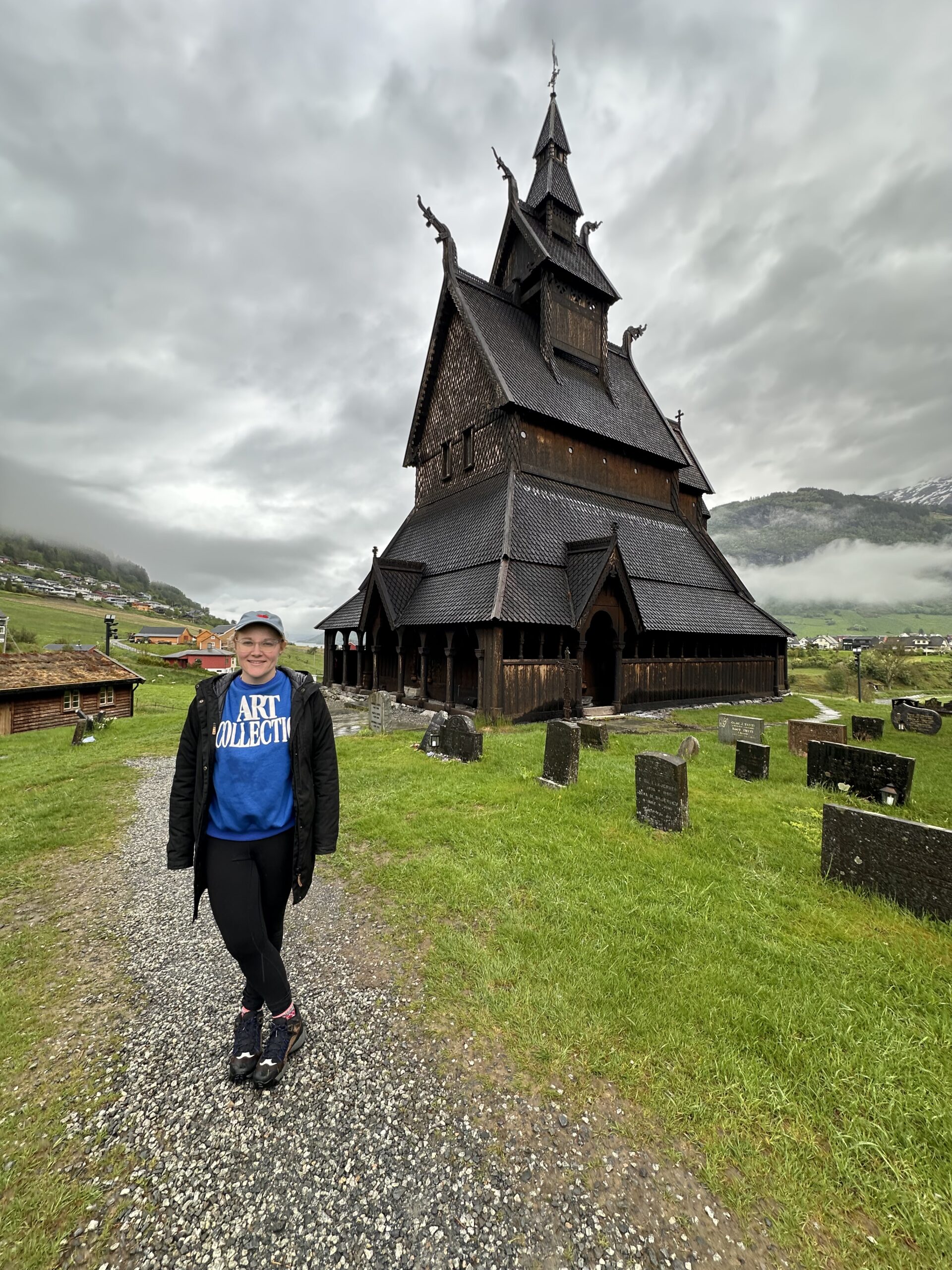
Hopperstad

The stave churches from the Middle Ages are Norway’s most important contribution to the world’s architectural heritage. It is estimated that over 1200 stave churches once existed in Norway, most of them dating from the first half of the 12th century until the Black Death in 1350AD. Today, however, only 28 of these beautiful churches still exist in the world. Made entirely out of wood, these churches have captured Norway’s history for over 900 years. They are admired by architects and engineers from all over the world, and feature Viking art styles combined with Christian motifs and imagery.

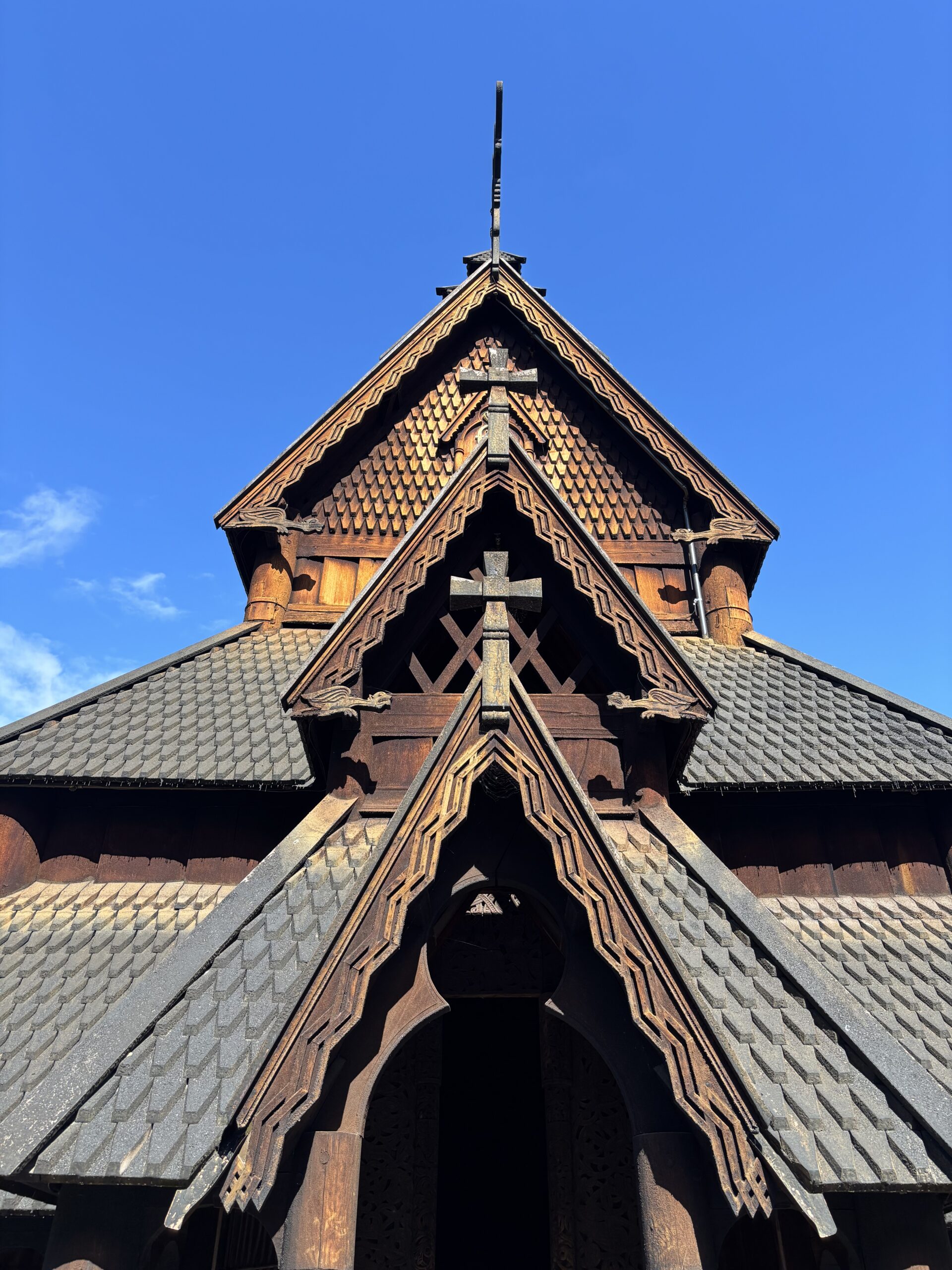
Gol Church roof

On my travels I was lucky to experience seven of these wooden marvels: Gol Stave Church, Torpo Stave Church, Borgund Stave Church, Kaupanger Stave Church, Undredal Stave Church, Hopperstad Stave Church and UNESCO World Heritage site Urnes Stave Church. Located deep in the fjords of Norway, these churches both capture the motifs and culture of the late Viking Age as well as represent and reflect the communities where they are located. I found that each church differed in size, appearance and cultural identity. Many narrowly escaped being torn down or destroyed as new churches and their modern amenities were preferred by the local parishes. Yet, the few that do survive today are either still active parishes or were sold/given to the Society for the Preservation of Norwegian Ancient Monuments. As for the stave churches that survive today, the medieval art they contain is unlike anything I have ever seen. It is intricate, beautiful, showcases exquisite craftsmanship, and oddly funny at times all while capturing Christianity’s beginnings in Norway.

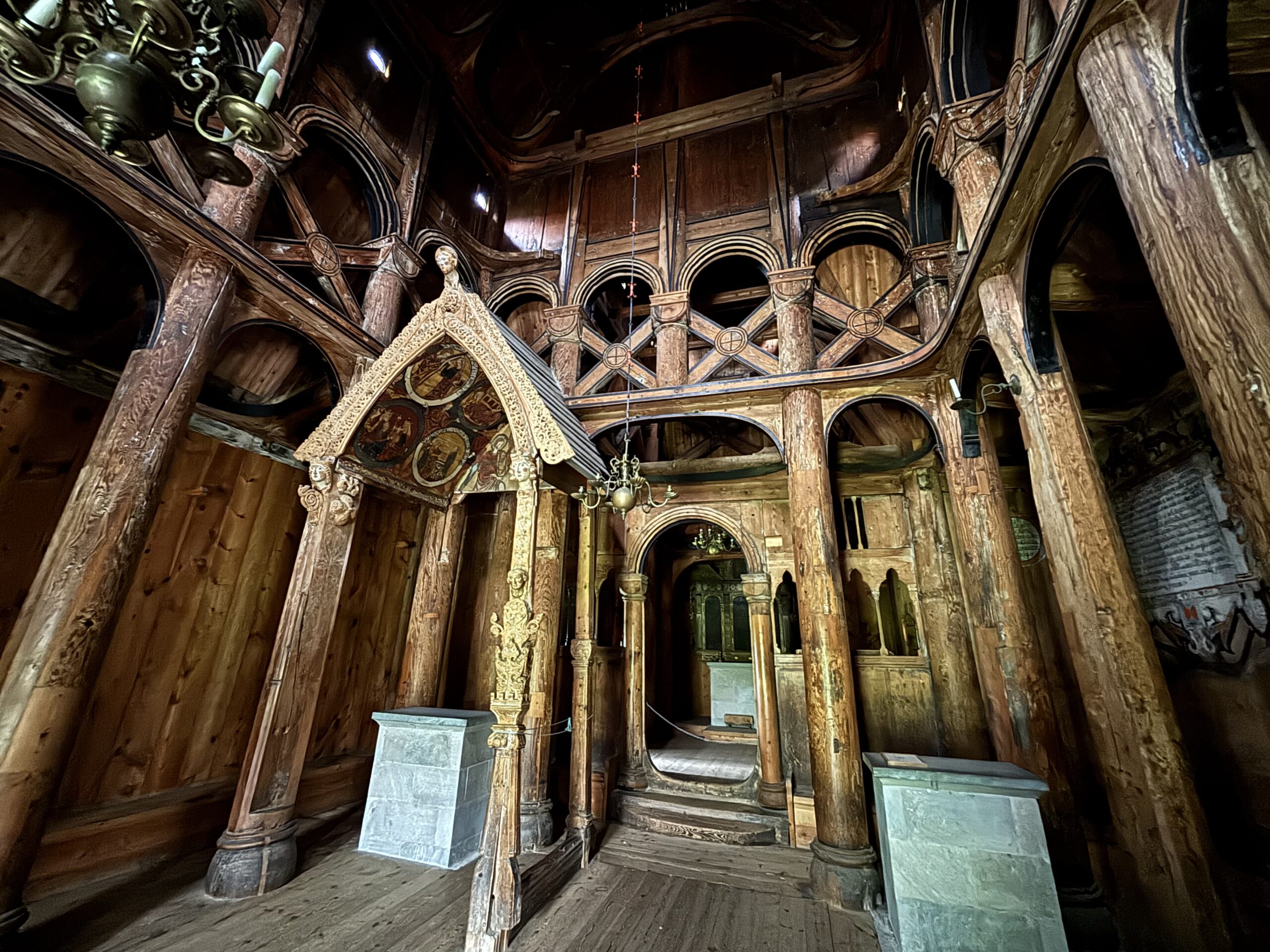
Hopperstad interior

Hopperstad interior

Beginning in Oslo, I first saw Gol Stave Church. Originally located in Gol, it was disassembled and transported to Oslo after it was purchased by King Oscar II of Sweden, a loyal friend of Norway, who saved it from demolition. Today it is part of the Norwegian Folk Museum. From there we travelled north to see Torpo Stave Church. A small, somewhat amputated stave church without a chancel (that again narrowly avoided demolition in 1880) that features an exquisite painted barrel vault from the middle ages. One of only two such vaults left in Norway (the other is located in the Historical Museum in Oslo from the now gone Ål stave church – we saw this as well), this barrel vault depicts the somewhat gruesome story of St. Margaret of Antioch.Continuing northward we then stopped at Borgund Stave Church, the most authentic and best preserved stave church in existence. It is also the only stave church that still has its accompanying standing bell tower. Borgund Stave Church is often called the “stave church of all stave churches” as it is used as a guide for all stave church restorations. It smelled of tar and was located next to a river deep in the heart of the fjord. Behind the church was the ancient Kings Road you could walk on and friendly sheep would come up to you from the nearby farms. Its atmosphere and intricate small dark interior transported you back to medieval times. About an hour from Borgund Stave Church is Kaupanger Stave Church. Still an active parish, this church has a long history of renovation; however a restoration in the 1960s returned the church to its 1600s appearance. It is very well kept, in fact a local and our tour guide told me that he believes consistent use is what keeps the stave church alive and best preserved. Further north of Kaupanger is Urnes Stave Church. This UNESCO World Heritage Site, sits in a small town on the edge of the fjord. The most common way to get to the church is by ferry (as it was not until 1982 that a road was made to access the church) and then a one mile hike up the hill. Urnes Stave Church is where the Urnes style of Viking Art got its name. The northern portal is richly carved with intertwining vines and animals. It is dated to the second half of the 11th century. Inside the church it is richly decorated with 16th century decor however the bishop’s chair in the chancel and the viking ship candelabra on the altar are medieval amongst a few other things.

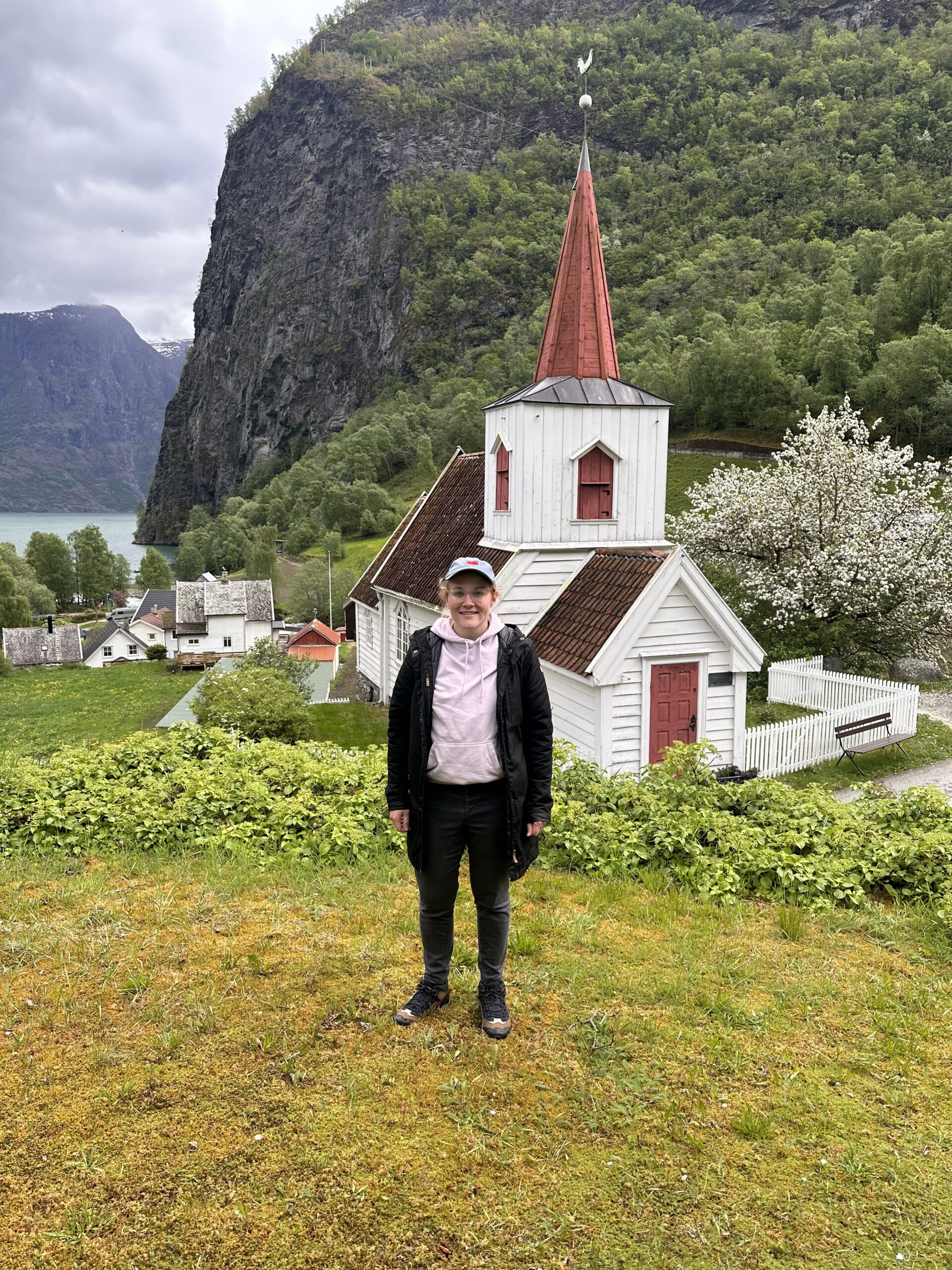
Undredal

Undredal Stave Church is considered the smallest church in Scandinavia. Located in the small town of Undredal with only 130 inhabitants (and 500 goats) this small church is still very active in the community. A community member said his family used to spend 3 hours every Sunday traveling the Sogn fjord to get to church. The inside of the church is filled with mismatched artwork, a deer chandelier and a blue starry ceiling featuring biblical figures. Undredal also still has and uses its medieval bell.

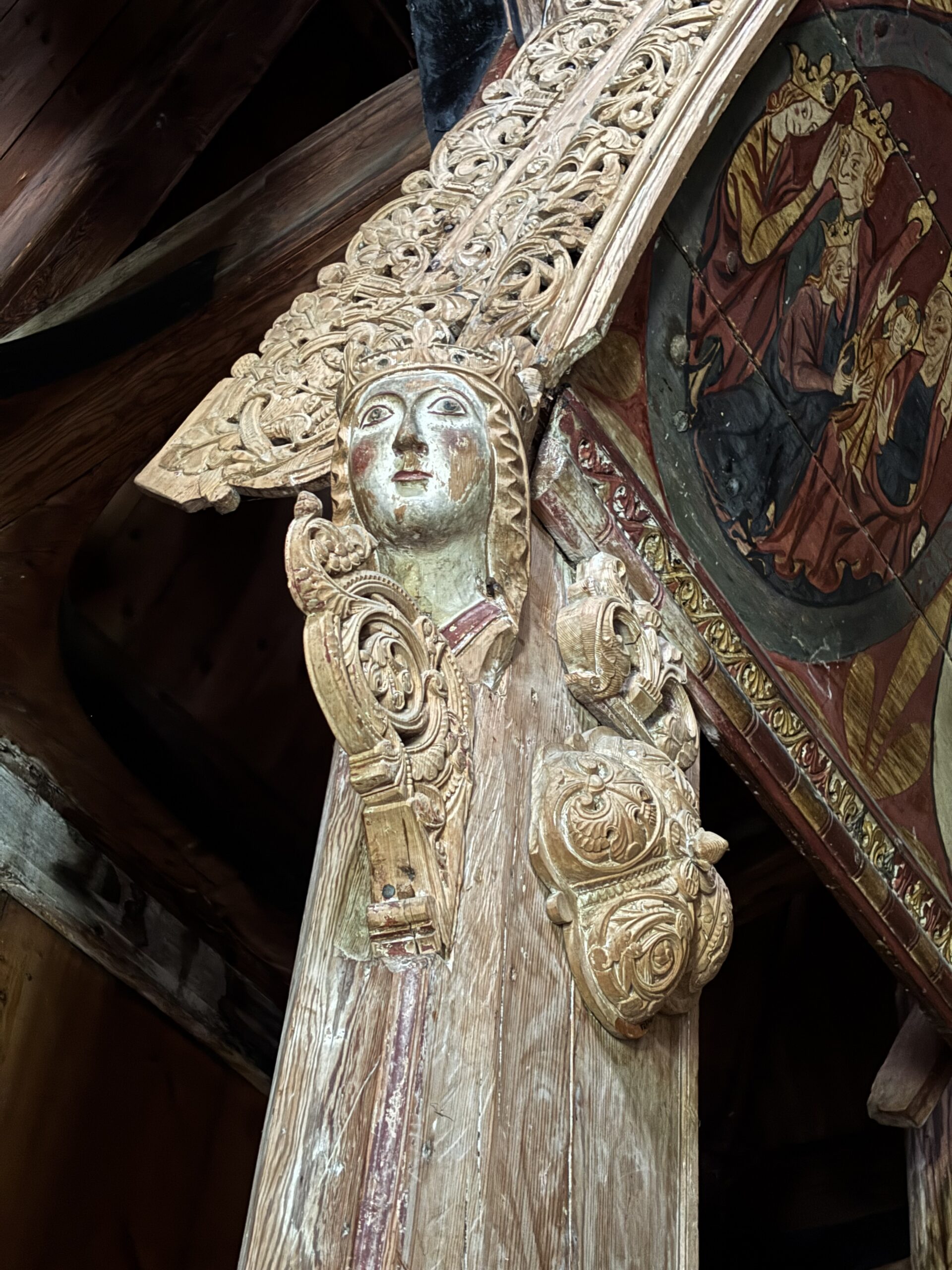
Hopperstad baldachin queen detail

The last church I visited was Hopperstad Stave Church. Located in Vik, this stave church was restored in the 1880s by architect Peter Blix. Its exterior now resembles that of Borgund Stave Church. Built on a hill, the Hopperstad Stave Church is home to the only remaining chancel screen left in any stave church. It also contains the only remaining side altar canopy or baldachin. Buried beneath the church is a woman whose large stone tomb is seen on the floor after one enters through the richly decorated west portal. It was common to bury bodies under the floor of the church, especially if they were someone of importance, however the use of stone is unlike any other stave church burial. The church has three portals, the large highly decorative western portal and two smaller, but rare portals.

Interesting facts:

  • The churches are often very dark and smell of tar and wood
  • In medieval times, people had to stand during service. Men and women were separated
  • The portals are almost all richly carved with motifs of dragons, vines, snakes, flowers and other foliage or animals.

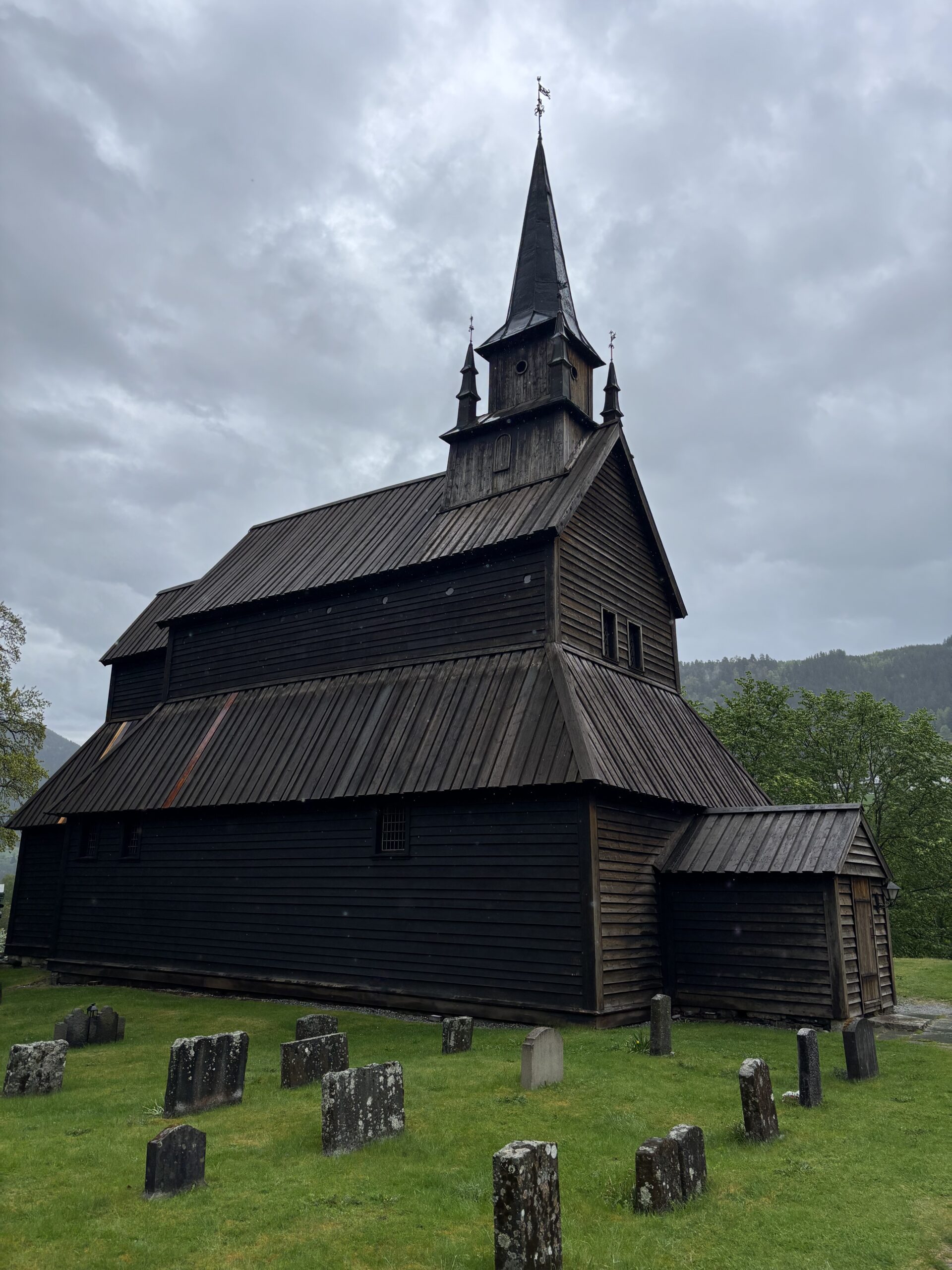
Kaupanger Stave Church

  • The cemeteries at all of these stave churches are still active. For example, at Borgund bodies get 25 years to be buried into the ground and then they decompose and a new body is laid in its place.
  • Each church still has at least one service a year. Often times on St. Olav’s day or around Christmas. They are also used by the communities for weddings and baptisms
  • Many of the churches are built on the same site as former wood churches. In Urnes, for example, the current church is actually the 3rd or 4th church on the site
  • Many people were buried under the churches. They also have found numerous coins, offerings, and even a game piece.
  • There is medieval graffiti all over the interior of the churches often of animals, weapons, symbols or weapons as well as runic inscriptions