Research – Holloran Center Professional Identity Implementation Blog - Page 2
Browsing Tag

Research

Barbara Glesner FInes, David Grenardo, Jerome Organ, Louis Bilionis, Neil Hamilton

Standard 303 and the Development of Student Professional Identity: A Framework for the Intentional Exploration of the Profession’s Core Values


By Felicia Hamilton, Holloran Center Coordinator

Holloran Center Directors Neil Hamilton, Jerry Organ, and David Grenardo, along with Holloran Center Fellows Barbara Glesner Fines and Louis Bilionis recently co-authored an article that supplies a framework for understanding the core values of the legal profession. The authors’ intention is to guide legal educators into a thoughtful exploration of the nature of these values, and to encourage law school faculty and staff to make intentional choices around how their programs highlight them. Using the metaphor of a tree, the authors address the core values of the “trunk” (a sense of responsibility to those whom the professional serves and the commitment to professional development) and the “branch” values as codified into the Model Rules.

Read more in the abstract for “Standard 303 and the Development of Student Professional Identity: A Framework for the Intentional Exploration of the Profession’s Core Values” below:

Legal educators, following the change in ABA accreditation Standard 303(b)(3)[1], must face directly the question “what are the core values of the legal profession?” This article offers a framework both to help faculty and staff clarify their thinking on what are the profession’s core values and to spotlight the choices law schools need to consider in purposeful fashion.

The framework offered here should also help allay two concerns that faculty, staff, and students may have about core values of the profession.  One concern is that all statements of values are subjective in the sense that they are expressions of individual subjective preferences, beliefs, and attitudes.[2]  A second concern is that statements of values tend to privilege the traditional, and hence fail to reflect the diversity of the profession and the experience and views of marginalized members of the profession – particularly with respect to the elimination of bias, discrimination, and racism.[3]

On the first concern, the article analyzes first the core values of all the service professions to point out two core values foundational to all of them. The article then analyzes the legal profession’s core values articulated in the ABA Model Rules of Professional Conduct, adopted with some variation by all fifty states. The fifty-state adoption of the Model Rules indicates a strong consensus on the core values of the profession.  On the second concern, the values framework offered here makes clear that elimination of bias, discrimination, and racism is among the profession’s core values, and that the profession should, on an ongoing basis, seek feedback widely regarding its core values, particularly from marginalized groups, and reflect on the feedback.

Part II outlines the ABA accreditation Standard 303 changes that require each law school to help students develop a professional identity through the intentional exploration of the values of the profession. This means the faculty and staff need to discern the values of the profession they want the students to explore.  Part III analyzes what is a professional identity?  Part IV provides a framework to help legal educators clarify their thinking about the profession’s core values.  The framework features some widely shared fundamental values for all the service professions, and locates also values particular to the legal profession. Part V explores how the core values of the profession in part IV connect to “successful legal practice.”  Part VI discusses cautionary arguments that traditional values like those in the Model Rules can privilege some groups and fail to account for the experiences and viewpoints of marginalized groups.

[1] Standards & Rules of Procedure for Approval of Law Schools, Standard 303(b)(3) (Am. Bar Ass’n 2023), [hereinafter Accreditation Standards], https://www.americanbar.org/content/dam/aba/administrative/legal_education_and_admissions_to_the_bar/standards/2023-2024/23-24-standards-ch3.pdf.

[2] See, e.g., Joseph Singer, Normative Methods for Lawyers, 56 U.C.L.A. L. Rev. 899, 902-911 (2009).

[3] See discussion in Part VI of this article.

You can download the article from SSRN here.

Neil Hamilton is the Holloran Professor of Law and Co-Director of the Holloran Center for Ethical Leadership in the Professions at the University of St. Thomas School of Law in Minnesota.

Jerome Organ is the Bakken Professor of Law and Co-Director of the Holloran Center for Ethical Leadership in the Professions at the University of St. Thomas School of Law
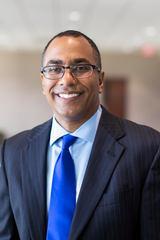
David Grenardo is a Professor of Law and Associate Director of the Holloran Center for Ethical Leadership in the Professions at the University of St. Thomas School of Law.

Barbara Glesner Fines is the Dean and Rubey M. Hulen Professor of Law at the University of Missouri-Kansas City School of Law.
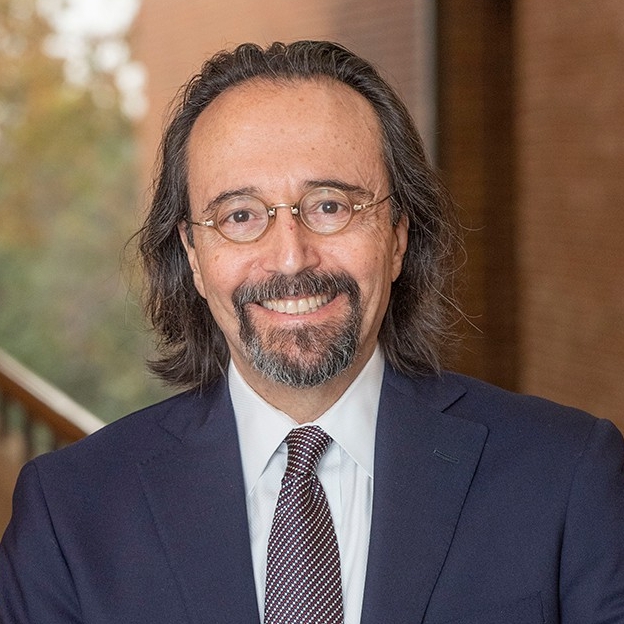
Louis Bilionis is the Dean Emeritus and Droege Professor of Law at the University of Cincinnati College of Law.


David Grenardo, Felicia Hamilton

Debunking the Major Myths Surrounding Mandatory Civility for Lawyers Plus Five Mandatory Civility Rules That Will Work

By Felicia Hamilton, Holloran Center Coordinator

David Grenardo, Associate Director of the Holloran Center for Ethical Leadership in the Professions, recently won the prestigious Warren E. Burger award for his essay “Debunking the Major Myths Surrounding Mandatory Civility for Lawyers Plus Five Mandatory Civility Rules That Will Work.” This award honors research that contributes significantly to the field of professionalism, civility, ethics, and excellence.

Building on his previous scholarship on the importance of civility in the legal profession, Grenardo tackles common misconceptions that prevent widespread standardization and proposes five rules for holding lawyers accountable to practicing civility with colleagues, clients, and opposing counsel.

Read the abstract below:

Civility remains a problem in the legal profession. Teaching law students about civility is important, if not critical, but it is not enough. Entertaining CLEs on civility for lawyers make for a fun hour, but they also fall short. Calls for civility and calls to return to civility have become routine, yet they can ring hollow. Adding phrases about civility to the oaths lawyers take to practice sounds wonderful, but those oaths oftentimes lack accountability. Recognizing that our country is divided and toxic in the way we communicate with each other is accurate, but that similarly fails to solve the problem. And most of all, we are naïve to hope that some lawyers will make significant changes to their behavior in a profession riddled with systemic incivility just because others in the legal profession kindly ask them to do so. Systemic change requires significant changes to the system.

Part I of this Article provides an overview of civility in the legal profession. Part II describes mandatory civility in the legal profession. Part III raises the major myths of mandatory civility and responds to each of them. Part IV includes proposed mandatory civility rules, while Part V sets forth arguments against mandatory civility and responds to those arguments. This Article concludes that mandatory civility rules are necessary and practicable.

How many more calls to civility must we endure as civility continues to decline in society and the legal profession? How long will the legal profession continue to pay lip service to civility while the negative effects of incivility continue to plague the profession? Talking is not enough—leaders of the legal system need to act. State bars, state supreme courts, and, if necessary, state legislatures must take the step that four brave states already have—mandate civility.

Download the full article from SSRN here.


Felicia Hamilton is the Coordinator for the Holloran Center for Ethical Leadership in the Professions at the University of St. Thomas School of Law.

David Grenardo is a Professor of Law and Associate Director of the Holloran Center for Ethical Leadership in the Professions at the University of St. Thomas School of Law.

David Grenardo

A Review of Roadmap

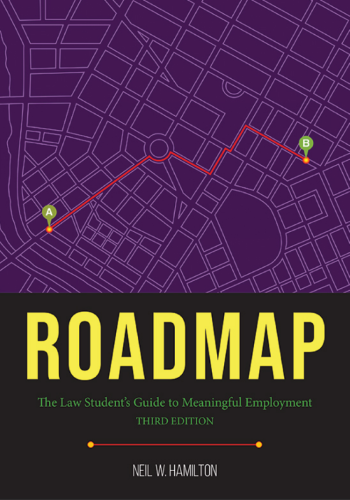
James Leipold served as the executive director of NALP (National Association for Law Placement) for over 18 years. He now works as a senior advisor with the Law School Admission Council (LSAC). Leipold wrote a thorough review of Neil Hamilton’s Third Edition of the award-winning book, Roadmap: The Law Student’s Guide to Meaningful Employment, published by the ABA. Leipold’s detailed and insightful review can be found here.

David Grenardo

Kill 1L: A Realistic Look at Legal Education Reform

By: David A. Grenardo, Professor of Law and Associate Director of the Holloran Center for Ethical Leadership in the Professions, University of St. Thomas School of Law

Prentiss Cox, a Professor of Law at the University of Minnesota Law School, previously published Law in Practice, a casebook to teach lawyering skills to first and second-year law students. His latest article, Kill 1L, proposes a bold, yet practical approach to reforming the 1L curriculum and experience to help develop law students into lawyers.

Here is the abstract of Professor Cox’s article:

Law school education has been extensively studied for decades, but changes have been modest. This Article makes the case that fundamental law school reform will not occur until we abolish the central pillar on which it rests—the current conception of the first year of law school, the “1L” experience. Many studies of law school curricula and pedagogy are sharply critical of the education offered, but they pull a punch when it comes to 1L. This Article compares recent data on 1L curricula at almost every U. S. law school with ABA-required law school statements of learning outcomes. The comparison reveals two contrasts: the gap between what is promised students for their legal education and what 1L delivers; and the gap between what is promised students and the actual use of law by attorneys, judges and even law professors in the modern world. The Article proposes a new 1L curriculum that would engage students in the law used by courts and policymakers while decreasing the demands placed on law students by the repetitive, inefficient legacy 1L curriculum.

A link to the article can be found here.

Should you have any questions or comments about the article, please feel free to contact Professor Cox at coxxx211@umn.edu.


Janet Stearns, Jerome Organ

Well-Being and Professional Identity: Inextricably Linked

By: Janet Stearns, Dean of Students, University of Miami School of Law
Jerry Organ, Bakken Professor of Law and Co-Director of the Holloran Center for Ethical Leadership in the Professions, University of St. Thomas School of Law

Well-being and professional identity are inextricably linked. While this has been true through the ages, the new articulation of professional identity in Interpretation 303-5 embodies this linkage when it states:

Professional identity focuses on what it means to be a lawyer and the special obligations lawyers have to their clients and society. The development of professional identity should involve an intentional exploration of the values, guiding principles, and well-being practices considered foundational to successful legal practice.

In earlier posts for this Blog, Dean Stearns has spoken of infusing law school orientation with lessons about well-being, activities for the October 10 Mental Health Day, and two new important books that can be used to educate law students about mindfulness and stress reduction.

Much of our teaching and advocacy involves explaining these principles of “well-being practices” and integrating these into the law school curriculum and larger professional identity environment. The needs are great. The news is filled with too many stories of suicide. The students who are now entering our law schools have faced significant isolation and related depression and anxiety through these recent pandemic years.

The best snapshot of the state of our law students today is the national survey published in the University of Louisville Law Review Symposium under the title “It Is OK To Not Be OK”: The 2021 Survey of Law Student Well-Being (Summer, 2022). The authors of this study were David Jaffe (Washington College of Law, American University), Professor Kate Bender (Bridgewater University), and Jerry Organ (University of St. Thomas, MN), and the work includes an analysis of data from 39 law schools across the country. The 2021 Survey showed that the percentage of respondents who had a diagnosis of anxiety in their lifetime increased from 21% to 40% since the original Survey of Law Student Well-Being in 2014. Similarly, the percentage of respondents who had a diagnosis of depression in their lifetime increased from 18% to 33% since 2014. Roughly one-third of the 2021 respondents had considered suicide sometime in their life (up from 20% in 2014) with 11% having considered suicide in the previous 12 months (up from 6% in 2014). The 2021 Survey also found that five in six respondents had experienced trauma, with one in five dealing with challenges to their day-to-day thriving associated with their experience of trauma (based on responses to the PCL-5, a screening tool for PTSD).

The data continues to be evaluated but the high levels of reported depression, anxiety, suicidality, and trauma should give us all pause.

One of the most critical lessons that we can teach in law school is the ability to reach out and access needed resources. Professional identify includes our ability to address needed self-care while balancing duties to clients and the profession. Tragically, many law students believe that they cannot access these resources, and in fact some believe that their admission to the bar will be jeopardized if they access resources. We teach these life-saving lessons in the classroom and when we respond to students in crisis. Dean Stearns has received calls and emails from students who are en route to an emergency room to ask if their bar admission will be impacted if they are admitted for mental health treatment.

Janet Stearns, David Jaffe, and other national well-being advocates have been working for years to reform state character and fitness investigation processes to ensure that students understand their ability to access essential resources; their efforts have seen some success with a number of states amending their questions. The most recent article on the topic by Stearns and Jaffe is Fixing a Broken Character Evaluation Process, which was published online in the ABA’s Law Practice Today in May of 2023. The article evaluated the mental health and substance use questions in the various jurisdictions and assigned grades to the states (and NCBE) on the basis of our rubric. The more a state’s questions focused primarily on conduct than condition, the higher the grade it received – an A was the highest grade available; and the more a state’s questions focused on condition instead of conduct, the lower the grade it received – an F was the lowest grade available. We continue to advocate for questions that will focus on conduct rather than condition, with a goal of destigmatizing efforts for law students to seek appropriate help and support for these challenges.

This month, Jerry Organ added a new and significant dimension to this advocacy. He analyzed two questions in the 2021 survey, separated law school responses by state, and then correlated those to the grades that Stearns and Jaffe had assigned in the ABA article.[i] The two critical questions were:

C15: Percentage who strongly agree or agree to the following statements (by year in law school)

If I had an alcohol or drug use problem, my chances of getting admitted to the bar are better if I hide the problem rather than seek treatment.

D21:  Percentage who strongly agree or agree with each of the following statements (by year in law school)

If I had a mental health problem, my chances of getting admitted to the bar are better if I hide the problem rather than seeking treatment.

Jerry Organ’s analysis determined the following:

The overall averages for “better off keeping problems hidden” (reluctant to seek help) were 49.8% (substance use) and 39.9% (mental health).

Schools in A/B jurisdictions had average scores for “better off keeping problems hidden”(reluctant to seek help) of 47.5 (substance use) and 37.3 (mental health).

Schools in C jurisdictions (including Virginia) had average scores for “better off keeping problems hidden” (reluctant to seek help) of 51.8 (substance use) and 42.6 (mental health).

Schools in F jurisdictions (Georgia/Florida/Nevada) had average scores for “better off keeping problems hidden” (reluctant to seek help) of 55.9 and 47.1.

These data suggest that there is a correlation between the type of state character and fitness questions and the reluctance to seek help among law students. The states that focused their character and fitness questions more on conduct rather than on condition have lower percentages of students who believe they are better off keeping problems hidden for substance use and mental health. And the states that focused their character and fitness questions more on condition instead of conduct have higher percentages of students who believe they are better off keeping problems hidden for substance use and mental health. The more than 8-point spread between A/B and F states on substance use and the nearly 10-point spread between A/B and F states on mental health strongly suggests that a relationship exists between the nature of a state’s character and fitness questions and a law student’s reluctance to seek help.

Law schools and boards of law examiners have to continue to message the importance of help-seeking so that the percentages of respondents who believe they are better off keeping problems hidden begins to decline. On this front, efforts in Minnesota and North Dakota are noteworthy. Respondents from law schools in those two states were among the lowest in terms of the percentage who believed their chances of being admitted to the bar were better if they kept a substance use or mental health problem hidden. In both states, the law schools have worked closely with their board of law examiners to facilitate messaging in the first year of law school about the importance of seeking help. Those efforts seem to be bearing fruit.

For all of us who care deeply about professional identity education, we must continue to understand the inextricable link between our work and ensuring the well-being of the next generation of our profession.

The authors welcome comments and input. You may connect with them at jstearns@law.miami.edu or JMORGAN@stthomas.edu. If you live in a state that has not yet reformed the substance use and mental health questions on the bar, then please contact Janet Stearns or David Jaffe (djaffe@wcl.american.edu) for strategies and advocacy resources.

[i] The only exception to the grading system was that Virginia, which Stearns and Jaffe assigned a B-, was included in the “C” category.

Janet Stearns is Dean of Students at the University of Miami School of Law and Chair of the ABA COLAP Law School Committee.

Jerome Organ is the Bakken Professor of Law and Co-Director of the Holloran Center for Ethical Leadership in the Professions at the University of St. Thomas School of Law


David Grenardo

Integrating Artificial Intelligence Tools into the Formation of Professional Identity

By: David A. Grenardo, Professor of Law and Associate Director of the Holloran Center for Ethical Leadership in the Professions, University of St. Thomas School of Law

The Holloran Center and the University of St. Thomas Law Journal brought together for the first time 1L and Professional Responsibility casebook authors to discuss ways to implement professional identity formation into the 1L curriculum and Professional Responsibility at the University of St. Thomas Law Journal’s spring 2023 symposium. One of the major reasons for this seminal gathering was to share ideas about professional identity formation amongst law schools from all across the country. Another reason was to generate excellent scholarship that could guide law schools as schools must now comply with the new ABA Standard 303 that requires law schools to provide substantial opportunities for law students to develop their professional identities.

Colleen Medill, the Robert & Joanne Berkshire Family Professor of Law and Director of Undergraduate Academic Programs at the Nebraska College of Law, delivered an amazing presentation at the symposium titled “Writing a Demand Letter: Litigator or Mediator” on a panel that focused on putting students in the role of lawyers, which is one of the ways law students move from law student to lawyer. She also authored an excellent, timely, and innovative article for the symposium issue, Integrating Artificial Intelligence Tools into the Formation of Professional Identity.

Here is the abstract of Professor Medill’s article:

My claim in this Article is that a lawyer’s personal use of artificial intelligence (AI) in the practice of law is now an essential component of a lawyer’s professional identity that must be intentionally developed as a law student before entering the practice of law. After demonstrating the strong connection between the use of AI tools in legal practice, the requirement of lawyer competence, and the formation of professional identity, the Article proposes four “best practices” principles for integrating AI tools with traditional lawyering skills exercises to assist students in the formation of professional identity. The Article concludes with an example that can be used in the first-year Property course.

A link to the article can be found here.

Should you have any questions or comments about the article, please feel free to contact Professor Medill at cmedill2@unl.edu.

David Grenardo

An Unexpected Synergy: How Integrating Professional Identity Formation Exercises in a Civil Procedure Course Not Only Help Students Form a Professional Identity but Also Enhance Their Understanding of Civil Procedure

By: David A. Grenardo, Professor of Law and Associate Director of the Holloran Center for Ethical Leadership in the Professions, University of St. Thomas School of Law

Professor Benjamin V. Madison III, Professor of Law and Director of the Center for Professional Formation at Regent University School of Law, authored a pretrial practice casebook, Civil Procedure for All States: A Context and Practice Casebook, which was one of the first casebooks that explicitly and intentionally incorporated professional identity formation as recommended by the Carnegie Institute study Educating Lawyers (2007).  Madison presented at the University of St. Thomas Law Journal’s spring 2023 symposium, which brought together 1L and Professional Responsibility casebook authors to discuss how they infuse professional identity formation into the required curriculum.  Madison’s latest article, An Unexpected Synergy: How Integrating Professional Identity Formation Exercises in a Civil Procedure Course Not Only Help Students Form a Professional Identity but Also Enhance Their Understanding of Civil Procedure, will be part of that symposium’s issue.

Here is the abstract of the article:

This article demonstrates that integrating professional identity formation exercises in a required course accomplishes multiple goals.  The Carnegie report stated, “[l]egal analysis alone is only a partial foundation for developing professional competence and identity.”  The report was clear that only the formation of values and the ability to exercise moral judgment would allow students to practice as true professionals.  Both first-year and advanced civil procedure courses feature professional identity formation exercises.  They present dilemmas litigators face, particularly ones that the Model Rules of Professional Conduct do not answer.

The article describes how the effectiveness of the exercises improved depending on how the professor assigned them.  When students read the exercises and discussed them in class, along with cases and other reading, students showed less engagement in the complexity of moral and ethical questions.  Conversely, when students wrote reflection papers on the exercises due before the class discussion, they displayed greater discernment than when students did not write reflections.  After writing about the exercise, more students recognized that reflective lawyers balance multiple interests and the lawyer’s values in resolving an ethical/moral challenge.  The examples explored in the article, as representative of the type of exercises, include various issues that arise in handling a civil suit.  The sample exercises include a choice-of-forum decision, a client’s request to serve a defendant in a specific manner, and two discovery scenarios.  The first discovery scenario depicts a lawyer deciding whether to set a trial and other deadlines later than necessary and how that affects the client, not to mention the lawyer’s financial gain if on a billable hour engagement.  The second discovery example demonstrates efforts to use excessive production of documents to increase the chance that the discovering party misses key documents.

The benefits of the exercises were two-fold.  As a routine, graded part of the course, students gained an appreciation for moral and ethical judgments not answered by the Model Rules.  The courses’ learning objectives state that by engaging in the exercises, students would develop a professional identity that includes values and a moral compass that will answer questions not addressed by the Model Rules.  Therefore, students cultivate values, a moral compass, and the ability to resolve dilemmas they will likely face in practice.  An additional benefit was the improved grasp of the rules and doctrines connected to the scenarios.  Although intended to promote professional identity development, the exercises also reinforced knowledge of the rules and doctrines that formed the context for the exercises.  Hence, students learned these rules and doctrines better than if the exercise were left out.

A link to the article can be found here.

Should you have any questions or comments about the article, please feel free to contact Professor Madison at benjmad@regent.edu.

David Grenardo

Breaking Down Siloes and Building Up Students: The Transformational Possibilities of Professional Identity Formation

By: David A. Grenardo, Professor of Law and Associate Director of the Holloran Center for Ethical Leadership in the Professions, University of St. Thomas School of Law

Three national leaders in professional identity formation—Lindsey P. Gustafson, Aric K. Short, and Robin Thorner—came together to author an exceptional article focused on professional identity formation. Their article, Breaking Down Siloes and Building Up Students: The Transformational Possibilities of Professional Identity Formation, will be part of the University of St. Thomas Law Journal’s spring 2023 symposium issue that will explore pedagogies relating to professional identity formation.

Here is the abstract of the article:

Under the ABA’s sequenced approach to implementation of Standard 303(b)(3), schools should now have developed plans for providing opportunities for professional identity formation and should be implementing them. These plans must provide students with an “intentional exploration of the values, guiding principles, and well-being practices considered foundational to successful legal practice.” In addition, these plans should provide for frequent opportunities for development, “during each year of law school and in a variety of courses and co-curricular and professional development activities.”

Because Standard 303(b)(3) is necessarily tied to the unique character, existing structures, and available resources of a law school, each school’s plan will be different. That has been our experience as we have worked as professional identity formation leaders in different roles with varying perspectives: Lindsey Gustafson at the William H. Bowen School of Law, University of Arkansas at Little Rock, is a current Associate Dean for Academic Affairs and a skills and doctrinal professor; Aric Short at the Texas A&M School of Law is a former Associate Dean for Academic Affairs, a doctrinal professor, and currently serves as the Director of the Professionalism and Leadership Program; and Robin Thorner at St. Mary’s University School of Law is an Assistant Dean for Career Strategy, a teaching adjunct, and the current Director of Professional Identity Formation.

In this essay, we hope to emphasize that professional identity formation efforts can occur all across the law school’s operations, from administrative offices to classrooms to voluntary student activities. We also provide specific examples of how schools can be more intentional and explicit as they weave together multiple professional identity formation opportunities for their students. This process takes time and attention, but it creates a powerful whole-building approach to identity formation that not only complies with 303(b)(3), but also best positions our students for a successful, fulfilling, and impactful career in law.

A link to the article can be found here.

Should you have any questions or comments about the article, please feel free to contact any or all of the authors at lpgustafson@ualr.edu, ashort@law.tamu.edu, and rthorner@stmarytx.edu.


David Grenardo

Professional Responsibility and Professional Identity Formation in a Community of Practice with Alumni

By: David A. Grenardo, Professor of Law and Associate Director of the Holloran Center for Ethical Leadership in the Professions, University of St. Thomas School of Law

Every time a bell rings, an angel gets its wings…and Neil Hamilton finishes another article. Neil Hamilton, the Holloran Professor of Law and Co-Director of the Holloran Center for Ethical Leadership in the Professions at the University of St. Thomas School of Law, has completed a new professional identity formation article. Hamilton wrote his latest article for the University of St. Thomas Law Journal’s spring 2023 symposium on professional identity formation. Hamilton’s article explores a new approach to the required Professional Responsibility course that provides reasonable coverage of the law of lawyering, legal analysis, and compliance, but also helps each student understand and participate in a community of practice focused on all the discretionary calls of lawyering in the area of the student’s ultimate practice interest. The student sees that legal ethics knowledge and capacities are not just doctrinal knowledge and legal analysis but are also social and situated in a community of practice. The student also sees that many alumni of the law school are successful in the practice of law while living into the values of the law school and the profession, not just compliance with the minimum floor of the law of lawyering. The student will also understand that in any practice area, the experienced lawyers know who can be trusted and who are the jerks. It will be the student’s and new lawyer’s choice which path to take.

Part II(A) of the article first outlines that the ABA Model Rules of Professional Responsibility (adopted by all 50 states with some variation) codify some values of the profession (like competence, diligence, confidentiality, and loyalty) into the law of lawyering with which licensed lawyers must comply. Part II(A) also explains that many of the Rules give discretion to practicing lawyers with respect to choices about conduct above the floor of the Rules. Part II(B) then analyzes the core values in the mission and learning outcomes of some law schools, and in the Preamble to the Model Rules, that help guide each lawyer’s discretionary decision-making. Part III analyzes how communities of practice influence lawyers in making the discretionary calls of lawyering in a way consistent with the profession’s core values. Part IV explores empirical evidence on whether practicing lawyers think their legal education was an effective community of practice fostering their understanding of these core values in making the discretionary calls of lawyering. Part V discusses Hamilton’s own Professional Responsibility course that creates communities of practice with students and alumni to help students understand the importance of the law school’s and the profession’s core values in making the discretionary calls of lawyering.

A link to Hamilton’s article can be found here.

David Grenardo is a Professor of Law and Associate Director of the Holloran Center for Ethical Leadership in the Professions at the University of St. Thomas School of Law.

Neil Hamilton

INTRODUCING THE STREAMLINED (AND EVEN MORE LAW-STUDENT FRIENDLY) THIRD EDITION OF NEIL HAMILTON’S AWARD-WINNING BOOK, ROADMAP: THE LAW STUDENT’S GUIDE TO MEANINGFUL EMPLOYMENT (2023)

By: Neil Hamilton, Holloran Professor of Law and Co-Director of the Holloran Center for Ethical Leadership in the Professions, University of St. Thomas School of Law

The learning outcome for the ROADMAP is that each student takes ownership (self-direction) over the student’s professional development toward the student’s goals of bar passage and meaningful post-graduation employment.  Students at later stages of self-direction demonstrate higher academic performance and planning and implementation skills that increase bar passage and post-graduation employment outcomes. The ROADMAP is empowering each student to perform at the student’s highest capacity. The ROADMAP is also meeting ABA Standard 303(b) and (c) requirements regarding the development of each student’s professional identity.

This third edition of the ROADMAP is a complete revision of the second edition.  Since the first edition was published in 2015, and the second edition in 2018, the Holloran Center and I have continued to learn how more effectively to go where the students are developmentally to help them achieve their goals (and the Law School’s goals) of bar passage and meaningful post-graduation employment.

The entire book is now 50 pages at a price of $19.95 (ABA’s website indicates ordered books will ship on August 15 at the earliest).  In this edition, the students read 21 pages and then do the template plan which is 5 pages.  The reading and the template plan focus on using the student’s time inside and outside of the building to gain experiences that will achieve three goals:

  1. Thoughtfully discern the student’s passion, motivating interests, and strengths that best fit with a geographic community of practice, a practice area and type of client, and type of employer;
  2. Develop the student’s strengths to the next level; and
  3. Demonstrate evidence of the student’s strengths that employers value.

The book then has a chapter on building a tent of professional relationships that helps each student achieve these three goals plus a professional relationship tent-building template plan.  This chapter also includes cross-cultural skills addressing ABA Standard 303(c).

A number of law schools already use the ROADMAP, and the hope is that other law schools will discover its incredible value in helping law students with their professional identity formation.  To discover what the ROADMAP can do for your law students, you can find the book here.

Neil Hamilton is the Holloran Professor of Law and Co-Director of the Holloran Center for Ethical Leadership in the Professions at the University of St. Thomas School of Law in Minnesota.