By: Thiadora A. Pina, Clinical Professor and Sr. Director of Inclusive Excellence at Santa Clara University School of Law
As law professors, we have always been deeply invested in preparing our students not just to “think like lawyers,” but also to become lawyers. Regardless of ABA Standards or other requirements, we know this transformation extends beyond mastering legal doctrine; it involves the crucial development of their professional identity. The question many of us grapple with is how to best facilitate this journey within our curricula. The answer, I believe, lies in the intentional teaching of critical lawyering skills as a direct pathway to the formation of professional identity.
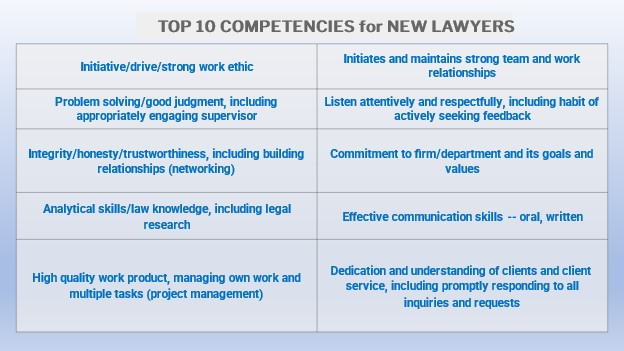
For years, legal academia has increasingly recognized the importance of professional identity formation (PIF). We understand that a strong sense of professional self is linked to ethical behavior, career satisfaction, resilience, and overall competence. Many articles and discussions have highlighted common goals for PIF: fostering self-reflection, moving beyond rote rule memorization in ethics, developing core competencies like communication and collaboration, and helping students understand the diverse roles and responsibilities lawyers undertake.
But how do we move from acknowledging these goals to actively cultivating them in our students? Moreover, how do we move from acknowledging these goals to teaching them? This is where the deliberate focus on critical lawyering skills becomes paramount. These skills are not merely vocational tools; they are the very building blocks with which students construct their professional selves.
When we teach students how to practice wellness as a competency, how to navigate diverse perspectives in a team, or how to reflect on a challenging ethical dilemma, we are not just teaching them tasks – we are also guiding them in the process of building their professional identity. And, when we give students the opportunity to practice these skills, as opposed to simply reading about them, we are guiding them in the experiential process of building their professional identity.
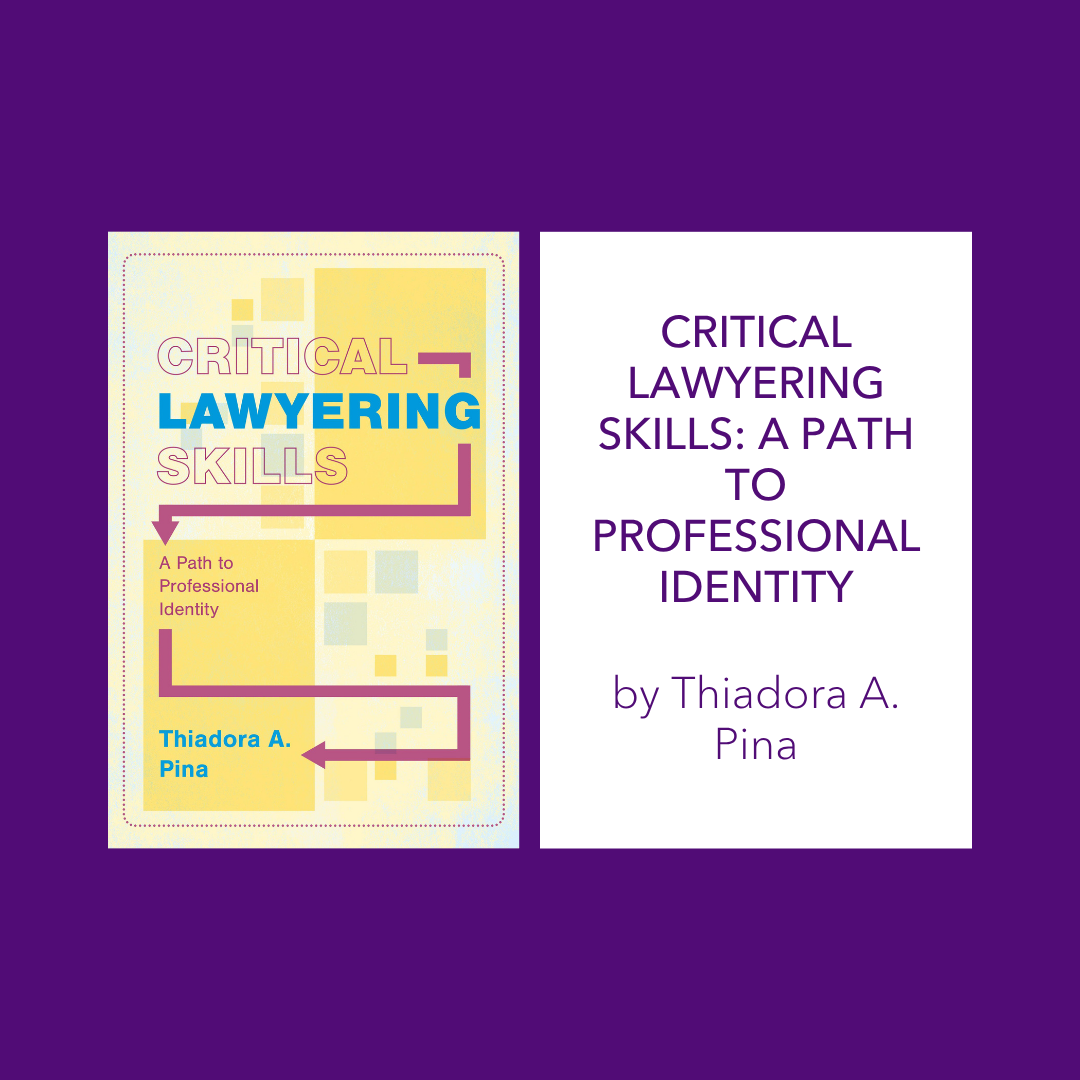
This conviction is at the heart of my new book, Critical Lawyering Skills: A Path to Professional Identity (Carolina Academic Press, June 2025). I wrote this book to offer fellow legal educators a comprehensive framework and practical tools for integrating skills-based learning directly with the objectives of PIF. The book is formatted as a workbook so that the “framework” is practiced: students apply the skills they are learning through role-plays, scenarios, presentations, and active exercises.
Critical Lawyering Skills: A Path to Professional Identity proposes that the journey to professional identity is not a random exercise, but a path paved with the acquisition and refinement of tangible competencies specific to lawyers. The book offers a “path” for this journey, detailing skills such as:
- Critical Thinking and Analysis: Beyond case law, applied to real-world scenarios and self-critique.
- Reflection and Self-Directed Learning: Providing detailed and structured methods for students to learn from experience and integrate their interests, skills, and values.
- Problem Solving and Decision-Making: Moving from theory to application in complex situations requires reflection, planning, and goal-setting.
- Effective Communication and Self-Development: Essential for client relationships, seeking and applying feedback, active listening, and networking.
- Social Competency and Engagement with Diversity: Preparing students for teamwork, problem solving, and relationship building.
- Wellness and Resilience: Recognizing that a sustainable career requires self-development and the integration of skills, interests, and values that lead to healthy practices.
What I believe makes Critical Lawyering Skills: A Path to Professional Identity a valuable resource for law professors is both its practical approach and workbook format. It is designed to theorize, as well as to equip and engage, providing students the opportunity to learn, develop, and practice. For example, the book relies on the use of rubrics for assessing skill development and growth in professional identity, offers insights into structuring role-plays and scenarios, and champions reflection/reflective practice as a core pedagogical tool.
Critical Lawyering Skills: A Path to Professional Identity can also help you integrate these concepts into your existing courses – whether they are legal skills, ethics, clinics, or even doctrinal classes – or to develop new offerings focused on this crucial aspect of legal education.
The challenge of guiding students towards a strong and ethical professional identity is significant, but it is also one of the most rewarding aspects of our work. By focusing on the critical lawyering skills that underpin this identity, we can provide our students with a clearer, more actionable path to becoming the competent, confident, and conscientious legal professionals our society needs.
I encourage you to explore Critical Lawyering Skills: A Path to Professional Identity. It is my hope that it will serve as a useful resource in your efforts to shape the next generation of lawyers.

Thiadora A. Pina
Clinical Professor
Sr. Director of Inclusive Excellence
Faculty Advisor: Black + First Gen Law Student Association
Santa Clara University School of Law
email: tpina@scu.edu
phone: 408.551.3268