Juli’s thesis centers on Notre-Dame de Paris as a case study in restoration and cultural resilience. Her research examines how the cathedral has been repeatedly damaged and rebuilt, and how each phase of restoration reflects the values of its time, from the nineteenth-century interventions of Eugène Viollet-le-Duc to the reconstruction following the 2019 fire. Traveling to France from November 28 to December 3, 2025 allowed her to encounter Notre-Dame not just as an object of study, but as a physical and living monument where questions of age, authenticity, and renewal are experienced in real time.
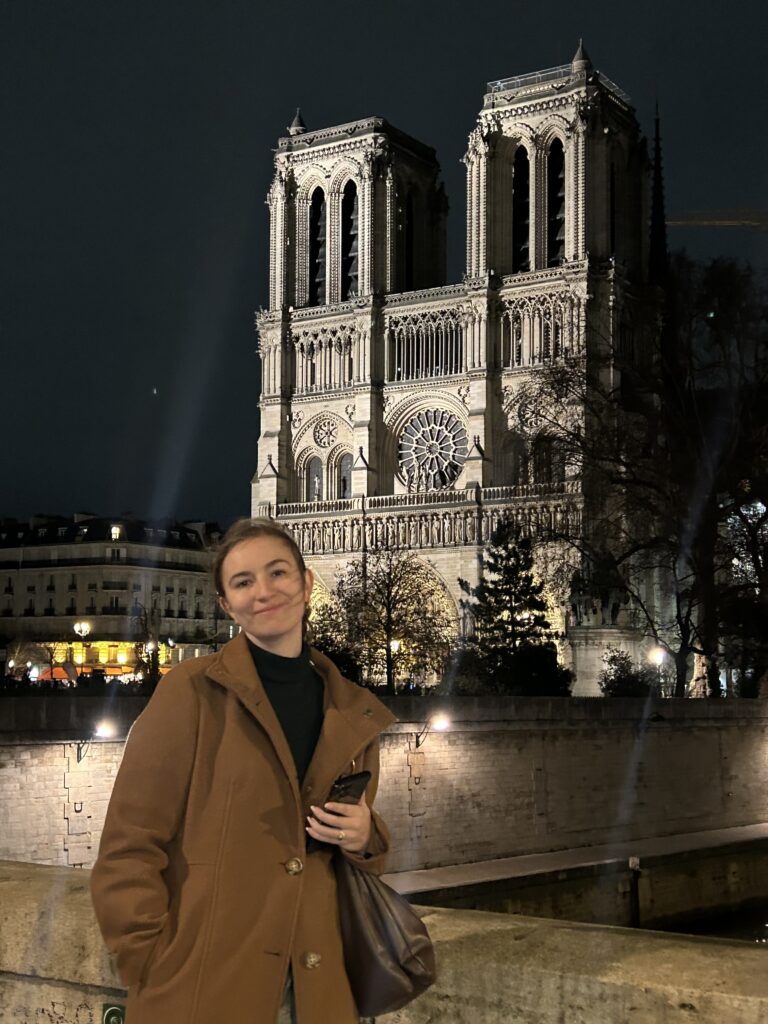
Juli in front of the West Façade of Notre Dame in Paris
At the center of the journey was Notre-Dame de Paris, which Juli visited multiple times: once to experience the interior, once to study the treasury, and once to climb the towers.
Inside the nave, the most immediate impression was the visible newness of the space. The stone has been cleaned, the surfaces are bright, and the effects of restoration following the 2019 fire are unmistakable. Yet despite this renewed clarity, the cathedral still feels old. The scale of the space, the acoustics of stone, and the vertical pull of the architecture communicate age in ways that cleaning cannot erase. Juli attended a Vespers service during this visit, and the sound of chant, moments of silence, and candlelight reinforced the cathedral’s identity as a living religious space rather than a purely historical site. The experience complicated any simple distinction between new and old and showed how age can persist within a restored interior.
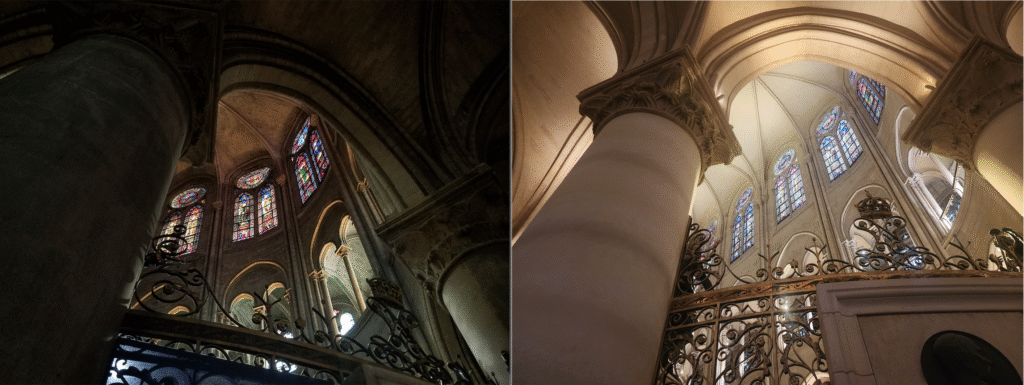
Left: Image from Juli’s 2017 visit looking up from the apse of Notre Dame in Paris. Image shows the darkness of the stone prior to the restoration following the 2019 fire
Right: Image from Juli’s 2025 visit looking up from the apse of Notre Dame in Paris. Image shows the stone restored after the 2019 fire.
The treasury offered a quieter and more intentional encounter. Alongside sacred objects and reliquaries, Juli saw works created by Viollet-le-Duc, connecting directly to the nineteenth-century restoration that shaped how Notre-Dame is recognized today. She also viewed the clothing worn for the cathedral’s reopening ceremony, placing contemporary history next to earlier moments of renewal. Together, these objects demonstrated that restoration extends beyond architecture into ritual, symbolism, and public memory.
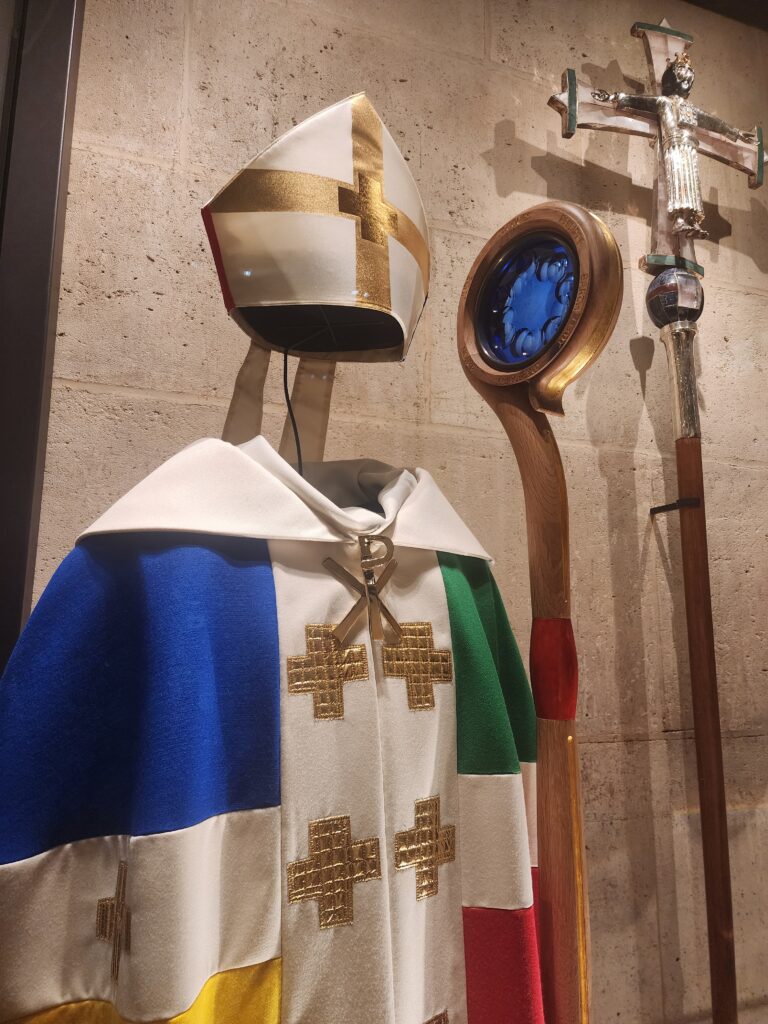
Liturgical objects used in the 2024 reopening of Notre Dame in Paris. Held in the treasury of the cathedral
Climbing the towers provided a view into the most recent phase of reconstruction. From above, Juli could see the new timber roof frame, the rebuilt spire, and the updated exhibit and visitor experience that now shapes how people understand the cathedral. The towers revealed how modern interpretation and infrastructure are being layered onto a medieval structure, balancing historical form with present-day engagement.
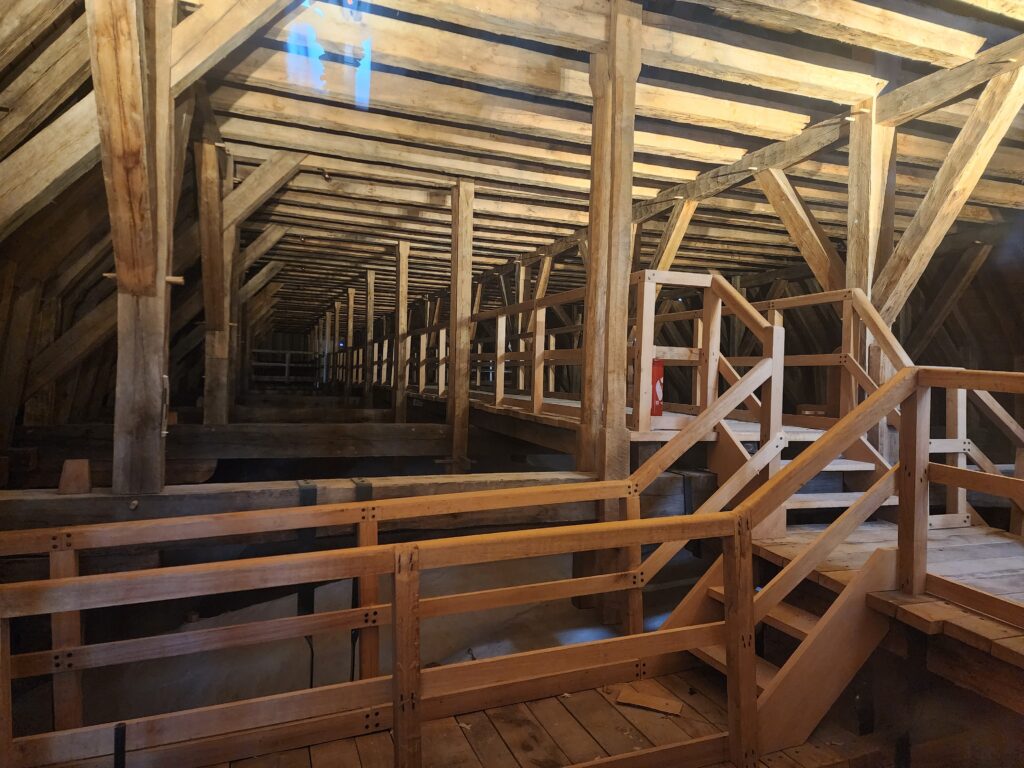
The newly constructed timer frame of the roof of Notre Dame in Paris
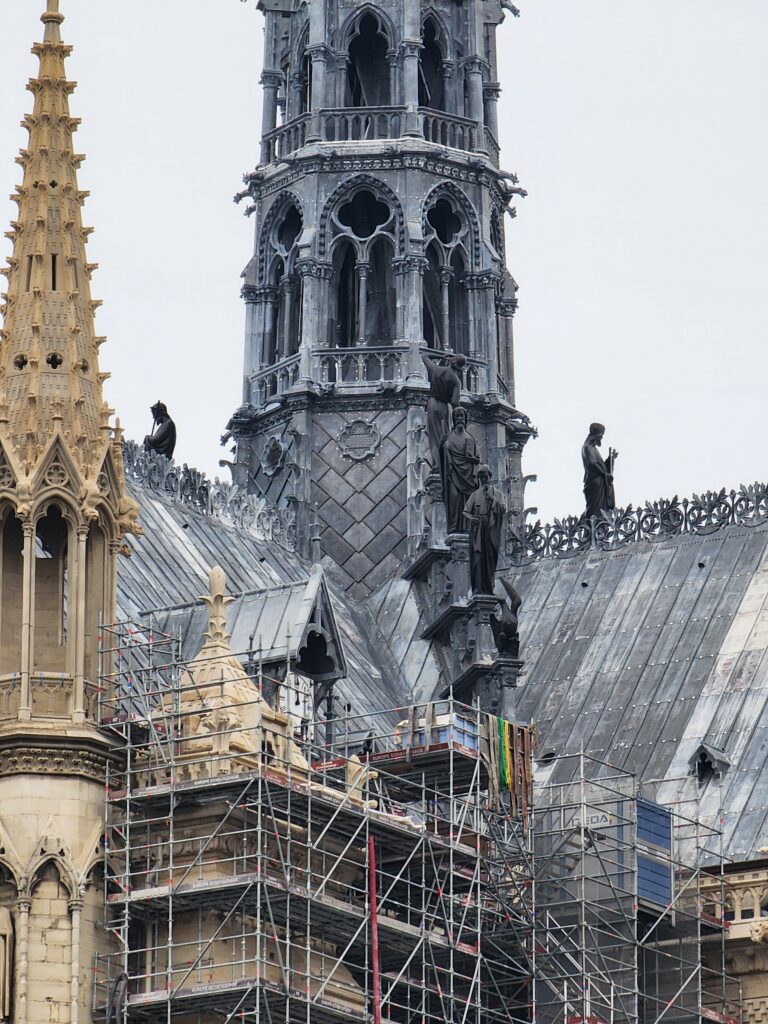
The restored spire and stone of Notre Dame de Paris
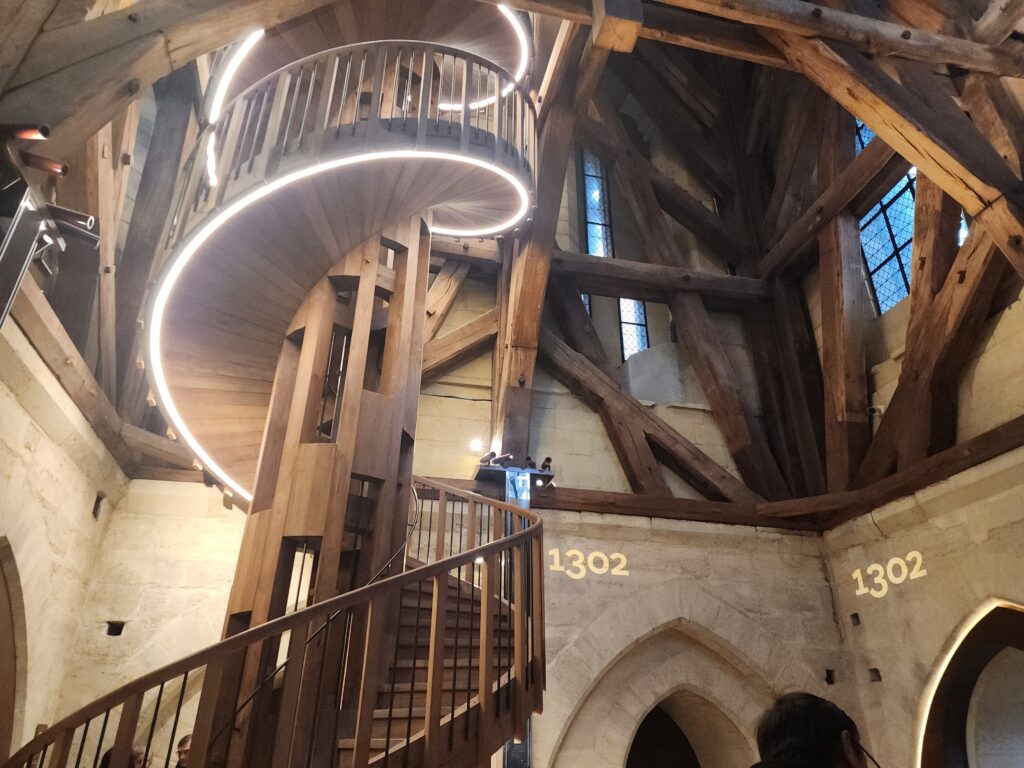
The new staircase placed in the towers to guide visitors
A visit to Notre-Dame de Reims added a critical comparative dimension. Reims, heavily damaged during World War I, reflects a more pragmatic approach to restoration. Hidden modern materials support the structure, yet the cathedral still feels deeply historic from the inside. For Juli, Reims reinforced the idea that material authenticity and sensory authenticity do not always align. Modern intervention can coexist with a powerful sense of age.
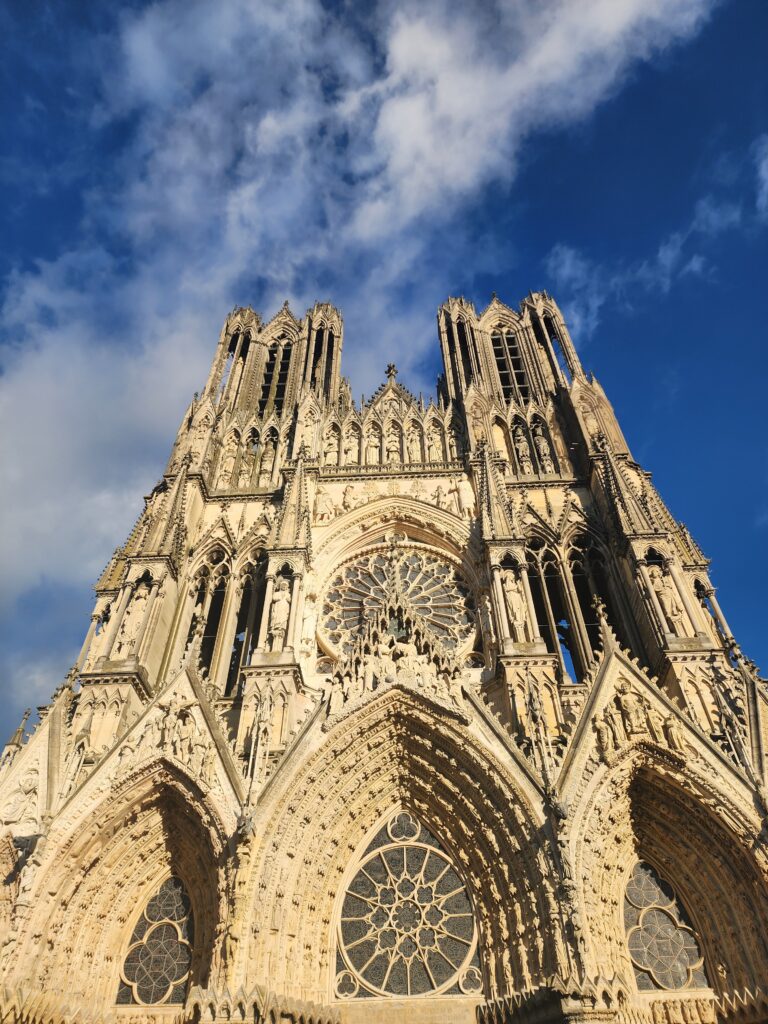
West façade of Notre Dame de Reims
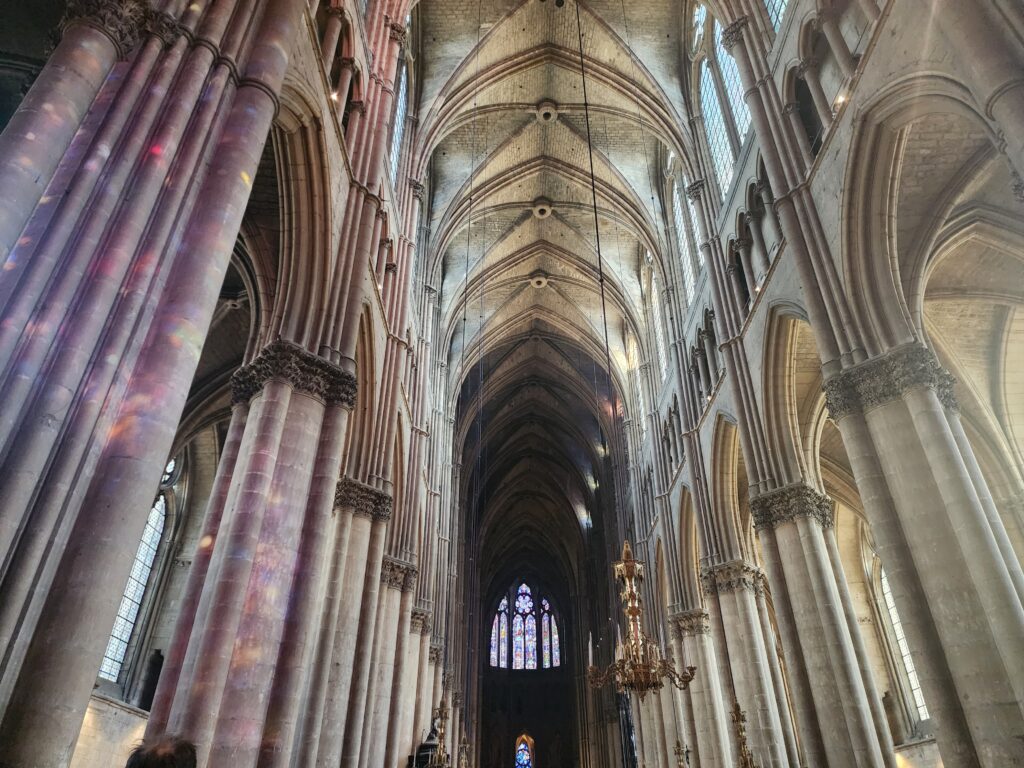
The nave of Notre Dame in Reims
The visit to the Musée de Cluny was directly tied to Juli’s work on Notre-Dame de Paris. She went specifically to see the surviving heads of the kings from Notre-Dame’s west façade, beheaded during the French Revolution in 1793 and rediscovered nearly two centuries later. Encountering these sculptures outside the cathedral was striking. Once violently removed and misidentified as French monarchs, the heads now stand as evidence of revolutionary iconoclasm and shifting political values.

The beheaded kings of Judah in the Musée Cluny
Taken together, these visits reshaped Juli’s understanding of Gothic architecture beyond the page. Repeated encounters with Notre-Dame de Paris allowed its complexity to emerge gradually, while Reims and the Musée de Cluny offered essential contrasts in restoration philosophy, material survival, and historical rupture. Gothic monuments, the trip revealed, cannot be fully understood through images or texts alone. They demand movement, repetition, and physical presence.
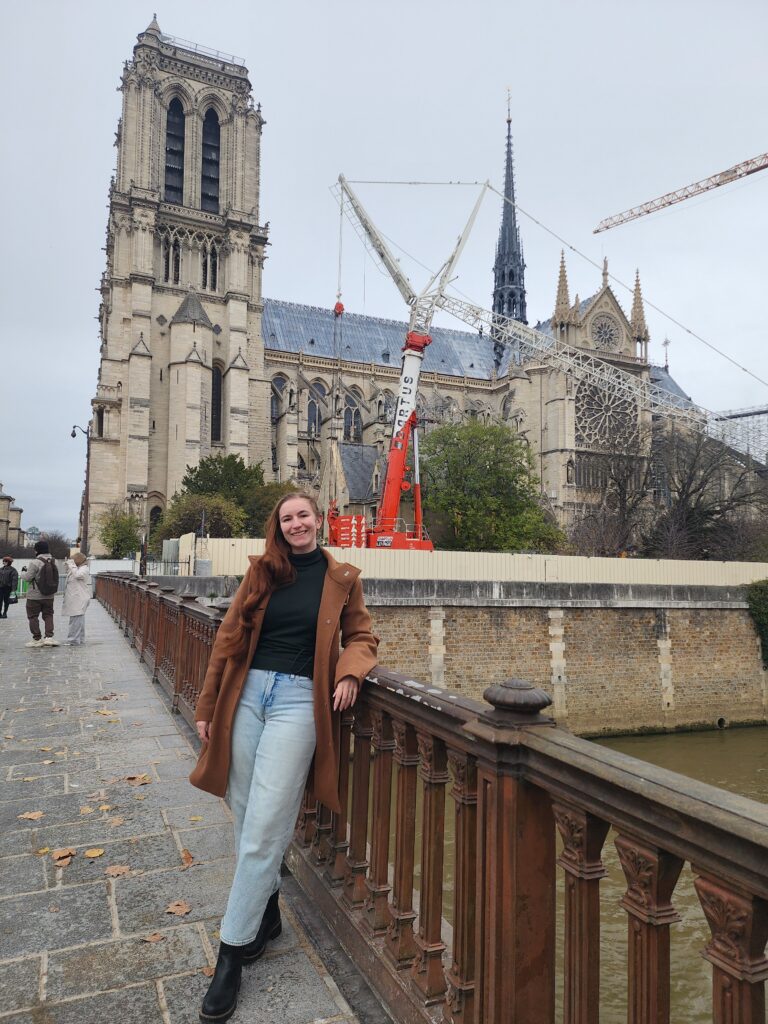
Juli in front of the South façade of Notre Dame de Paris. Construction to restore the cathedral is still underway