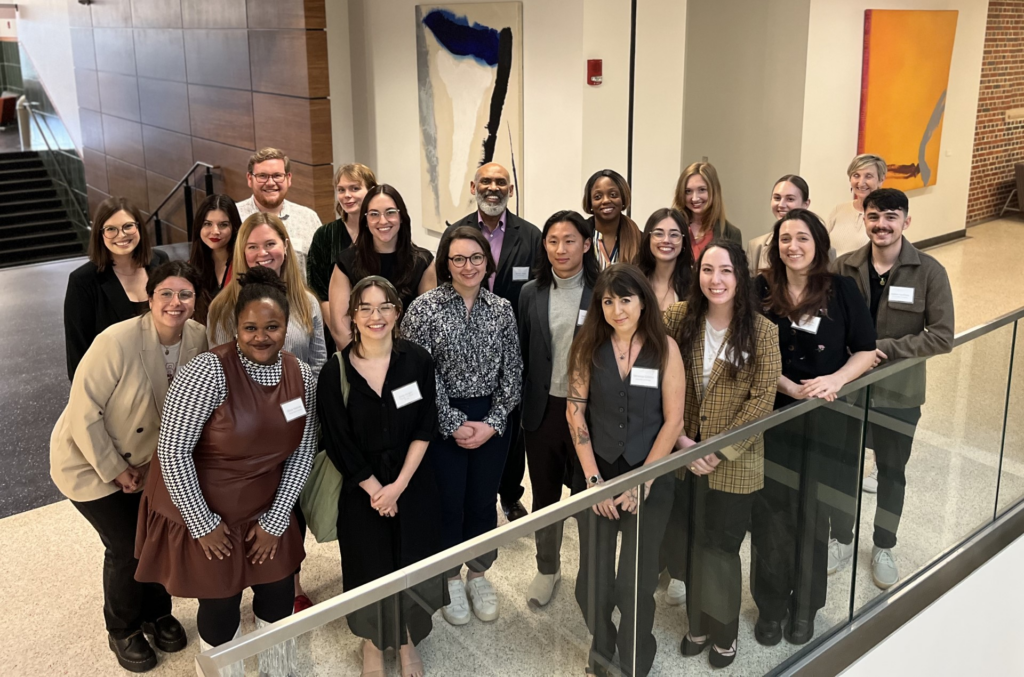
In the beginning of March, Michaela Peine was invited to present her paper, “Tangible Devotion: A Tactile Understanding of Fra Angelico’s Virgin Enthroned,” an excerpt from her QP research, at the Florida State University 40th Annual Art History Graduate Student Symposium. Presenting this paper gave Michaela an opportunity to hone her research and writing, presenting a facet of her work and receiving feedback that will contribute to her ongoing research.
Michaela’s paper focused on a small double-sided panel entitled Virgin and Child Enthroned with Saints Peter, Paul, and George, Four Angels, and a Donor, painted c. 1446 by Fra Angelico. This research argues that this panel shares many key similarities with deschi da parto—the trays presented to women upon giving birth—but also that it also contains vital elements that mark it as a devotional object, not meant to be given to a new mother, but instead deliberately borrowing the iconography of birth trays in order to operate as an item of devotion for a male donor. Virgin Enthroned is not a static art piece; rather, the physical qualities of this panel reveal that this is an object that is meant to be held closely, turned over, and passed from hand to hand. By understanding the tactile qualities of this painting and imagining the spatial and physical environment it would have inhabited, it is possible to examine the psychological and spiritual narratives within Virgin Enthroned. Through this methodology she seeks to “embody” the piece, understanding its spiritual impact through its sensory qualities. Activated by the physical presence of the viewer, this tiny panel encapsulates the complex relationship between art, religious devotion, civic engagement, and the gendered gaze in quattrocento Italy.
Michaela was invited to submit her paper for publication with Athanor, the graduate publication of the Art History department at Florida State University. Her paper will be published in November, and she will present her QP in December.
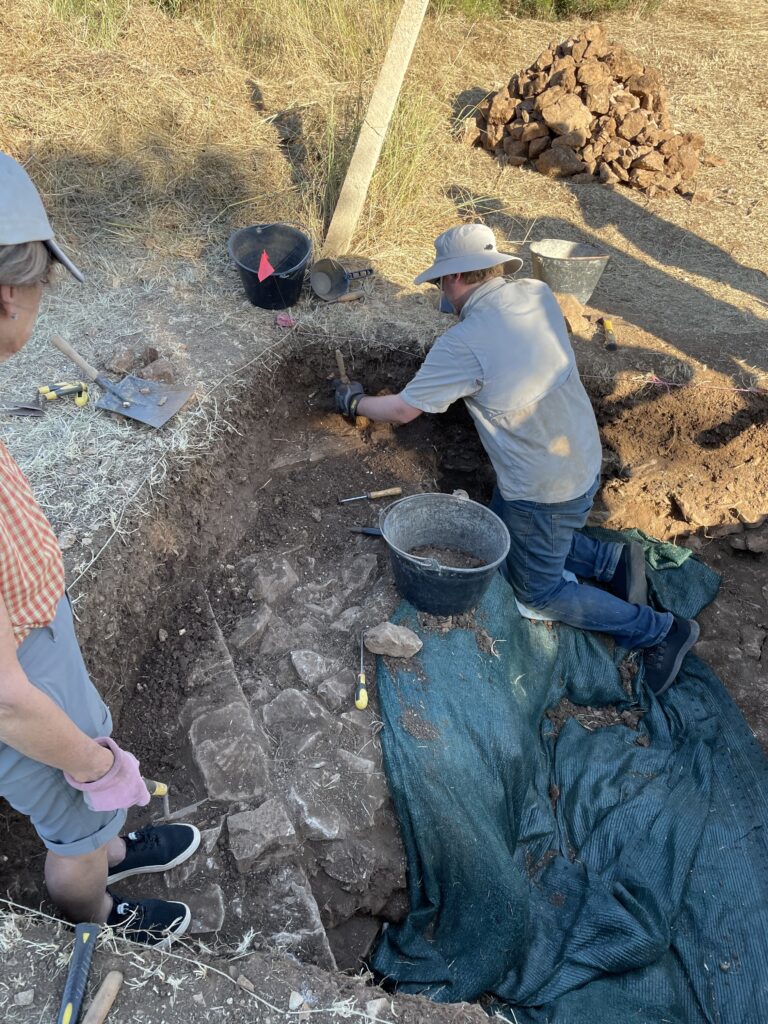
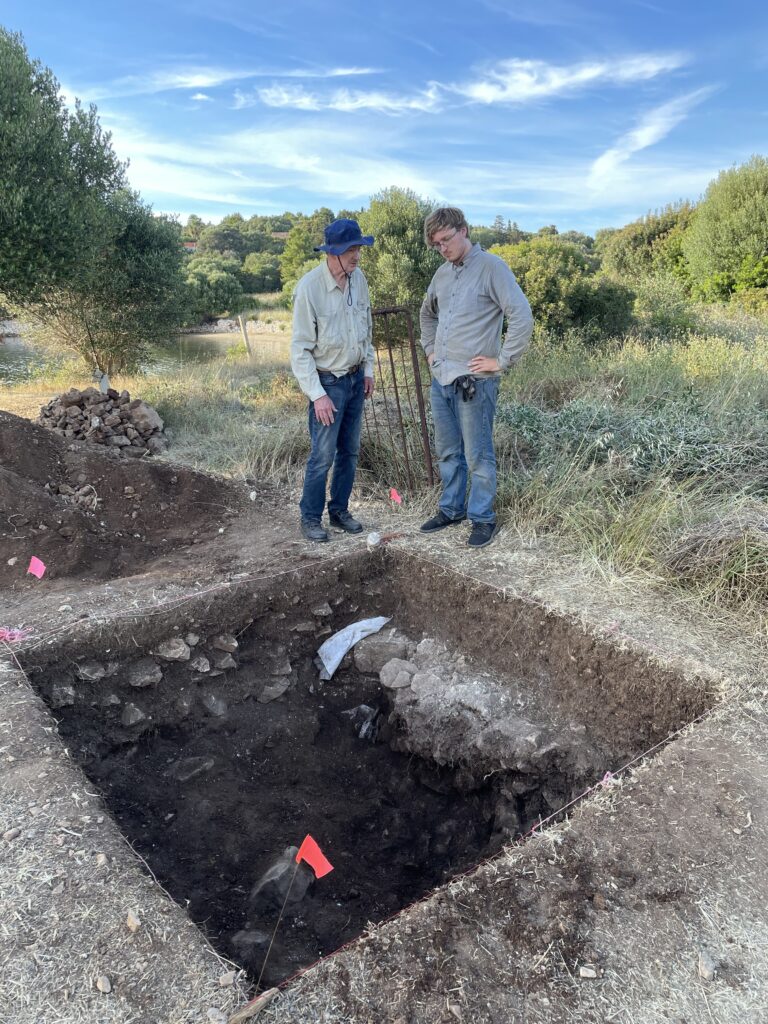
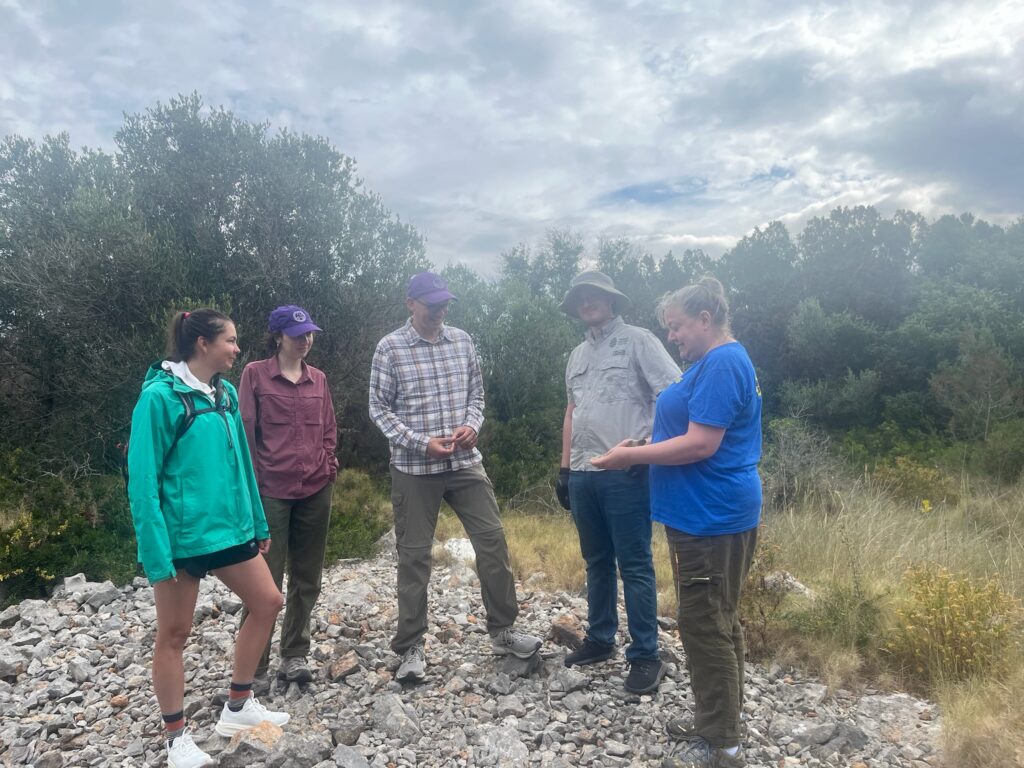 The project’s initial stages involved setting up the excavation site and estimating the location of the old Roman wall. The located wall was in much better condition than expected – walls from the early Roman period are usually better cut than those from later periods and were almost always repurposed for other structures. Excavation continued to the lower layers where the digging ran close to bedrock and the wall’s foundation could be identified, which took most of the remaining time that had been allotted for the dig. The excavation team had other projects running alongside the primary excavation, which members of the crew assisted with as needed.