News – Jay Phillips Center News - Page 8
Browsing Category

News

2012-2013, News

Gun control backers present their own State of the Union

February 11, 2013 KARE 11

ST. PAUL, Minn. — Leading up to President Barack Obama’s State of the Union address, a coalition of gun control advocates presented their own version of the national report card Monday at the State Capitol.

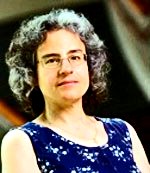
“The state of our union is bereaved, shocked and horrified by the problem of gun violence,” Rabbi Amy Eilberg told reporters.

Eilberg, a consultant at the Jay Phillips Center for Interfaith Learning at the University of St. Thomas, said that the Sandy Hook Elementary School mass killing in Newtown, Connecticut stirred her to be more vocal on this issue.

“As a rabbi, an American and a mother, the death of so many children in what should be absolutely safe place — their school –was unbearable.”

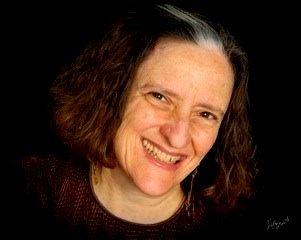
Rabbi Amy Eilberg
2012-2013, News

Rabbi Amy Eilberg to Speak Here Feb. 12 on ‘Everyday Peacemaking’

Jay Phillips Center for Interfaith Learning | January 30, 2013 | Academic News, College of Arts and Sciences, Events, Faith, Justice and Peace Studies

Rabbi Amy Eilberg will present the lecture “From Enemy to Friend: Jewish Reflections on Everyday Peacemaking” at 7:30 p.m. Tuesday, Feb. 12, in the Anderson Student Center’s Woulfe Alumni Hall North (Room 378A) on the St. Paul campus of the University of St. Thomas.

The lecture is sponsored by the Jay Phillips Center for Interfaith Learning in collaboration with St. Thomas’ Justice and Peace Studies Department. It is free and open to the public.

Drawing on Judaism’s rich body of sacred texts about peace and peacemaking, Eilberg will explore why conflict arises among individuals and groups, what contributes to the resolution of conflict, and how each of us can serve the cause of peace.

Eilberg will be rabbi-in-residence with the Jay Phillips Center, a joint enterprise of the University of St. Thomas and St. John’s University, Collegeville, from Feb. 4 through Feb. 15.

In 1985 Eilberg became the first women ordained as a rabbi in Judaism’s Conservative Movement. A co-founder of the Bay Area Jewish Healing Center, where she directed the Jewish Hospice Care Program, and a founding co-director of the Yedidya Center for Jewish Spiritual Direction, she is nationally known as a leader of the Jewish healing movement and in the field of Jewish spiritual direction.

From 2007 to 2011 Eilberg served as coordinator of the Jay Phillips Center’s Interfaith Conversations Project, fostering interfaith learning and friendship among Christians, Jews and Muslims in the Twin Cities area. Currently she is the center’s interfaith conversations special consultant. She also works with the Jewish Council on Public Affairs on its Civility Campaign and serves on the International Jewish Committee for Interreligious Consultations.

Eilberg is also deeply engaged in the work of peace and reconciliation, particularly in connection with the Israeli-Palestinian conflict, lecturing and writing on this topic as well as on the art of compassionate listening, healing and spiritual direction. She is at work on a book titled From Enemy to Friend: The Sacred Practice of Jewish Peacemaking.

2012-2013, News

Faith, Hope and Clarity: Contemporary Interreligious Dialogue

November 24, 2012

Discussing a particular theological question is like pulling that piece of thread coming out of your sweater. The more you pull, the more you see how connected the piece of thread is to the whole of the sweater; likewise, the deeper you address a theological topic the more you see its connectedness to other questions in theology and indeed to questions within other faith traditions. In 2012, St. Thomas theology faculty and students have had several opportunities to pull at the threads of connection between Christians and Muslims.

2012-2013, News

Eating on $31.50 per week? Twin Cities Religious Leaders Give it a Try

Jay Phillips Center for Interfaith Learning October 31, 2012 Events, Faith

What is it like to eat on $31.50 per week? Leaders from 15 Twin Cities community and religious organizations – Muslim, Christian and Jewish – will participate in two November programs that provide a glimpse of life on a food-stamp budget.

The Sunday, Nov. 11, “Food Stamp Challenge” program will be held from 2 to 4 p.m. at Holy Trinity Lutheran Church, 2730 East 31st St., Minneapolis. Leaders from the participating organizations will head to a nearby Cub Foods to buy $31.50 worth of groceries. That’s the average, weekly, per-person food allotment given to recipients of SNAP (Supplemental Nutritional Assistance Program).

Following the shopping trip, participants will return to Holy Trinity for a program on hunger in Minnesota and to discuss Jewish, Muslim and Christian teachings on caring for the poor. For the next week, some participants will honor a pledge to only eat food purchased with their $31.50.

The Sunday, Nov. 18, program will be held in two adjacent St. Paul locations. From 10 a.m. to 12:30 p.m. participants will prepare and serve food at The Family Place, 244 East 10th St. From 12:30 to 2:30 p.m., participants will gather next door at the First Baptist Church, 499 North Wacouta St., to hear from the pledge-takers what it’s like to live on a $31.50 food budget and to learn from experts how to combat hunger in Minnesota.

All of the “United Against Hunger: An Interfaith Partnership” programs are open to the public. Reservations are required to help serve food at The Family Place on Nov. 18. To make a reservation and for more information email Rabbi Amy Eilberg.

The hunger awareness programs are sponsored by the Jay Phillips Center for Interfaith Learning, a partnership of the University of St. Thomas and St. John’s University.

Co-sponsors are Adath Jeshurun Congregation, Beth El Synagogue, Beth Jacob Congregation, Greater Minneapolis Council of Churches, Islamic Center of Minnesota, Islamic Resource Group, Jewish Community Relations Council, Jewish Community Action, Justice and Witness Team of the Minnesota Conference of the United Church of Christ, Minnesota Council of Churches, Minnesota FoodShare, Minnesota Rabbinical Association, Muslim American Society of Minnesota, Northwest Islamic Community Center, and St. Paul Area Council of Churches.

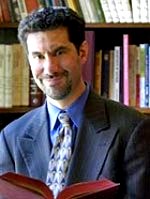
Rabbi David Wirtschafter
2012-2013, News

Rabbi to Speak Here Nov. 8 About the Meaning of the Sabbath

Jay Phillips Center for Interfaith Learning October 31, 2012 Events, Faith

Rabbi David Wirtschafter, rabbi of the Ames Jewish Congregation in Iowa, will discuss “The Radical Notion of Rest: Reflections on the Meaning of the Sabbath” at noon Thursday, Nov. 8, in the Anderson Student Center’s Woulfe Alumni Hall North on the St. Paul campus of the University of St. Thomas.

The lecture is sponsored by the Jay Phillips Center for Interfaith Learning and is free and open to the public. A free buffet lunch will be provided.

“In biblical times, the idea of the Sabbath as a day of rest for all people was a revolutionary idea that challenged social orders based on the assumption that some people owned other people’s time,” said the Jay Phillips Center’s director, John Merkle, “And the Sabbath has sustained the Jewish people and their religion throughout the centuries.”

According to Wirtschafter, “the Sabbath has been one of the Jewish people’s most important social and intellectual contributions to civilizations throughout the world.” In his lecture at St. Thomas he will explore the meaning of the Sabbath and “how the digital age raises new challenges for the distinction between the work place and home, labor and rest.”

Wirtschafter was raised in Minneapolis and graduated from Brandeis University with a B.A. degree in English literature and from Hebrew Union College in New York with an M.A. in Hebrew literature.

During the current academic year, Wirtschafter is rabbi-in-residence with the Jay Phillips Center, a joint enterprise of St. Thomas and St. John’s University, Collegeville, serving as guest professor in classes at both universities. He also hosts Sabbath meals for students and leads trips for them to synagogues in the Twin Cities area.

Professor Susan Stabile
2012-2013, News

Law Professor Susan Stabile to Speak Nov. 13 About Buddhist Meditation and Christian Spirituality

Jay Phillips Center for Interfaith Learning October 31, 2012 Academic News, Events, Faith, School of Law

University of St. Thomas law professor Susan Stabile will present the lecture “Adapting Buddhist Meditation Practices to Christian Spirituality” at 8 p.m. Tuesday, Nov. 13, in the Anderson Student Center’s Woulfe Alumni Hall North on the St. Paul campus of the University of St. Thomas.

The lecture is sponsored by the Jay Phillips Center for Interfaith Learning and is free and open to the public.

Drawing from her book, Growing in Love and Wisdom: Tibetan Buddhist Sources for Christian Meditation, published this month by Oxford University Press, Stabile will explore common values that underlie Christianity and Buddhism and how interreligious engagement can offer mutual enrichment for people of both traditions, giving special attention to how Buddhist meditation practices can enrich Christian spirituality.

After the program, Stabile’s new book will be available for purchase and signing.

Stabile holds the Robert and Marion Short Distinguished Chair in Law at St. Thomas’ School of Law, where she also serves as a fellow of the Holloran Center for Ethical Leadership and offers retreats and other programs of spiritual formation for students, faculty, staff and alumni.

Raised as a Catholic, Stabile devoted 20 years of her life to practicing Buddhism and was ordained as a Tibetan Buddhist nun before returning to Catholicism in 2001. She is a spiritual director, trained in the Ignatian tradition, and one of the leading scholars in the United States on the intersection of Catholic social thought and the law.

The Jay Phillips Center is a joint enterprise of St. Thomas and St. John’s University, Collegeville.

2012-2013, News

We Made it! Opening Doors Capital Campaign Surpasses $500 Million Goal

Gifts and pledges totaling $515,104,773 have been generated in the university’s “Opening Doors” capital campaign, Father Dennis Dease, president, told a dinner audience in the Anderson Athletic and Recreation Complex.

“The campaign transformed our campus with stunning new facilities. But most significant was our single-largest goal, raising $142 million for financial aid that will open the doors to a St. Thomas education for future generations of students from all economic and cultural backgrounds,” Dease said.

The university’s Board of Trustees approved a $500 million goal and the campaign was announced publicly in October 2007, just months before the onset of the recession. Despite challenging economic conditions, St. Thomas raised more in its Opening Doors campaign than the combined total of all previous fund drives.

“The 43,539 alumni and friends who made contributions were key to our success,” Dease said. “That is nearly twice as many donors as our previous campaign and a demonstration of the depth of feeling for St. Thomas on the part of a tremendous number of people. It was truly a community effort.”

The campaign benefited from three gifts of more than $50 million each, two of them made anonymously, and from two large challenge grants. An anonymous donor made one challenge grant in 2010 for $25 million, and St. Thomas trustees made a second challenge grant for $20 million earlier this year. When matched, the challenge grants collectively added $90 million to the campaign and pushed the total beyond the $500 million goal.

Anderson Gift Launches Campaign

Opening Doors was launched with news of a $60 million gift from St. Thomas trustee Lee Anderson and his wife, Penny. The gift helped underwrite three major construction projects on the St. Paul campus: the 2012 Anderson Student Center, the 2010 Anderson Athletic and Recreation Complex and the 2009 Anderson Parking Facility.

The campaign was co-chaired by two longtime St. Thomas trustees and their wives, John and Susan Morrison and Richard and Maureen Schulze.

“Our trustees were nothing short of heroic,” Dease said. “They knew from the start that raising $500 million was going to be a challenge, but they never wavered – not even when the bottom dropped out of the economy.”

The recession “made the road more challenging, but the reaching of our goal all the more rewarding,” said co-chair Morrison, a trustee since 1996. “While the big gifts were significant to our success, equally so were the tens of thousands of our alumni and friends who contributed what they could. The spirit, breadth and depth of this campaign were unprecedented. Maybe it had something to do with the recession, but Sue and I heard over and over from alumni who had received financial aid as students. They wanted to help future generations the way that they had been helped.”

Morrison said the generosity of alumni reminds him of a Greek proverb that is etched in glass and mounted in the new student center: “A society grows great when people plant trees in whose shade they know they shall never sit.”

“We are thankful to have so many generous and supportive trustees who have done so much to ensure a successful campaign with support for so many future students,” said co-chair Schulze, a trustee since 1995. “Scholarships not only open doors, but also keep them open. I have seen it happen time and time again: Students arrive confident but a bit unsure of themselves and their new environment, and mature into young adults ready to take on the world. Maureen and I wanted to make sure those same opportunities remain available to future generations of students.”

“Creating that pool of scholarship and financial-aid resources for students of diverse backgrounds speaks to our deepest roots,” Dease said. “Archbishop Ireland founded St. Thomas, in large measure, to serve Minnesota’s growing immigrant community.”

Thanks Also to Students, Staff and Faculty

Dr. Mark Dienhart, executive vice president and chief operating officer of St. Thomas and director of the campaign, thanked students, faculty and staff for their contributions.

“It’s inspiring that more than 3,300 students contributed to the campaign, and we know they don’t have money to spare,” Dienhart said. “Faculty and staff also pitched in and did so at record levels. Their participation rate jumped from 15 percent to 58 percent during the course of the campaign. That’s impressive.”

Dienhart also praised St. Thomas employees, including staff in Development, Alumni and Constituent Relations, University Relations, and Web and Media Services, for their effectiveness in raising funds, holding events and communicating about the campaign.

“Many, many people have been engaged in this effort for the better part of a decade,” he said, “and their good work has created a lasting impact on this institution.”

Campaign Priorities

Opening Doors’ priorities addressed the campaign’s three themes: access, excellence and Catholic identity. St. Thomas raised nearly $254 million for financial aid and academic programs and another $176 million for construction and renovations. It also raised $52 million in other restricted gifts and $32 million for the Annual Fund.

Funds raised for construction projects include:

  • $58.7 million for the Anderson Student Center.
  • $52.9 million for the Anderson Athletic and Recreation Complex.
  • $15 million for the Anderson Parking Facility.
  • $4.6 million to expand Sitzmann Hall, home of the Center for Catholic Studies.
  • $2.6 million to expand the Gainey Conference Center in Owatonna.
  • $1.1 million to renovate the Chapel of St. Thomas Aquinas.

Funds raised for financial aid and academic programs include:

  • $142.5 million for financial aid ($106.5 million for undergraduates and $36 million for graduate students).
  • $51.8 million for 19 endowed chairs and professorships.
  • $35.1 million for deanships and strategic funds.
  • $8.6 million for the School of Law.
  • $5 million for the Norris Institute.
  • $3.9 million for the Center for Ethical Business Cultures.
  • $3.4 million for the Center for Catholic Studies.
  • $2.5 million for the Terrence J. Murphy Institute for Catholic Thought, Law and Public Policy.
  • $1 million for the Jay Phillips Center for Interfaith Learning.

Benefits Will Last as Long as St. Thomas Exists

The most visible signs of Opening Doors are the three new Anderson structures. Along with their construction came an enlarged lower quadrangle with a fountain and new plaza that links the quadrangle to the entrance of O’Shaughnessy Stadium.

The three facilities had been on St. Thomas’ wish list for years. The student and athletic centers replaced outdated facilities designed for a much smaller student population. The parking structure has eased parking problems and was essential because the new student center was built on what had been a 400-space surface lot.

“The beauty of our campus and quality of its facilities have become a St. Thomas hallmark,” said Steve Hoeppner, executive director of development. “But from the start, this campaign was not about the appearance of our buildings … but what goes on inside them. We’ve never before had anything like our new student and athletic centers. The way they’ve enhanced the undergraduate student experience here has exceeded our highest expectations.”

While those facilities will serve students for many generations, so will funds raised for scholarships and professorships. Proceeds from the invested funds will provide financial aid for as long as the university exists. Opening Doors, for example, created 309 newly endowed scholarships, each valued at $50,000 or higher. The number of endowed chairs and professorships, meanwhile, will increase from 17 to 36.

The university honored the four Opening Doors co-chairs at Wednesday’s dinner. John Morrison and Richard Schulze received the Archbishop John Ireland Award for contributions to higher education. Susan Morrison and Maureen Schulze received honorary doctor of humane letters degrees.

St. Thomas’ four previous campaigns raised a combined $359.5 million. They were: “Ever Press Forward,” completed in 2001, $250 million; “Century II,” completed in 1991, $83.1 million; “Priorities for the ’80s,” completed in 1982, $20.1 million; and “Program for Great Teaching,” completed in 1965, $6.3 million.

The St. Thomas community is invited to celebrate the conclusion of Opening Doors from 11:30 a.m. to 1 p.m. Thursday, Oct. 18, in the Anderson Athletic and Recreation Center field house. Lunch will be provided, and transportation from Minneapolis will be available.

READ MORE
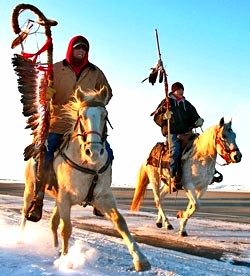
Riders on a 330-mile trip from South Dakota to Minnesota.
2012-2013, News

Film ‘Dakota 38’ to be Shown Here Oct. 17

Jim Winterer ’71 October 11, 2012

The film “Dakota 38” will be screened at 7 p.m. Wednesday, Oct.17, in the Great Room (Room 100) of McNeely Hall on the St. Paul campus of the University of St. Thomas.

Following the screening, Jim Miller and Alberta Iron Cloud Miller of the Pine Ridge Indian Reservation will lead a discussion of the Dakota history and spirituality introduced in the film.

The program is sponsored by the Jay Phillips Center for Interfaith Learning and the Department of Justice and Peace Studies at St. Thomas in collaboration with the Healing Minnesota Stories initiative promoted by the St. Paul Interfaith Network. It is free and open to the public.

In 2005, Jim Miller had a dream about riding on horseback across the great plains of South Dakota. Prior to waking, he found himself at a riverbank in Minnesota and saw 38 of his Dakota ancestors hanged. Miller said that, at the time, he knew nothing of the largest mass execution in U.S. history, which was ordered by Abraham Lincoln on Dec. 26, 1862.

“When you have dreams, you know when they come from the creator,” Miller said. “As any recovered alcoholic, I made believe that I didn’t get it. I tried to put it out of my mind, yet it’s one of those dreams that bothers you night and day.”

Four years later, after embracing the message of the dream, Miller and a group of riders retraced the 330-mile route of his dream on horseback from Lower Brule, S. D., to Mankato, Minn., to arrive at the site of the hanging on the anniversary of the execution.

Dakota 38,” which documents their journey, is a story of hope and healing as they confront the painful history it represents and the plight of their communities today.

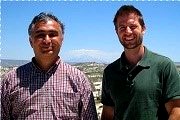
Dr. Ozer Ozdemir & Dr. Hans Gustafson
2012-2013, News

Center’s Assistant Director travels to Turkey

September 15, 2012

Hans Gustafson, the Jay Phillips Center’s assistant director traveled to Turkey in June with the Niagara Foundation of Minnesota, a foundation which promotes global fellowship, intercultural exchange, as well as peace and bridge-building between Turkey and Minnesota.