Field Trips! – J-term Abroad: Roman Structures, Engineering & Society - Page 10
Browsing Category

Field Trips!

Field Trips!

Quakes, Quintili, and (A)Queducts

Buon Giorno!

First of all, I want to start out by letting everyone at home know that while there were a few earthquakes today, we are all fine! In fact, we didn’t know it happened until about 6 hours after! The epicenter of the three 5.7 magnitude quakes is nearly 62 miles northeast of Rome. However, the metro(subway), schools and other institutions were evacuated here in Rome just to be safe. If you read some of the news articles, you’ll find that this particular area has been hit more than a few times in the last year alone. Definitely not something we’re used to back in Minnesota!


That being said, we had a fantastic day! First, we set off via coach to Villa Quintili. A giant estate, once belonging to two affluent brothers, is now a skeleton of what used to be. The villa contains pretty much everything you’d imagine two young and wealthy senators would want: large baths, private and public residence, water storage, maritime theater, and a gorgeous view of Rome, the mountains and even a volcano. Of course, there was plenty of engineering present- we looked at the massive arcades that were still standing around some of the baths and the residence halls, and heating in the bricks that made up the walls and floors. The remnants of the marble floors and walls, as well as the mosaics were nothing shy of beautiful.
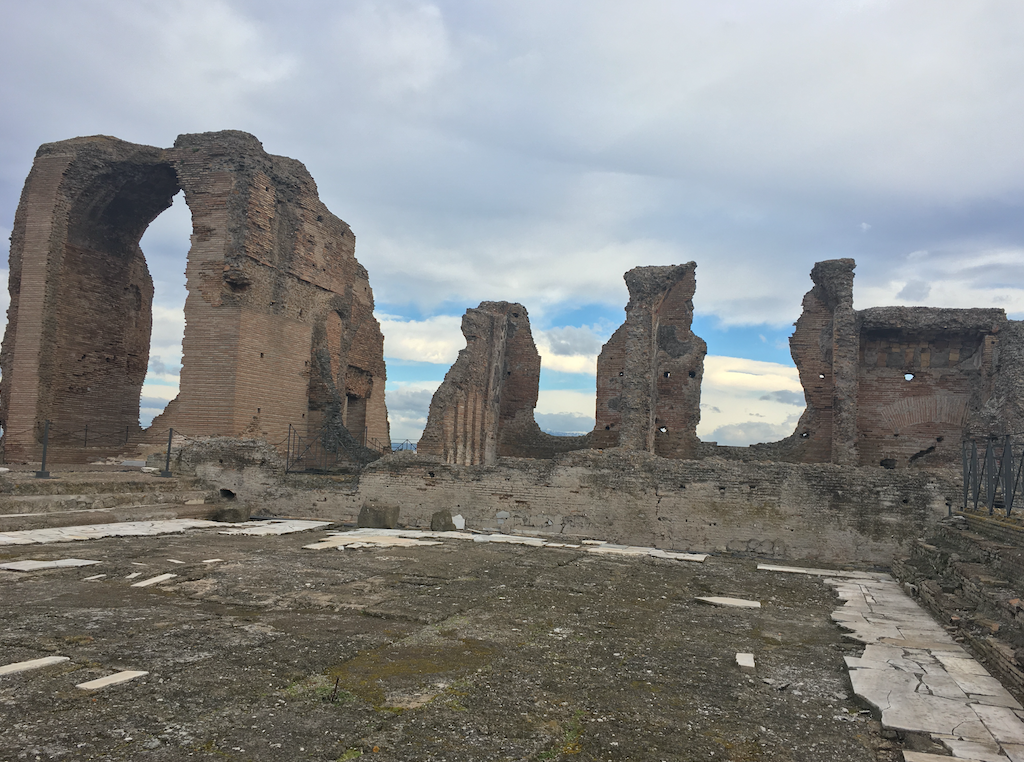
Part of the residence hall.

After a little lunch break at Eataly, we got to play in the park! You’re probably wondering why a bunch of engineering students would go abroad to just play in a park… but trust me, there was plenty of learning to be had! We arrived at the Aqueduct park, where two (of the once 11) visible aqueducts rolled through green fields. We got to see Aqua Claudia and Aqua Marcia; Aqua Marcia, which supplies water to capitol hill, is one of the two that is still in use today (along with aqua Virgo-which supplies the Trevi fountain). The aqueducts often took water from rivers or springs in the mountains nearby and carry the water toward the city over various terrains. This is where the engineering really comes in! They used bridge arcades to cross-valleys, and would bury the channels underground when the terrain was raised. It’s all about flow! As long as the aqueducts are slightly downhill, gravity will do all the work, and carry water to fountains, baths, irrigation systems, and even private villas and palaces. We found another use for these miraculous pipes though, as we found ourselves climbing in and around them.
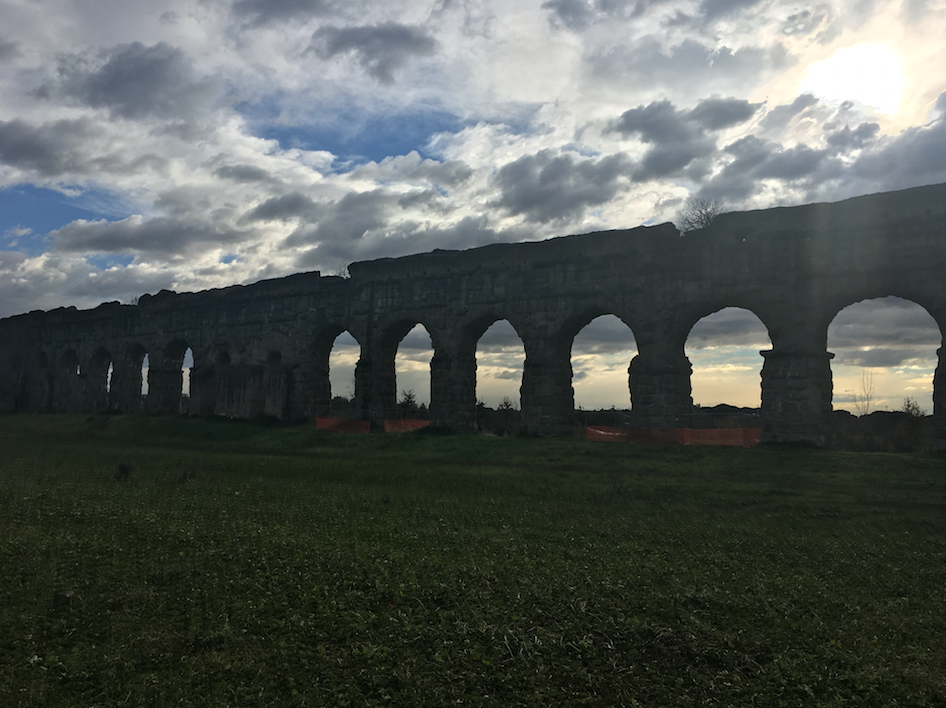
Aqueduct Claudia, built in 52 AD, runs 43 miles long, but is no longer in use.
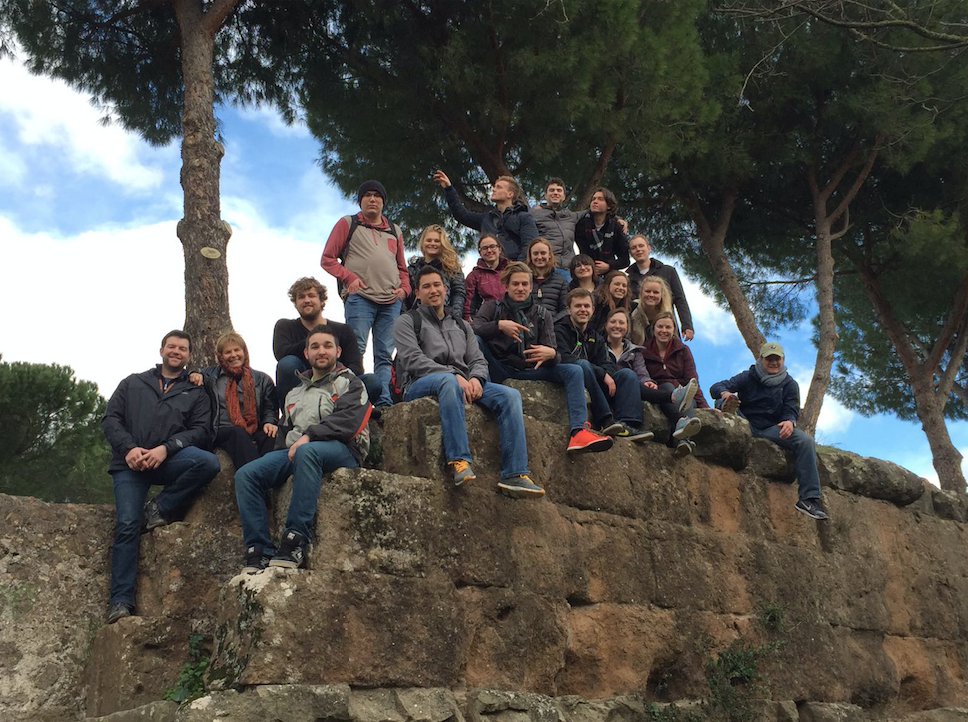
Some of us on top of Aqueduct Marcia.

And that wraps up our time here in Rome! Tomorrow we take a high speed train to Naples, and soon after that we’ll be in Florence! Ciao!
Field Trips!

The Vatican Museum + Michelangelo’s Masterpiece

It is Day 16 and we are reaching the end of our time in Rome! Many of us have been scrambling to cross off the last few items on our lists of things to do. A couple of those things involving exactly what was on the itinerary today: The Vatican Museum and The Sistine Chapel! We were reunited with Gino, our beloved tour guide, for the day.

fresco1

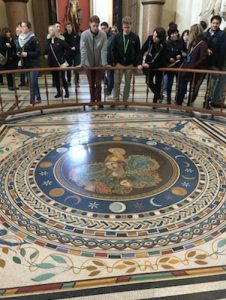
One of the most beautiful mosaics that we saw today!

To be completely honest, every aspect of the Vatican Museum was breath-taking (and I’m not just talking about the many flights of stairs that were climbed in the process). The experience as a whole left me speechless. You won’t see a single ugly thing inside. Well, except for the painting that depicted “a gentleman with big ears like a stupid donkey” according to Gino.

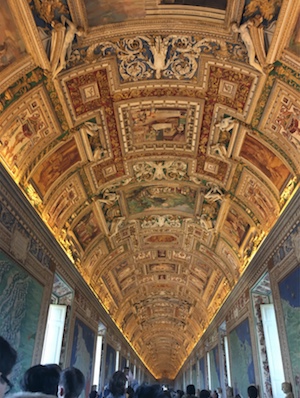
We walked through rooms and hallways and staircases filled with sculptures, decorated with frescoes, and accented with gold. Every step we took was upon vibrant marble slabs or intricate mosaic tiles. Although many of today’s experiences seemed to focus more on the artistic elements rather than engineering elements, our scientific brains continued to spin in their normal fashion.

coffers2

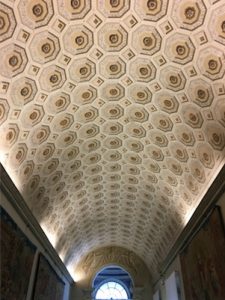
Beautiful white and gold geometric coffers!

goldvault

Again, left speechless by this amount of intricate detail on this vault ceiling.

dome2

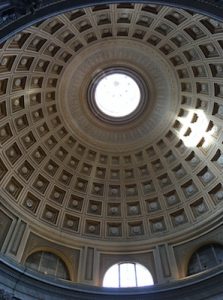
If you look closely, some of these coffers are decorated with flowers and others with faces.

The Vatican Museum contained more coffers in one place than I have ever seen. There were coffers in domes, vaults, arches, and essentially any where else you could fit them. There were coffers with flowers, with faces, and with simple geometric shapes. In addition to the coffers, we walked through a hallway with massive hanging tapestries. Gino was particularly interested in one where the eyes of Jesus seem to follow you as you walk down the hall. He explained the unique use of perspective along with the large looms required to create such a magnificent tapestry. One last highlight from the Vatican Museum was seeing some of Raphael’s famous pieces in the apartments of Pope Julius II. Again, the detail and beauty continues to amaze me.

rafael

One of Rafael’s magnificent pieces in the apartments of Pope Julius II.

The Sistine Chapel, again magnificent simply in its artistic value, but also in its use of engineering. Michelangelo needed to design a way to hoist himself 60+ feet in the air in order to create such a magnificent ceiling. He developed a platform that positioned him within arm’s length of the curved ceiling. In addition, it needed to hold the weight of multiple grown men and large quantities of lime sand and water. Michelangelo built a bridge structure that utilized horizontal posts and followed the slope of the ceiling. Unfortunately, I cannot grace your screens with these beautiful frescoes since we were consistently reminded that “no fotos” were allowed.

That is all for today! Ciao!
 

Field Trips!

Back in the Classroom!

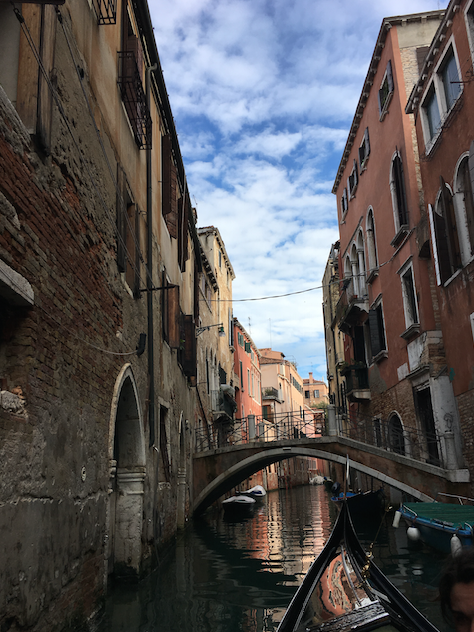
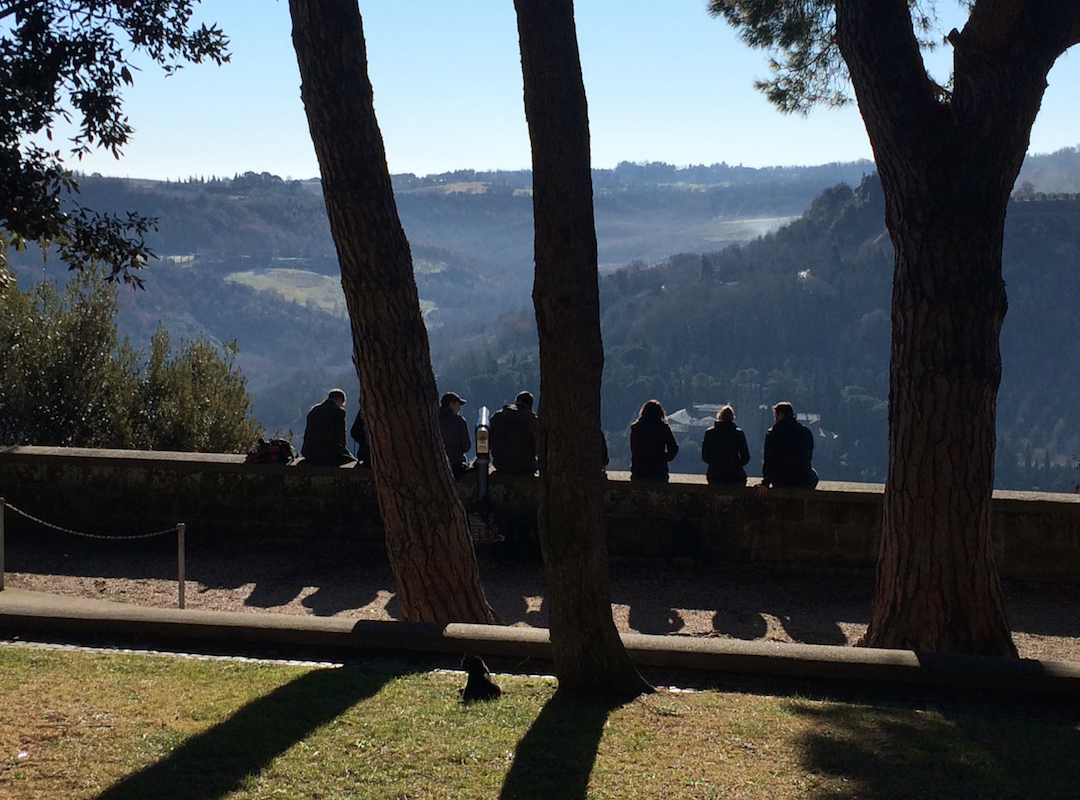
Welcome back! As some of you might already know, we had a free weekend! Here is how some of us spent our days off:

Screen Shot 2017-01-16 at 11.02.50 PM

Taking a Gondola ride in Venice

Screen Shot 2017-01-16 at 11.02.35 PM

Enjoying the view in Orvieta

Screen Shot 2017-01-16 at 11.02.16 PM

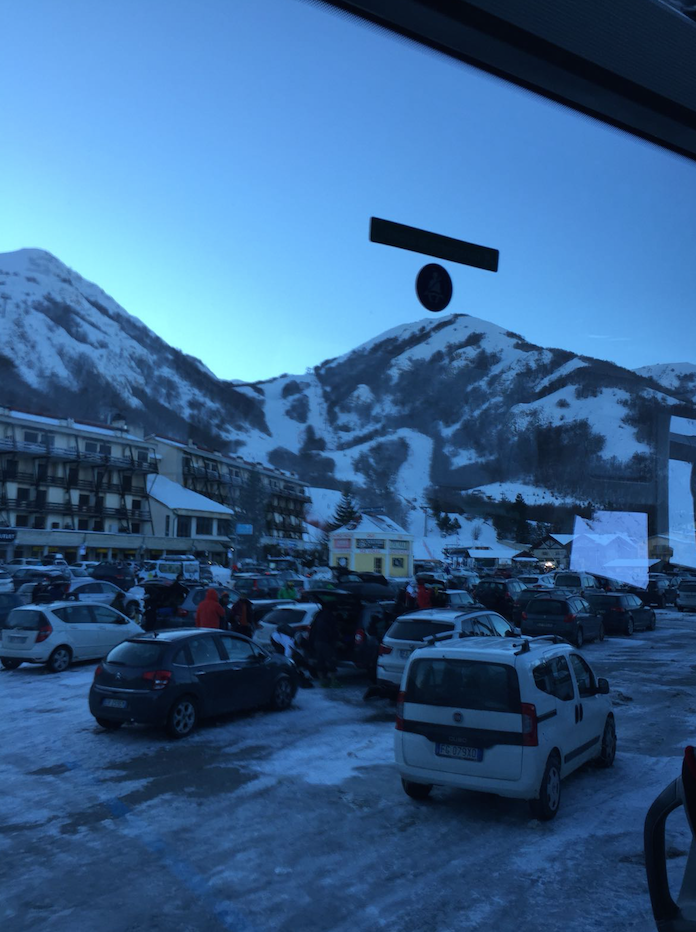
Skiing in Ovindoli

…And then it was Monday!

Since we usually learn our course content while out and about the city, today was a refreshing change-up to our routine, as we found ourselves back in the classroom! We were lucky enough to join professors and faculty at La Sapienza University in Rome. We were treated to lectures from a multitude of engineering topics from a variety of professors. Below is a brief list and notes about the topics we covered today:

  • Introduction to Roman Engineering with Alessandro Ranzo
  • Roman Roads with Paola Di Mascio
    • We learned about the different layering techniques and methods used to construct ancient roman roads.
      • How Romans would construct raised parts of the road to allow for pedestrians to cross, but allow carriages and carts to pass through.
      • Romans would use wood to make a sturdier foundation in cases of soft terrain.
  • Roman Bridges with Mario Paolo Petrangeli
    • Introduction to all the different types of arches found in ancient roman architecture
    • How they used machinery to construct the bridges.
  • Roman Hydraulics with Roberto Magini
    • Aqueducts and their use throughout the city.
    • Drainage systems (they would join rain water with waste water to dilute what was drained into the river)
    • Installation of aqueducts- use of gravity to create water pressure and flow.
  • Vulnerability of historical buildings with Fabrizio Vestroni
    • Introduction to seismic activity
    • How different types of buildings and structures are more or less vulnerable than others in the case of an earthquake.
      • Seismic activity and reaction are series of oscillations!
  • Logistics with Guiseppe Loprencipe
  • United States highways with (our very own) John Walker

My civil-engineer brain was running fast today! A very special thanks to Antoni D’Andrea, the Dean of the School of Engineering at La Sapienza, for welcoming us with open arms and allowing us to take what we know and apply it to Roman ideas and concepts!

Screen Shot 2017-01-16 at 11.06.45 PM

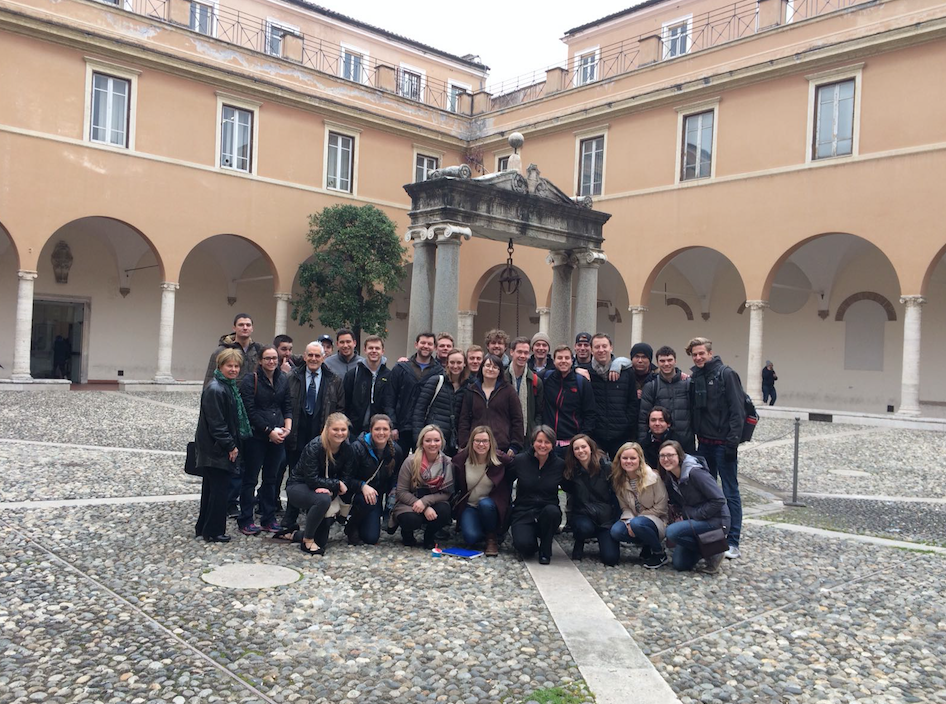
A Tommie Tradition! Since this course began in 2003, groups have been visiting La Sapienza and taking a photo in front of this well in the courtyard. Now it’s our turn!

Screen Shot 2017-01-16 at 11.06.31 PM

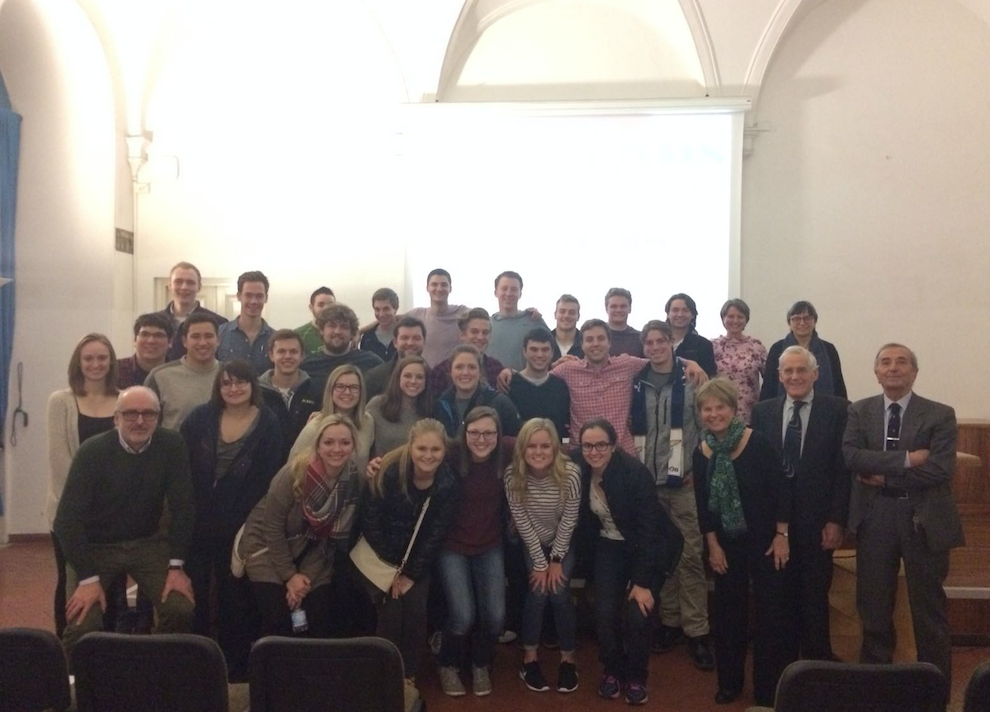
And of course we also had to get a group picture with the wonderful professors at La Sapienza! Thanks again!


Field Trips!

A Rainy Day in Roma

Hello everybody! Sorry to take a day off from blogging. We had a free day yesterday and spent most of the day exploring the city and catching up on sleep. Today, on the other hand, was back to our typical adventures with the addition of some Roman rain. In order to stay out of the rain we switch today’s schedule with a day that was originally meant for next week. I think we were all grateful to spend this hazy, rainy day inside museums rather than climbing the terrain at the aqueduct park.

IMG_0500

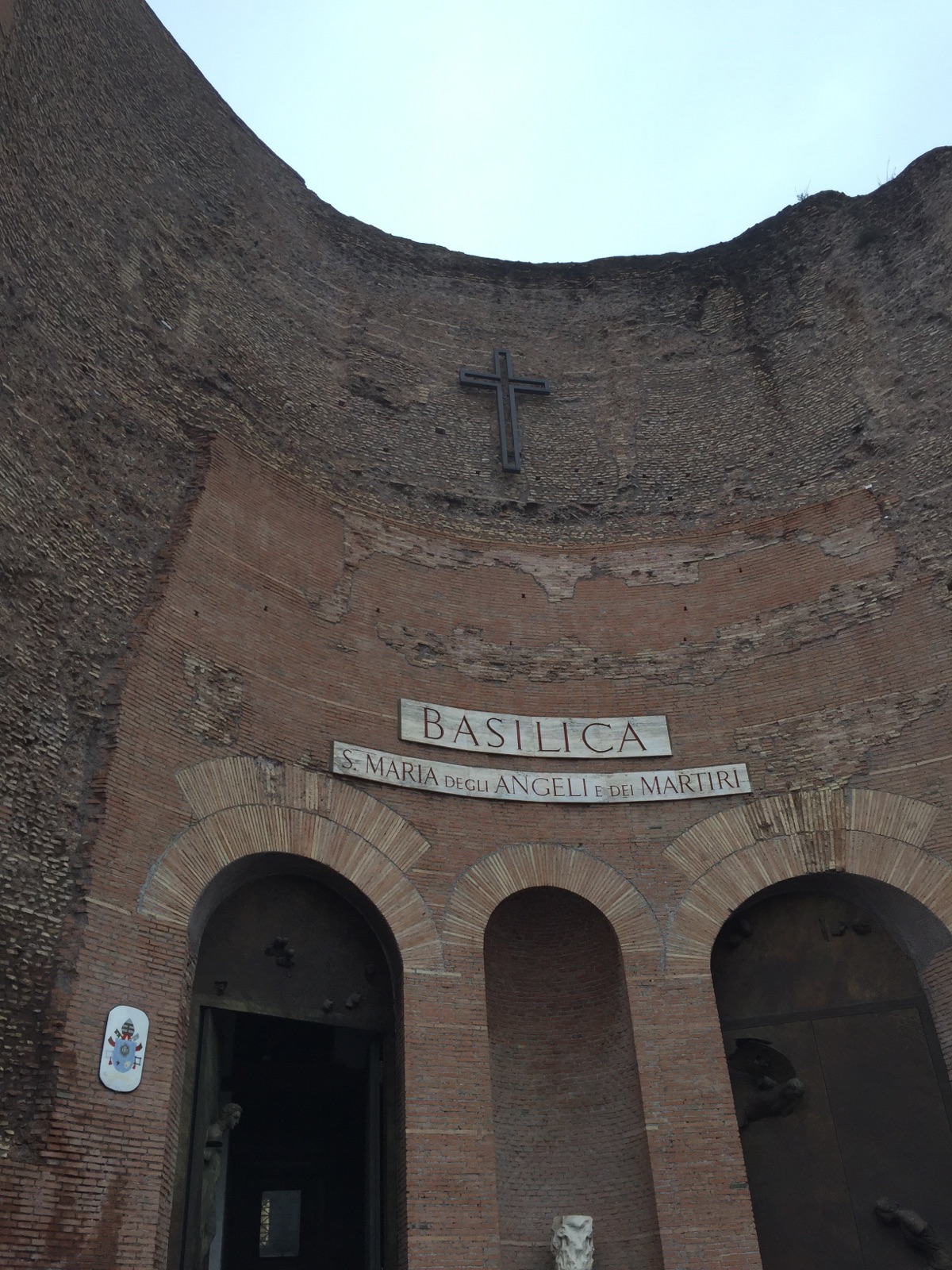
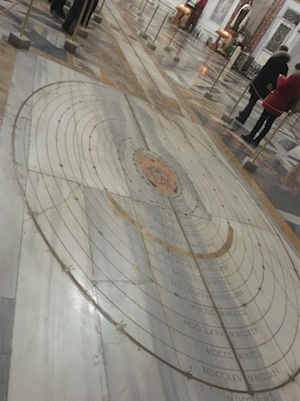
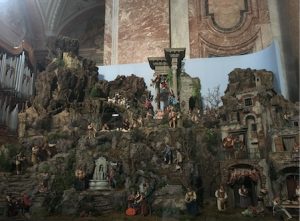
We started off the day touring Santa Maria degli Angeli e dei Martiri (The Basilica of St. Mary of the Angels and the Martyrs). Just like every church we have visited, it was breathtaking. You’d think that touring churches could get old, but it definitely hasn’t. Each one is unique in decor, style, and layout leaving us in amazement after every visit. A couple of aspects that caught my eye today were the meridian line, the painted coffers, and the Christmas Crib.

meridian

The meridian line was a diagram etched into the stunning marble floors and used to determine the location of the sun by the location of sunlight on the floor. This tool was most important for determining which day Easter should land on each year as well as for measuring a whole year more accurately.

The painted coffers were a small engineering aspect that I noticed. In many of the dome structures that we have visited, the dome required coffers to reduce the weight and overall force acting on the base of the dome. In the basilica we visited today, there were coffers, except they were not actual indentations. Instead, they were painted in a manner to resemble the true coffers that we have seen in St. Peter’s Basilica and the like.

crib

We also saw an elaborate Christmas crib, which could also be known as a nativity scene. Gino explained that our Christmas traditions are more similar to those of northern Italy, like the Christmas tree for example. In southern Italy, Christmas cribs or nativity scenes are far more common than decorated trees. The amount of artistic detail was mind-boggling. I’ll let the beauty speak for itself above.

baths

We spent the rest of the afternoon wandering through the ancient Diocletian baths, weaving between exquisite statues, and staring at intricate mosaics. The Diocletian baths being so prominent in ancient Roman culture proved to be just as magnificent as you would imagine. The incredible usage of arches, brick, and marble created very luxurious pools for wealthy families.

IMG_7757

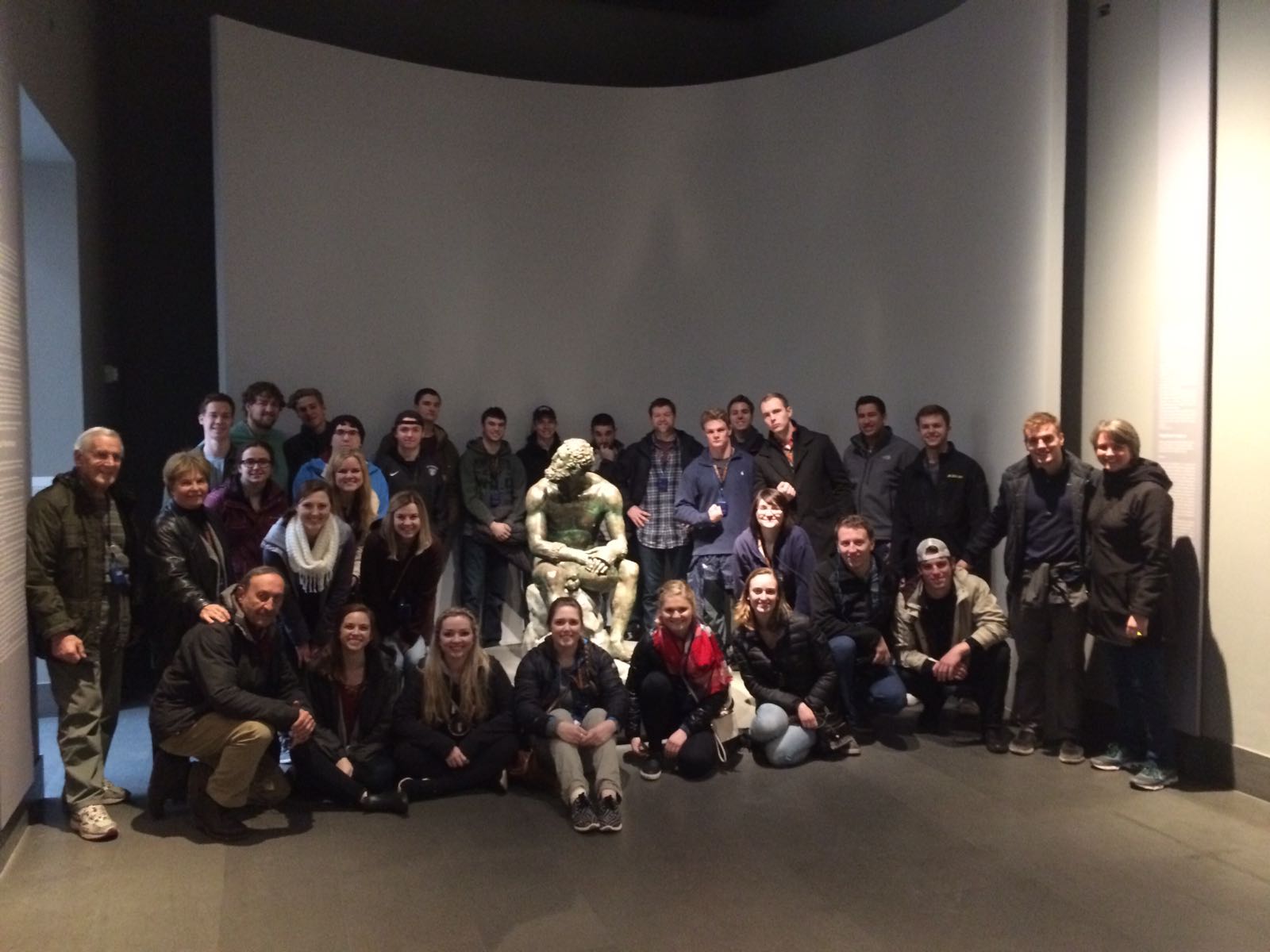
One of the favorite sculptures from today was easily The Boxer. We learned all about the construction of the sculpture from the holes in the eyes and back of the head that allowed the entire head to be hollow. Gino explained the difference between using marble versus bronze when sculpting such large pieces. It was so interesting to see the development of detail, expression, and movement in art over the centuries. The first few sculptures we saw seemed to be in very forced, stiff positions. As we continued on to slightly more recent pieces, fluidity and movement became much more prominent.

Also, today just happened to be Dr. Besser’s birthday! What a way to spend such a special day. Tonight, we will have the chance to celebrate with a birthday dinner here at our hotel.

That’s all for today! We have this entire weekend free, so keep an eye out for our next post summarizing everybody’s individual adventures.

Ciao!
 

Field Trips!

Viva la Papa!

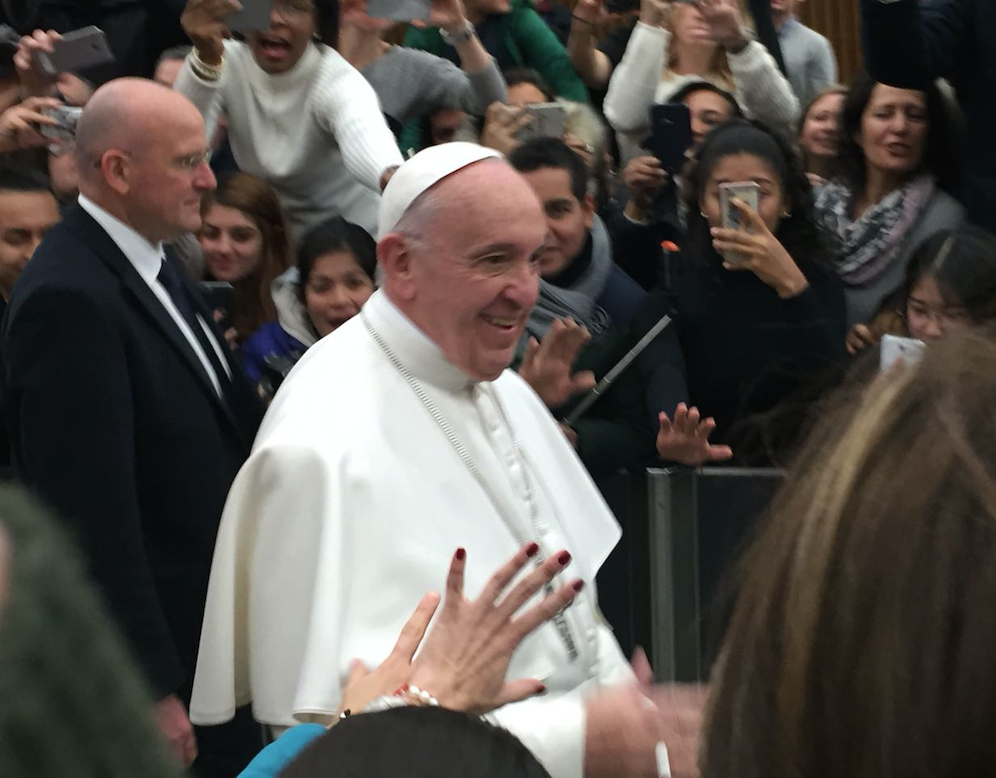
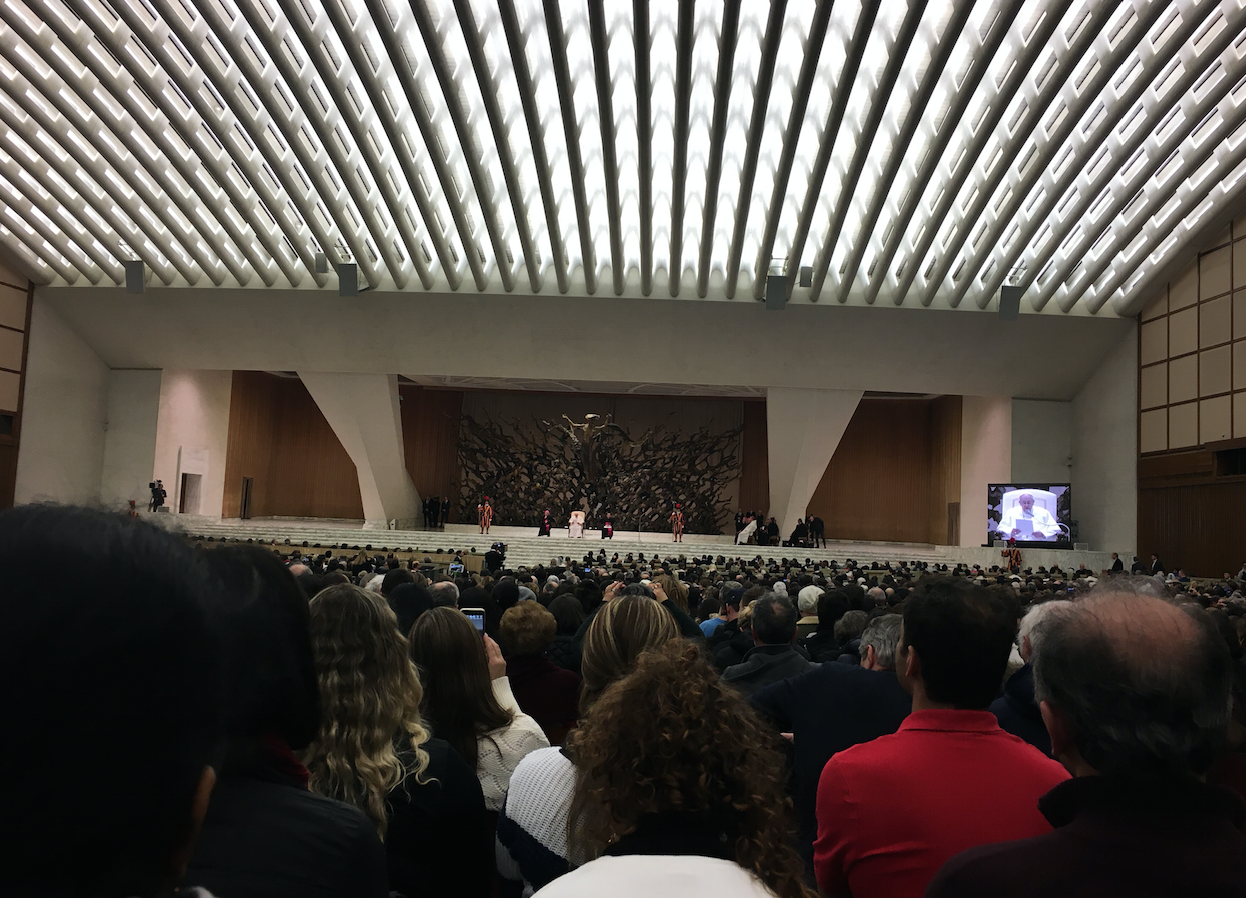
We’re all feeling extra blessed today! After an early morning, we walked right over to the Vatican again and checked through security to join the Pope’s audience! We filed in a very large auditorium welcomed by (you guessed it) more wonderful arches along the roof- these ones strategically utilized for lighting purposes as well. The pope  walked down the center aisle (which we were about 6 seats away from), and stopped to talk and pray with people, as well as bless some religious articles. After he sat down, he said his passage in Italian, and cardinals followed with translations for other languages. After what was about an hour, he started his procession back up the aisle, this time taking much longer to work his way along. He took this time to bless articles that people brought along-things like jewelry, rosaries, bibles, among other things. Unfortunately, he only walked passed us, not stopping close enough to us. However, we did snag these pictures and videos of him!

screen-shot-2017-01-11-at-8-15-49-pm

The Pope is all smiles as he walks down the aisle. Credit: Becky Reinke

screen-shot-2017-01-11-at-7-30-07-pm

The view from our seat, we were about 2/3 back in the auditorium. The pope is seen sitting in a white chair at centerstage just in front of a massive Bronze sculpture of Christ.

Click on the following link to see a short video clip of the Pope walking by our row.

https://twitter.com/Deb_Besser/status/819263065975902221

Next, we walked over to John Cabot university to meet with their president, Franco Pavoncello. We joined in a classroom where he gave us a brief overview of the area surrounding the university, as well as the history of Italian politics. What a great way to see the other universities here in Rome!

And there you have it! A short, sweet, and blessed day. Ciao!
Field Trips!

Bones, Bodies, and Bon Appetite!

st-peters

It has officially been a whole week since we left Minneapolis for our little Italian adventure – I can’t believe it! Today, our visit to St. Peter’s Basilica left us in utter amazement. We started off the morning descending into the depths beneath the basilica where we found the Vatican Necropolis and the tomb of St. Peter. In small groups, we were guided through narrow passages, into musty nooks, and under layers of history. Our guide highlighted the varying areas of brick. Each section had its own unique style and characteristics identifying it as part of a particular century of construction. As the tour continued, we learned about the concept of a sarcophagus shop, a place where families could purchase pre-decorated stone coffins for their loved ones. These final resting places were incredibly detailed, requiring long ours of meticulous sculpting. Our guide shared that a few parts of each sarcophagus were left blank in order to personalize it for the person who had passed. How interesting! (As Gino would say if he could have joined us.) We finished off our tour in a room that looked into the tomb of St. Peter. With the use of a laser pointer, our attention was drawn to the mandible of St. Peter. Hearing the stories of the investigative research required to make such a claim was fascinating.

fronttop


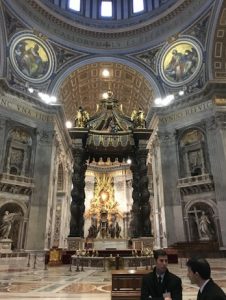
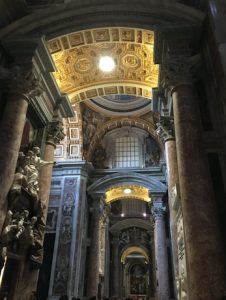
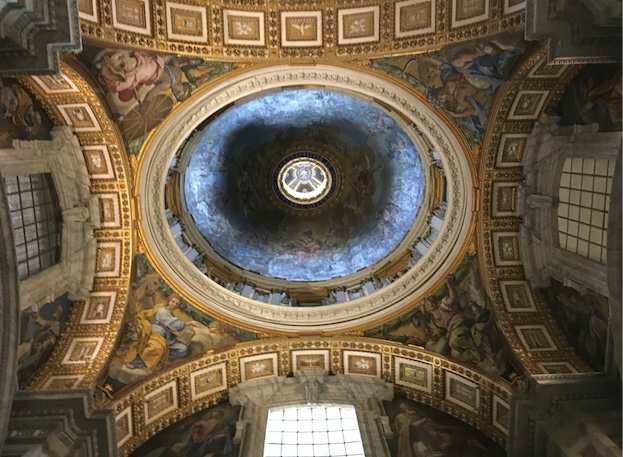
After our tour of the Scavi, our three small groups joined together for a walk throughout St. Peter’s Basilica. A seminarian led us across the vibrant marble floors from mural to mosaic to mural to a pope’s body to sculpture to mural. Did you catch that? We saw the decaying bodies of three previous popes. They were not necessarily on my list of things to see in Italy, but Italy has yet to disappoint. As we stared in awe at the ceiling encased in gold and the walls tastefully decorated with murals, I could not help but to notice the beauty of the coffers utilized in the vaults of the St. Peter’s Basilica. Centering a gold flower in each coffer as a finishing touch, only added to the absolute elegance of the building. Although these coffers serve as an artistic element, we have learned that they were sometimes necessary in creating a reduced load and a more stable structure. In addition to the numerous coffers and vaults, we saw eleven domes in total! Each with a small oculus acting as a keystone does in an arch.

dome

We wrapped up our full day with  four-course meal at Professor Zell’s favorite restaurant: Pizzeria Piacere Molise! The thirty-one of us sat in small clusters almost filling every table at the quaint Italian restaurant. With grumbling bellies and excitement, we enjoyed baskets of bread, bowls of caprese, two pasta dishes, pork, gravy, and roasted rosemary potatoes. We ended our lovely, authentic meal with a dish of fresh tiramisu.

Ciao!
Field Trips!

Not Your Typical Monday

If you’re itching to read what we did today, I’ve got just what you need, and there sure is a lot!

To start off our Monday, we left the hotel around 9 am, and took a short (much warmer) walk over to St. Thomas’s Bernardi campus just a few blocks from our hotel. There, we spent around an hour taking a look around the campus, as well as chatting with one of the faculty members, Thanos.

Shortly after, we walked a few more blocks and across the Tiber river to the Castel Sant’Angelo. Here, some engineering feats we studied were:

  • Slanted stairs that led up to the tower that allowed horses and carts to roll up the incline.
  • Tall, open passageways that were essentially skylights to the top of the tower.
  • Drawbridges (multiple of them; as the ground level increased, they built more entrances to the tower).
  • Holes designed at an angle to allow cannons and rifles to aim toward an enemy invasion.

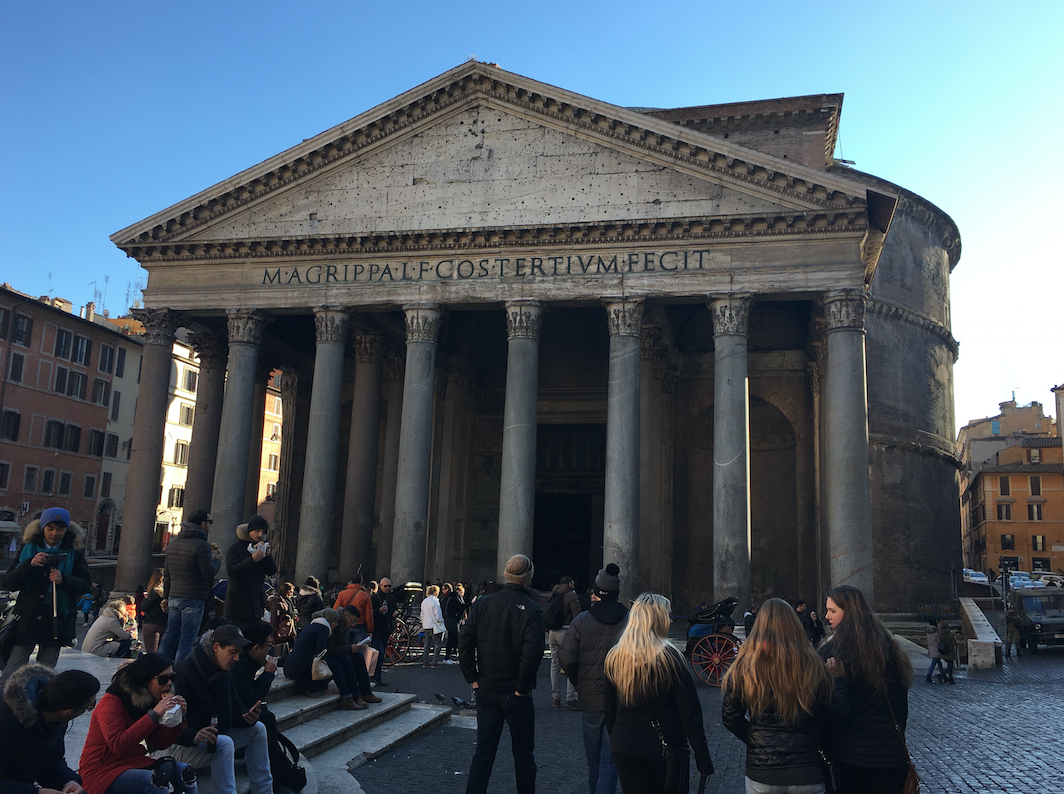
Hitting the road again (I tracked over 9 miles-and counting!), we walked through some shopping areas and grabbed a quick lunch (some of us got a whole pasta dish for only 5 euros-what a deal!). To quote Gino, ‘around the corner is a big surprise!’, and a surprise it was! We turned our heads around toward the next street and there it was- the Pantheon. It’s safe to say it took my breath away. For being one year shy of 1,900 years old, the Pantheon is in beautiful condition.

screen-shot-2017-01-09-at-8-27-45-pm

A front view of the outside of the Pantheon. The translation on top of the facade reads ‘Marcus Agrippa, son of Lucius, in his third consulate, made it’, which honors it’s original builder, Agrippa.

screen-shot-2017-01-09-at-8-27-58-pm

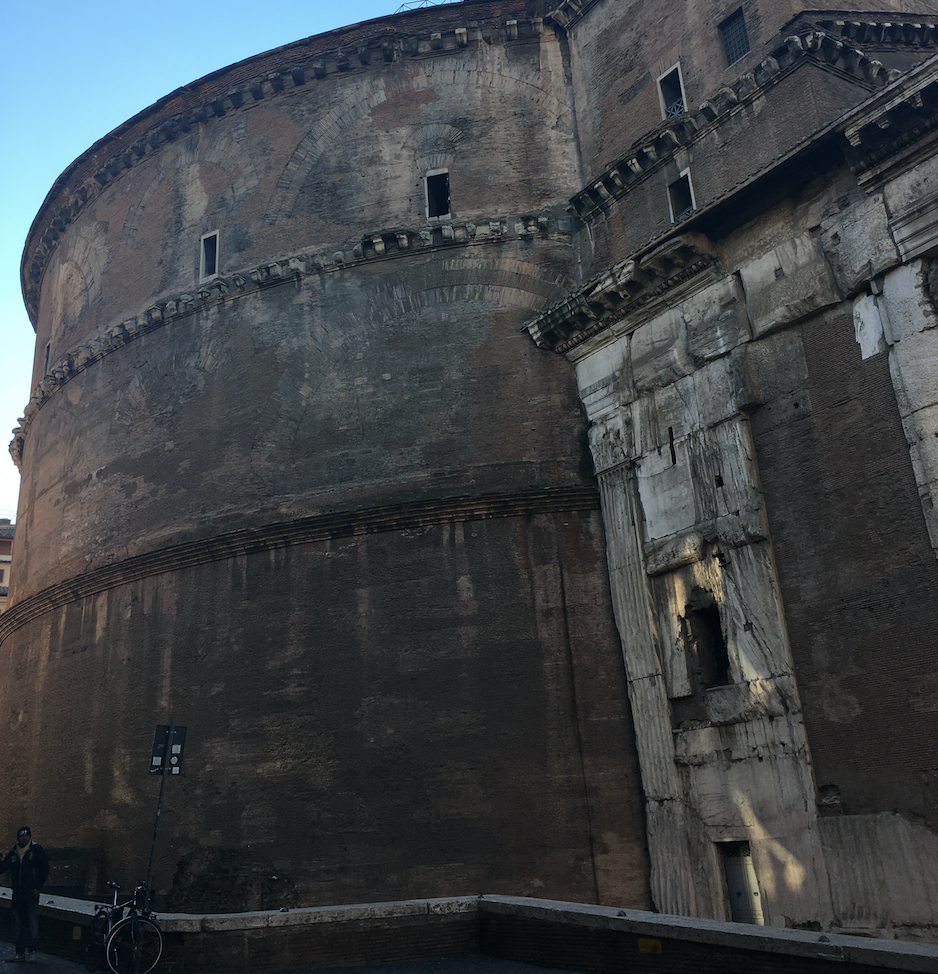
Another view (taken from the front left) of the Pantheon. These walls, now showing brick, used to be covered in stucco.


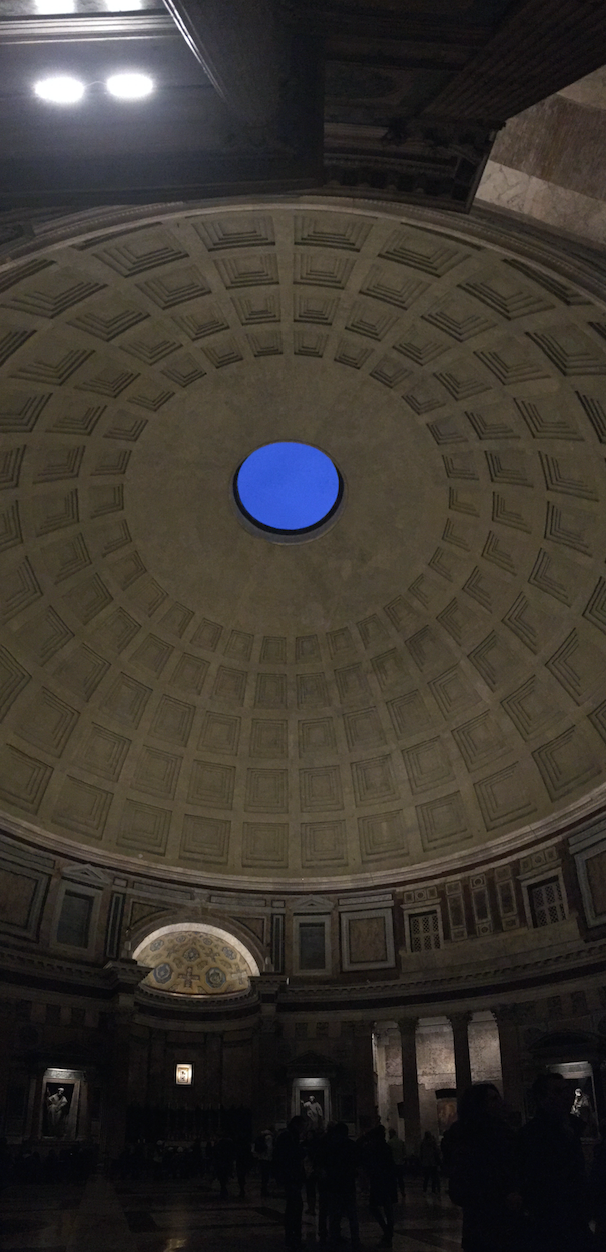
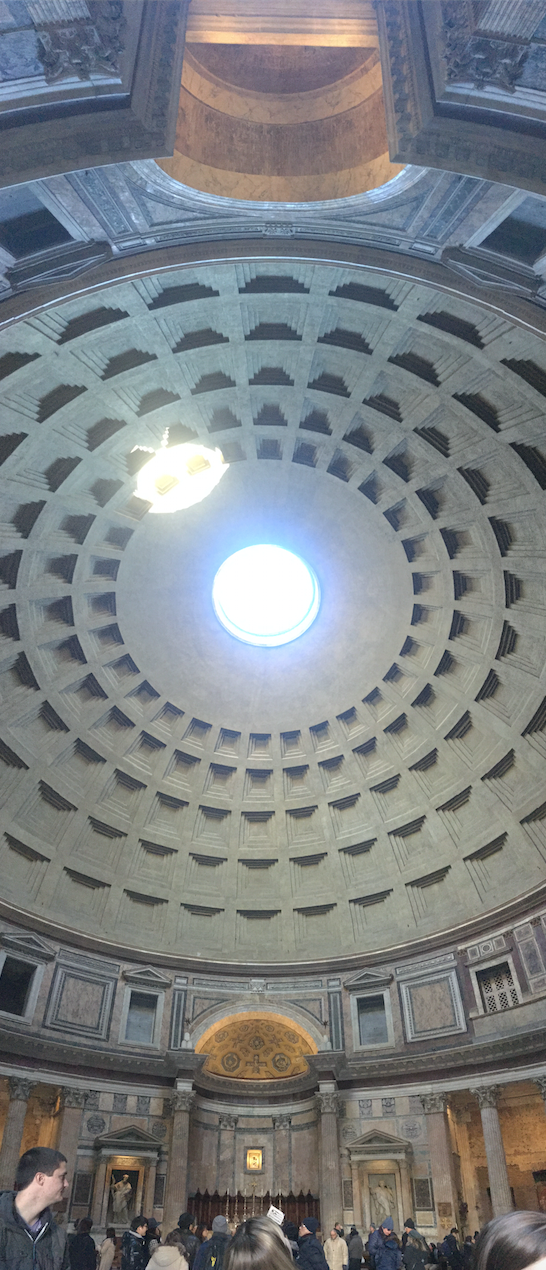
As we entered the dome, originally built as a Roman Temple and is used now as a church, our attention immediately went to the very eye-catching opening at the top of the dome, called the oculus. The oculus is 29.1 feet in diameter! This ring shaped centerpiece allows for extra reinforcement of the dome (and clearly it worked, this thing isn’t going anywhere!), you should also note that the concrete is around 5 feet thick at the top of the dome, and around 19 feet thick at the base (which has a diameter of 142’6″). All around the dome, there are square coffers (If you’re keeping up with us regularly, you’ll remember these were present in the Basilica Maximus at the Roman Forum on Saturday), they are present again to reduce the weight of the (very thick) dome. This is the oldest and largest unreinforced concrete dome to exist today. Also interesting, with the concrete we typically use in construction today, we could not make another dome like this! The concrete used when the Pantheon was constructed was much thicker and dryer, therefore less air bubbles were integrated in the concrete, and much less likely to crack. You might also be wondering what happens if it should start to rain; and so did the Romans! The floor of the Pantheon is convex, and has little drain holes in the marble floor to allow for any water that comes through the oculus is drained and there is no standing water.

screen-shot-2017-01-09-at-8-44-31-pm

It was so wonderful, I had to stop in again on the way home to see it in the evening! It looked very different this time (due to the lighting differences, since the only light that comes in is due to the sun).

screen-shot-2017-01-09-at-8-44-21-pm

(My poor attempt at) A Panorama of the dome. Here, you can see the coffers and the oculus. On the bottom (straight ahead) is the part of the structure that houses the church’s pews and altar.


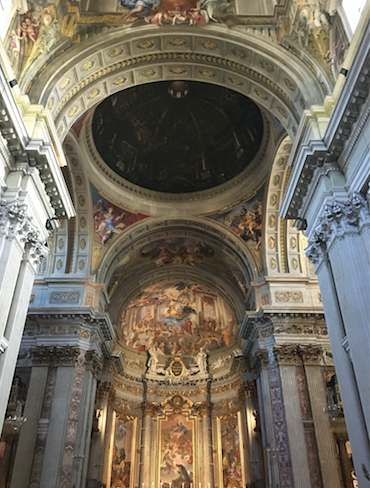
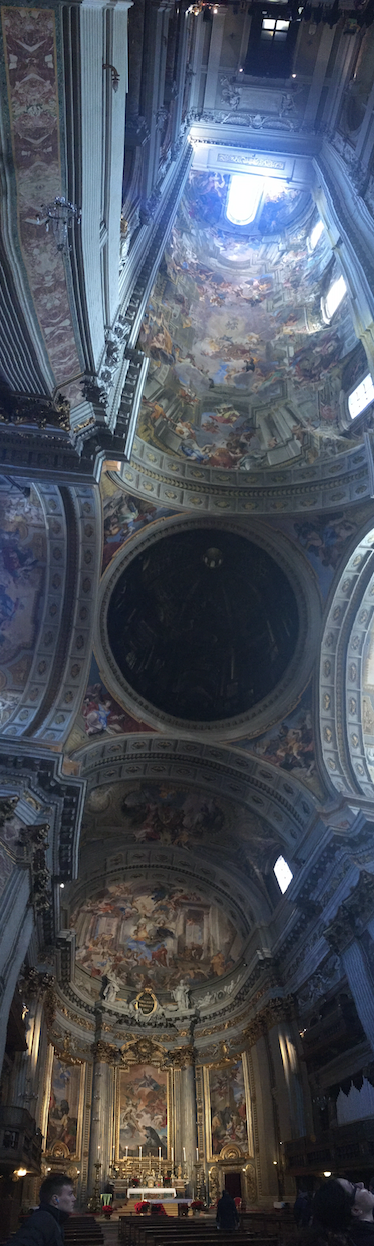
Next, we stopped in the church of St. Ignacious. This church was absolutely gorgeous (I have yet to find an eyesore here in Rome). What was most impressive about it was the beautiful paintings on the arched ceiling above, not to forget the dome! This dome is actually flat (whaaat?), and the brilliant artist painted what you see in darker tones in a completely mind-blowing way. The dome appears rounded due to his use of perspective drawing, and moves to satisfy wherever you are standing in the church. Even we engineers were amused!

screen-shot-2017-01-09-at-9-06-28-pm

You can see the ‘top of the dome’ at the top/center of the darkened area.

screen-shot-2017-01-09-at-9-05-23-pm

(another poor attempt at a panorama-I’m working on improving my skills, I promise!)


For the last stop of the day, we popped into what seemed like a little gift shop just near the Trajan column. But what lay underneath was a huge surprise! The Domus Romane-a large area under what now is now shops and restaurants, archaeologists had excavated a few ancient buildings. We walked on glass floors, while looking below our feet to see the ruins of beautiful mosaic floors, massive marble pillars, baths, halls and courtyards. We saw how ancient Romans used hollow bricks to trap and store heat for baths and rooms- a genius idea for such early times (I’m starting to sense a theme here). We also saw again how ancient roads were build with gravel, sand, and stone. Unfortunately no cameras were allowed inside, so you’re going to have to take my word on this one!

That’s (exhaustingly) all for today! Ciao!
Field Trips!

Cheering for Lazio

Well, we have survived our first weekend in Rome! This last week has been filled with lots of sightseeing, engineering, traveling, and eating. Yes, eating. Gnocchi, pizza, risotto, caprese, gelato, and so many other dishes have filled our eager bellies in the last few days.

Today, we had our first day off. I don’t think I’m alone when I say that it was a very necessary break. With all of the traveling, touring, and readjusting that we have experienced in the last five days, I think we all required a bit of time to get back on track. We had a lot of different options with how to savor our free day: Mass at St. Peter’s Basilica, Lazio soccer game, Scavenger hunt exploration, and essentially anything else you could imagine. Many of us spent part of the day nestled in our warm beds trying to regroup before all the fun begins again tomorrow.

img_7164

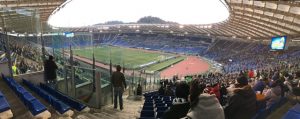
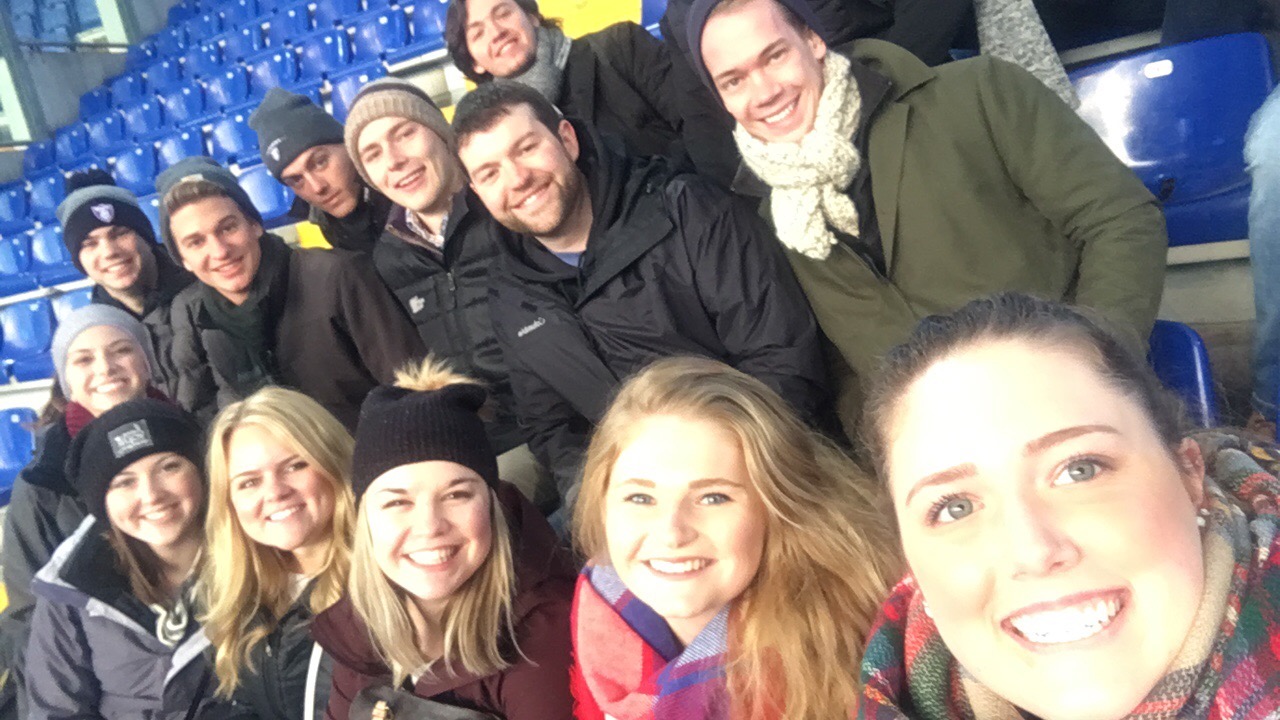
A group of us did venture out to watch Lazio vs. Crotone at Stadio Olimpico this afternoon. It was quite the experience! We were all amazed when a trained eagle flew around the stadium before the start of the game and landed at a podium next to its trainer The Lazio fans engulfed in blue apparel surrounded us in the stands. They cheered loudly and passionately for their beloved team and joined together for various chants and songs. We had a blast trying to join in on the fun even with our inability to translate. The game ended with Lazio scoring their only goal of the game in the 90th minute. Yay, a win for Lazio!
img_7166

Chloe and I can’t wait to continue sharing our adventures with you all!
Ciao!

Field Trips!

Mass at St. Peter’s Basilica

1-8-17-st-peters

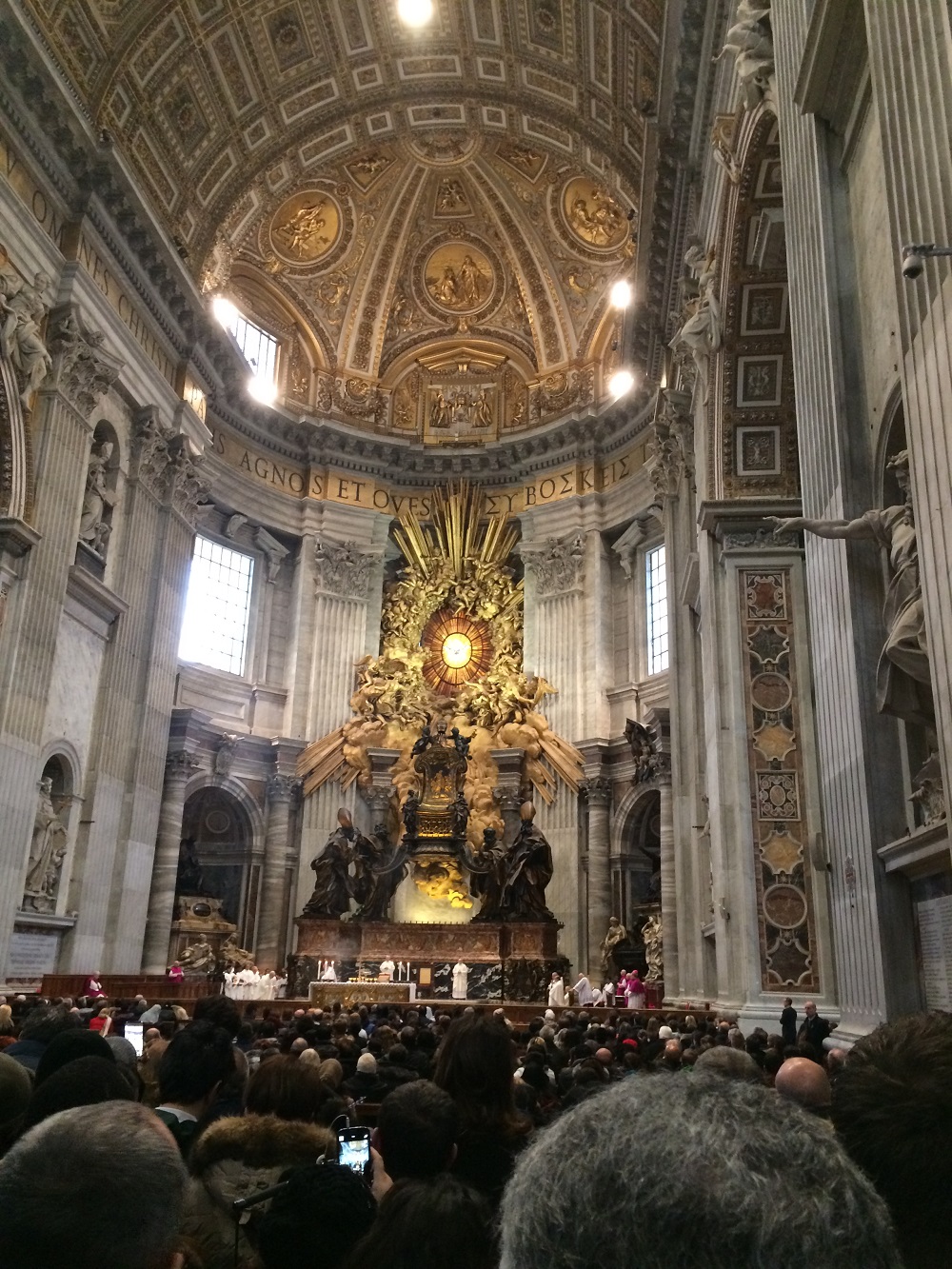
Engineering among the Roman ruins and renaissance masters’ works has been a phenomenal opportunity to understand the foundation of our field. Yet, mass today at St. Peter’s Basilica held an unanticipated gift. We may not have understood everything that was said in Italian, but the significance of the worldwide church held a new, nuanced meaning as we participated in the mass with people from around the world. Yes, the soaring space creates the effect that the designers intended, but a stronger much more essential sense of what it means to be present in one’s faith exists in this space, regardless of the structure. Our families are celebrating the Epiphany today; it may be viewed as a celebration of the fulfillment of hope. Experiencing the hope of the Epiphany in this sacred space is an extraordinary opportunity and gift. (Friends back home, the Epiphany was officially celebrated on Friday in Italy.) As we left the Basilica we joined the crowd, mass if you will, in St. Peter’s square. The Pope appeared at noon and addressed the packed the crowd who waited to see and hear from him. This has been a phenomenal day.

Field Trips!

Roman Forum and Palatine Hill

arch-1-7-17

Buon Sabato! Happy Saturday!

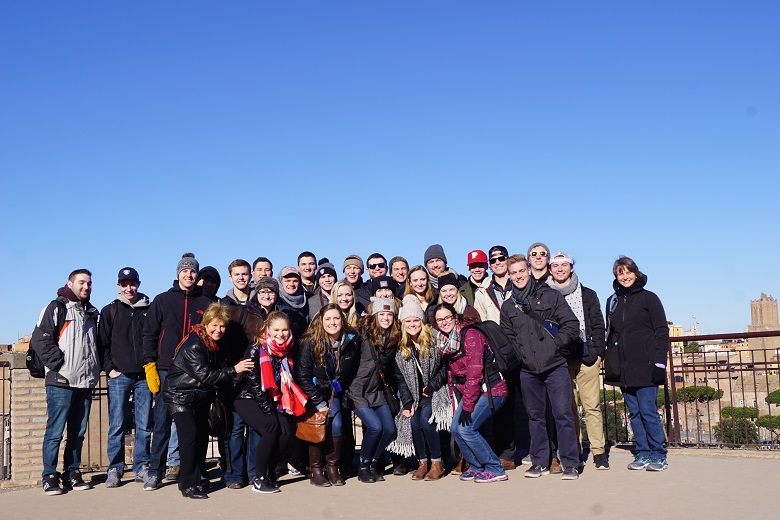
While most of you are just getting your mornings started back at home, we have already had quite the day!! Around 9:30, we bundled up and took a coach over to Palatine Hill and the Roman Forum, while getting in some fabulous tidbits of information on the way from our lovable tour guide, Gino. We all have come to adore him, and it has been so great having him lead us though the beautiful city, as he not only has a lot to teach us about the architecture, but he has an incredible amount of knowledge on mythology, religion, history, philosophy and always manages to slip in some comedic relief!

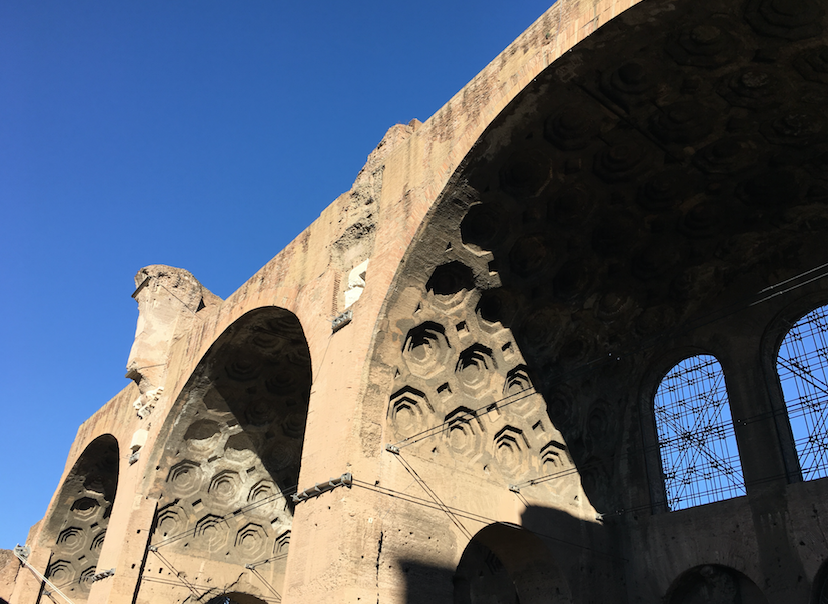
One of the greatest Engineering ‘takeaways’ today came from Basilica Maximus, a massive structure. The basilica is so large and sturdy thanks to the usage of fewer columns and wider vaults. On the ceiling of the remaining vaults, you can see octagonal coffers, which were designed and used to reduce the weight of the structure (Gino also informed us that the octagonal shape was important to the romans, as it symbolized the connection between humanity and the divine).

screen-shot-2017-01-07-at-4-54-53-pm

A distant shot of Basilica Maximus- It is HUGE!

screen-shot-2017-01-07-at-5-36-26-pm

A closer view of the vaults and octagonal coffers.


Next, on the walk towards the forum, Gino showed us a few temples that had been dedicated to emperors and their wives, children, parents, etc. It is amazing how well preserved they are, considering how high the ground level was when they began to excavate the area hundreds of years ago. This was all hidden underground!

screen-shot-2017-01-07-at-5-50-16-pm

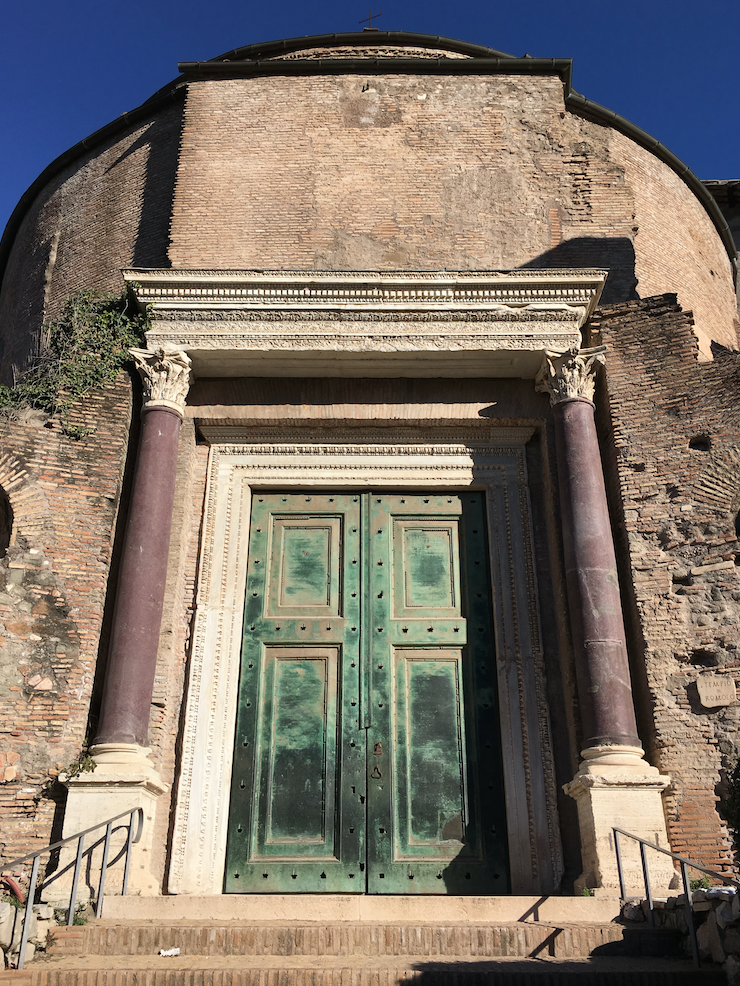
Temple of Romulus. It is circular in structure, and features a massive (now green) Bronze door framed by detailed carved marble and large columns made of porphyry- which was only used for the very important members of society.

screen-shot-2017-01-07-at-5-50-04-pm

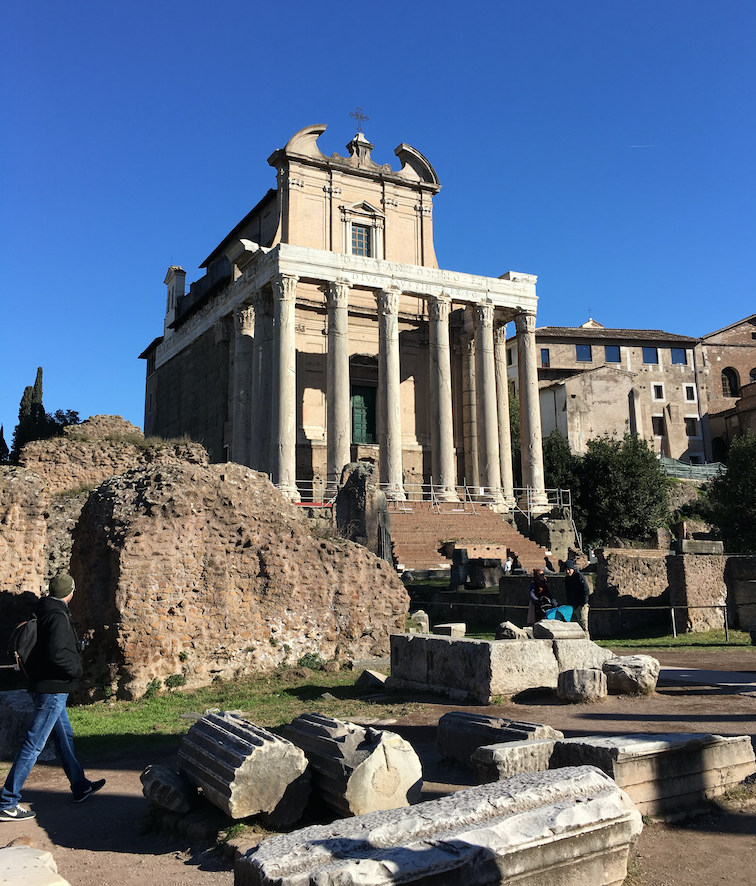
Temple of Antonius and Faustina. Originally a temple dedicated Faustina, it later became a christian church. The structure is still in great shape today, due to the use of the marble columns and crushed brick foundation.


Another fun tidbit of information from today; Gino went through the process of the road construction, the sewer system, and wells throughout the forum. It continues to amaze us how well-planned and executed the Romans were able to construct what did they did, considering the resources available to them at the time. Many of these streets and buildings are 1,700-2,500 years old!

screen-shot-2017-01-07-at-5-32-55-pm

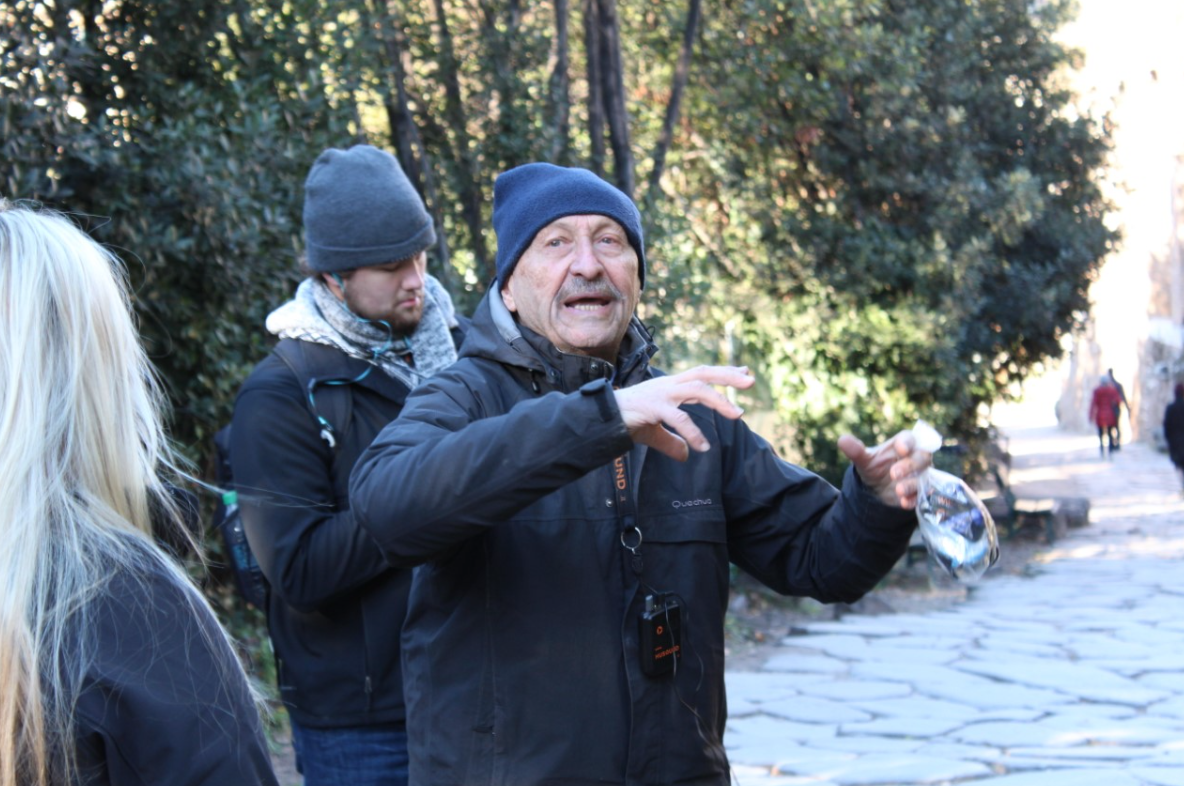
Gino explaining the construction of the ancient roads (seen on the right). A trench was dug roughly 2 meters deep, filled with gravel, then sand, and finally finished off with Tufa- a volcanic rock used to build a lot of the roads and structures here in Rome.

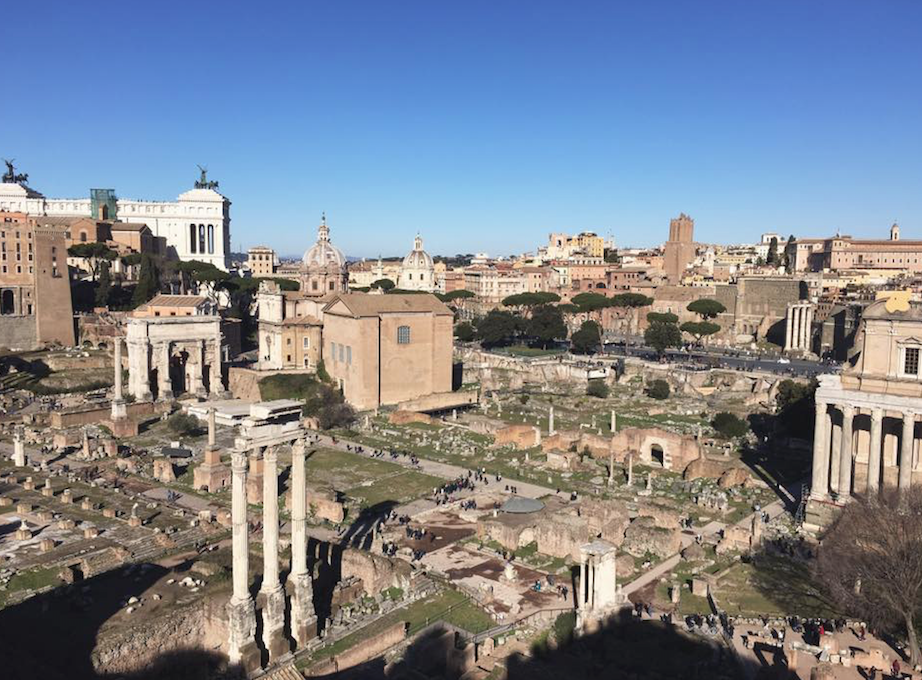
Finally, we walked up to the top of Palatine hill to capture this gorgeous view of the ruins of the forum below, as well as a backdrop of the city and the colosseum.

screen-shot-2017-01-07-at-4-57-13-pm


1-7-17-top