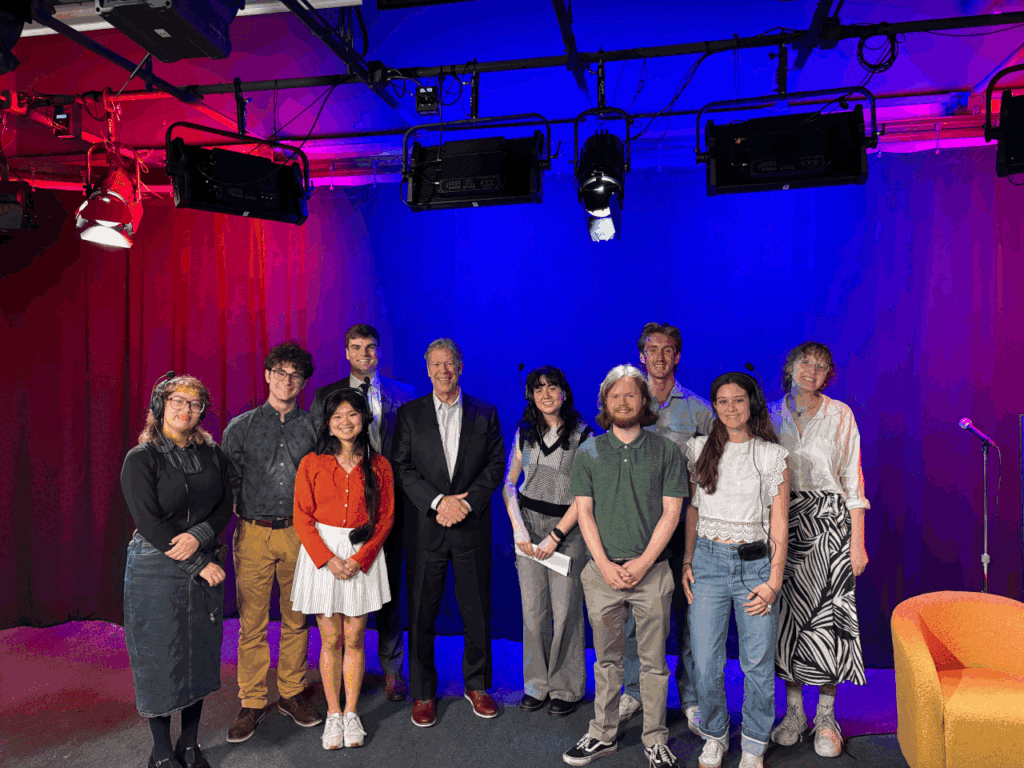
Major Garrett and eMedia students during the studio show “Deep Focus”
CBS News Chief Washington Correspondent Major Garrett visited the University of St. Thomas this spring, connecting with students in the Emerging Media department and participating in campus-wide discussions on journalism.
During his visit, Garrett, who is host of the streaming show “The Takeout with Major Garrett,” spent time with Emerging Media students in the studio, where he was interviewed about his career and experience covering national politics. The “Deep Focus” interview was hosted by Emerging Media student Adam Mueller ‘26, who asked questions about journalism’s business model and the field’s future in a shifting digital climate. Other Emerging Media students posed questions about the realities of covering the White House in a heavily polarized environment.
“Polarization is an external reality that ought not to influence what you’re doing,” Garrett said.
The session gave students a behind-the-scenes look at how national stories are developed and verified before being distributed to the public.
Later in the day, Garrett joined a panel of media professionals that included Tommies alum Mark Ginther (news director, WDBJ in Virginia) and Kathleen Hennessy (executive director, Minnesota Star Tribune). The panel was moderated by former Emerging Media department chair Mark Neuzil and brought together Media Literacy students and Aquinas Scholars for a discussion on the current state of journalism and the importance of media literacy.
Panelists focused on the role of journalists in an environment shaped by rapid information sharing and audience demand. Garrett emphasized the distinction between journalism and content, noting that the goal of journalism is to report accurately and serve the public with verified information. The group also discussed how “citizen witnesses” contribute to the flow of information, while professional news organizations remain responsible for confirming facts and providing context.
During the reigning moments of his visit, Garrett sat down with University President Rob Vischer for a live conversation as part of the university’s “Finding Forward” series. In that candid discussion, Garrett spoke about the current pressures facing journalism and emphasized the importance of maintaining clear standards and verification.
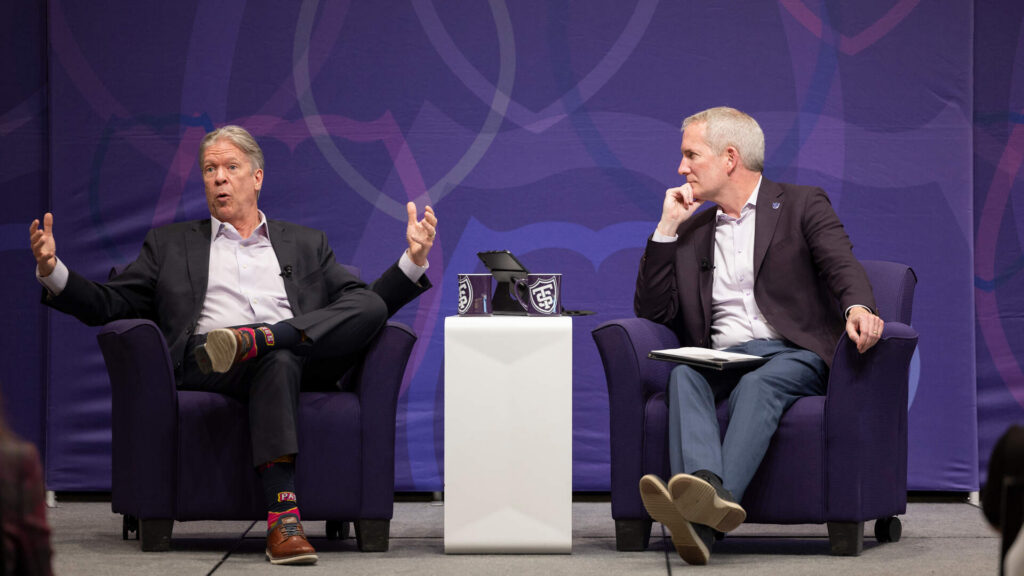
Finding Forward featuring President Rob Vischer and CBS News Chief Washington Correspondent Major Garrett discussing how media organizations can serve the public interest amid deepening political polarization in Woulfe Hall on April 21, 2026 in St. Paul.
He discussed digital technologies, but when the topic of Artificial Intelligence in journalism arose, he spoke candidly: he doesn’t use it.
“I don’t use AI at all, because I’m a writer,” Garrett said. “It’s kind of emotional for me, because it’s all I ever wanted to be. So, I’m not interested in anything that someone else created that will write for me; that would essentially carve out my very being.”
He also shared his belief in journalism’s future and the reporters who act as witnesses, even as digital technologies disrupt the media industry.
“The thing you’re Googling didn’t spring out of the ground by itself,” he said. “Somebody was someplace with a pad and a pen and a camera and recorded it, witnessed it, chronicled it and produced it.”
The event is part of the inaugural Whalen Media Ethics Summit, which was sponsored by the Emerging Media department.