Field Trips! – J-term Abroad: Roman Structures, Engineering & Society - Page 8
Browsing Category

Field Trips!

Field Trips!

A Studious Day of Studies

Hello from the beautiful and sunny Florence Italy, this is one of your three seniors on the trip, Grant Gunderson. After spending so much time editing everyone’s writing, it’s finally my turn to paint you a picture with my own words.
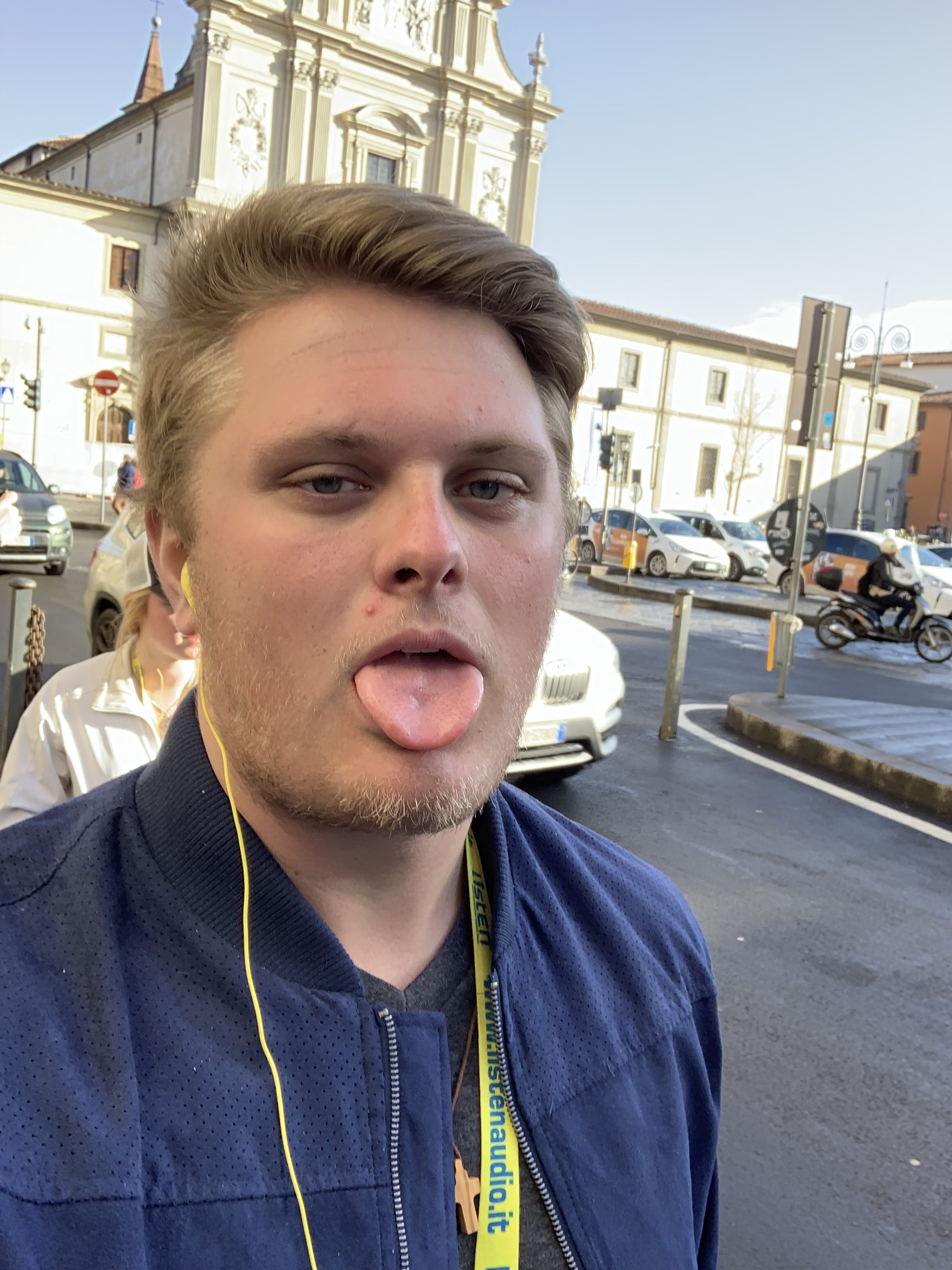
I would love to be able to tell you that the temperatures are in the 80’s and 90’s and that we are all getting tan but, just like America its winter over here as well. After a hectic couple of days leaving Rome and heading off to tour Pompeii, we got a chance to visit one of Europe’s most impressive and well renowned facilities for structural engineering. The university sits just outside of the city of Naples and has multiple campuses. If you can believe it there is 84 thousand students that attend the university. The student’s study everything from surgery and medical careers all the way to structural and environment engineering. In total the school also has 5000 paid staff and was founded back in the year 1224 when it became one of the first universities in the country Italy and now to this day remains the largest university in the country.
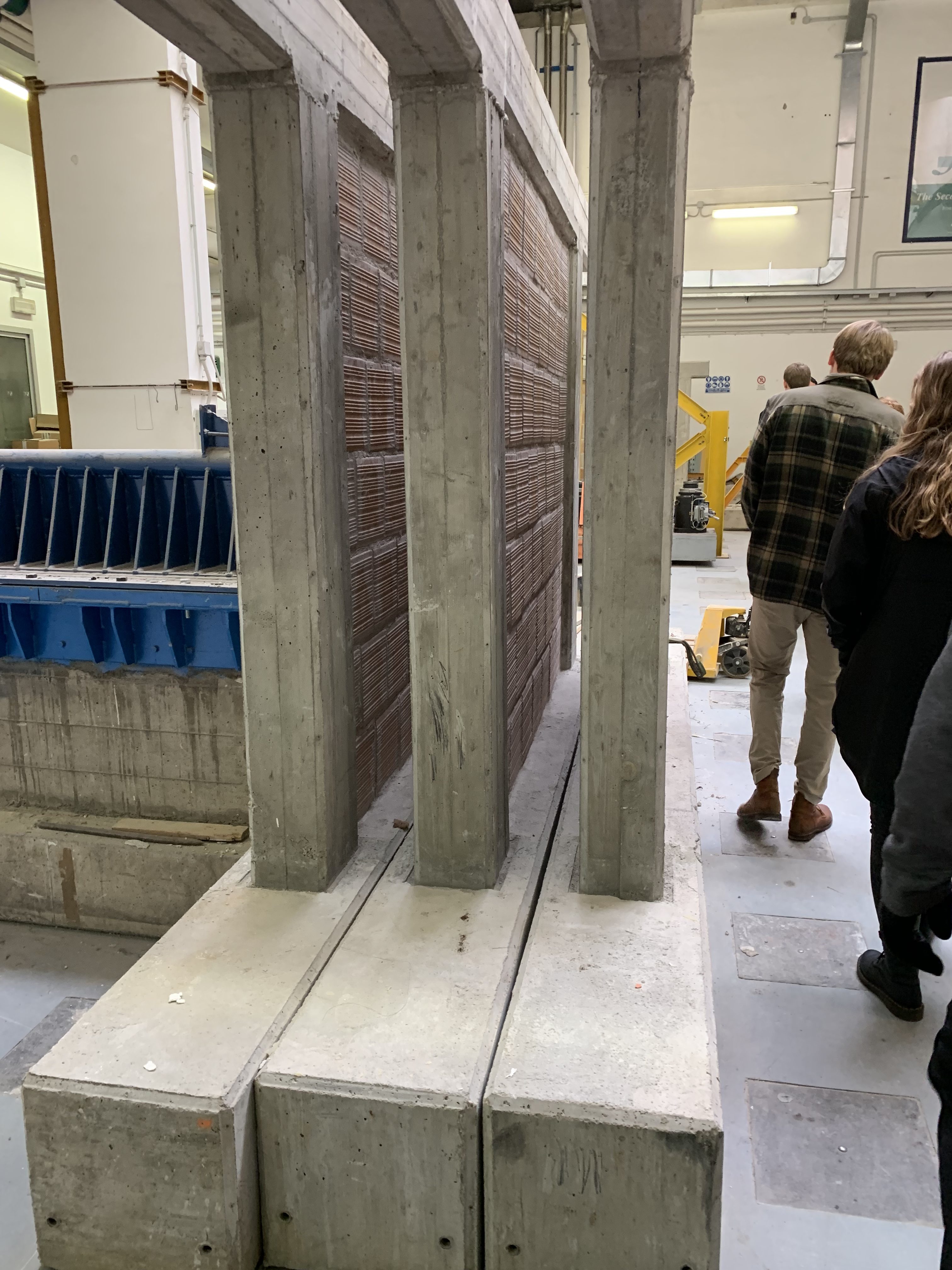
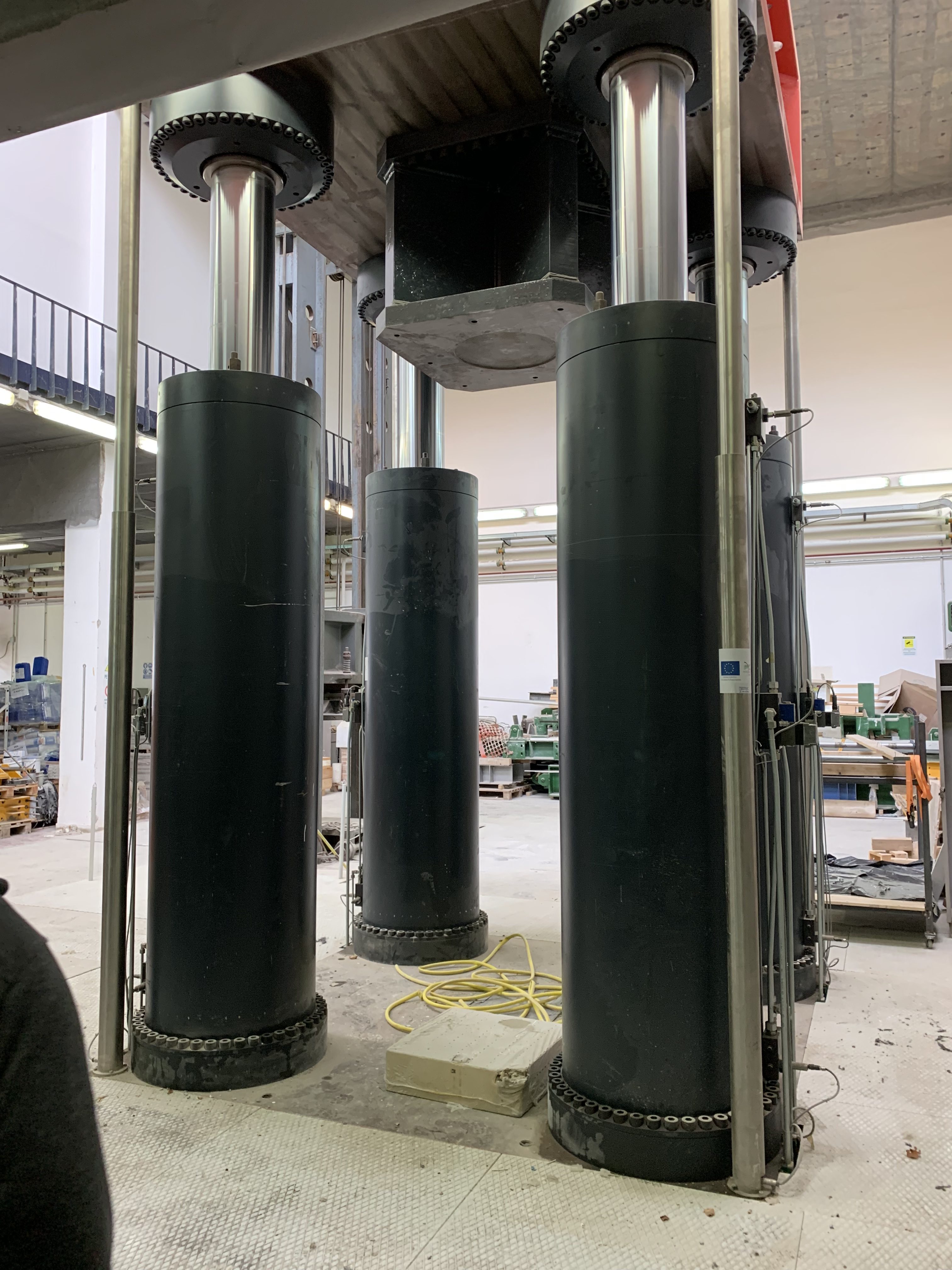
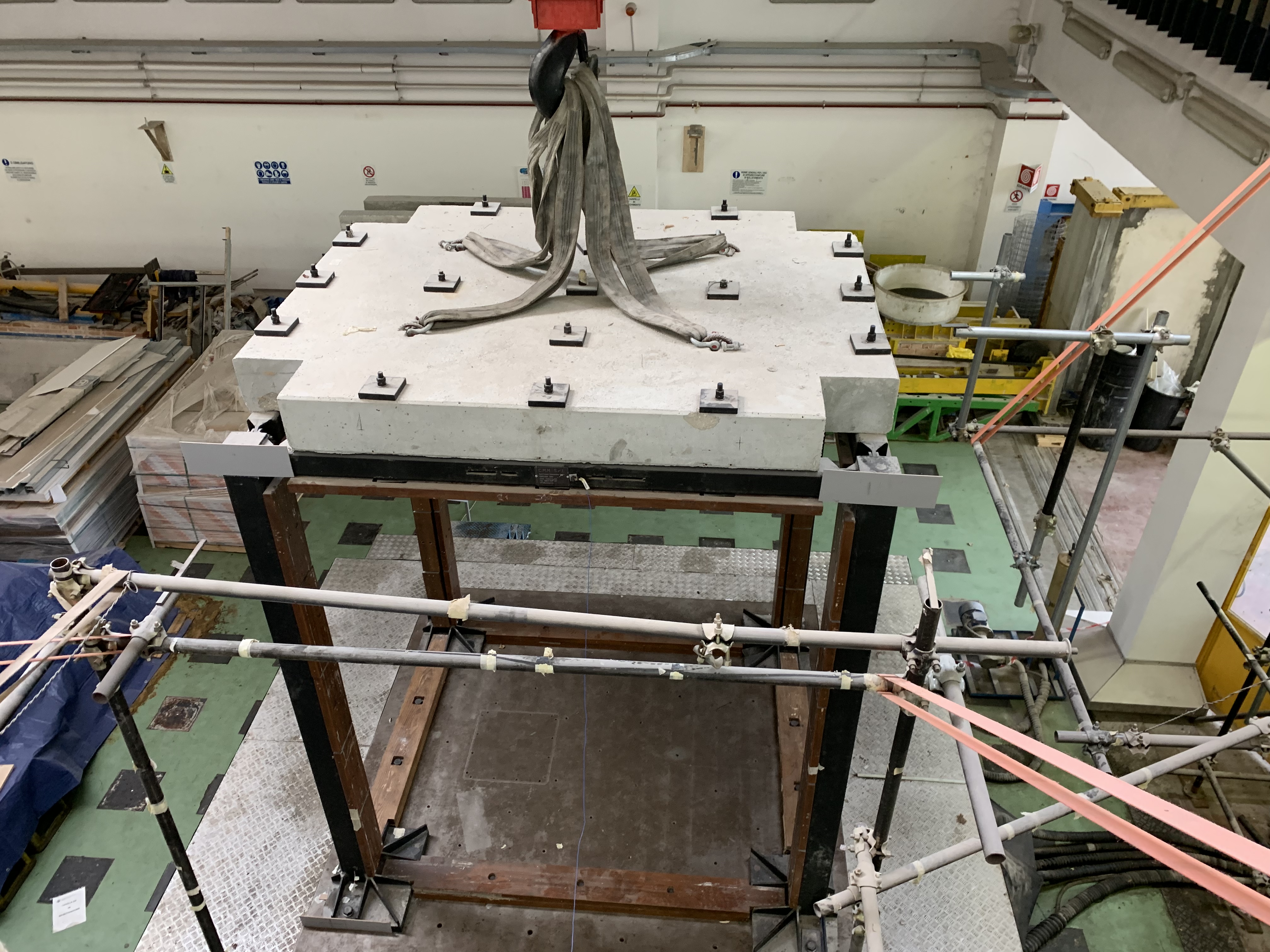
Upon arrival to the campus we were greeted by staff and then sat down for our 2.5 hour long 3-part lecture with some of the professors who worked at the university. The first of the professors was named Dr. R. Landolfo. He presented to us on the background of the school itself as well as general thoughts and purposes of engineers who worked in Italy. He gave us great insight into a common idea that many Italian engineers share, to preserve the past and its beauty but work towards improving the future around it. Something interesting we learned is that the school does accept international students to attend but, that most of the students who come from countries outside of Italy are either Japanese, Chinese, Iranian, or residents of another middle eastern country such as Pakistan. If you would like to learn more about him feel free to check out the bottom of the post for a link where I will be posting bios for all the speakers we saw today. The second speaker was an 80-year-old man who was presenting to us on the magic behind the leaning tower of Pisa. He had worked since the 50’s on an engineer on Italy’s state projects to preserve the tourist attracting tower. From being an intern in his earlier days to heading a group of engineers, he told us stories of the many different tactics used to keep the tower vertical. We learned that the tower is always in constant motion falling towards the ground. The catch is that it moves at such a small rate that the human eye could not even notice. In all the tower weights right around 14,500 tons and stands at a total height of about 58 meters tall or 190 feet. We learned ways that Engineers have been able to combat the tilt of the tower by changing the soil around the base of the tower to altering the tower into a shape much like a banana to help balance out the loads created from gravity. It was amazing to get to hear the history of the tower directly from someone who had made the tower his life’s work. Our final presenter was Dr. Federico M. Mazzolani and he was presenting to us about his time as a structural engineer and his work to help maintain and restore different historical buildings around Europe and parts of Asia. Mainly, he and his colleagues would recreate smaller scale models of these ancient buildings and then test them against the damages of earthquakes using a machine called shaking tables. Using large amounts of power and force these tables help to replicate the forces experienced during earthquakes so engineers to can test their designs against the power of mother nature. Dr. M spoke of buildings he had worked at from France to Italy and even Iran and the middle east. To finish up our day at the university we received a tour of their laboratory and the many pieces of equipment they for testing different materials. We might have even lost a few people as the civil Engineer in them took over and they wandered off in awe of the monumental and powerful machines.
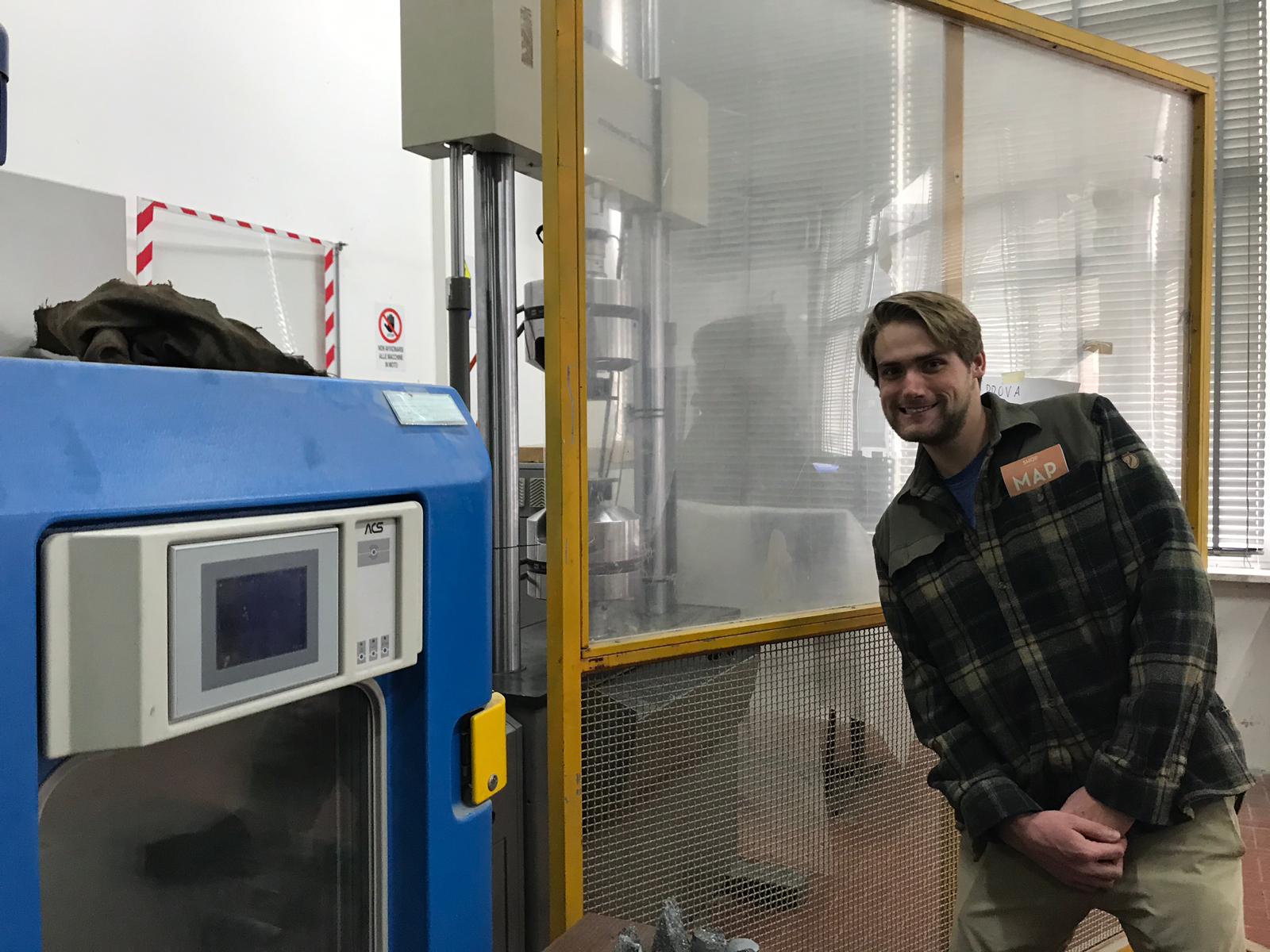
As of now everyone is starting to see the finish line in sight but, we are all happy healthy and enjoying every second of this trip. Thanks to everyone for following along and we will see you next in Florence! Ciao!
 

further Prof. info

https://www.researchgate.net/profile/Federico_Mazzolani

Field Trips!

In the Shadow of a Sleeping Giant

Today was our first day spent outside of Rome in a group. We left our hotel that had been home for the past week and a half and moved on to Naples. We took the high-speed train from Rome to Naples and booked some extra seats in hopes of keeping our luggage together, all failed when the train company sent someone over to tell us that our suitcases could not sit on the chairs themselves. Below I have still included a photo of the luggage strategically placed together on the seats tetris-style as everyone put in their best engineering effort to fit the bags into those four chairs.

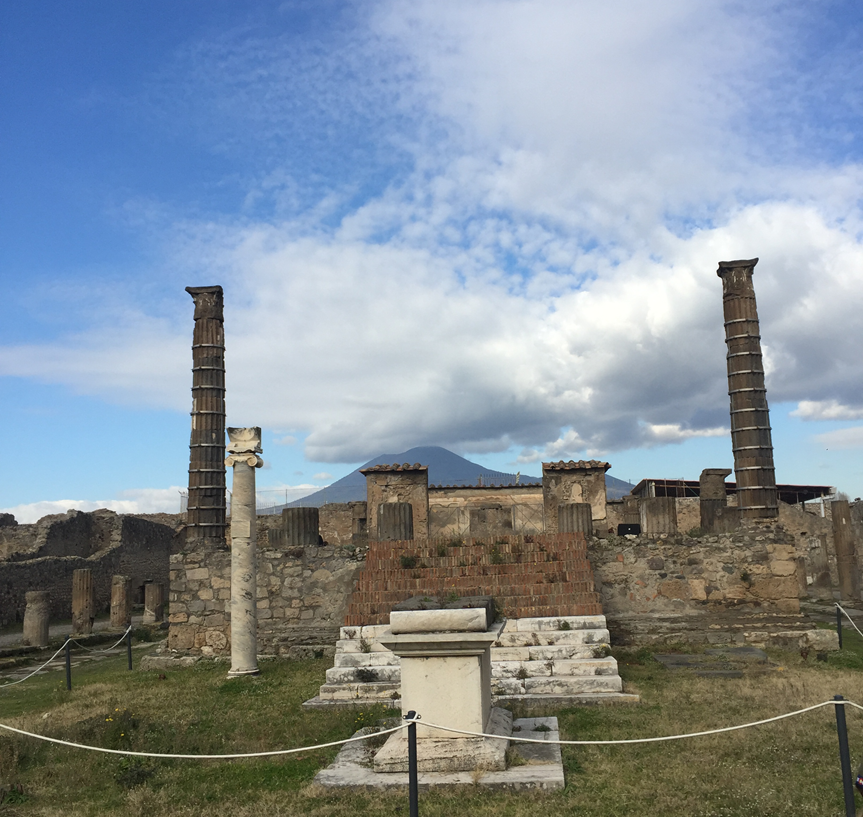
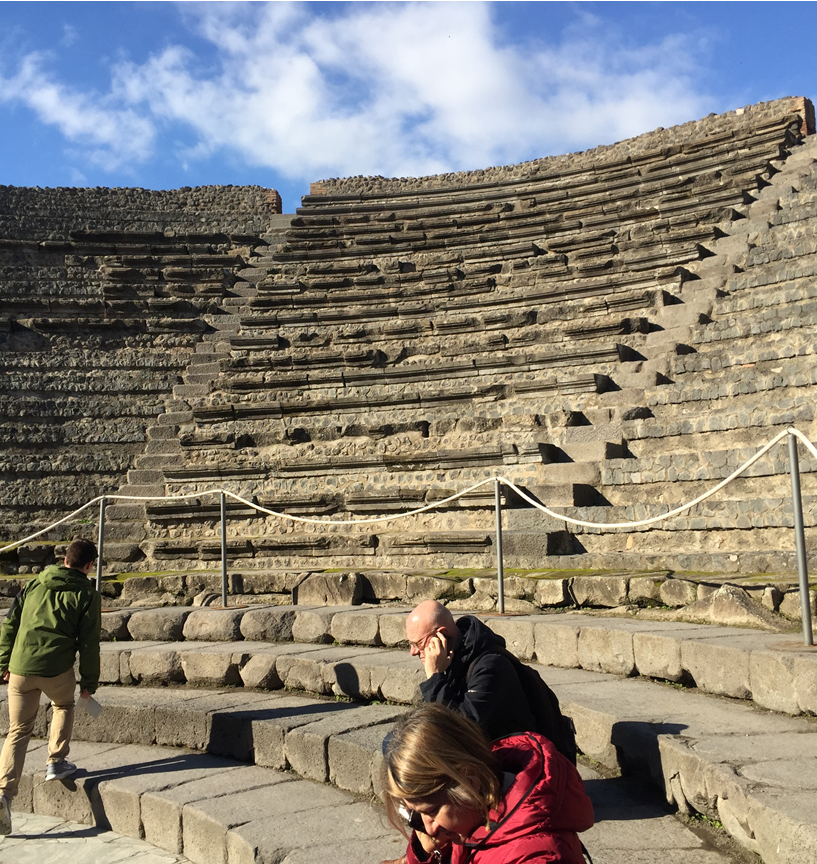
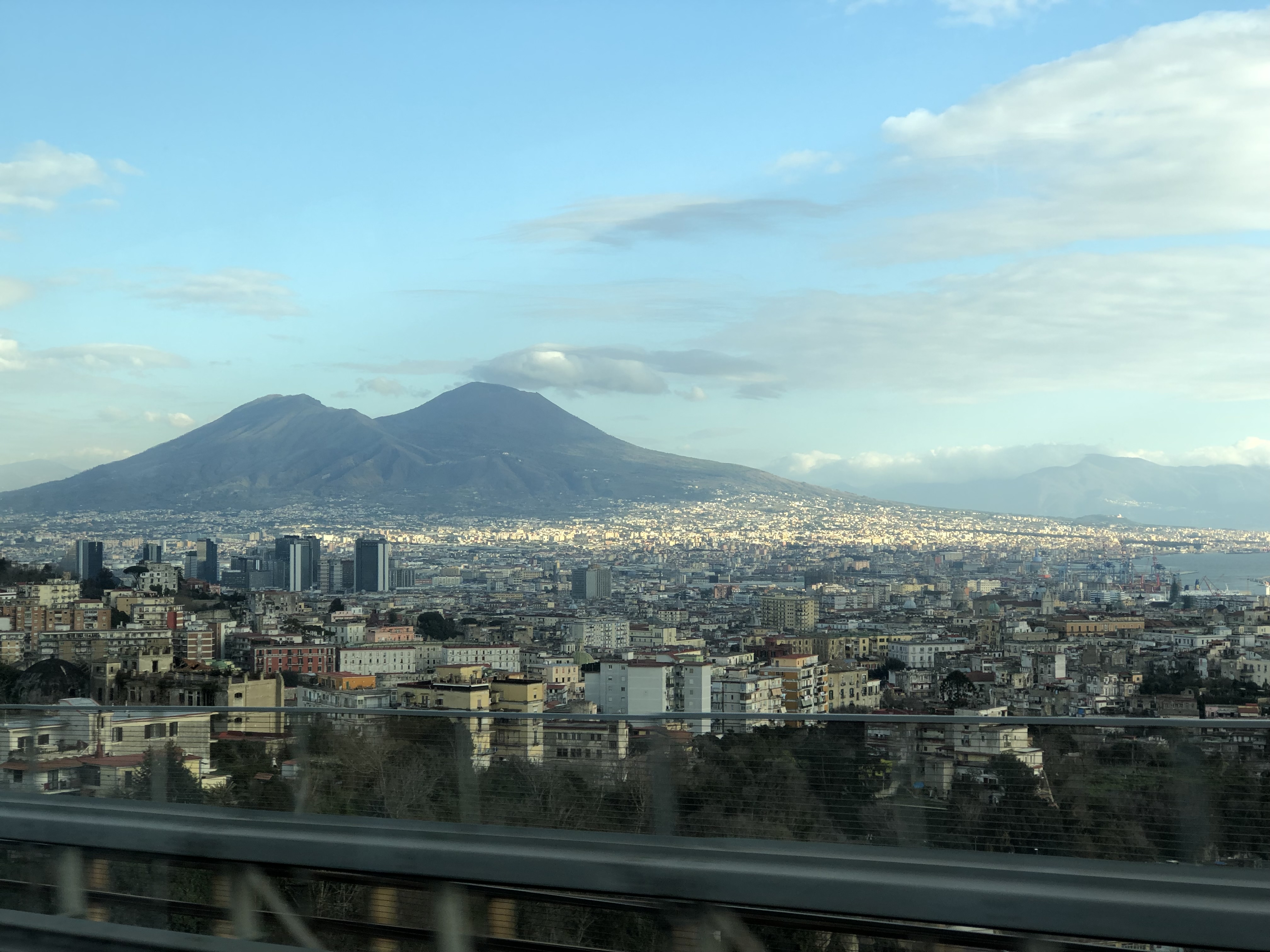
Once we arrived in Naples we took a coach bus to our destination of the day: Pompeii. In Pompeii we were guided through the main areas such as the forum, the bath house- “Le Terme Stabiane”, an example of a rich person’s home and lastly the Teatro Piccolo by our guide Michaela. She had great insight on the history of Pompeii. One of the first things she talked about was obviously Mount Vitruvius. The citizens had no idea that the huge mountain they saw everyday housed a rumbling volcano so when the time came, and the volcano erupted, no one was prepared to take precautions and leave the city before they were covered in ash and effected by the toxic gases. Instead, they were laid to rest where they stood because they did not take actions necessary, which in the end is what gives us their well-preserved ruins and bodies/food. Below in the photo of the forum, you can see Mount Vitruvius near the center in the background.
Our tour guide was able to show us some unique features of the city as well. On the pathways and streets there are smaller white rocks inlaid within the larger stable rocks, this acted as ancient “road paint” and would illuminate the pathways at night with the reflection of the moonlight. This was one of my favorite features as I had never noticed it before on any other roman streets and once it was pointed out to me, I noticed in everywhere within the Pompeii ruins.

Another one of the features pointed out to us were the Thermopoliums. These were cement and stone structures that were inlayed with clay and surrounded in marble. They were used to keep vases and various containers of food and liquids cold on warm days. On a day like today where it was sunny and 50 degrees, the thermopoliums were still cool to the touch. These served as bars and merchant tables for the citizens.

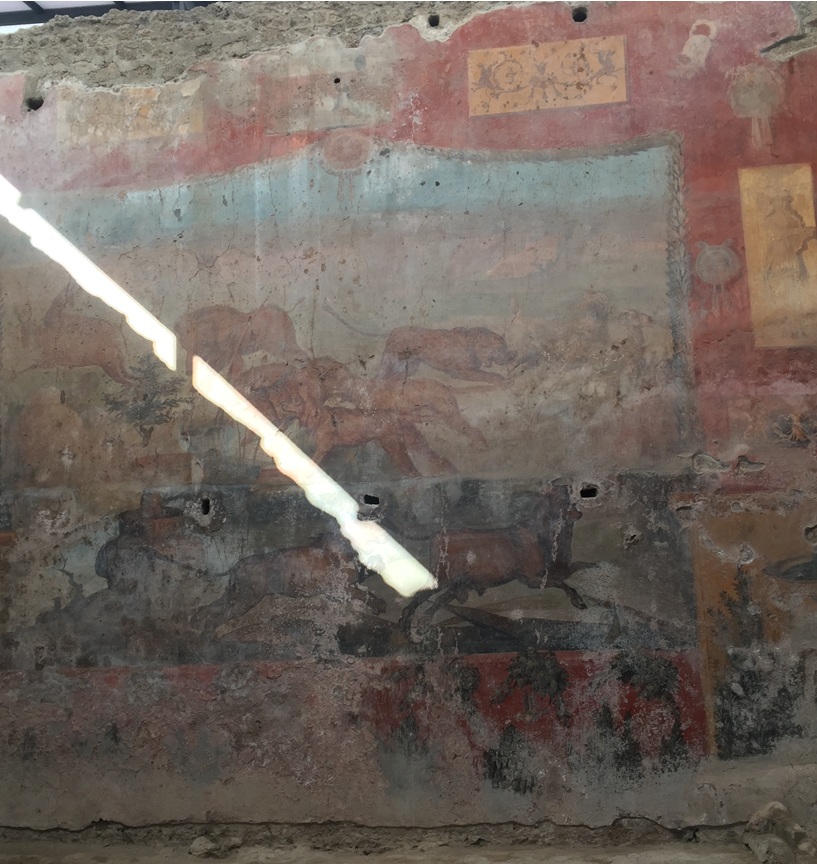
One of the last few things to mention would be the bath house, which was a large area with smaller and fewer openings in order to keep the hot air in in the hot bath room. In Pompeii’s bath house, there was separation by sex, there was a men’s waiting room, cool bath room, sauna, and hot bath room and a women’s’ version identical to it just through a separate hallway. Another area we viewed was an example of a richer person’s home. In this what stood out to me was the intricate flooring and the frescos that included red, as it was the most expensive color. Lastly, we viewed a small theater in the city, it was most likely used for comedy, tragedy and singing performances.

The trip to Pompeii was short and sweet, I’m sure we could have all spent hours wondering around within it’s walls but it was great to have a guide and be informed on important areas of life for the citizens before their untimely death.

Field Trips!

Ciao Roma!

Hello everyone! I’m Nathan Fischer and I am a sophomore majoring in Mechanical Engineering and minoring in Materials from Cottage Grove, Minnesota. Day 10 was split between class, a tour, museums, and enjoying our last day in Rome.


We off started the day with class. We covered arch, cable, and dome forces then finished it off with another set of student presentations. Afterwords we walked down the street to tour a nearby high school. Four students led us through as they explained the history of the school and some notable things it has. In the hallway encased in glass they had all sorts of old lab equipment that was handmade by students and is approaching a century old. Then inside of the teachers’ lounge there was a wall of various taxidermized creatures and shelves with jars of different specimens. Then we left and took the metro to the National Roman Museum.  


First, we saw the statue of the boxer and then split into smaller groups as we went floor to floor.


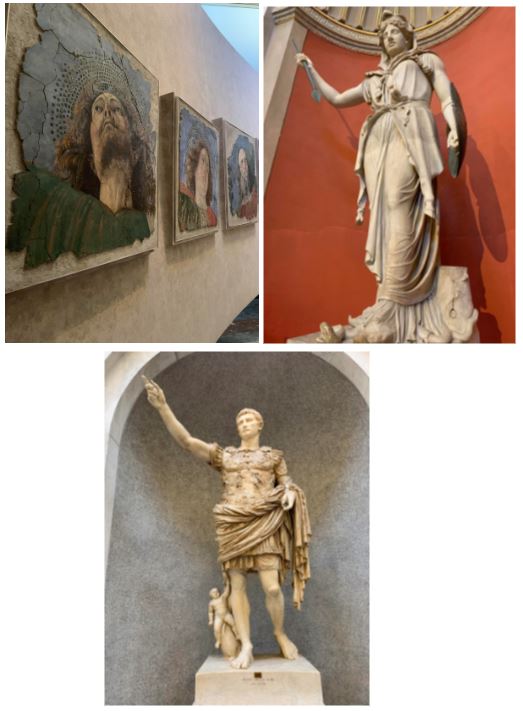
The first floor was filled with carvings, mainly different statues and sarcophagi. As you wandered this floor you could see the immense detail put into the statues like each individual lock of hair or a vein on a flexing muscle. Most pieces had broken and were missing arms, heads, toes and there was even a room of just heads.

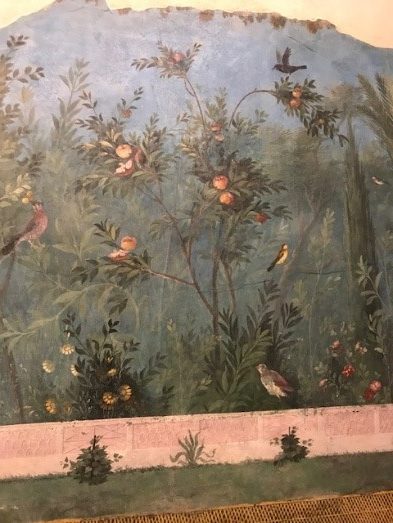
The second floor was filled with mosaics and frescos. The mosaics used an obscene amount of different colored and shaped tiles in order to create surprisingly detailed images. The frescos are like murals made from watercolor on plaster. Although many were faded from old age there was a room where a well-preserved fresco covered all four walls creating a peaceful gardenlike image.

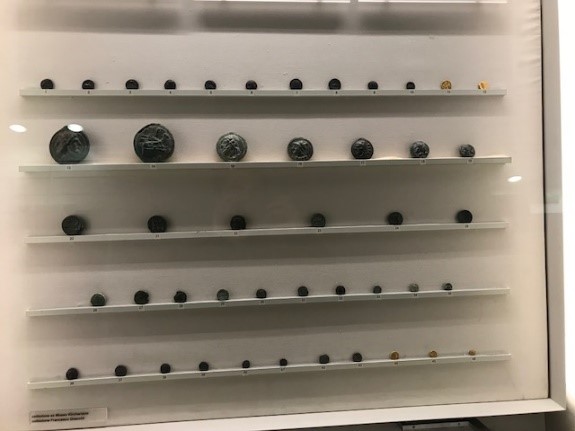
The final floor was the basement and behind thick vault doors was a coin collection spanning from the beginning of the roman empire to the modern euro. It was interesting to see coins change as Rome grew the coins got and fell. As Rome grew the coins were made out of more prized metals like gold and silver instead of bronze and the sizes varied greatly from something as big as a hockey puck to coins smaller than a quarter inch in diameter. Also, it was fun watching the quality of the coins increase every time the exhibit showed when a new coinage technique was discovered.

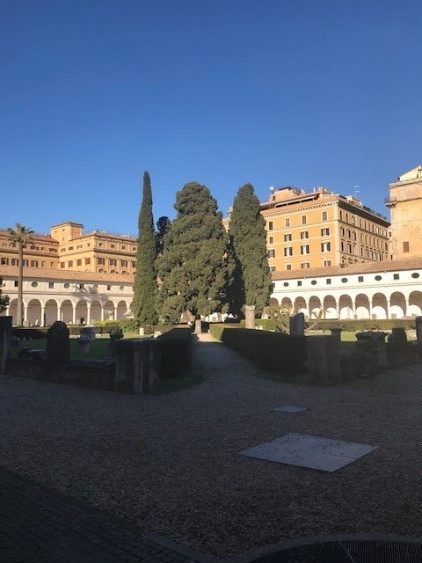
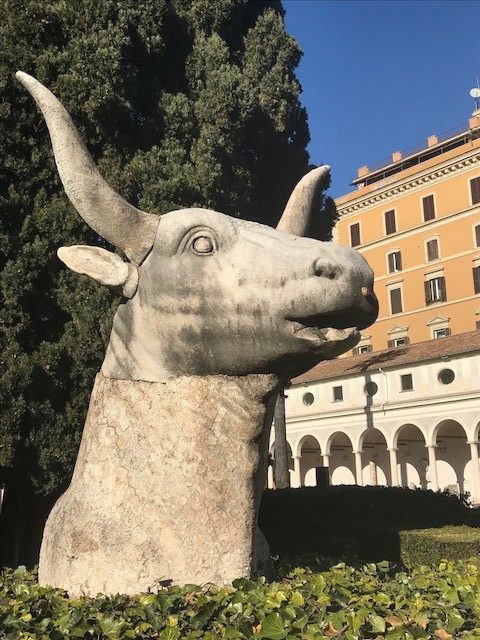
Our next destination was the Diocletian baths. It had a nice outdoor courtyard with greenery which was refreshing to walk around because of its contrast to the busy streets of Rome.  

Inside there was another museum portion that had more Roman artifacts and on the other side of the building were the ruins of the original baths. Then we had the rest of the day to make the most of our last day in Rome.

Field Trips!

When it Rains in Rome

Monday, January 13th, 2019 (Day 9)

Hello, devoted blog readers! I’m Rachel Farah, one of two computer engineers on the trip and I am from the beautiful Saint Paul, Minnesota. It is already Day 9 of ENGR 271 and I can’t believe how fast everything is flying by!

Our day began with hotel breakfast croissants and class at 8:00 am. Today we discussed Arches and how to analyze art. This was very fitting since we were headed to the Sistine Chapel later that day. After our discussion, we had four more powerpoints surrounding Italian culture and engineering and set off to our rooms to drop off our stuff and head out.

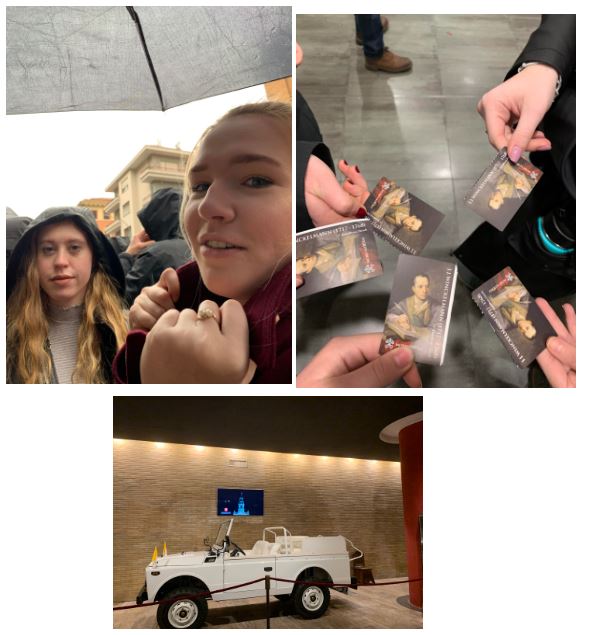
We went out into the rain and began our walk to the chapel. When we arrived we had to wait in the long line of other eager people to see the beloved paintings of Michelangelo. About an hour later we were finally in! We swiped our tickets and began looking at the many paintings of saints. Before we could enter the chapel we had to make our way through various museums of art. A few of us stumbled upon a whole room with various pope mobiles across time. It was awesome to see the change in technology from the popemobile being a horse-drawn carriage to an automobile. We also saw the change from non-bullet proof to bulletproof glass from the popemobile in which John Paul II was shot. They depicted a video of the shooting and the Pope forgiving his shooter which gave me chills.

After this, we continued to the Sistine Chapel and went through many rooms with colorful ceilings and mosaic floors. Each painting depicting a holy moment was decked out in gold and royal blues and reds. It was beautiful how the paintings expressed to us the richness or the Kingdom of God. I was also incredibly overwhelmed by the number of statues, each more intricate than the last. I found my self struggling to take it all in. Each room of art we passed led right into another one and we began wondering if we would ever make it to the chapel.

Finally, after the incredible build up, we walked our way into the chapel. At this point, we had been exploring the museums for about 2 hours and were very ready to see The Creation of Adam. There were guards shouting “No Photos!” over and over again and people smushed together, it was chaos. However, I looked up and saw the breathtaking works of Michelangelo with The Creation of David near the center. To be honest, it was a lot smaller than most of us expected. It was, in fact, the same size as most of the scenes painted above. It got me wondering what made this one so much more special than the rest… Nevertheless, it was beautiful! Adam was painted with his hand struggling to reach out, while God’s arm was strongly placed toward Adam depicting that He is all powerful. We sat on the benches for a bit and just looked up, I don’t think all the time in the world could allow me to ever notice every detail.

After a bit, we got up and headed towards the exit. On our way back to the hotel we stopped by a flea market and got a nice laugh in by looking at all the fake designer items. We popped into a pizza shop for lunch. I got a rice ball with mozzarella in it and maybe I was just hungry but it was probably the best-tasting thing in the world.

Thanks for a nice day Rome,

Rachel 🙂

Field Trips!

Venice and the islands around it

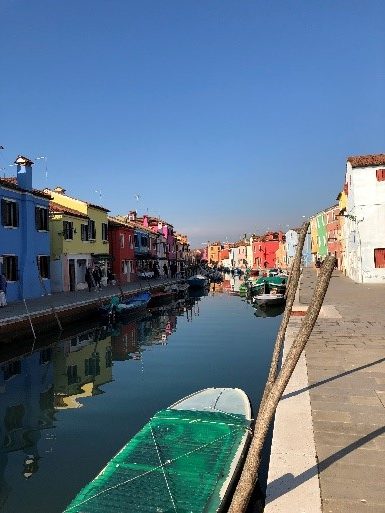
Hello! My name is Peter Elliott, I am a sophomore mechanical engineering student from Bloomington, Minnesota. I am writing to you on our second free day of the trip. Our group was divided among the island of Burano in Venice, the island of Murano in Venice, and Rome. I was with the group of five that went to Burano, so I will be sharing the day from the colorful island.

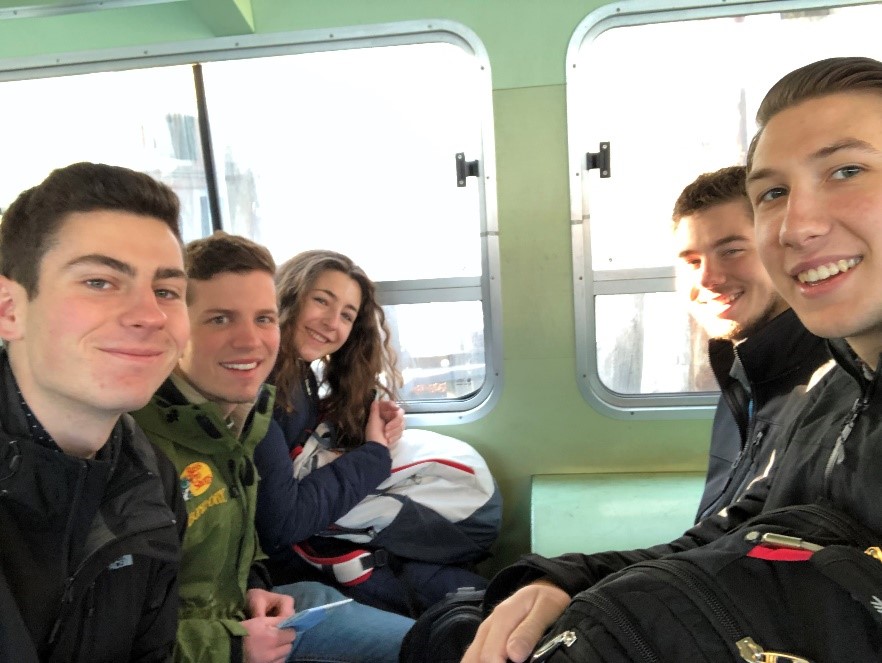
From left to right: Mitchell, Joe, Rachel, Nathan, and myself. On the ferry from the main island of Venice to the smaller island of Burano.


The day started at the Airbnb on the main island of Venice. After cleaning and checking out, the five of us went to the far side of the island to the ferry. We bought round trip tickets for 15 euros, which is a good deal considering each way was 45 minutes.  After arriving in Burano, we spent the first few hours walking around and taking pictures. Burano is less crowded than Venice and is full of brightly colored houses packed together. We walked through the narrow alleyways and along the canal, which is much clearer than in Venice.

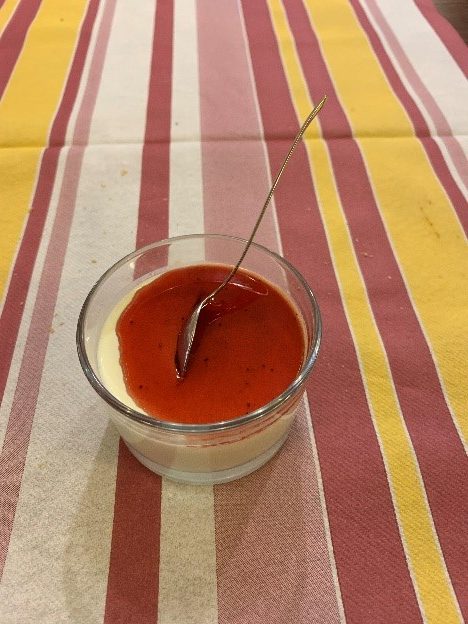
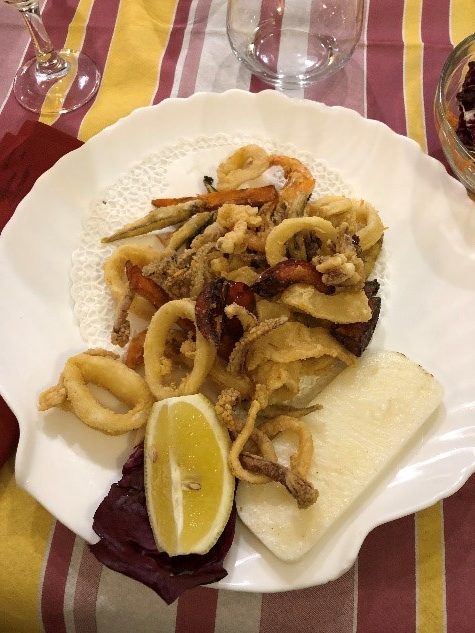
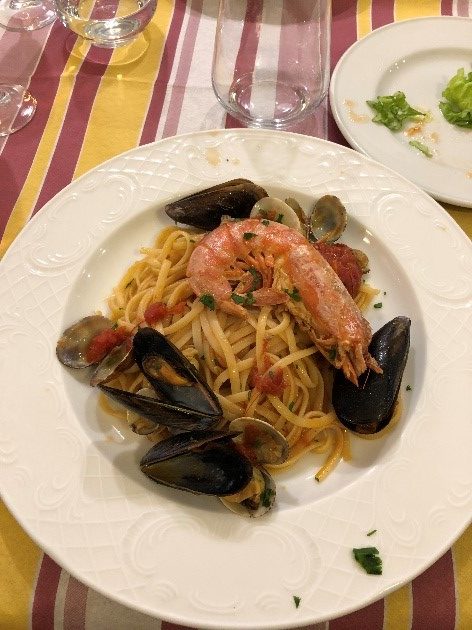
For lunch we decided to get seafood since fishing is popular in Burano. We found a deal for a 5-course meal for 20 euros. We were skeptical, but it paid off. Lunch included bruschetta, seafood linguine, a plate of fried seafood (calamari), salad, and dessert. We were also given bread and champagne for free, which is unusual since normally nothing is free at restaurants in Italy. It was the best seafood I have ever had.


After lunch we boarded the ferry back Venice and met up with the group coming back from Murano. We boarded the train and began the 4-hour train ride back to Rome. Most of our group slept, tired from an eventful weekend.  It was a fun weekend, but now we are back to work bright and early tomorrow with class at 8am.


Before I go, I would like to give a very special birthday shout out to the one and only Deb Besser. I hope you had a fabulous day!


Ciao!

Peter   

Field Trips!

Venice, minus the flooding

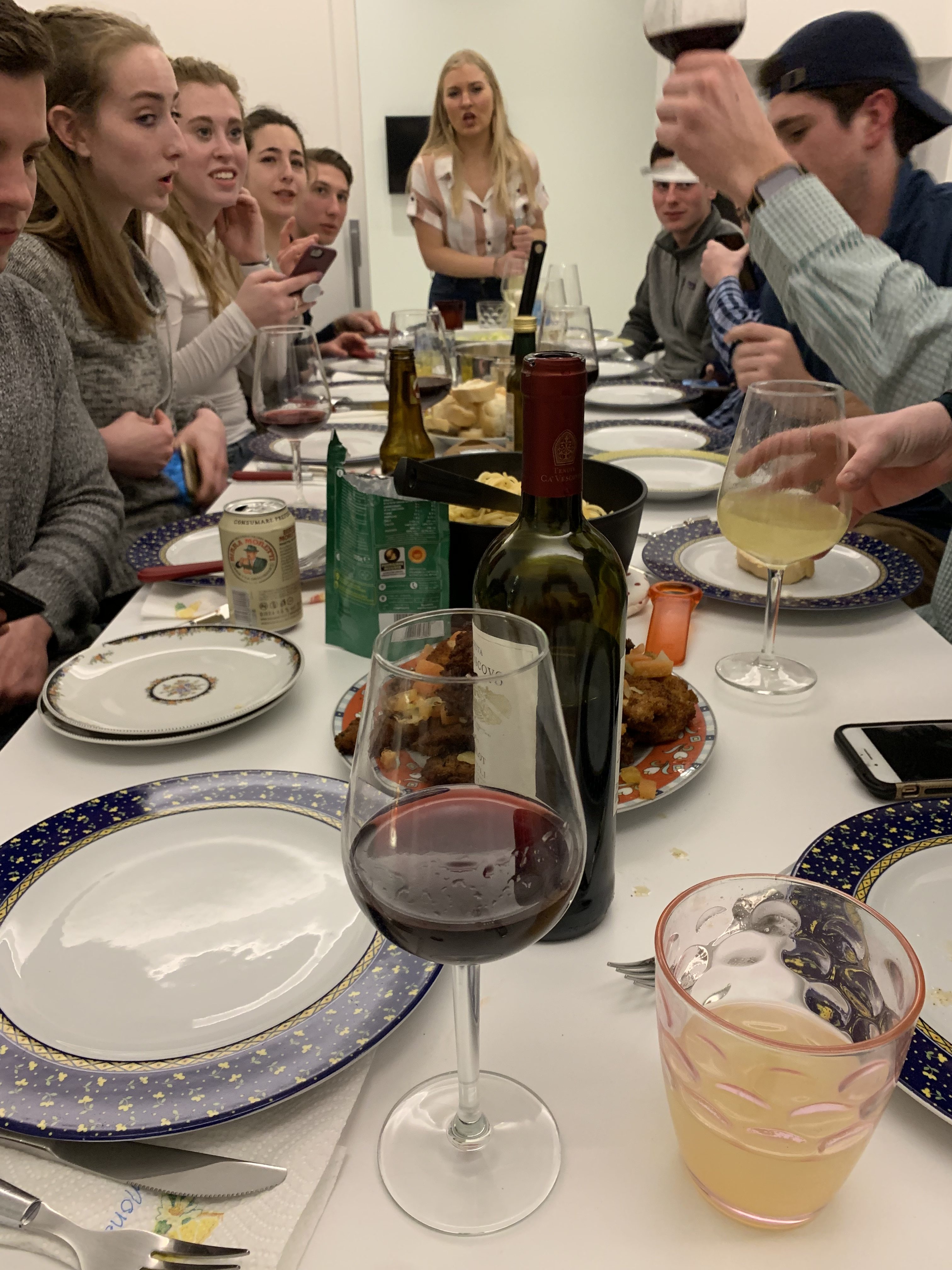
“CoUnTrYrOaDs TaKe Me HoMe….”, the tone going in and out by 15 people sharing the same space, enjoying a modern Airbnb on the canals of Venice. A meal which consisted of Grandma Crosetto’s chunky tomato paste, Charles’s ceiling tested noodles, and Grant’s burnt Chicken Parmesan (Let’s not talk about how he bought mozzarella instead of parmesan). The first day of our free weekend in Italy has been a blast. It began with a nap that started yesterday at 6:00 p.m., which soon led to five snoozes. At 8:30 p.m. I thought it was time to set that fat 5:00 a.m. alarm. Eight and half hours later I was on a train to Venice for the first time on the trip, I had no idea what the day had in store for me.


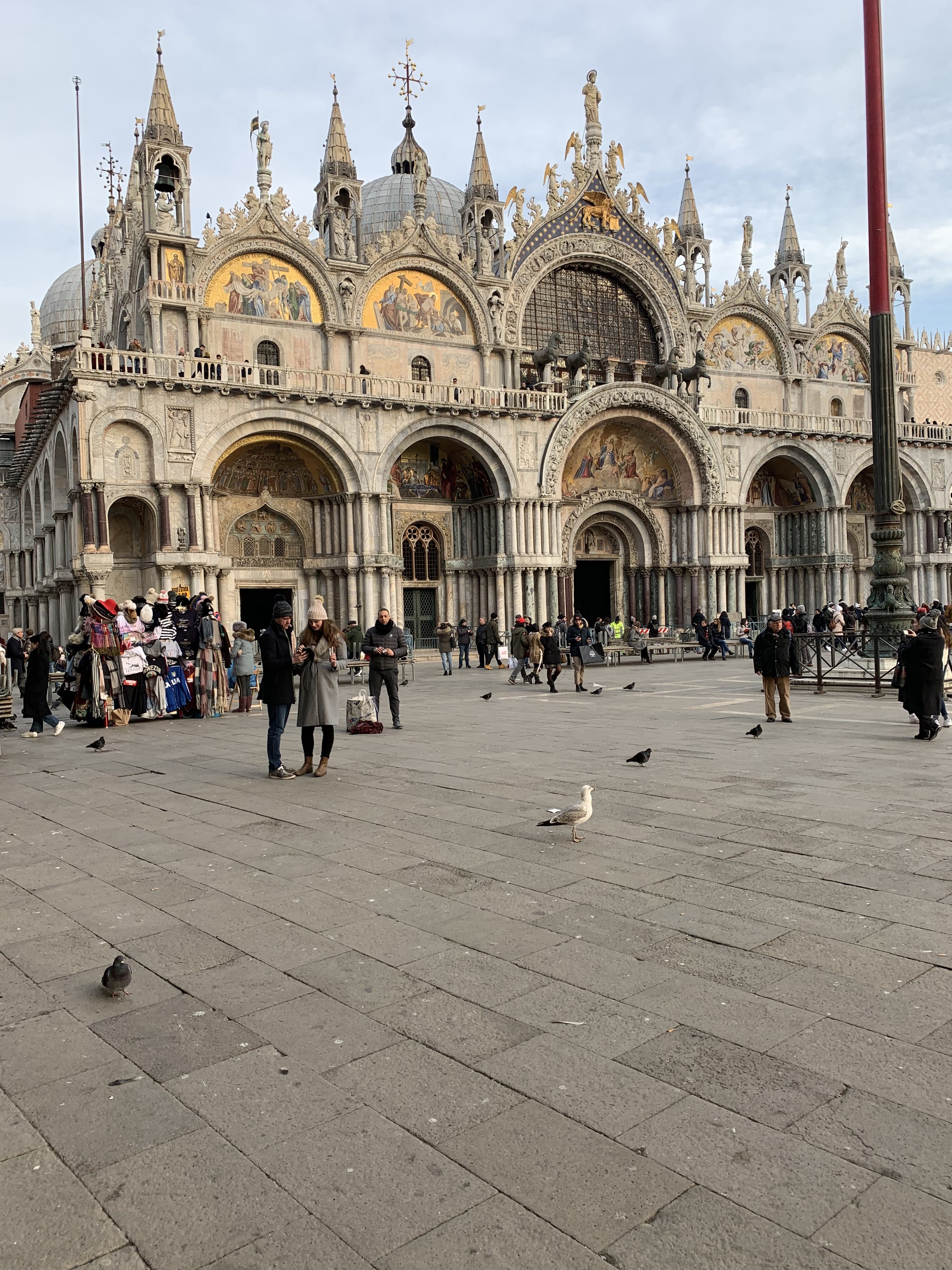
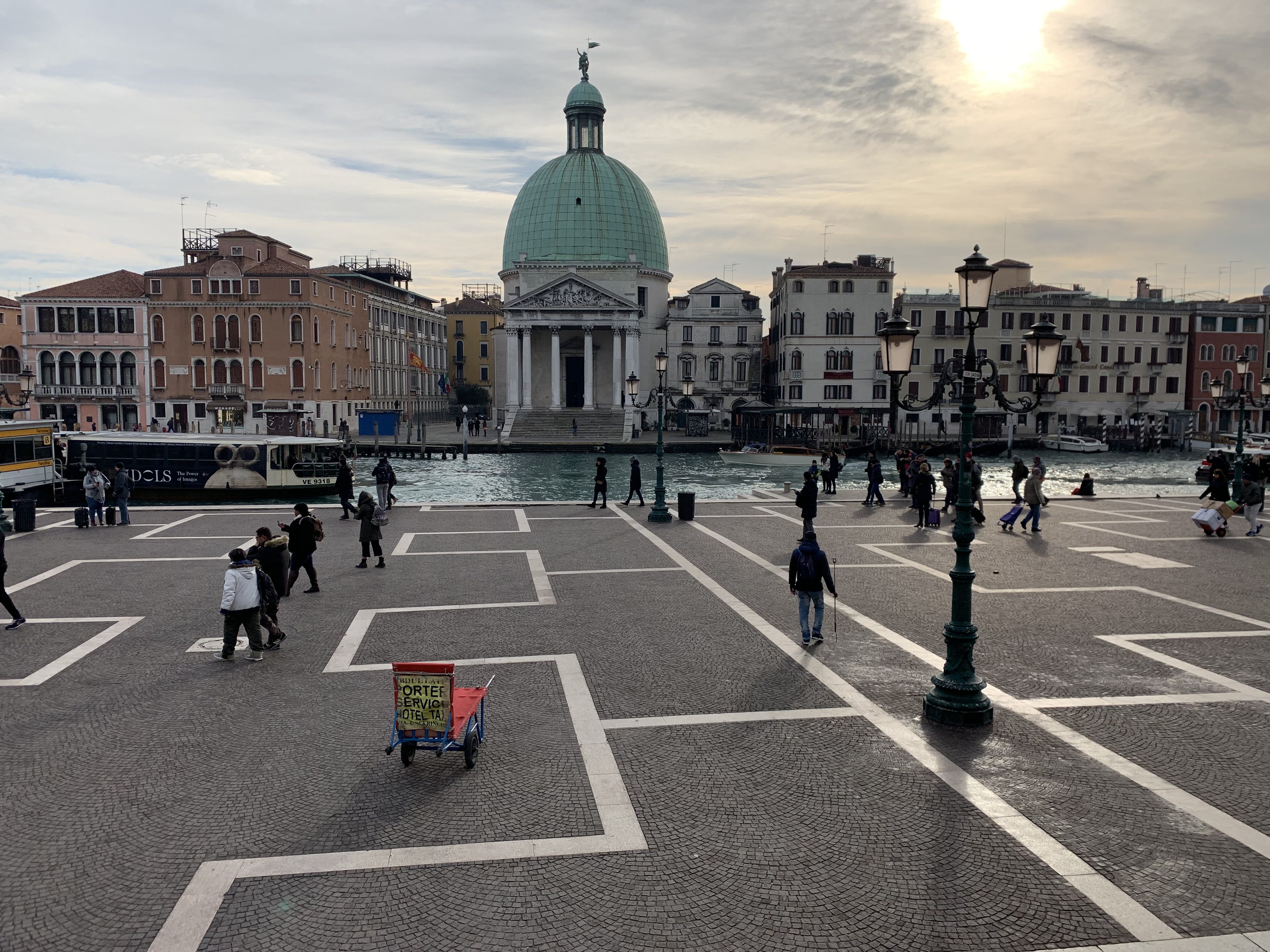
At the arrival of Venice, I enjoyed the roaming. Glassware, we checked it out. Masks, we wore them. Gondolas, we saw weren’t cheap. Canals, we took pictures at. Now, here I am about 9:00 p.m. and I am very relaxed but full of energy. It was the first day Charles pedometer read under 10 miles. After many days of everything planned out it was nice to be able to take a city by ear. The highlight of the day had to be the dinner I spoke of earlier.

(Cheesy alert) In a city of history and beauty, it was the people that I spent it with that made the experience so enjoyable. Hotel rooms only have so much space. No way could 14 people enjoy each other’s presence between the tandem twin beds of Rome, but in this apartment we will all be able to welcome the night together.


So here I am, post-meal, writing a blog in between many sing alongs, happy to be where I am. Among the new friends Luke toasted too, I will have to cut this blog short to not miss out on this special moment. I hope tomorrow, Peter has more to say, but for tonight, know that Venice has treated us well. We are excited to wind down our time here in Rome and to move on our adventure through Italy.

Field Trips!

Hello all! It’s your one and only Wisconsinite Tommie on this trip, Caitlin Cretton! Today was a nice day of rest and re-catching up before our free weekend in Venice.

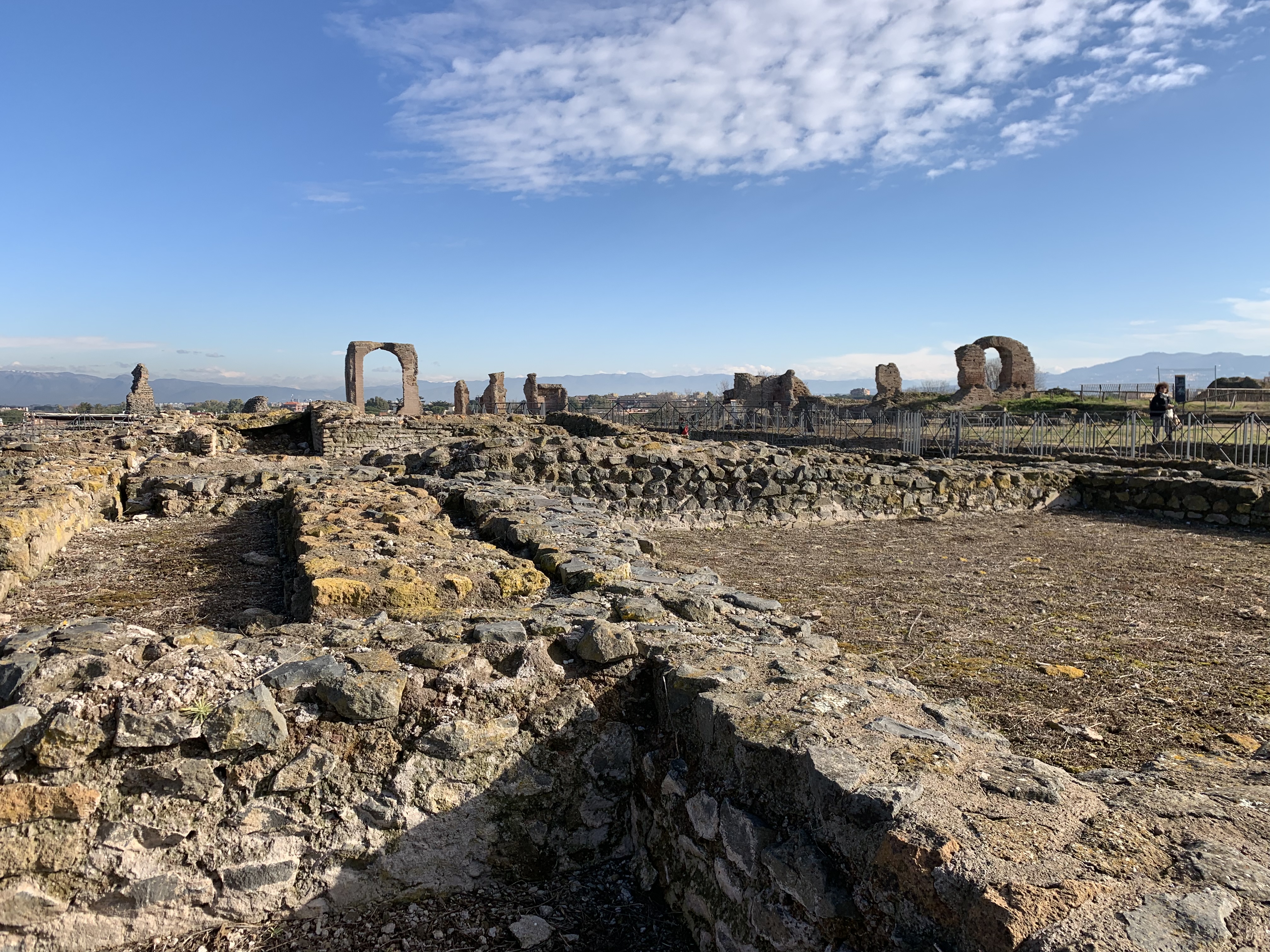
We visited Villa Dei Quintili – Santa Maria Nova as well as Parco degil Acquedotti. Both of these cites gave us an opportunity to wander and look around at the amazing scenery and just enjoy being outside. To start the day we had class in the morning for about two hours at our hotel. After class we met with our tour guide of the day and she led us to our bus that we would take out of the central city but we were technically still inside Rome.


Our first stop was Villa Dei Quintili – Santa Maria Nova and here we saw what used to be a castle for two rich brothers and it was built in 151 A.D. The ruins still standing had several beautiful arches and layers within itself that we were able to walk through and explore. After doing some exploring there was a large structure made up of brick and mortar and later our tour guide let us know it was a tomb, which is the image on the left and there is a person in front to compare how large this tomb was. However, many of us students had several unanswered questions still. One of our main questions was where the rest of the building ended up because we were able to walk on the floor and see the foundations of the building but not its ceiling and most of the sides of the walls.


Our second stop of the day was the Parco degil Acquedotti which gave us the nice fresh air and nature that we all needed. It was a nice walk and we also were able to play with some dogs along the way.

We are all preparing for our weekend as we take a night of rest due to our early wake up call at 5:45 tomorrow. As Charles said, each day just gets better and better.

Field Trips!

Livin’ In Luxury

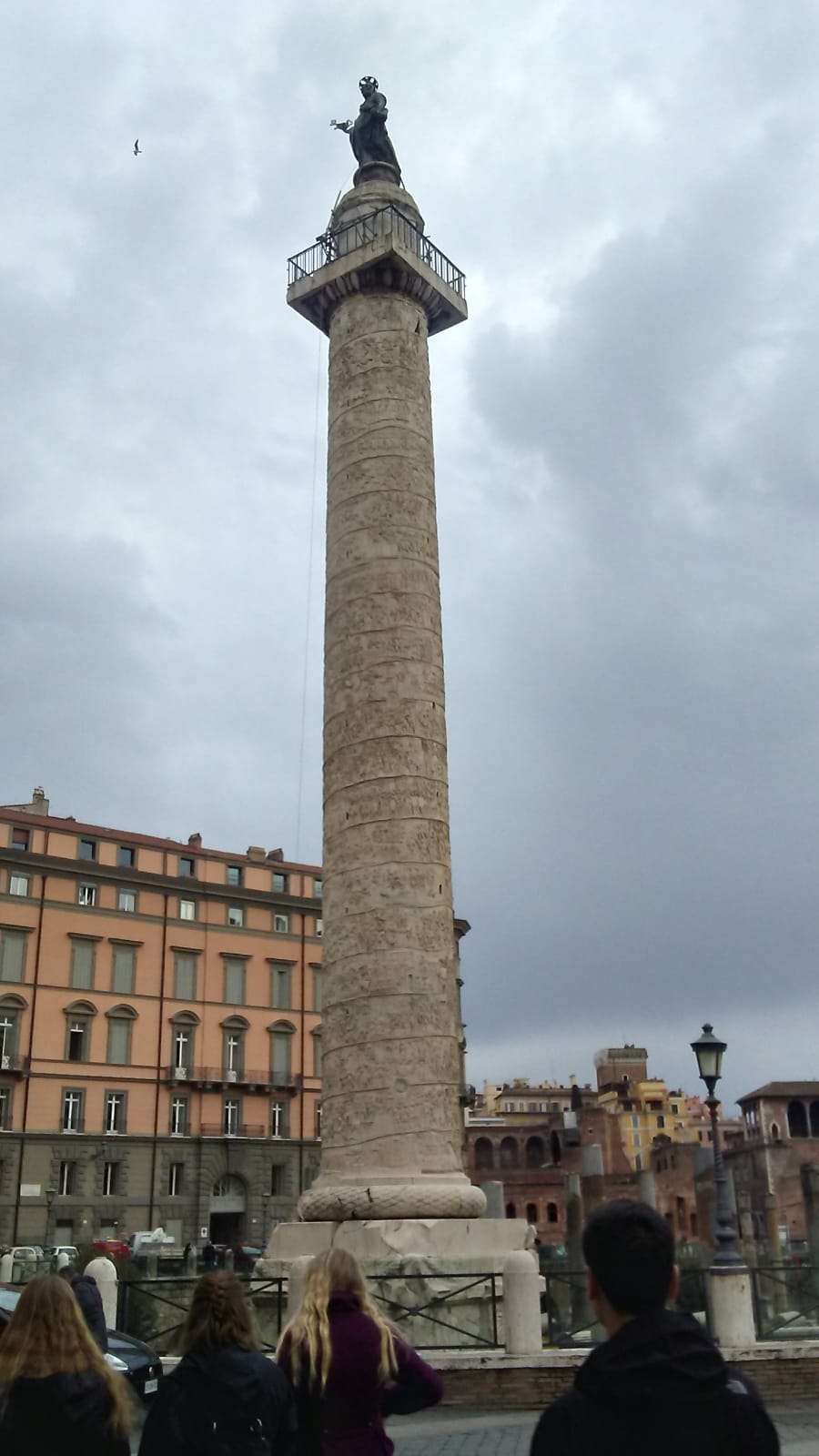
Hello! My name is Anthony Buchanan and I’m a junior mechanical engineering student from Crystal, Minnesota. We spent day 5 of our adventure visiting a few major archeological sites. We started out at 8:15am by taking the bus to the Domus Romane, an old Roman estate whose ruins were built upon during the Renaissance. The entrance to this archeological site was situated next to Trajan’s Column which was built around 115AD to celebrate Rome’s victory over what’s now Romania.

After descending to the site, we were able to see what remains of the Domus Romane through a glass floor. The bulk of the tour consisted of a pre-recorded narrative accompanied by images projected onto the ruins to suggest what they might have originally looked like. We were able to see the baths, including the frigidarium (cold room), tepidarium (mild room), and Caldarium (hot room), as well as the remains of a few rooms throughout the estate, a Roman street, and an adjoining house. Unfortunately, we weren’t allowed to take pictures inside the site.

After the tour, we walked through the Jewish ghetto, where we saw several examples of building and building materials that were repurposed throughout their lives.

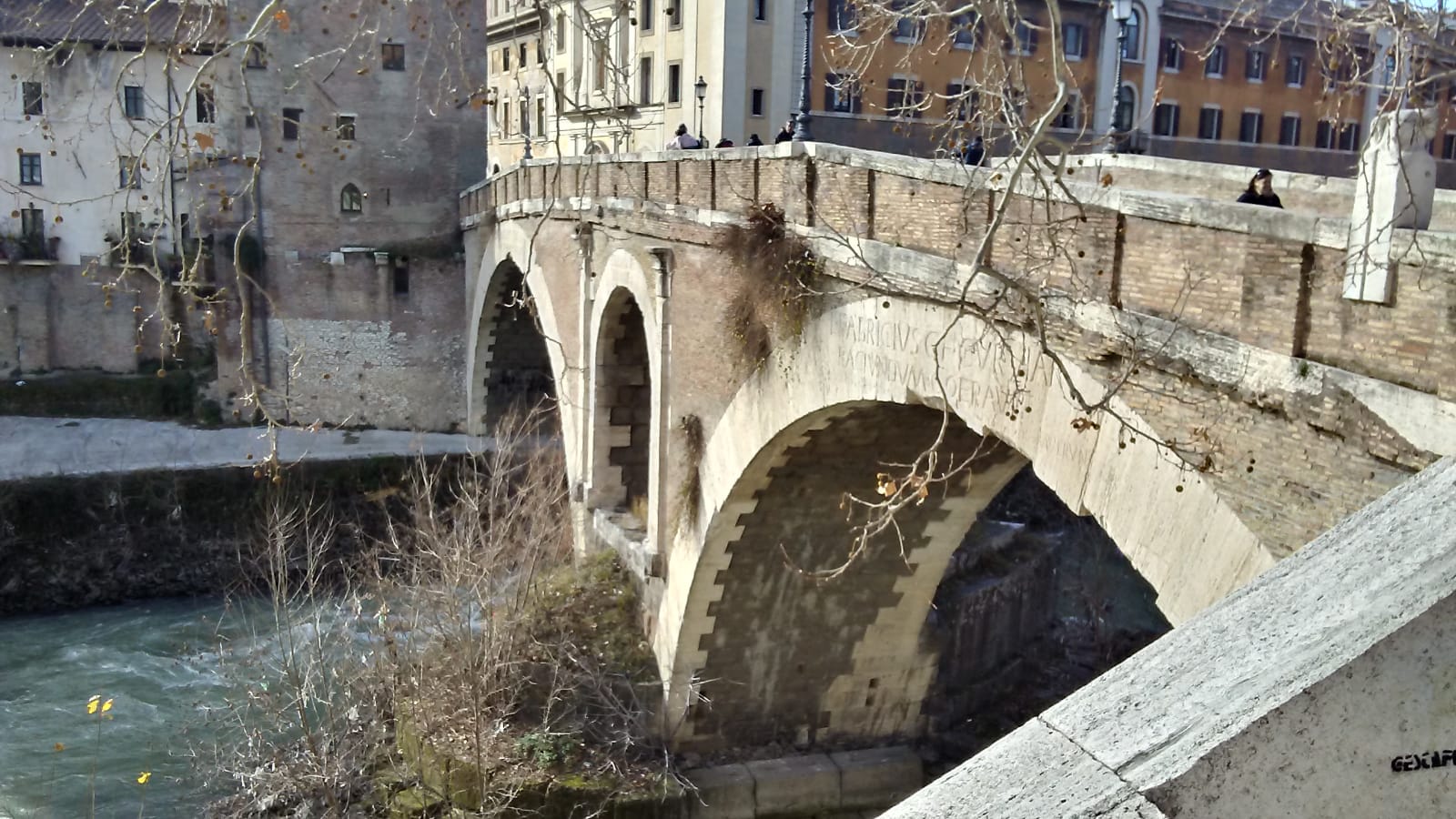
A short walk from the ghetto took us to the Pons Fabricius, the oldest bridge in Rome. This bridge, built in 62BC, spans the Tiber River and is a great example of the ancient Romans’ use of arches.

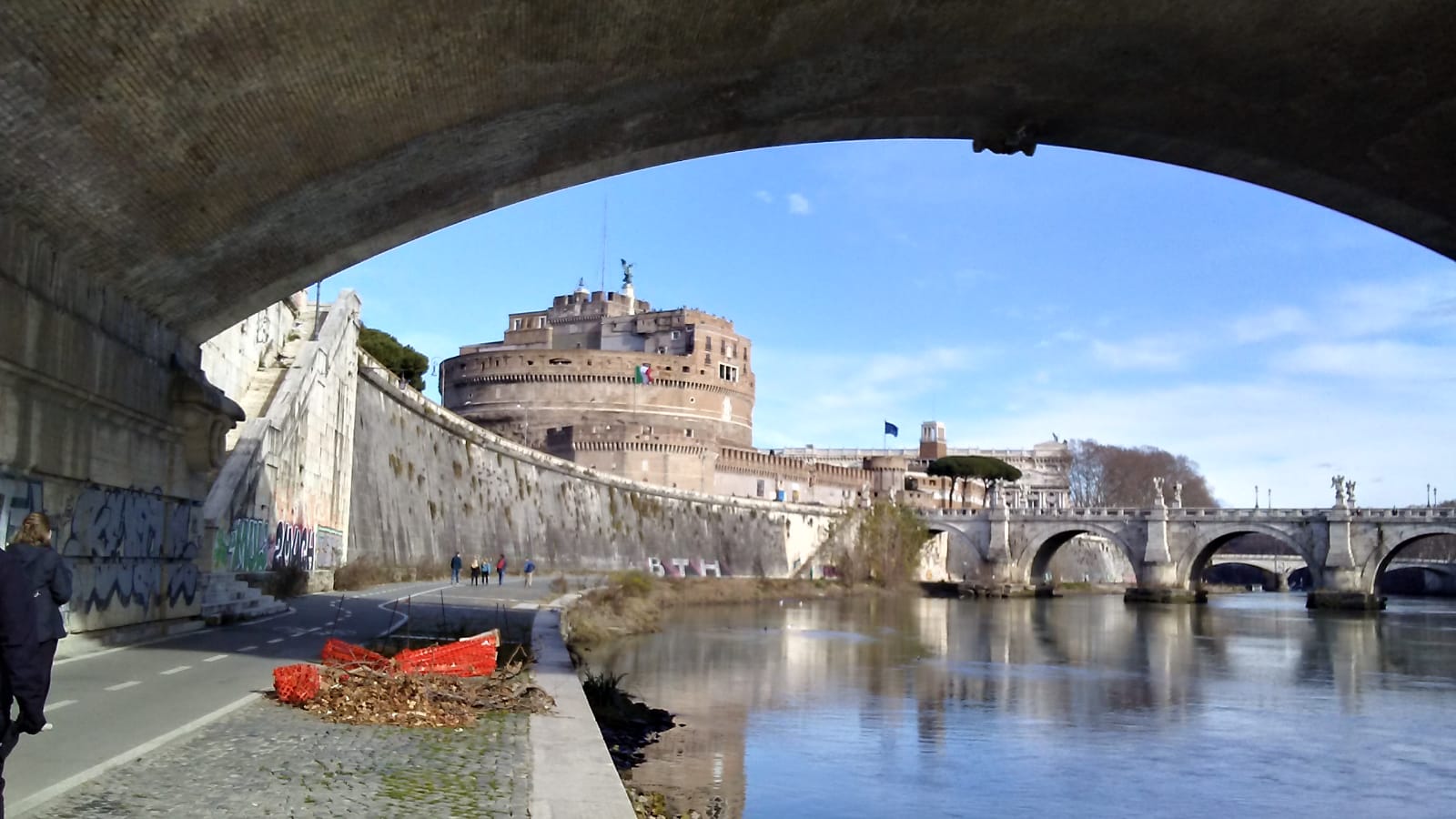
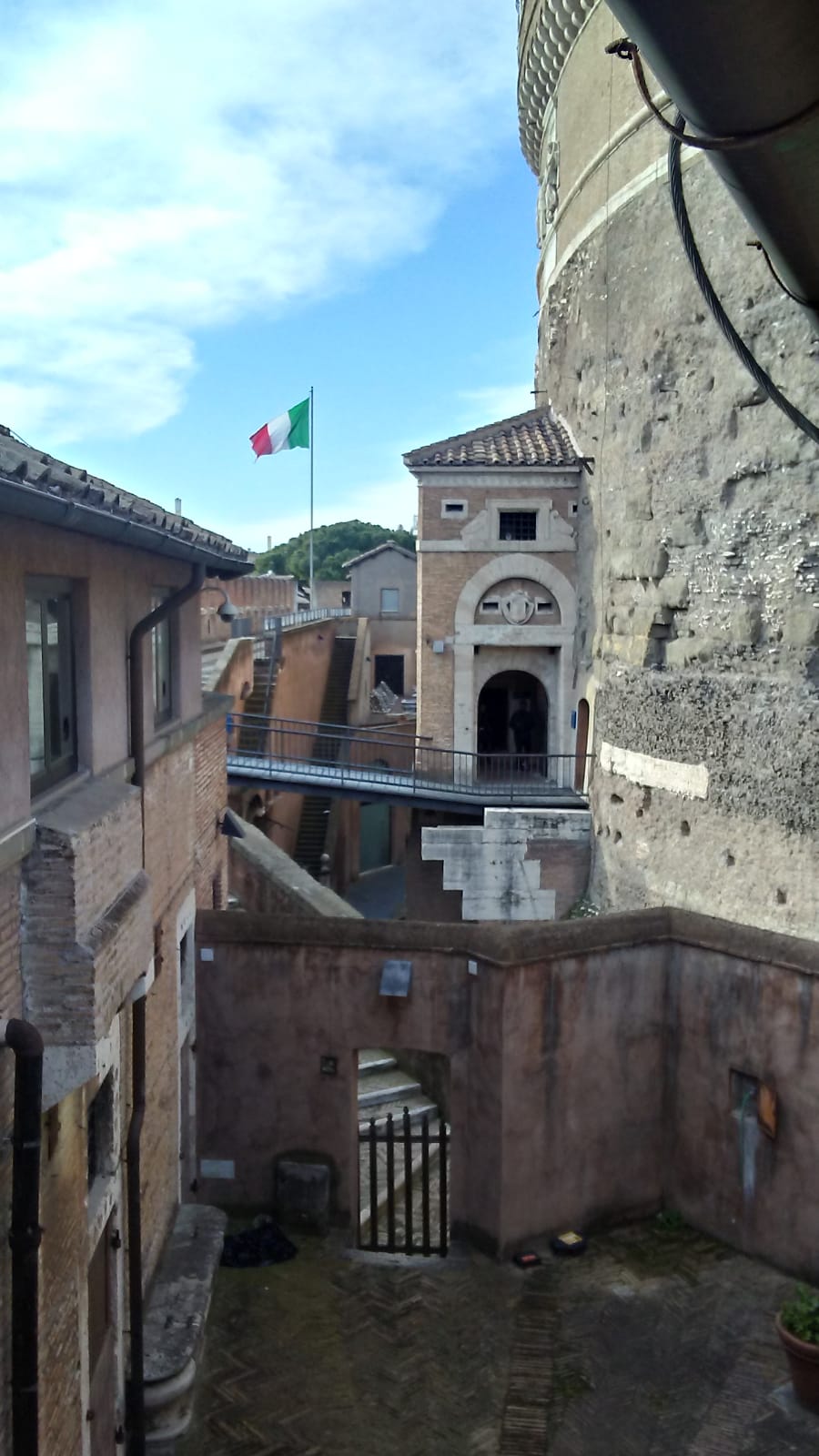
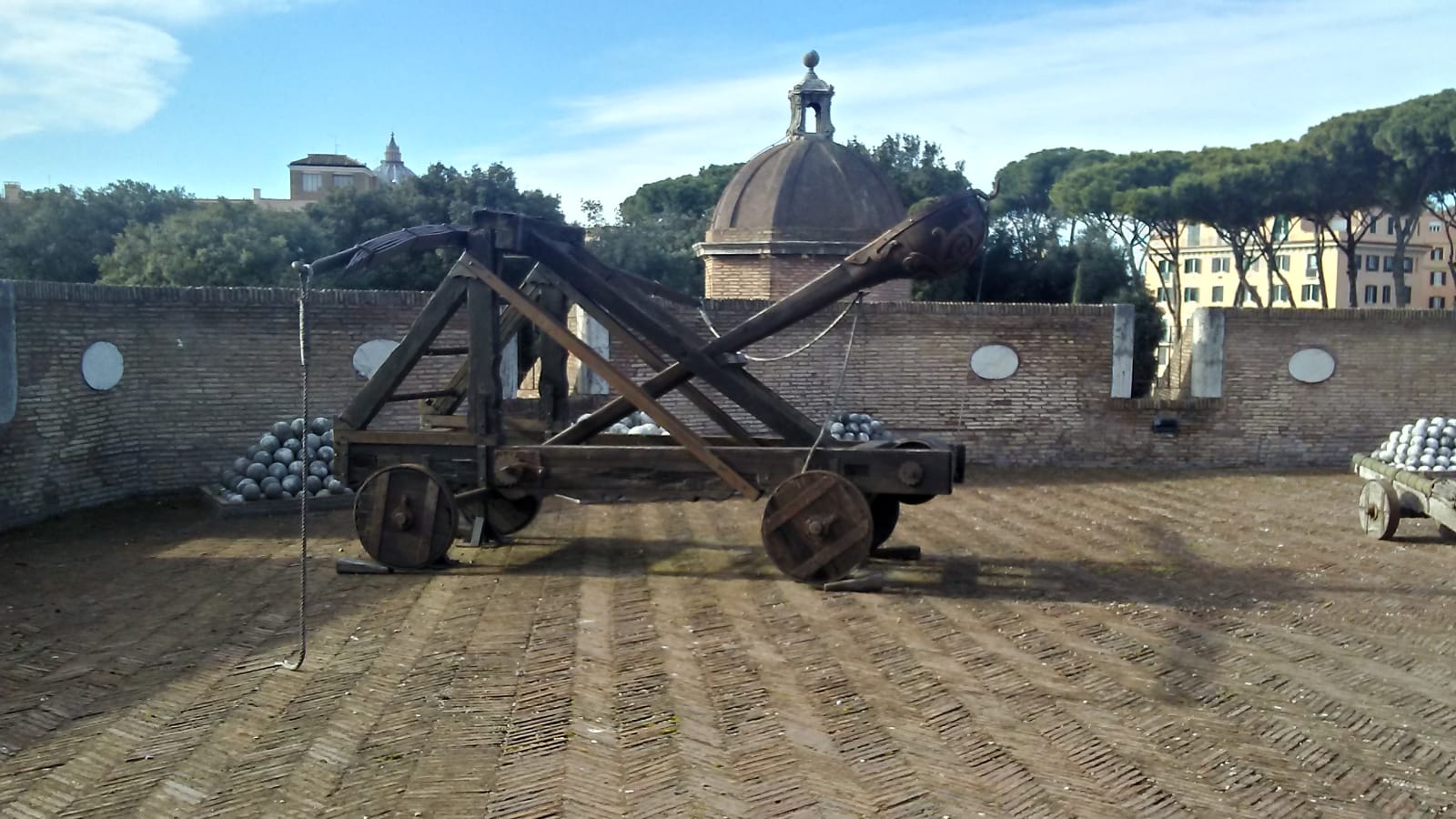
Our final site of the day was Castel Sant’Angelo. This historic building was originally built next to the Tiber River as a mausoleum for Emperor Hadrian and his family and was later converted into a temporary home for the Pope in times of unrest. Today however, it’s simply a museum.

Field Trips!

Il Papa and His Home on the Hill

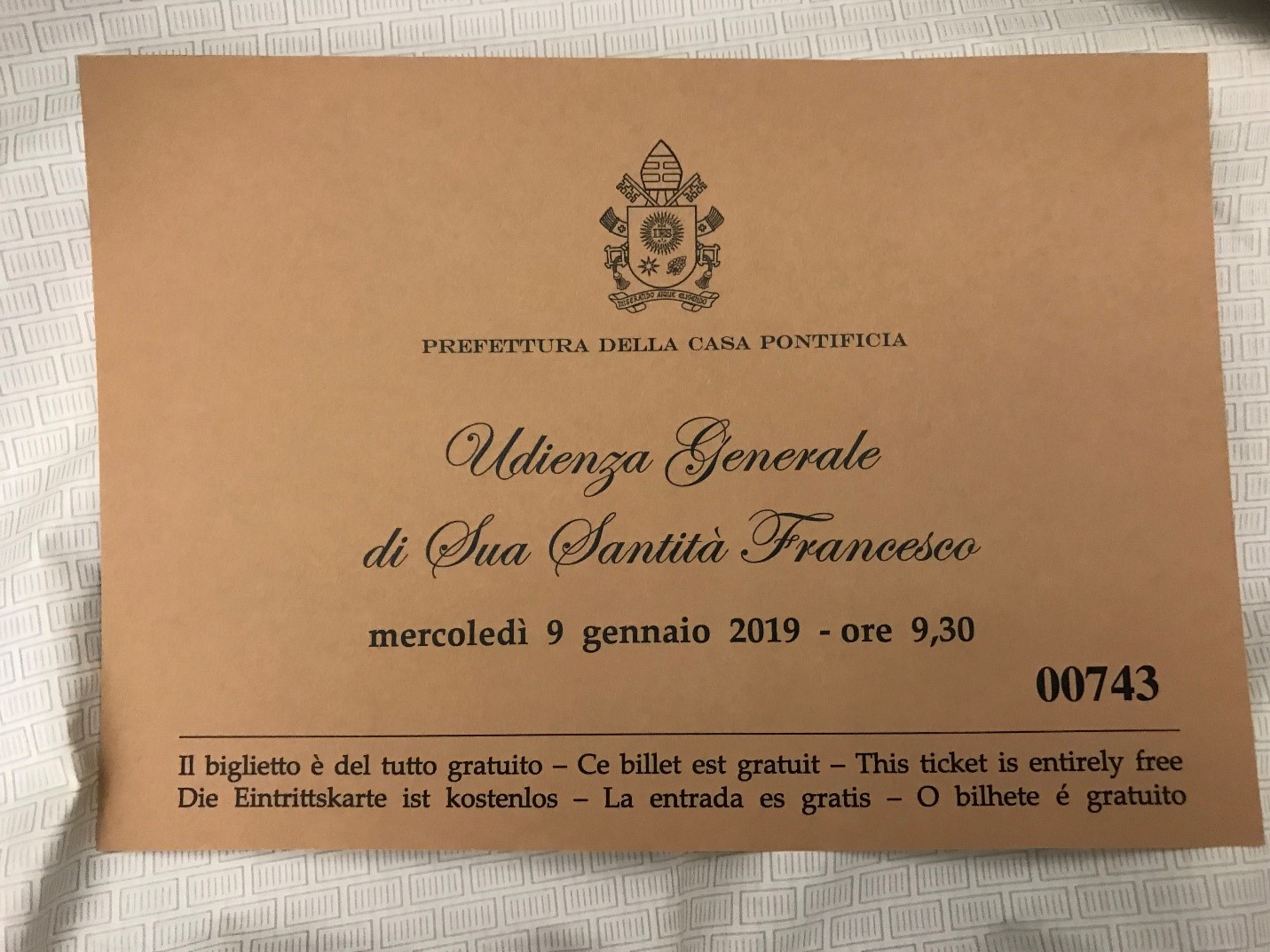
What up! It’s your favorite (and only) Electrical Engineer of the group, Charles Augustine. Today was a big day for us, and it included a lot of walking (12 Miles by my count!). Just after a quick breakfast, we left our hotel bright and early at 7:45 and walked over to the Vatican for the pope’s weekly audience.

Here’s our ticket for the Pope

t

The Pope talked for a short while and then other people translated everything he said into about nine languages (which may be an exaggeration, but it sure felt like a ton). I tried my best to snap a picture of Il Papa as he walked into the room, but all I could manage to capture was a sea of phone screens being held up, which is far less interesting so I didn’t include it.

After the audience with the Pope, we toured St. Peter’s Basilica which was, in a word, incredible. Of course, as it is for most things like this, pictures don’t come close to doing it justice. It is unbelievably massive, and very beautifully decorated with paintings and statues.

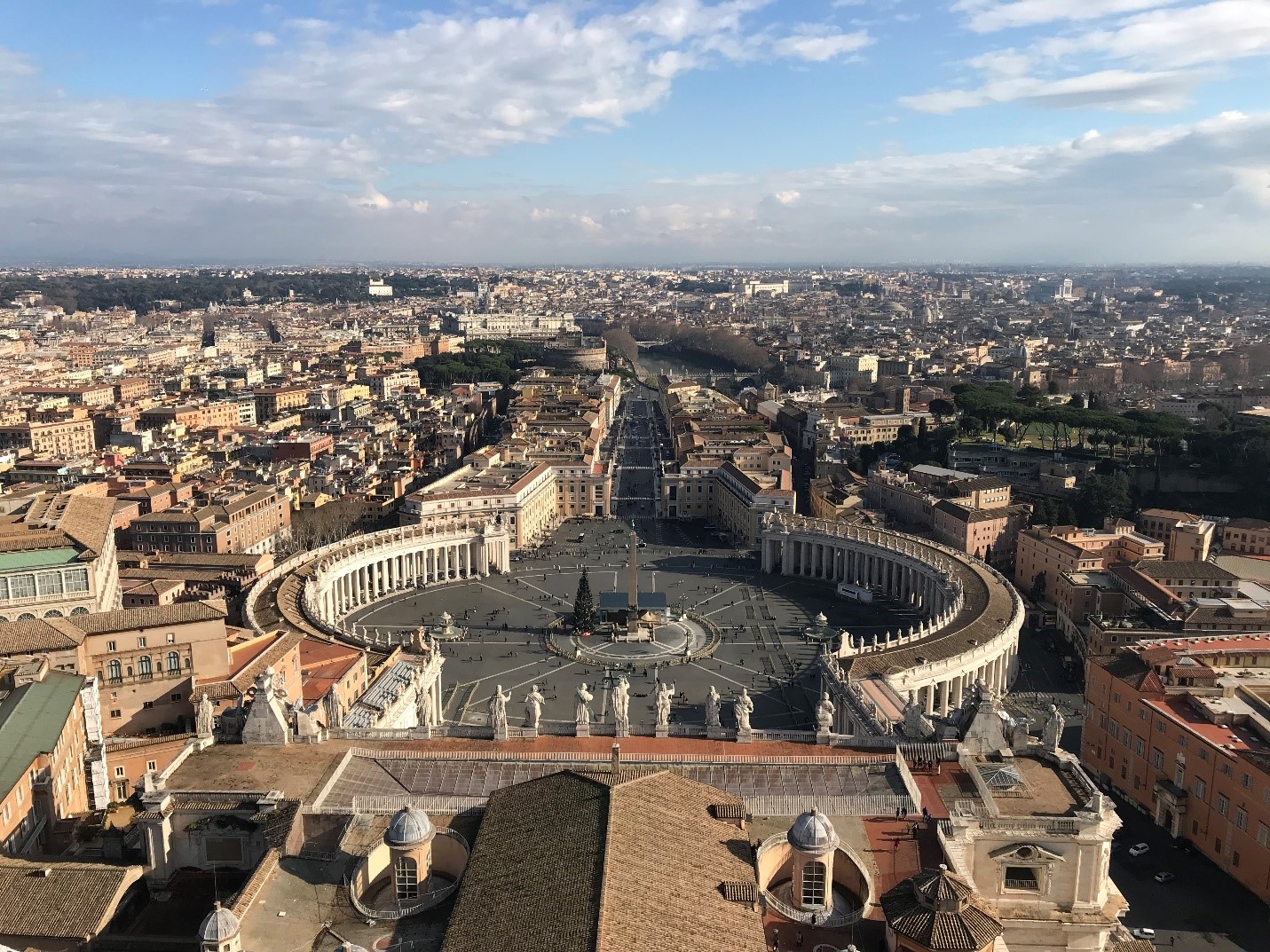
By far the highlight of the day for me was climbing the 551 steps up the basilica and looking out onto the city. The climb was tough as the stairs were steep and claustrophobic, but the view was entirely worth it. The next few photos highlight how small the steps were the for the majority of the climb.

I know it doesn’t really look like it, but it felt like I was bent over at a 45-degree angle the whole way down.

After the long, sweaty climb we were treated to this gorgeous 360o panoramic view of the city.

After the basilica, we went on a guided tour of the Necropolis, which is the area under the Basilica. Unfortunately, we weren’t allowed to take pictures in there, so you’ll just have to trust me that it’s pretty darn cool. Under the Basilica there is the ancient Roman Necropolis, which was a massive cemetery (of sorts), where the wealthy Romans would build mausoleums to bury their dead and keep in touch with them in the afterlife. It was buried when Constantine (the first Christian Emperor) decided to build a Basilica in honor of St. Peter, in the location of the current Basilica. He took the top off the Vatican hill and used the dirt to cover the Necropolis and flatten the area. In later years, it was discovered that the tomb of St. Peter himself was buried along with the Necropolis and was re-discovered in the 1940s when excavations began under Pope Pius XII.

After we finished at the Vatican, we had our second (and final) Italian lesson. Today’s focus was on how to order (wine) at Italian bars and how to shop at Roman grocery stores. We took a short field trip in the middle of class and bought some pastries from the shop on the street below, but apparently, it wouldn’t have been appropriate to order some wine. Lame. All in all, this day has been great. Every day is getting better than the last, and I don’t expect this trend to end any time soon.


See you soon Mom!!

-Charles


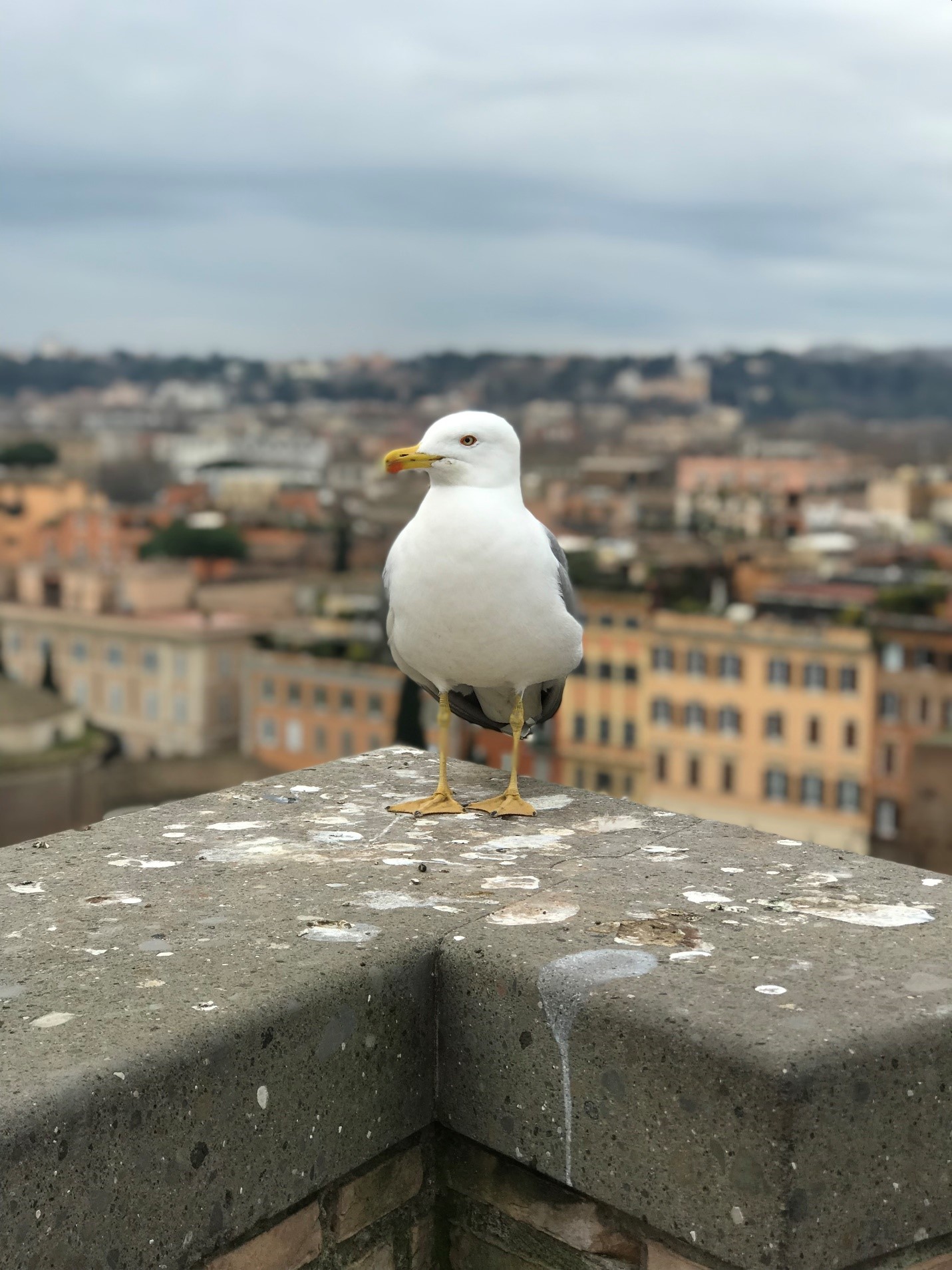
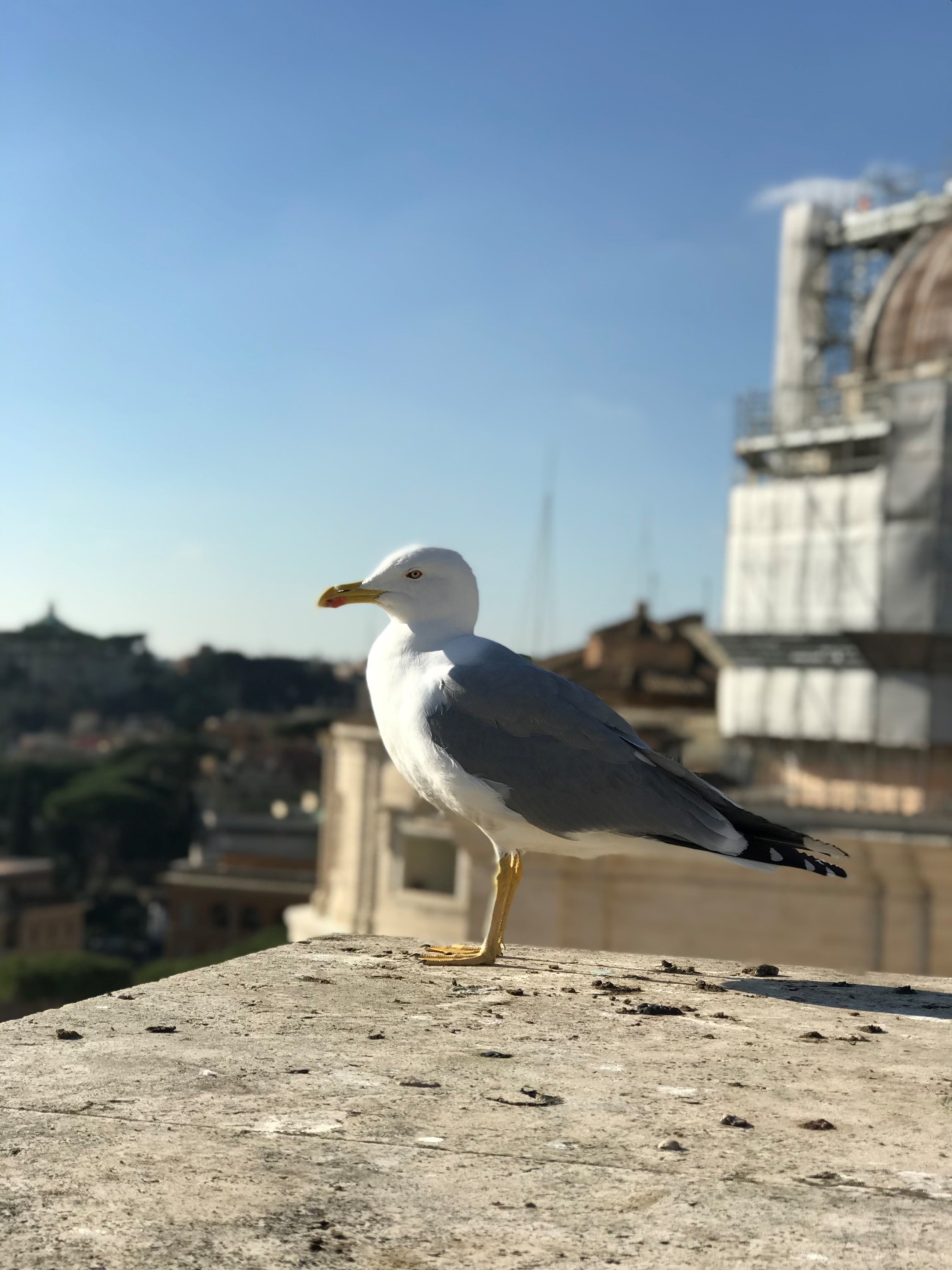
Side note- I’ve taken it upon myself to document the trip through portraits of Seagulls. Here are a few of my favorites so far.

Field Trips!

The Roman Forum and the history of hills

Hi Everyone! My name is Kristen Andrews and I am a Junior Mechanical Engineering student from Rosemount, Minnesota. Day 3 of our time in Rome was spent in class and out exploring some classic Roman tourist sites.

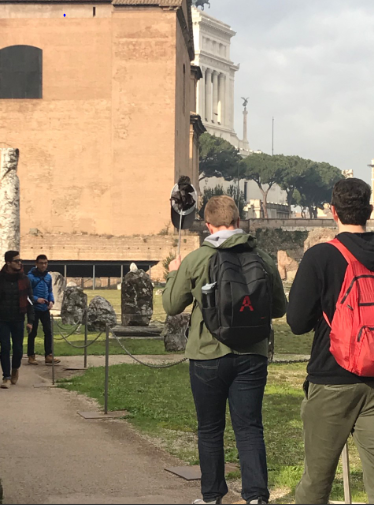
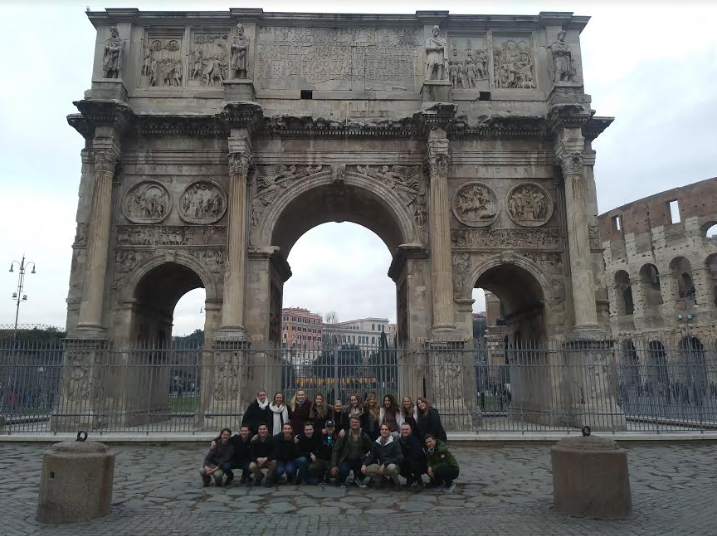
We met for class at 8:30am for a brief lecture before our adventure was to begin. Professor Besser discussed engineering aspects regarding forces on buildings. After a few student presentations, Claudio and three small vans met us outside the hotel. Our first stop was at the basilica of St Clemente. From the outside, the basilica was impressively large. The inside was even more majestic, with paintings on the ceilings. However, the most interesting aspect of the basilica was beneath the current structure. Descending down a flight of stairs, we were taken to a completely different world. The air was musty, it was slightly dark, and at times could give a claustrophobic person quite a scare. Beneath the current church was two stories of older buildings, the lowest dating back the first century AD. There was also a fresh water spring on the bottom floor. Unfortunately, no photos were allowed while in this building. After the basilica of St Clemente, we walked over to the Roman Forum and Palatine Hill. The entrance was near a famous archway created by an old emperor who erected the monument after a key win in the war.

Our tour guide for this location was Grant, with help from the Rick Stevens travel book. Rick provided a spicy type of writing style for our adventure through the Roman Forum. Just for the day Grant became our tour guide as we walked the ancient streets that Augustus and Julius Ceaser once walked themselves.(editors note)

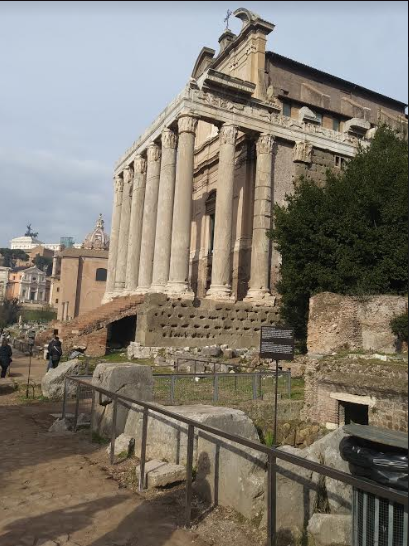
Between the two of them, the group learned much about the site. Even though the knowledge was coming from 90 percent Rick and the last 10 percent from Grant (editors note) There were marble pillars that were almost stolen (note the lines at the top of the pillar, those are indents from rope and vinegar being used to try to cut down the pillar as noted by Rick Steves.

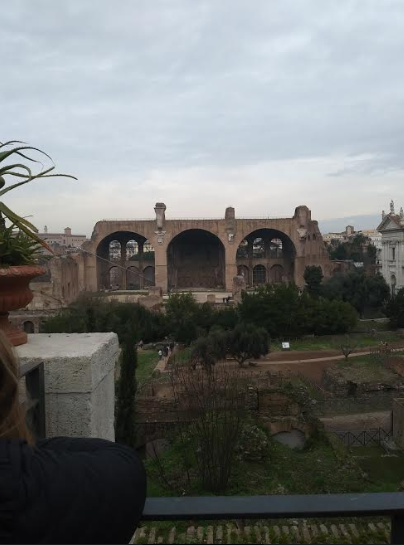
There was a large temple (larger than a football field) which is only 1/3 still standing.


The cementation site of Julius Ceaser also resides in this location. At the top of Palatine hill, there was a race track where chariots were raced, which we visited.
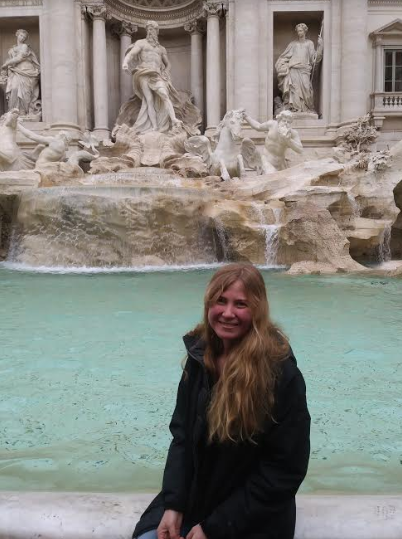
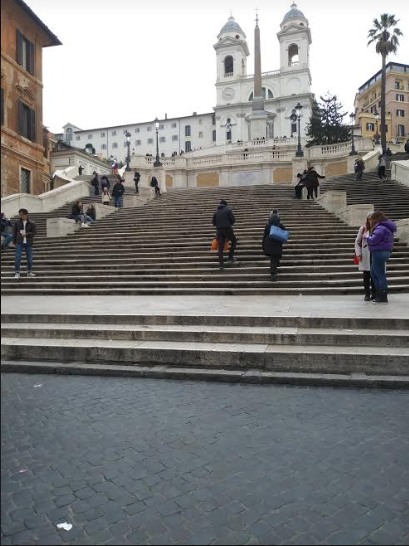
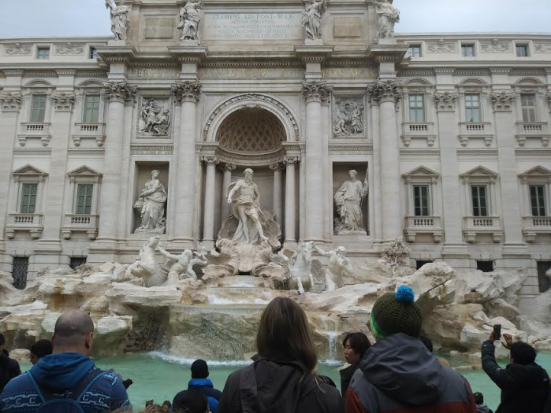
The rain started but we managed to walk to the Trevi fountain and also to the Spanish steps.

As we wind down our days in Rome, we will be visiting some of the many churches and chapel through out the city. Look for pictures of the Vatican to come soon. The next destination for us is coming up this weekend when a majority of us will be going to Venice Italy to celebrate and visit the city. We are hopeful that it wont be under water but excited to see what the city has to offer and how it differs from Rome.