gren2380 – Holloran Center Professional Identity Implementation Blog - Page 3
All Posts By

gren2380

David Grenardo

Transitioning from Student to Lawyer: Infusing Professional Identity Formation into the Required Curriculum

By: David A. Grenardo, Professor of Law and Associate Director of the Holloran Center for Ethical Leadership in the Professions, University of St. Thomas School of Law

On April 20 and 21, 2023, the Holloran Center for Ethical Leadership in the Professions and the University of St. Thomas Law Journal hosted a symposium/workshop that focused on incorporating professional identity formation (PIF) into the required curriculum, namely 1L courses and Professional Responsibility (PR). The speakers consisted primarily of casebook authors who include PIF in their textbooks and corresponding courses.

Orchestrated and led by Jerry Organ, Co-Director of the Holloran Center, the symposium/workshop offered one impactful speaker after another. The presentations provided a wide array of means to include PIF in the required curriculum. Each panel is listed here, and the following are just snippets of what professors presented:

  • Role-playing exercises, which included an inter-disciplinary dental malpractice deposition simulation in Torts in which law students work directly with dental students as purported expert witnesses;
  • team-based approaches to learning in first-year and PR courses;
  • the use of technology to aid in PIF;
  • the importance and use of reflective journaling;
  • methods to address well-being; and
  • details of a required 1L PIF course.

The panelists inspired and motivated each other and the attendees with creative ways to incorporate PIF. For example, Neil Hamilton, Co-Director of the Holloran Center, shared how he matched coaches (alumni of the law school) with teams of students in his PR course based on the students’ practice areas of interest, and the coaches guided discussions and reflections within those small groups on critical aspects of the practice of law, such as how to deal with adversaries and the importance of relationships. Kendall Kerew, a Holloran Center Fellow, discussed a simple technique to ask students anonymously about what they learned after each class, remaining questions they had from class, and how they are feeling. The effects of that daily exercise at the end of class allow her to gauge where further instruction is needed on certain topics and to monitor and address any well-being issues that students may be encountering.

Whether incorporating PIF entailed an exercise in a class or a complete immersion throughout the fabric of an entire course – as Lou Bilionis, another Holloran Center Fellow, demonstrated could be done in his Constitutional Law course – a common theme throughout the event was placing the students in the role of the attorney serving a client through various types of simulations. PIF involves helping law students become lawyers. Giving a student opportunities to act in the role of an attorney helps them understand what it means to be a lawyer and how to be a lawyer, particularly when coupled with purposeful and guided reflection.

The other theme that echoed throughout every speaker and group discussion was a love for the students. PIF encompasses trying to help law students become the best people and professionals that they can be, which means something different for every single student. The dedication and commitment to help law students develop into professionals resonated with all those attending, including the talented members of the University of St. Thomas Law Journal who helped put on the event.

Holloran Center Fellow Barbara Glesner Fines, who initially came up with the idea to bring together doctrinal faculty of required courses to discuss PIF, led a necessary discussion on the “curse of coverage.” This curse oftentimes prevents law professors from adding anything new or changing the way they teach because they feel constrained to get through all of the material they can to prepare students for the Bar exam. It became clear early on in the event that through planning, intentionality, and just a modicum of creativity, a professor can easily incorporate PIF in small, medium, or even large portions in any class they choose, with no loss of coverage and the possibility of some gain in learning.

As with every Holloran Center symposium/workshop, the participants left feeling empowered, inspired, and motivated to help law students move along in their journeys to become lawyers.

The Law Journal will be publishing pieces from this symposium, which will be highlighted on this blog when those articles are ready. Should you have any questions or comments about this post, please email me at gren2380@stthomas.edu.
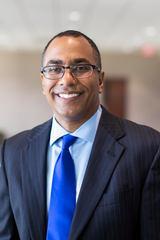
David Grenardo is a Professor of Law and Associate Director of the Holloran Center for Ethical Leadership in the Professions at the University of St. Thomas School of Law.

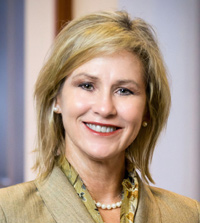
Leah Teague

Training Law Students to Converse Respectfully: Public Discourse Workshop

By: Leah Teague, Professor of Law & Director of The Leadership Development Program, Baylor Law School

As previously discussed, amendments to ABA Standard 303(b) (development of a professional identity) & (c) (education to law students on bias, cross-cultural competency, and racism) did not require major adjustments to our programming at Baylor Law. Still, we created a faculty committee to document our compliance and consider enhancements. The committee confirmed numerous ways in which Baylor Law already complies and then considered additional opportunities to enhance their training.

This post highlights one of those enhancements. Beginning with the Fall 2022 entering class, students in each entering class are required to participate in a public deliberation workshop in their second week of law school.

What is public deliberation and why should law students learn how to do it?

The public expects lawyers to be zealous advocates for their clients, but sometimes a lawyer’s conduct goes beyond zealous advocacy and crosses the line of civility. Not only does ill-mannered conduct reflect poorly on our profession, but it also contributes to the normalizing of disrespectful, uncivil, and polarizing reactions to viewpoints and statements with which a person does not agree.

Lawyers’ professional obligations extend beyond individual clients to our system of justice and to society. As stated in the preamble to the ABA Model Rules of Professional Conduct: A Lawyer’s Responsibility, “[a] lawyer is a representative of the clients, an officer of the legal system, and a public citizen having a special responsibility for the quality of justice.” Since the beginning of this nation, lawyers have recognized that their special status comes with a professional responsibility to address pressing issues facing society. A lawyer’s legal education and training provide the opportunity to be change agents and difference makers not only for their clients but also in their communities and across the nation. These professional obligations and opportunities for influence call for lawyers to model civil discourse and to be able to facilitate deliberation in a calm and respectful manner.

The Public Deliberation Workshop teaches our students a different way to approach advocacy – one that helps them embody professionalism, model civility, and advocate more effectively. The following excerpt (from Baylor University’s website) succinctly summarizes the Baylor Public Deliberation Initiative:

“Deliberation involves the best parts of dialogue (conversational) and debate (argument) to offer an experience where participants can learn from one another by talking through different perspectives and approaches to local and global issues and working together to come up with community action steps.

We want this experience to occur early in law school, so students recognize that civility and professionalism are not antithetical to zealously representing a client. We also hope the experience will inspire and enable students to approach some of the most potentially heated issues debated in the public square (e.g., race, religion and its role in society, sexual orientation, gun rights or gun control, among others) with a desire to build community through shared values, solve problems, and build a better tomorrow.

Public Deliberation Workshop Required for Baylor Law Students

Beginning with the Fall 2022 quarter, each entering student at Baylor Law is introduced to a model for civil discourse through a workshop developed in partnership with Baylor University’s Public Deliberation Initiative. Dr. Joshua Ritter, former Director of the Public Deliberation Initiative, leads the workshops and describes it as a “partnership for training law students as active deliberative citizens with democratic skillsets they can implement within their own communities and leadership.”

The 1½ hour workshop begins with a video from our dean to explain the importance of the effort and to give some context. After some initial remarks and instructions by Dr. Ritter, the law students are divided into groups of 10-12 and given an issue for discussion. Different topics can be used but it needs to be one that elicits a wide range of differing views. We use food insecurity in our workshops to provide a less controversial topic but one with which students have a wide range of understanding and personal experience. The goal is not to change anyone’s mind on the issue, but simply for each participant to hear and to be heard on the issue. Topics incorporated into the training include active listening, cultural competency, and emotional intelligence.

Through this interactive exercise, we hope to demonstrate to students that individuals with diametrically opposed positions often share common values, but they may prioritize those values differently. We are already seeing the benefit to the law school environment as well. Creating a culture of respect for colleagues with different life experiences and perspectives enriches our classrooms and programs.

The workshops provide additional opportunities for second- or third-year law students as well. Law students in our Leadership Education and Development (LEAD) course are trained by Dr. Ritter to be the small group facilitators for upcoming workshops. As facilitators, their job is to keep the group on task while remaining neutral. After training and participation, the law students receive certificates as public deliberation facilitators.

Teaching students about expected behavior as legal professionals is baked into the DNA of a Baylor Law education. With that said, we recognize more can and should be done. Nine years ago, we made significant strides to be more intentional in our professional development training. In 2014, we created our Professional Development Program and our Leadership Development Program to better equip students for the modern challenges of being a member of our time-honored profession. The Public Deliberation Workshop is our newest addition to what we are now calling Baylor Lawyer Pathways, which will be described in a future post.

Please contact me at Leah_Teague@baylor.edu  for more information on any of our programs. 

Leah Witcher Jackson Teague is a Professor of Law and the Director of Business Law Programs at Baylor Law School.

Karen Gross

A Case for Getting Proximate

By: Karen Gross, Founder & CEO of Citizen Discourse

“We cannot create justice without getting close to places where injustices prevail….We have to get proximate.” – Bryan Stevenson

Esteemed innocence attorney and justice warrior, Bryan Stevenson, is known for making the case for what he calls, “getting proximate.”  Around the time I first watched him speak, I had the privilege of bearing witness to a transformative restorative circle facilitated for victims of hate, an initiative of the Austin Hate Crimes Taskforce.  This was my first restorative circle and I was amazed by what I witnessed.  In a short period of time, a diverse collection of people connected on a deep level due to the thoughtfulness that went into the curation of the conversation.  And the proximity.

***

Our brains are amazing.  We are literally wired for human connection.  And all it takes is the slightest interaction: a moment of eye contact, the touch of a hand, the sound of a voice.  Humanizing interactions causes the brain’s limbic system to release dopamine and oxytocin.  These neurotransmitters accelerate bonding and trust. 

Research conducted by David DeSteno, a social psychologist at Northeastern University, shows that brief social interactions increase feelings of empathy and compassion.  And a study published in Social Cognitive and Affective Neuroscience in 2017 titled, “The Effect of a Single Session of Intense Emotion on Implicit Empathy in Healthy Participants,” found that simply looking into someone’s eyes for a few seconds increases activity in the prefrontal cortex – the area of the brain associated with empathy. 

In light of this, it seems that getting proximate is an expedient and powerful opportunity for our students to develop their social and emotional skills and even expand their cultural competence.  When students have regular and meaningful interactions with their peers or clients (in clinics or pro bono work) from cultures, geographies, and backgrounds different from their own, they have the chance to develop a deeper understanding, appreciation, and respect for different perspectives. Law school offers an ideal opportunity for students to expand their perspectives by getting proximate with others.  

In my next post, I will discuss the importance of creating psychological safety so these exchanges indeed foster trust and understanding.  

***

Invite to Write

Reflect on a time you recently “got proximate.”  Describe the circumstances, the setting, and the interaction.  How did your perception shift?  What contributed to your shift in perception? 

Let’s connect!  Email me at Karen@citizendiscourse.org.

Karen Gross is the Founder & CEO of Citizen Discourse.

David Grenardo

How Law Students of Faith Can Respond to Imposter Syndrome

By: David A. Grenardo, Professor of Law and Associate Director of the Holloran Center for Ethical Leadership in the Professions, University of St. Thomas School of Law

Imposter syndrome can impede a law student’s (and lawyer’s) ability to develop their professional identity. Several legal scholars acknowledge that an aspect of one’s professional identity includes their spiritual or religious beliefs and/or their faith tradition.[1] The Notre Dame Journal of Law, Ethics & Public Policy recently published How A Person of Faith Can Address Imposter Syndrome in Law School on its Considerations blog. The short article briefly discusses the prevalence of imposter syndrome in law school, and it provides a number of ways that a law student of faith can address imposter syndrome.

Should you have any questions or comments about this post, please email me at gren2380@stthomas.edu.

David Grenardo is a Professor of Law and Associate Director of the Holloran Center for Ethical Leadership in the Professions at the University of St. Thomas School of Law.

[1] See, e.g., Isabelle R. Gunning, Lawyers of All Faiths: Constructing Professional Identity and Finding Common Ground, 39 J. LEGAL PROF. 231, 269 (2015); Neil W. Hamilton et al., Empirical Evidence That Legal Education Can Foster Student Professionalism/Professional Formation to Become an Effective Lawyer, 10 U. St. Thomas L.J. 11, 29 (2012); Robert K. Vischer, Moral Engagement Without the ”Moral Law”: A Post Canons View of Attorneys’ Moral Accountability, 2008 J. Prof. Law. 213, 232 (2008).

Linda Sugin

Does Law School Have to Suck?

By: Linda Sugin, Professor of Law & Faculty Director for the Office of Professionalism, Fordham Law School

The three-part series published in the National Law Journal, “Does Law School Have to Suck?,” analyzes seven reasons why law students are unhappy.  In the series, I also propose changes that law schools and the legal profession should adopt to transform the student experience by reforming curriculum, assessment, hiring, and financing.  The solutions advocated reflect two major themes – creating inclusive and supportive communities and individuating the development of professional identity for law students.  These reforms would improve learning and help students build a wider range of capabilities necessary for professional success and satisfaction.

Here is a link to the three-part series published in the National Law Journal on March 30, April 4, and April 6, 2023. Feel free to contact me at lsugin@fordham.edu with questions or comments.

Linda Sugin is Professor of Law & Faculty Director for the Office of Professionalism at Fordham Law School in New York.

Greg Miarecki

The Leadership Project

By: Greg Miarecki, Executive Assistant Dean for Career Planning and Professional Development, Director of the University of Illinois College of Law Leadership Project, University of Illinois College of Law

As part of our work on professional identity formation, the University of Illinois College of Law recently launched a Leadership Project that is designed to teach students about core principles of leadership.  For many reasons, our profession is over-represented in leadership ranks.  One only need look at the 45 U.S. Presidents (Grover Cleveland was one man, but two Presidents) for proof – 26 of them were trained as attorneys, two of them (Abraham Lincoln and Barack Obama) from Illinois.

The Leadership Project begins in the 1L year, with three sessions of our Fundamentals of Legal Practice course focused on leadership.  One class offers general principles of leadership, co-taught by our Dean and the CEO of Portillo’s Hot Dogs.  The second class focuses on the importance of diversity, equity, and inclusion when leading teams. The third and final class in the series focuses on leadership in the non-profit realm, recognizing that lawyers will be called to lead everything from condo boards to nations.

We invite 2Ls and 3Ls to continue with Leadership Project activities.  Each year, we offer a series of lectures and classes focused on leadership, as well as two “book talks” – sessions that discuss selected books focused on leadership.  During the past couple of years, we’ve hosted notable guests such as former Illinois Governor Jim Edgar, Carlyle Group co-founder David Rubenstein, and Illinois Supreme Court Justice Lisa Holder White.  And, together, we’ve read and analyzed a variety of books, including, for example, Barack Obama’s A Promised Land and Sam Walker’s The Captain Class.  As part of the event planning process, we regularly reach out to student groups and encourage them to co-host Leadership Project events.  This year, many of our events featured student moderators and discussants.  In fact, each year, our Student Bar Association hosts a panel discussion of student leaders – moderated by students – as part of the Project.

Students who complete the required number of lectures, book talks, and classes are invited to participate in a half-day leadership retreat facilitated by an executive coach.  Upon completing the retreat, students receive the designation of Leadership Scholar, which is added to their transcript.  This month, we’re looking forward to graduating our second cohort of Leadership Scholars, and interest in the Project among our students continues to grow.

We’ve also expanded the Leadership Project beyond the student body, offering continuing legal education in this area to alumni and friends around the world.  If you’re interested in learning more about the Leadership Project, or taking part in some of our events, please connect with me on LinkedIn or e-mail me at miarecki@illinois.edu.

Greg Miarecki is the Executive Assistant Dean for Career Planning and Professional Development and the Director of the University of Illinois College of Law Leadership Project at the University of Illinois College of Law