J-term Abroad: Roman Structures, Engineering & Society - A University of St. Thomas School of Engineering Blog site - Page 7
Field Trips!

Touring the Colosseum

Tony Hartmann – Senior Civil Engineer

For today’s class, we finally conducted the highly anticipated tour of the Roman Colosseum, or the ‘Amphitheatrum Flavium’, as it was originally named. To prepare for the visit, we spent the morning class period learning about the fundamental structural behavior of arches and arcades, as well as conducting a presentation on the colosseum’s history and reviewing a modern structural analysis of the structure.

Upon arriving at the Colosseum, we were greeted by our tour guide who spent the day sharing a passionate wealth of knowledge on the construction, history, function, and justification for creating such an impressive structure for its time. The tour began by leading us through the main concourse of the stadium, carrying with it a feeling of fascinating similarity compared to my recent visit at Lambeau Field in Green Bay, Wisconsin. Next, we were led out onto a platform that was level with the old ‘field’ inside the colosseum, made to resemble the feeling of standing inside the colosseum as if you were performing for the crowd. From here, we got an excellent look at the rooms and complexities built beneath the main floor of the colosseum where slaves, animals, and other competitors were held prior to competitions.


Image of the interior of the colosseum with a great view of the structures underneath the main entertaining floor.

Once we reached the second floor, we started to analyze the materials of the structure more carefully. Our guide pointed out to us that there were several reasons for the colosseum only having one side of the outer wall still standing. One of these reasons was that there was a considerable difference in the materials used in the concrete that was used to build one side versus the other – obviously, the stronger concrete mixture was used on the side that remains standing today.


Image of the original outer wall that still stands.
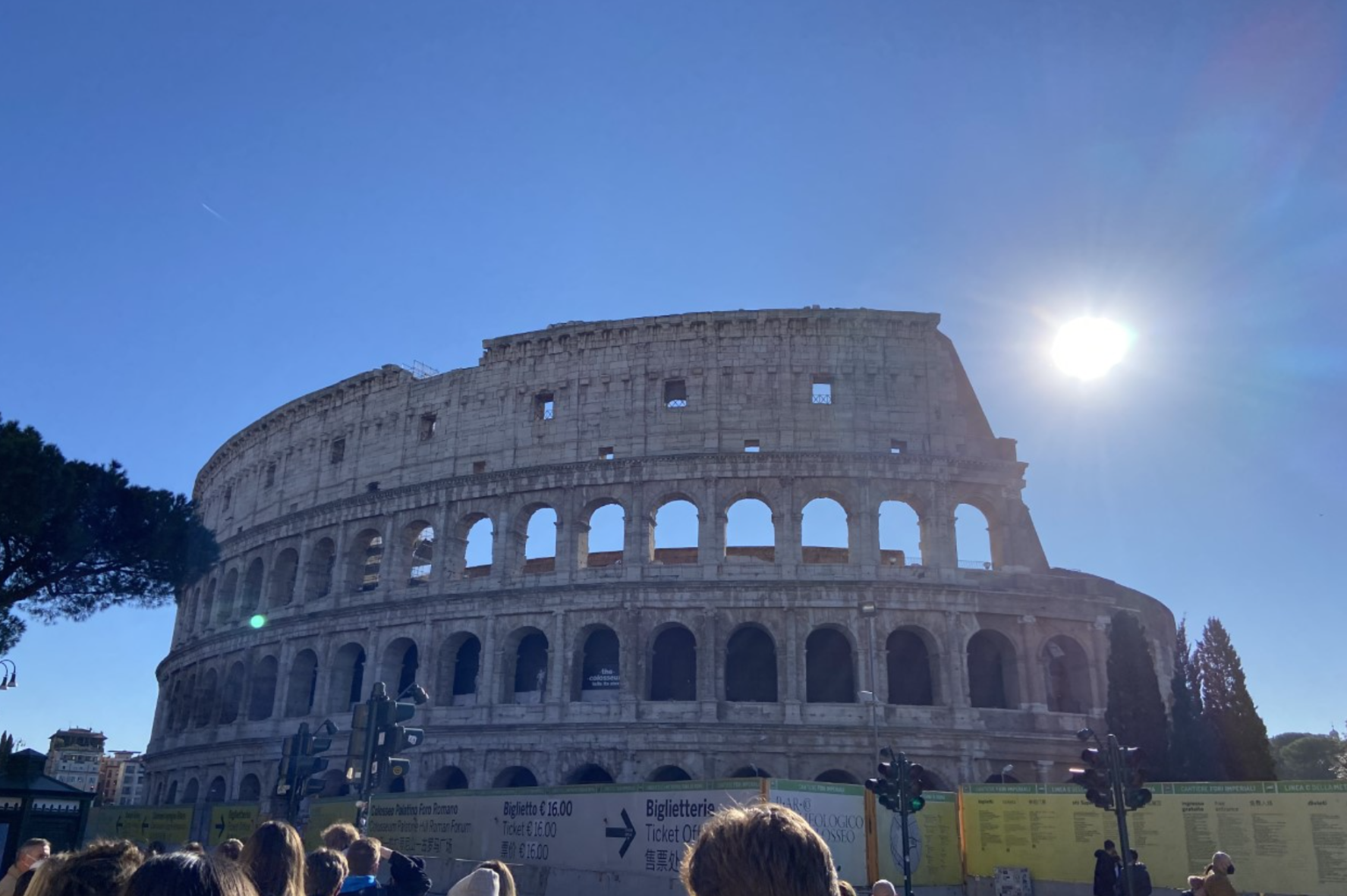
 

Image of the now revealed interior wall, due to the collapse of the outer wall.

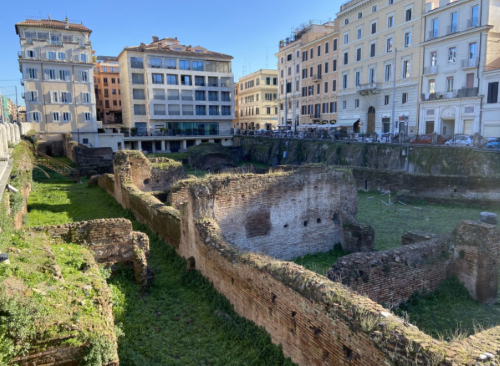
After taking continuing the tour around the top of the colosseum, on our way out of the stadium, we were told stories of the different types of entertainment that would take place here. Interestingly, one of these is speculated to be documented naval battles that would be performed for the audience, where they would flood the floor of the stadium and bring boats inside to act out the given battle. However, there is controversy as to when, how, and even if this display could have been pulled off to a significant scale. Once we left the stadium and the tour had ended, we briefly stopped by the barracks in which the top gladiators would live and train for their future fights. Overall, this was a day full of monumental historical value and lessons taught in engineering and structures that I will never forget!


Image of the foundation of the ancient gladiator barracks and training grounds.
Field Trips!

Vatican Museum Day!

Nicole Harris- Senior Mechanical Engineer


Today our class visited the Vatican Museum, which included paintings, sculptures, mosaics, and lots of awe. My favorite part of this day was looking at the cars/ wagons the pope used to ride in. These vehicles ranged from carriages to Mercedes Benz! Not to mention all of them were extravagant and you could tell someone important rode in them. The engineering that just went into the mechanics of the carriages must have been very detailed in order to ensure that not only the pope was safe, but the vehicle could be moved efficiently and safely. I also really liked all the artwork at the beginning, there were so many paintings of so many different sizes I wasn’t sure where to look first, and this also continued throughout the museum. Every single painting told the viewer a story and it was fun to try to interpret what the artist was conveying to its audience and how that was important in those times. Some of these paintings were larger than life and took up an entire wall! Some had to be in special cases to have them preserved with temperature and light control. Most of these paintings had a style to them that I had a brief knowledge of because I took art history. The way they painted to include dimension, size and general picture was incredibly intricate and amazing. Another highlight of this day was the hallway of maps. On both walls there were maps of countries all up and down. I thought this was especially cool because they didn’t have half the technology we have today and still came up with extremely accurate and detailed maps. Near the end of the museum there were 2 full size maps with what the people back then thought the world looked like which was also crazy because only half of North America had been outlined and most edges were straight. A very cool day looking at everything and learning about this history and engineering!

Old Pope Car

Tapestry Depicting the Last Supper

Field Trips!, Naples

A Day of Time Travel

Morgan Fritz – Junior Civil Engineer

As Grant said we were able to see the ancient city of Pompeii at the base of Mount Vesuvius. Our tour guide took us back in time to the days when Pompeii was a bustling trading hub for those traveling from around the world buying and selling goods. Many things stood out along side the amphitheaters Grant discussed including the housing, activities, and plumbing used in the ancient city. The dining rooms were large rooms full of color that could host up to 15 people at a time, the kitchens used terracotta bricks to evenly heat the food, and there were personal gardens in each house we went were able to see today. The Romans are known for their excellent knowledge in water resources and they used pipes that would get smaller in diameter to clean the infamous dirty streets of Pompeii, something I found very interesting! They also used lead pipes, as we know today these pipes were actually slowly poisoning the aristocrats of Pompeii and explains why they were shorter than their servants and didn’t have a long life expectancy. We also walked through the red light district of Pompeii and discussed the use of pictures instead of language in this area because of the merchants coming from around the world without a common language to speak. Lastly we were able to see Mount Vesuvius from the Forum where we were also shown preserved human and pottery remains.

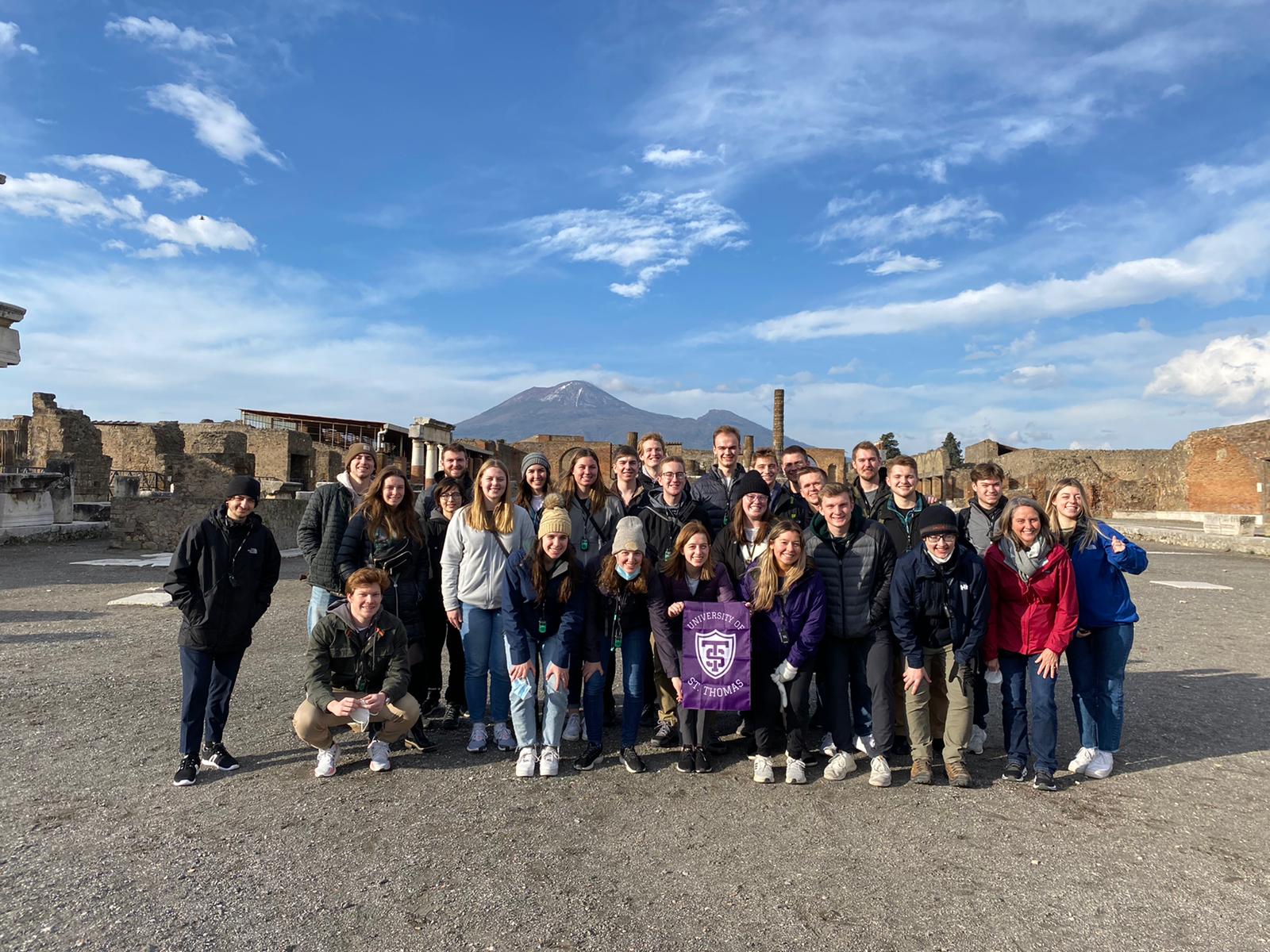
The class in the Forum with Mount Vesuvius in the background.

Field Trips!

A Day in Pompeii

Grant Gregory – Senior Electrical

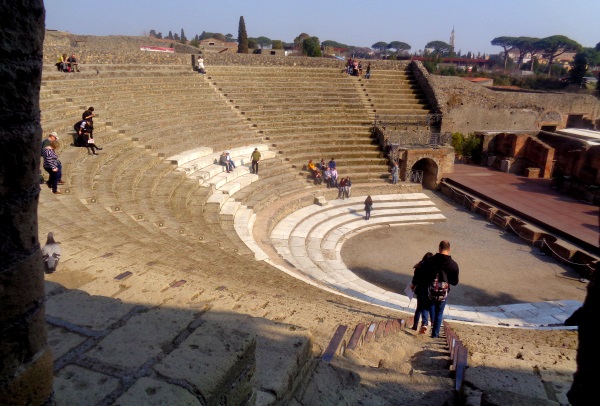
Today started bright and early with a bus ride to Naples, Italy. Just outside Naples is the ancient city of Pompeii. Pompeii is very well known and famous because of the disastrous destruction of the city in 79 AD when Mount Vesuvius exploded showering the city below in flaming rock and meters of ash. We started our tour in the ancient Greek style outdoor theater. Pompeii has three outdoor theaters each of a different style. The Greek one is the smallest and the oldest style being a single row of seats and rather small capacity.  Much of this theater is preserved and still intact today. This ancient Greek style theater is not in use or open to the public to view. From there we went to the more modern Roman style amphitheater. This theater is the half circle style outdoor theater that we think of today as an amphitheater. This style boast several improvements over the Greek style in that it has two levels of seating so its capacity is much higher. It also has been designed in such a way that actors speaking toward the audience have their voice bounce of off the hard stone and amplified. This allows the whole audience to hear the actors even if the actors speak in a normal tone. The final style of theater is the full Roman amphitheater. We unfortunately did not have time to see this one. It is a smaller version of the famous Roman Coliseum. It is a full oblong shaped theater with a huge amount of seating and retractable roof for rainy days.


Below is the Half Roman style theater:

Theatres in Pompeii: Amphitheatre, Big Theatre and Small Theatre


Field Trips!

Walking Tour of Rome!

Bjorn Eggen – Sophomore Mechanical

Today, we toured the Jewish Ghetto, the Theatre of Marcellus along with other ruins, the national monument and finished by touring bridges along the Tiber river.

The Jewish Ghetto is a Jewish neighborhood in Rome with lots of Kosher restaurants and shops. It was established in 1555 by Pope Paul IV to isolate the Jews of Rome. The conditions in the Ghetto were horrible with severe overcrowding and unsanitary conditions. Visiting and learning about the Jewish Ghetto reminded me of the redlining and racially restrictive laws in the United States.

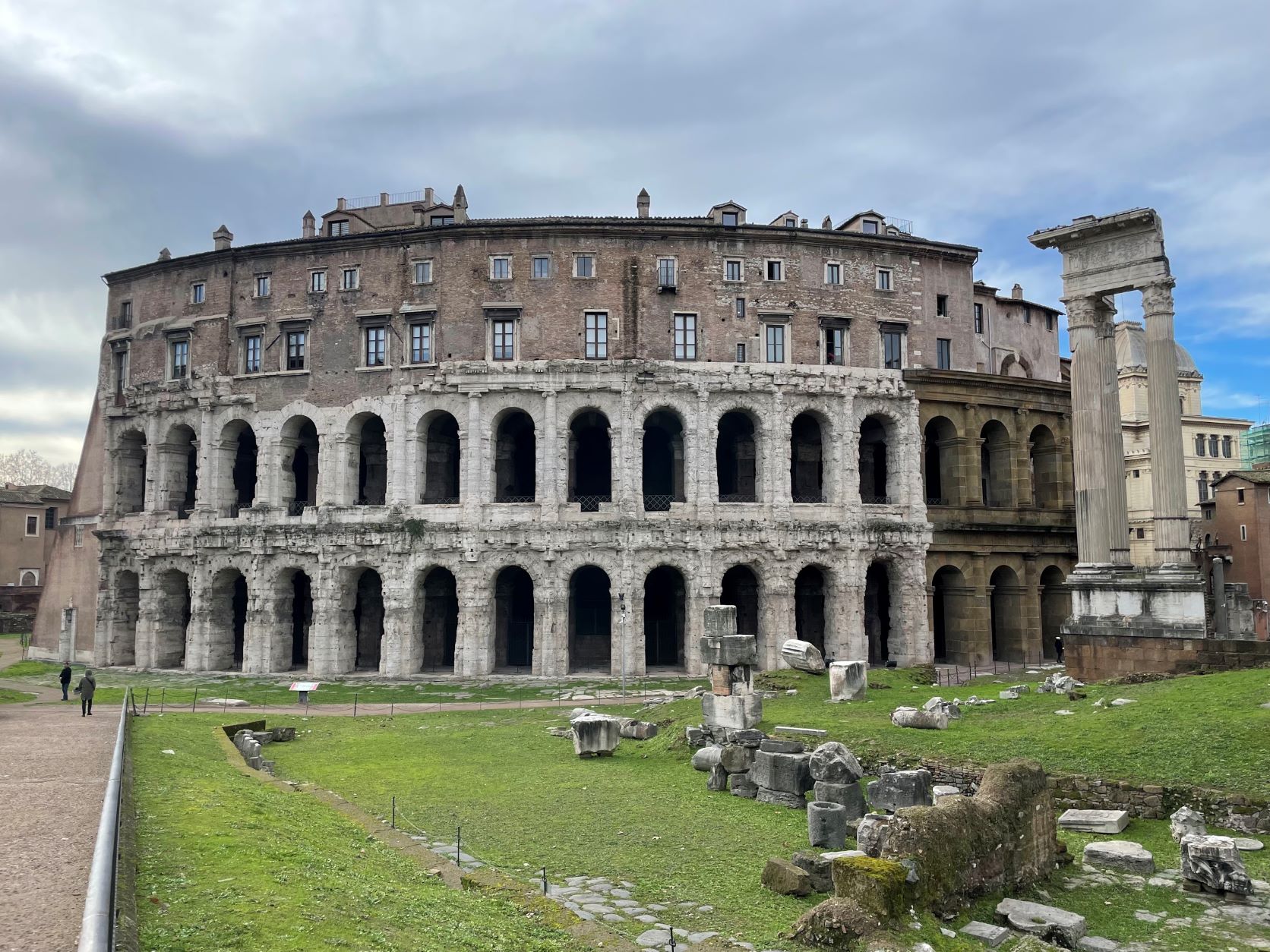
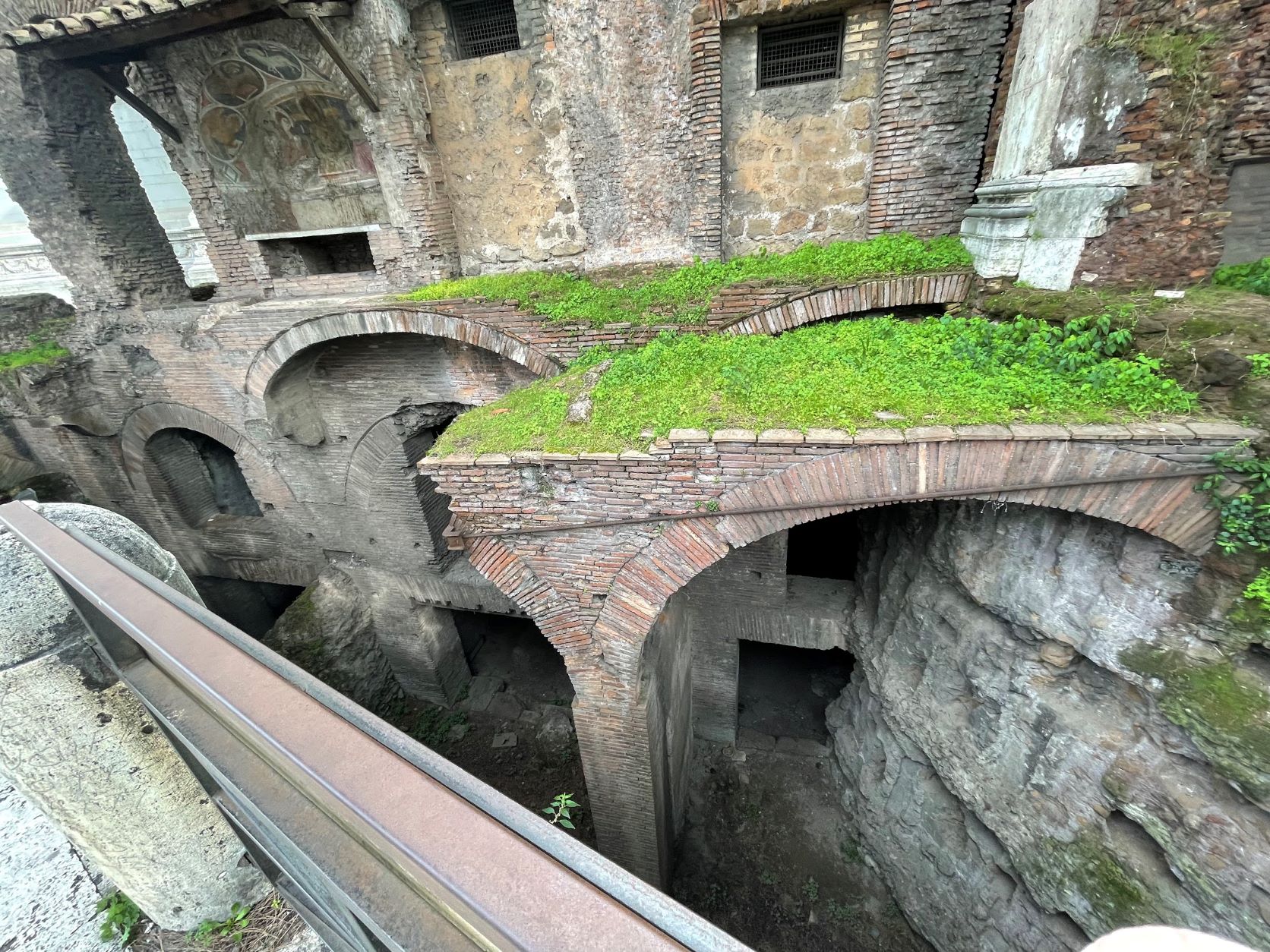
Next, we visited the Theatre of Marcellus, which was a theatre with a design similar to the Colosseum that was built 2000 years ago. This building was a good illustration of how modern Rome is built upon old buildings. Beneath Rome, there are ruins of a previous city. There is currently a new underground metro line being built, however, it is extremely difficult since archaeological ruins keep getting discovered as they are tunneling.

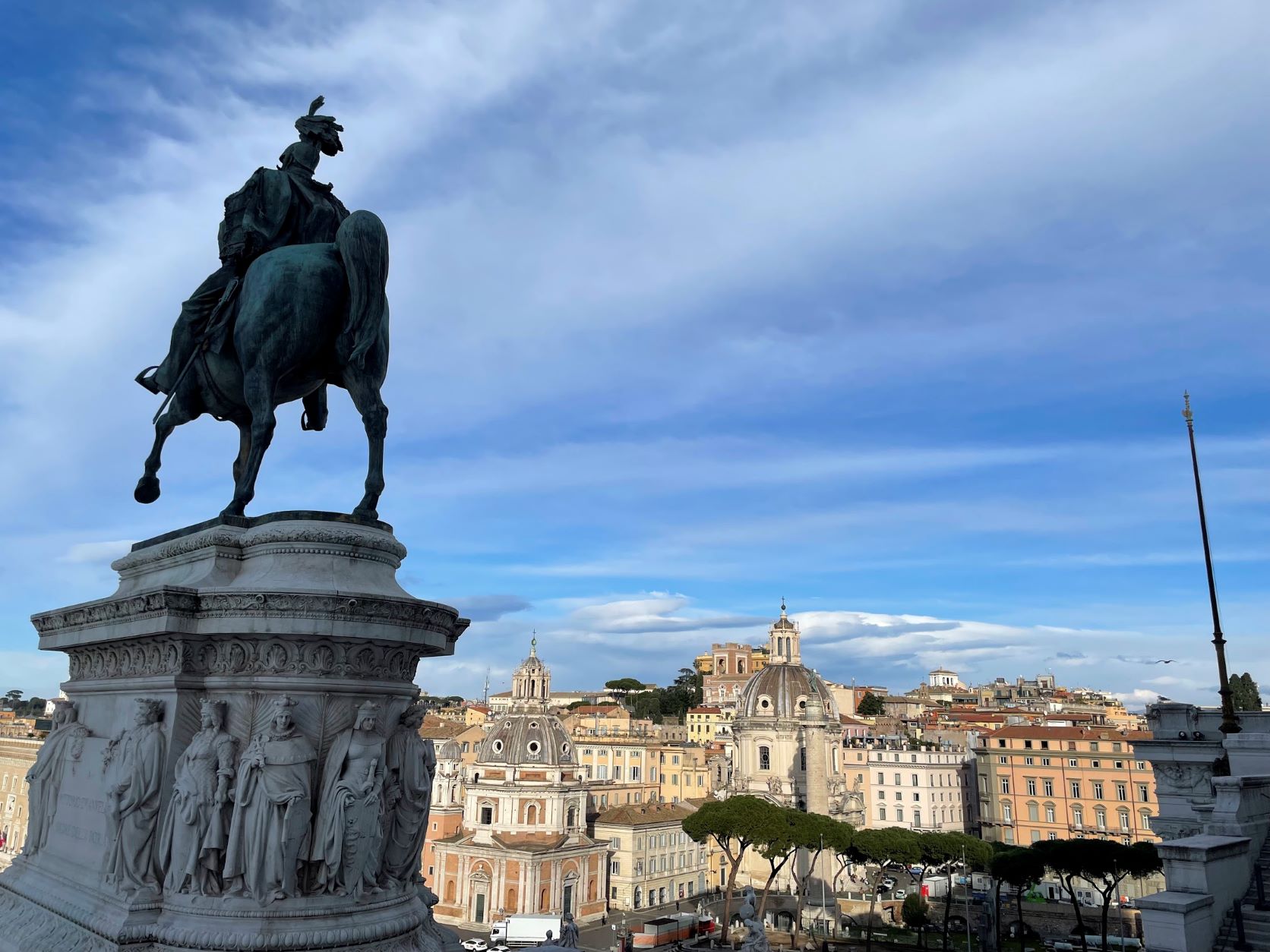
Next, we toured the National Monument in Italy, which was built after World War 1 in celebration. The most striking feature of this monument is the gigantic horse statue. The views from the monument were also stunning.
We finished the day by walking along the paths on the bank of the Tiber river looking at bridges. Our professor, Deb Besser, a former bridge engineer, talked about the different bridges.


Theatre of Marcellus.

Ruins seen from the streets of Rome

Horse statue at the National Monument

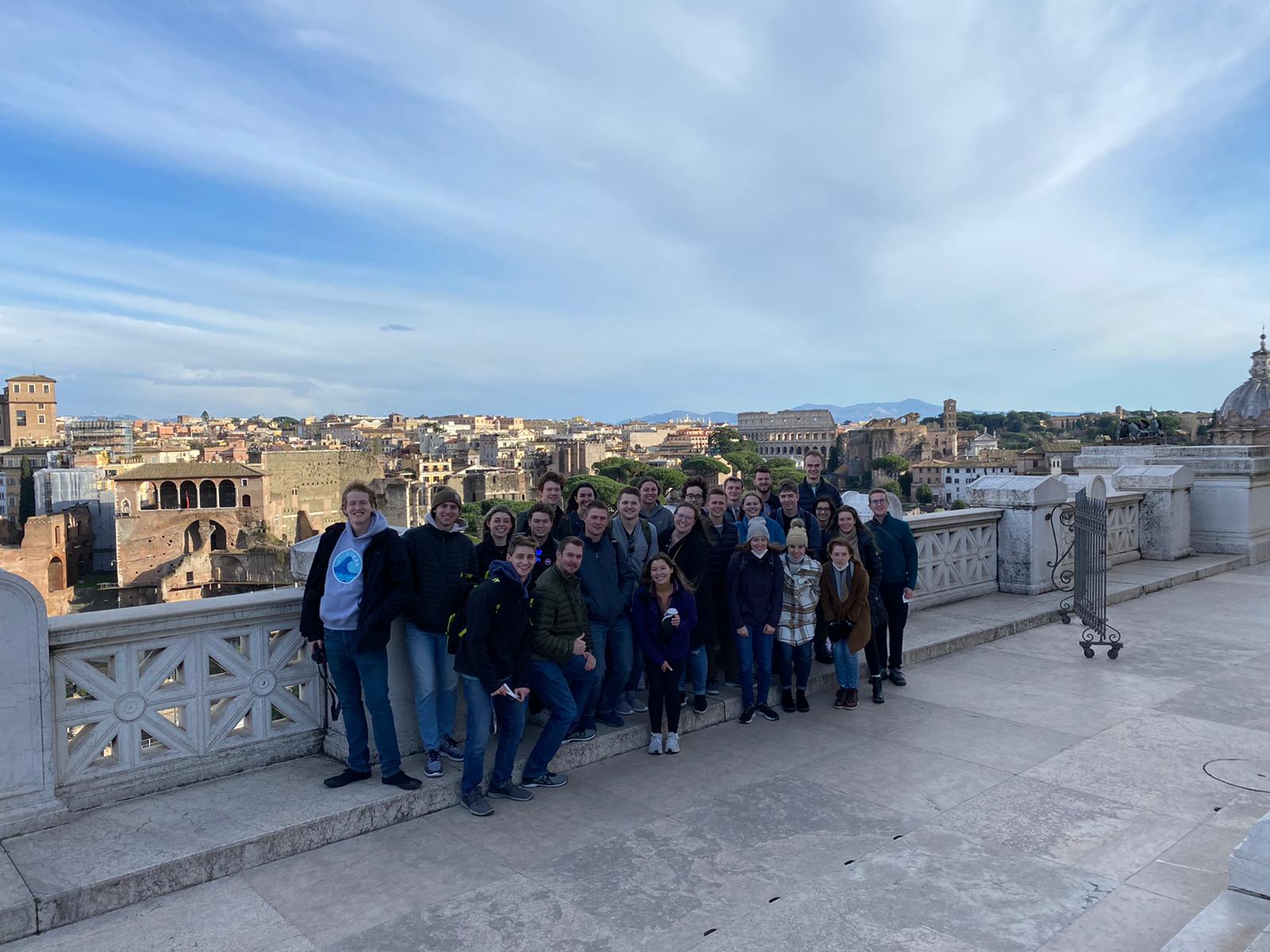
Group photo from the National Monument (Colosseum can be seen in the background).


Field Trips!

Eric Danner – Junior Mechanical Engineering Student


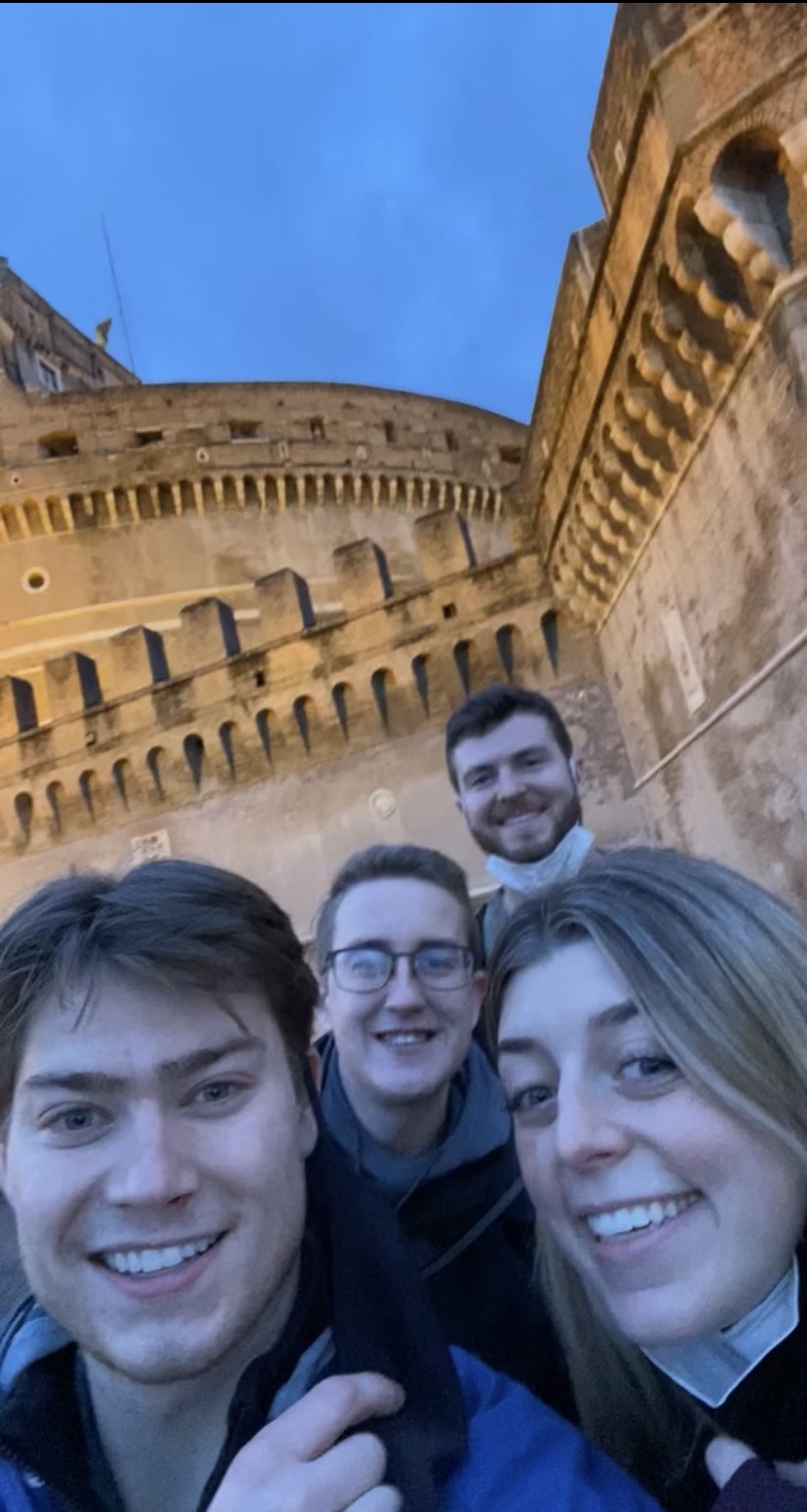
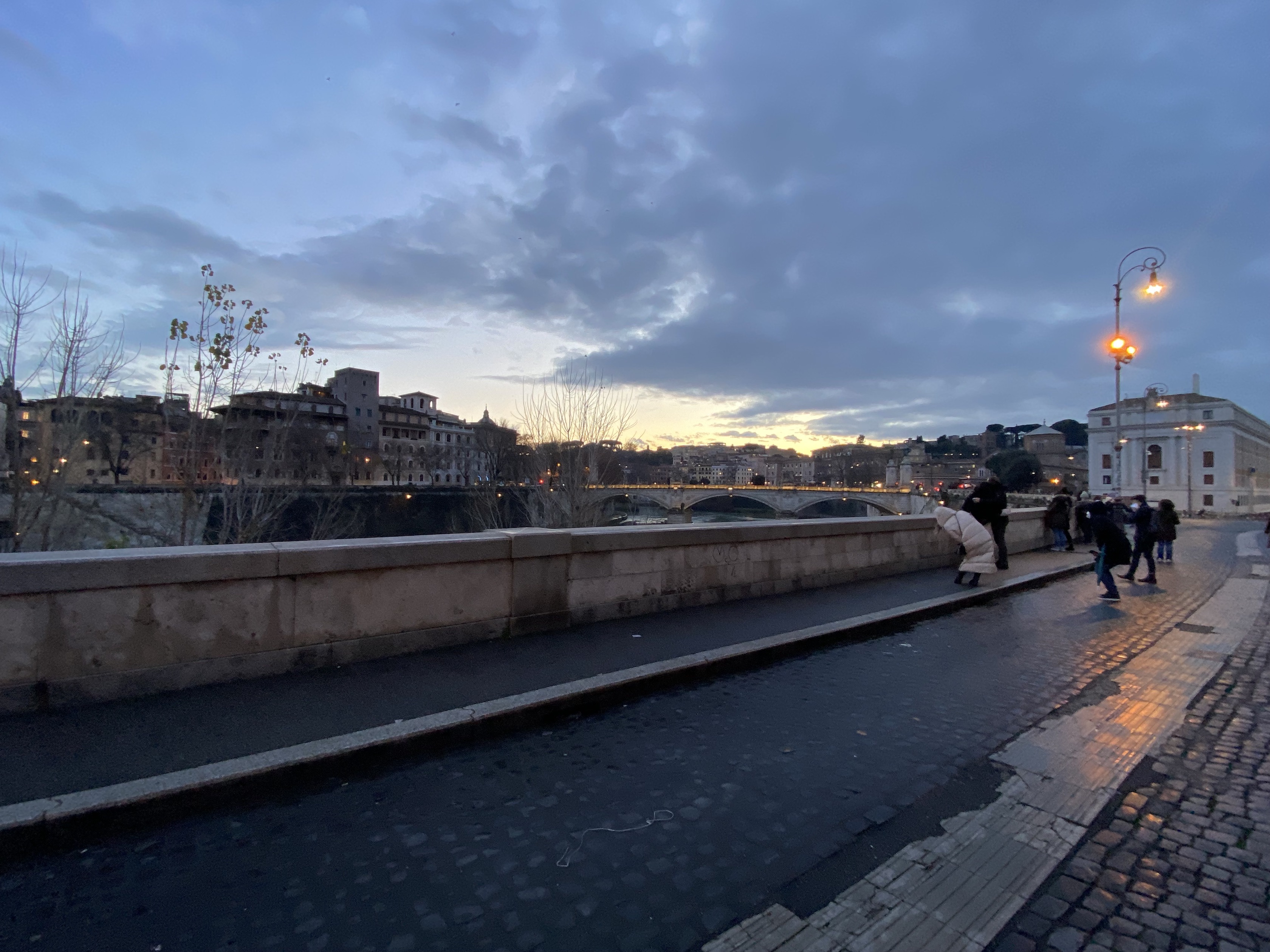
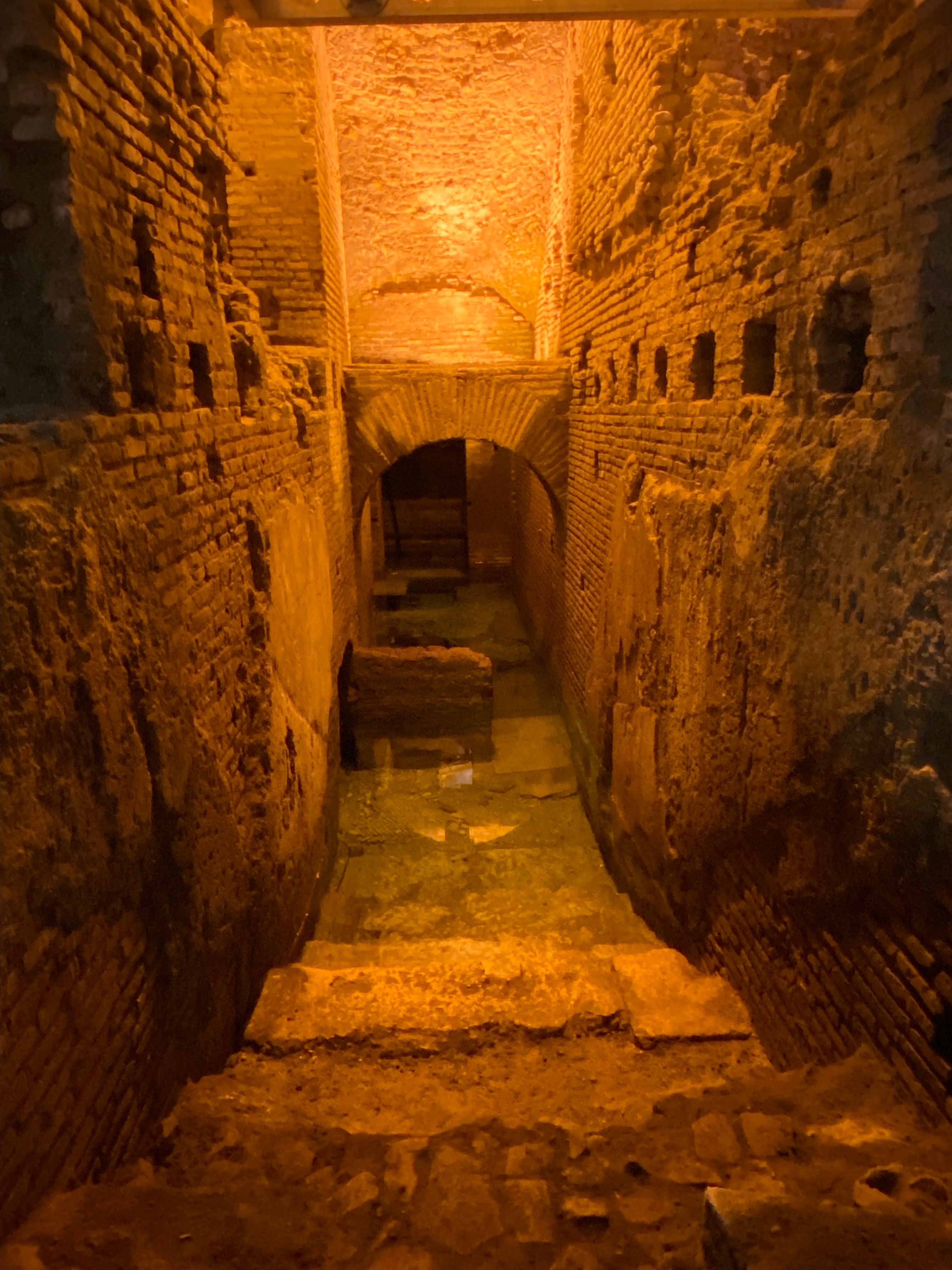
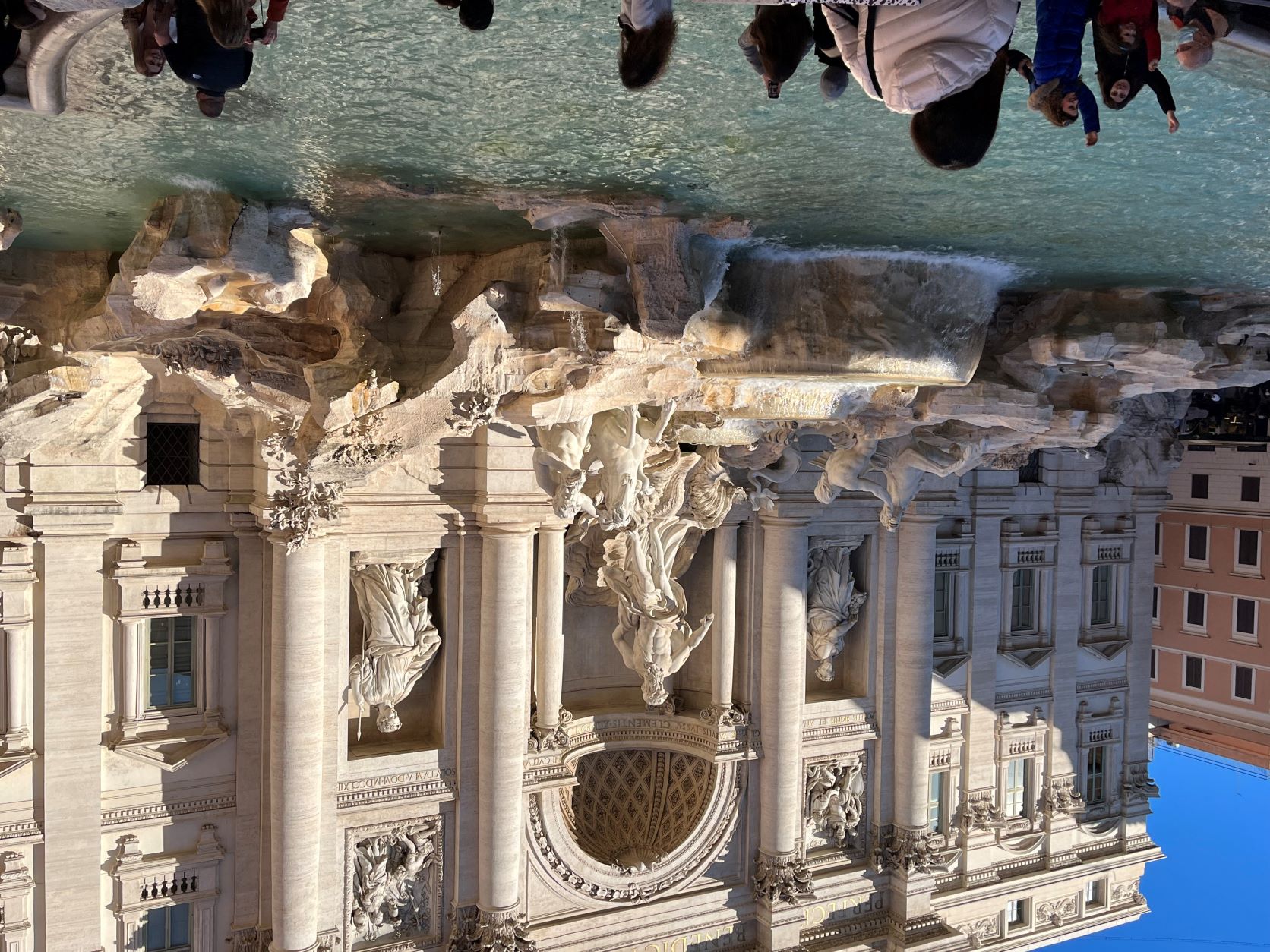
Today Rome finally set in… Upon waking and opening up my balcony window, I was met with pouring rain, a beautiful sight as compared to snow! I rejoined with my group from the previous night and trudged through the rain to the high-end shopping district of Trevi. I did not find any items to purchase, however, I found the best traditional Gelato shop! I was able to sit and have a cappuccino and try the vanilla gelato (Amazing!). While we sat and enjoyed our treats, live music poured up the street, complete with a man singing acoustic Metallica. Continuing with the theme of water, my group and I decided to adventure underground in the Trevi district. We were able to go below the street level down a staircase and check out the hidden aqueducts that fed the city from below. At the site, we saw the original stone foundations of the homes that stood here thousands of years ago. Additionally, the aqueducts that flow to the nearby trevi fountain and their storage reservoirs are found deep below the city at this site. It was fascinating to see how the new and modern city was built right on top of ancient Rome. A complex network of I-Beams and trusses allow the modern high-rise apartment buildings, restaurants, and shops to exist above. Finally, my group and I ventured back to the Castel Sant’Angelo and stood by the Tiber River. We watched the sun engulf the bridges connecting the Tivoli to Prati and the St. Peter’s basilica and its statue-lined driveway while two amazing musicians played on the shore. Overall, today was an excellent day full of culture, learning experiences, and new friendships!


Best,

Eric Danner

Field Trips!

First Day of Class and a Few Added Adventures!

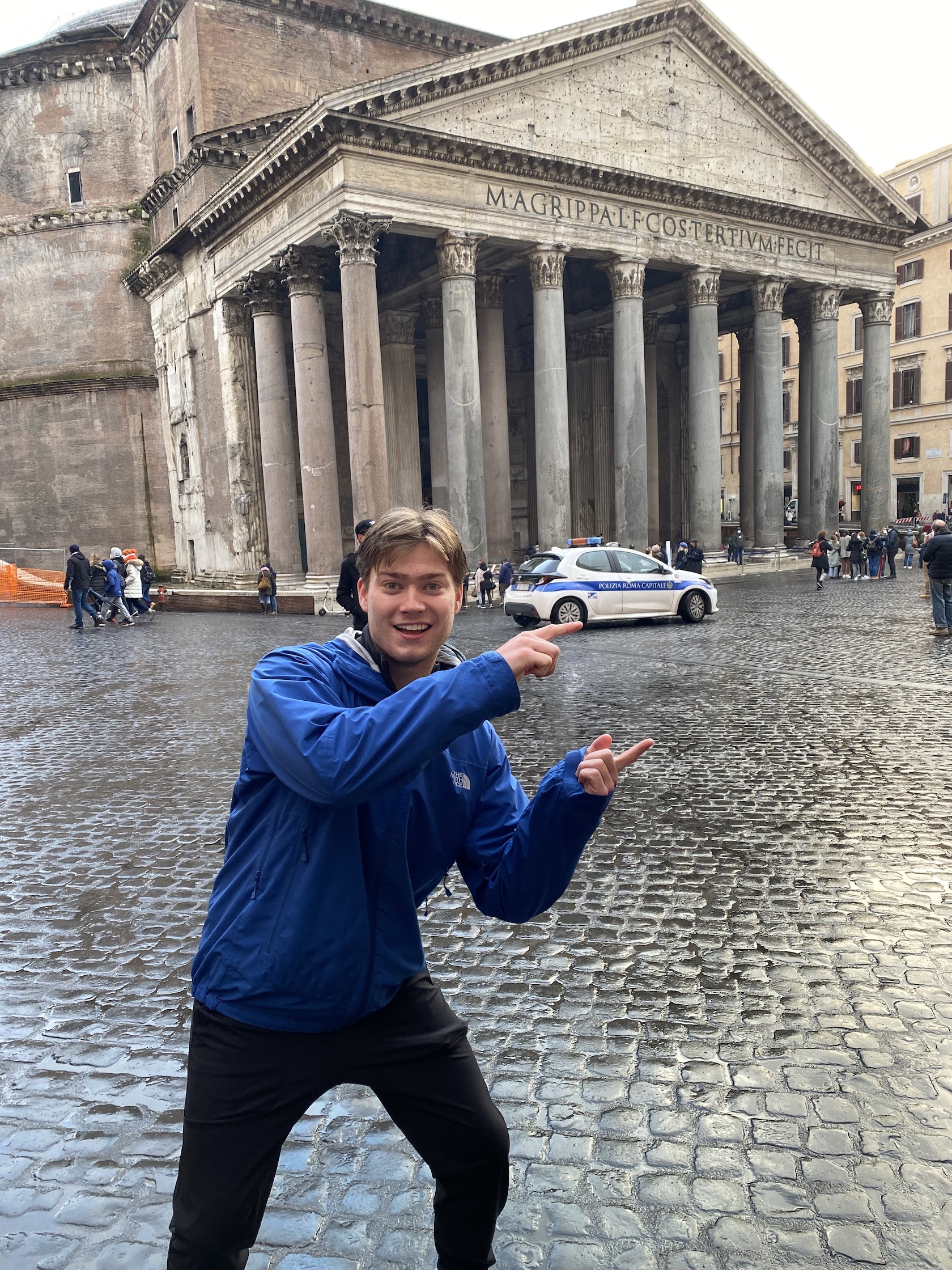
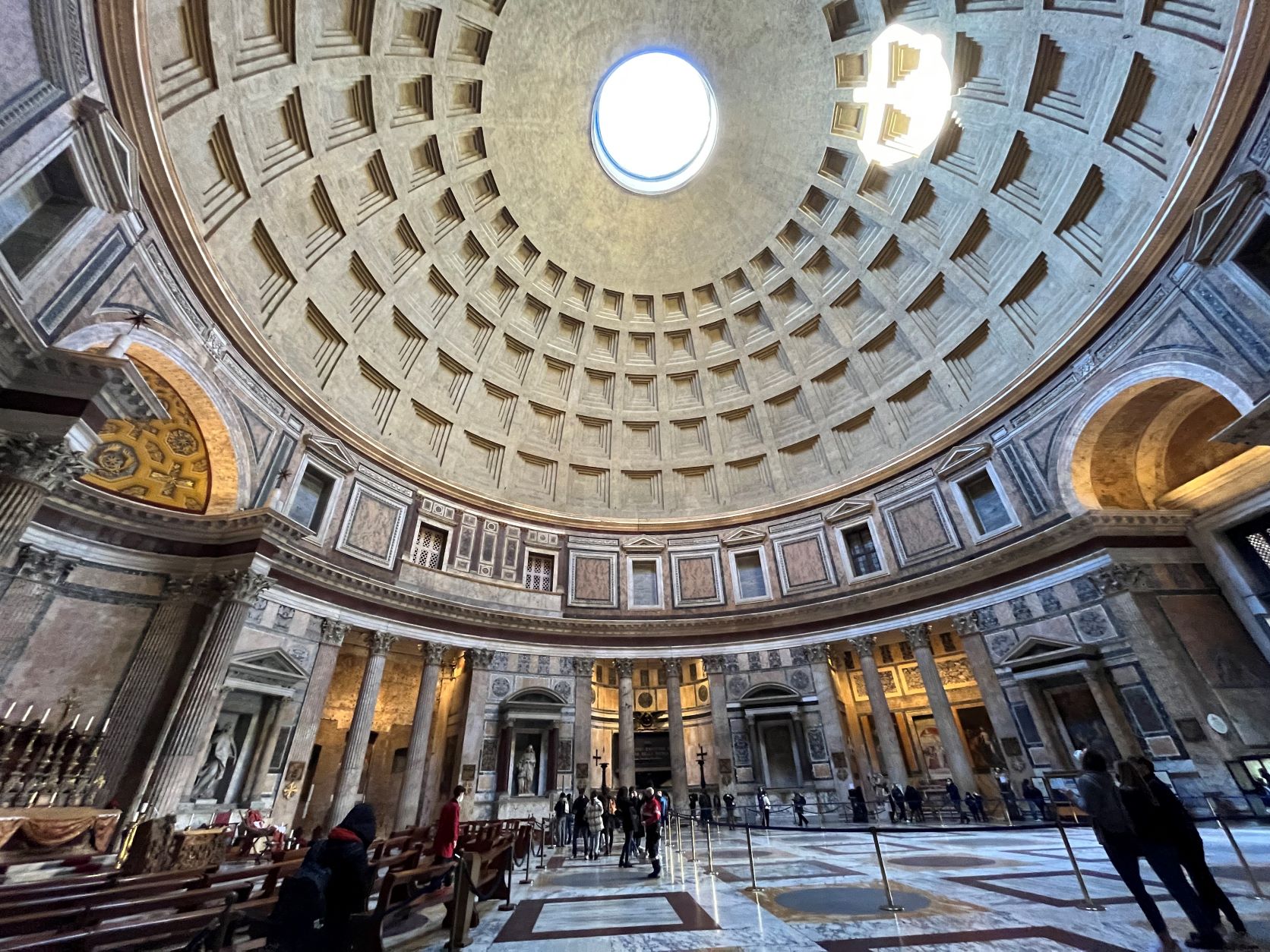
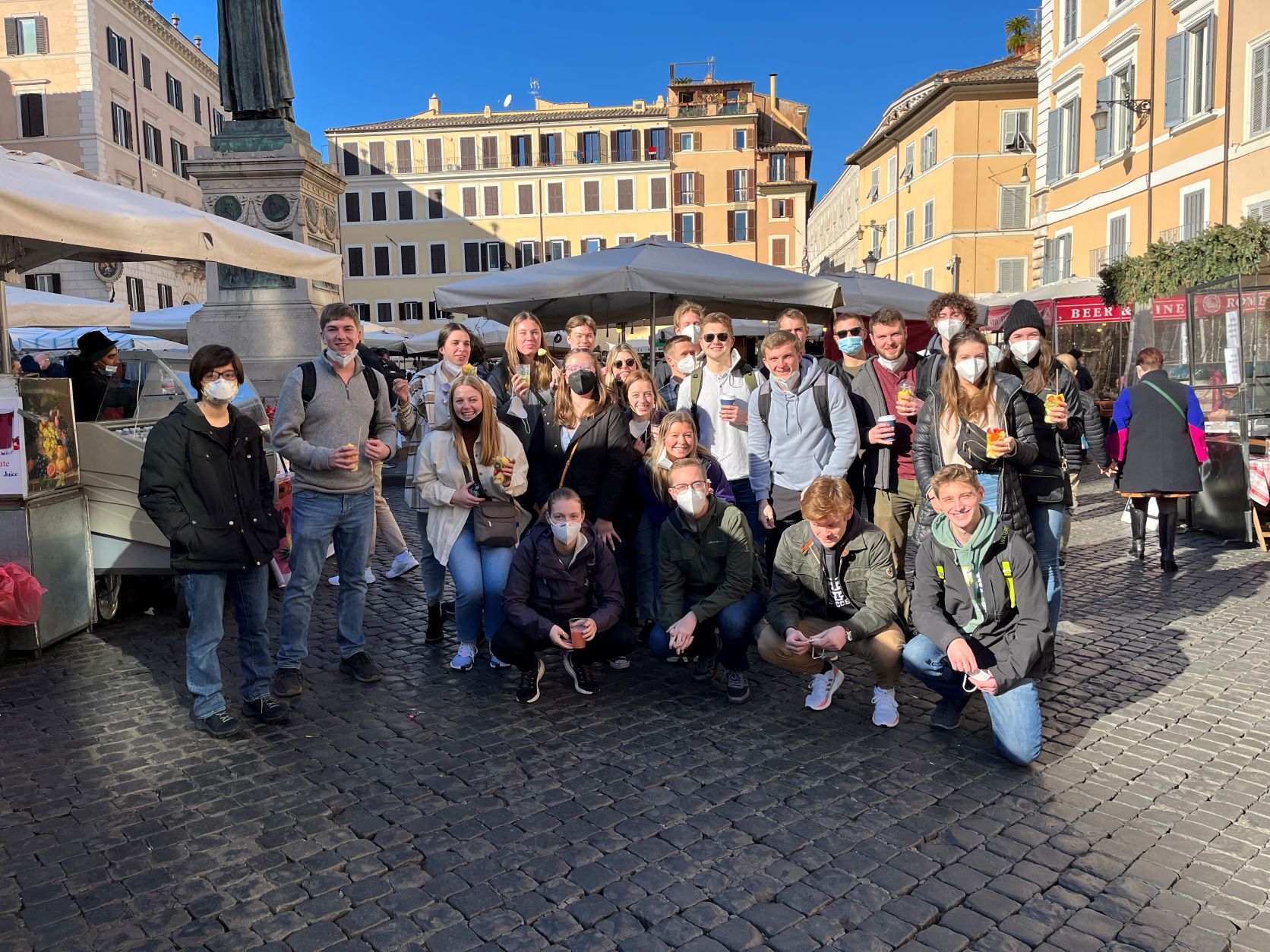
We started off our day by meeting Paulo (he is from AIFS helping us with our trip) and he took us to the study center where we will be having class while in Rome. After conversing with everyone, it seems that the amount of sleep we got last night helped cure our jet lag, and we were ready to take Rome by storm! Once we got to the study center, we were able to meet up with Dr. Besser and have a pretty productive first day of class. Although class only took about an hour (us students were happy about that) we were lucky enough to get a lot of information in as well as a great presentation on the Pantheon by Kate Achenbach, Alex Thordson, and Max Meves. After class we went our first adventure of the trip. After stopping at a local market (most of us bought some fresh fruit) we visited the Plazza Navona, Chiesa Di Sant’igazio Di Loyola, the Pantheon, Trevi Fountain, and the Spanish Steps. All the sites were great and we made sure to take plenty of pictures! We were able to split into smaller groups later in the day and I went with Dr. Besser, Kate Achenbach, Emma Sullivan, Bjorn Eggen, and Morgan Fritz. We got to see a few extra sites including the Colosseum, the Roman Forum, and some other cool looking buildings on the way! My group was able to finish the day with a whopping 10.7 miles of walking. Although we might be a little tired, we are all still ready for all Italy has to offer!!

-Kyle Bratvold


Travel

We have arrived in Rome!

We have started the trip off strong with 2 hour long issues at Delta ticketing! Getting through security at MSP was a breeze (surprisingly) with a line that moved quite fast. Our flight from MSP to Amsterdam was an hour shorter than expected, which was a nice surprise, at a whopping 7 hours and 11 minutes long. Dinner in flight was a choice between 4-cheese ravioli and BBQ chicken… the ravioli was the correct choice I have heard. The sad general consensus of sleep for this flight was that not many people were able to fall asleep even with sleeping pills but I was not one of these people, woohoo! Once landed in Amsterdam, many of the group were relieved that the bags were transferred from one flight to the next without having to recheck the bags. We had an hour to spare so Emma Sullivan and I grabbed a cappuccino to try which we quickly realized was just straight espresso with frothed milk which was not exactly the expectation. As we were flying on the second leg to Rome, I had watched a movie and once it was completed, I looked around and realized I was one of the only people awake! Luckily, many folks woke back up for the beautiful views of the Swiss Alps. We landed and of course, took a bathroom break before everyone grabbed their bags that made it allllll the way to Italy. We were all a bit shocked when we were introduced to Paolo and Dr. Besser split from us but we somehow made it to our lovely apartments. For myself and five other gals, we were shown what to do in case of emergency and are now just resting a bit before grocery shopping and dinner! It has been quite an interesting day and I’m glad we have officially made it!! Let the adventures begin…

Kate Achenbach

Travel

Getting Ready!

With the holiday season wrapping up the excitement of the general population has subsided, but not for us! Today is the day that we leave for Italy. Preparing to depart has not gone without its bumps. As required by the Italian government, a PCR Covid-19 test must be completed and result in a negative within 72 hours of entering Italy or a rapid antigen test within 24 hours. Many of us scrambled to find available time slots to receive the test and others had to deal with cancelled appointments. Unfortunately, a few members of this group will be arriving late due to Covid-19 exposure or for testing positive. Although we have all taken extra precautions to isolate ourselves, some things aren’t easily avoided. But we look forward to having everyone together! Tutti insieme! Additional measures put in place in Italy is the use of KN95 masks indoors and outdoors. This is different from here in the US, especially in Minnesota, and finding these masks meant we had to resort to Amazon or dig deep in our local hardware stores.

We are all excited to explore more of the world these next three weeks and cannot wait to share our experiences.

Buon viaggio – Mandy

Field Trips!

We are headed to Rome!

The students in ENGR 271 Roman Structures, Engineering & Society are headed to Rome! We began our acclimation and knowledge building over the summer with readings, online discussions, and research-curiosity-projects! A key text that we have built a Roman engineering foundation upon is Bill Addis’s “Building: 3000 Years of Design Engineering and Construction”. Over the fall semester our Roman engineers have been meeting in small groups to start structural analysis on seminal structures; we have had a survival Italian language mini-course; and we have started our class discovery on the intersection of engineering and society. Our hard working, curious students (and instructor) are ready to go! A presto, Rome!