Field Trips! – J-term Abroad: Roman Structures, Engineering & Society - Page 5
Browsing Category

Field Trips!

Field Trips!

Villa d’Este in Tivoli

Hello all,

Today we met up as a group at the UW Rome Center, loaded up on a bus, and headed for Tivoli, Italy for a day trip. We first went to Hadrians Villa (See Emm’s Post for more on that!) and then headed into Tivoli for some pizza. I got a spicy salami slice seen below at a place called Alice Pizza, it was fantastic:


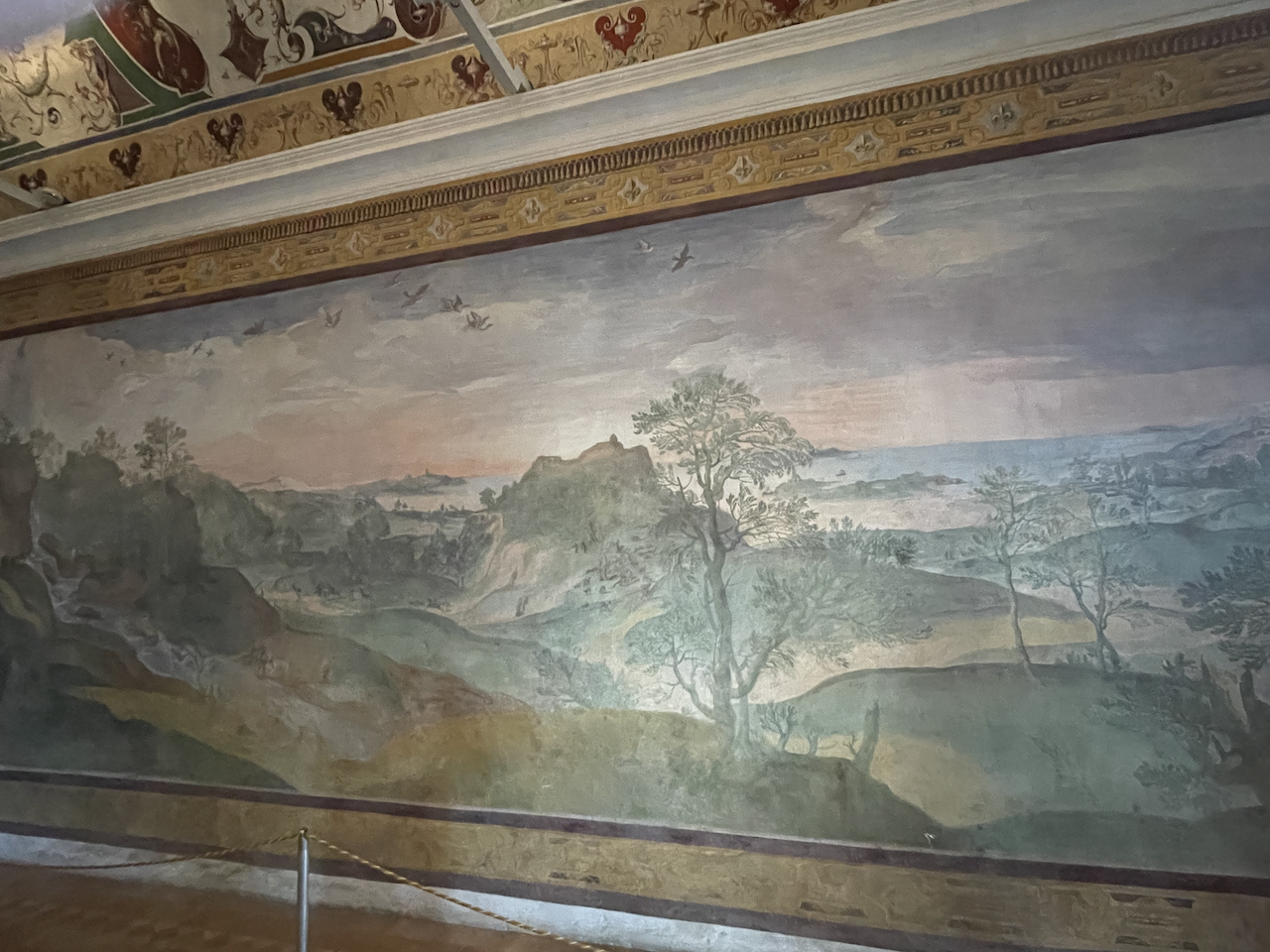
After lunch we then entered the Villa d’Este. This was a renaissance villa that is known for its massive terraced hillside garden. The villa was commissioned by a Cardinal who was in the same family as Pope Alexander VI. After Checking in, we entered on the upper level of the villa, which has since been converted into an art gallery museum that was filled with modern art and renaissance frescos on the walls and ceilings. Our tour guide pointed out that these frescos were popular in an age where windows were uncommon and were a way to make a room feel bigger while also giving a “view of the outside.”
The real reason to see it though was the garden down below the main level of the villa. When we exited the villa into one of the higher level terraces, the view down below was enough to take your breath away.But we first had to hastily head down to a water powered organ that only plays every 2 hours. It was beautiful and made the view all the better. From above the main level shown on the right. In the distance you can also see the edge of the terrace overlooking the valley down below.

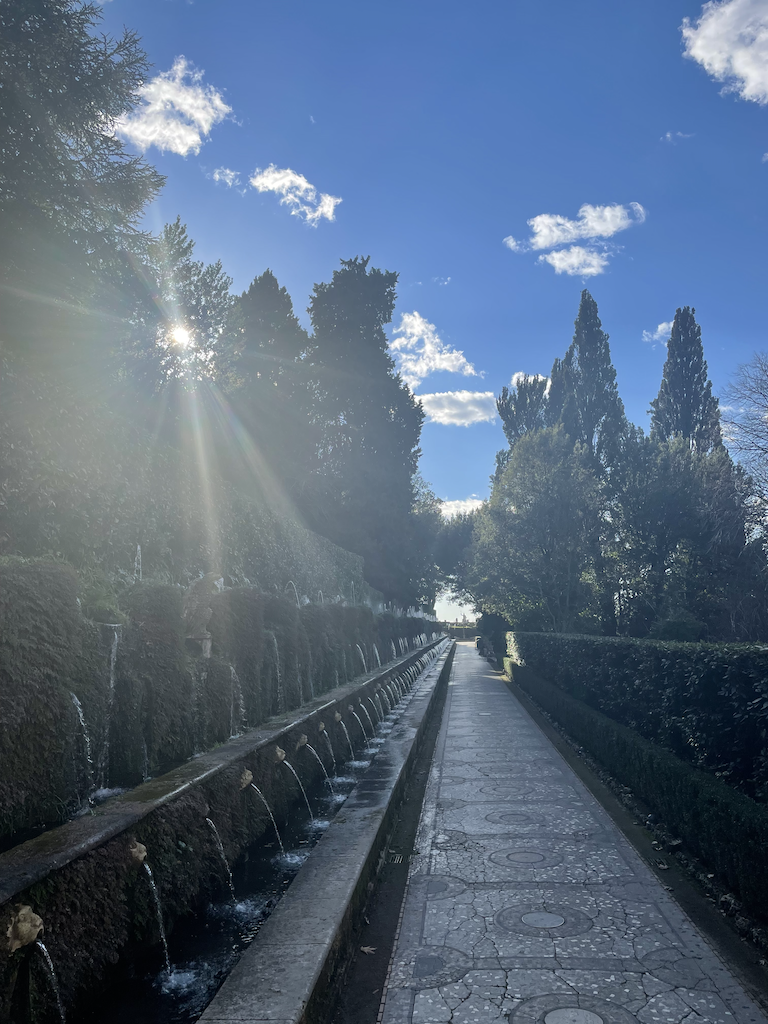
There were so many incredible fountains to look at in the garden. The water system used to support so many fountians is truly an achievement of engineering. My favorite was a fountain dedicated to Neptune that was originally designed by Bernini, but has since been remade (shown below on the left). On the right is the wall of the hundred fountains. This three tiered fountain represents the rivers Albuneo, Aniene, and Arcolaneo and meet at the fountain of the Rometta. Each of the hundred fountains takes on a unique shape of its own.
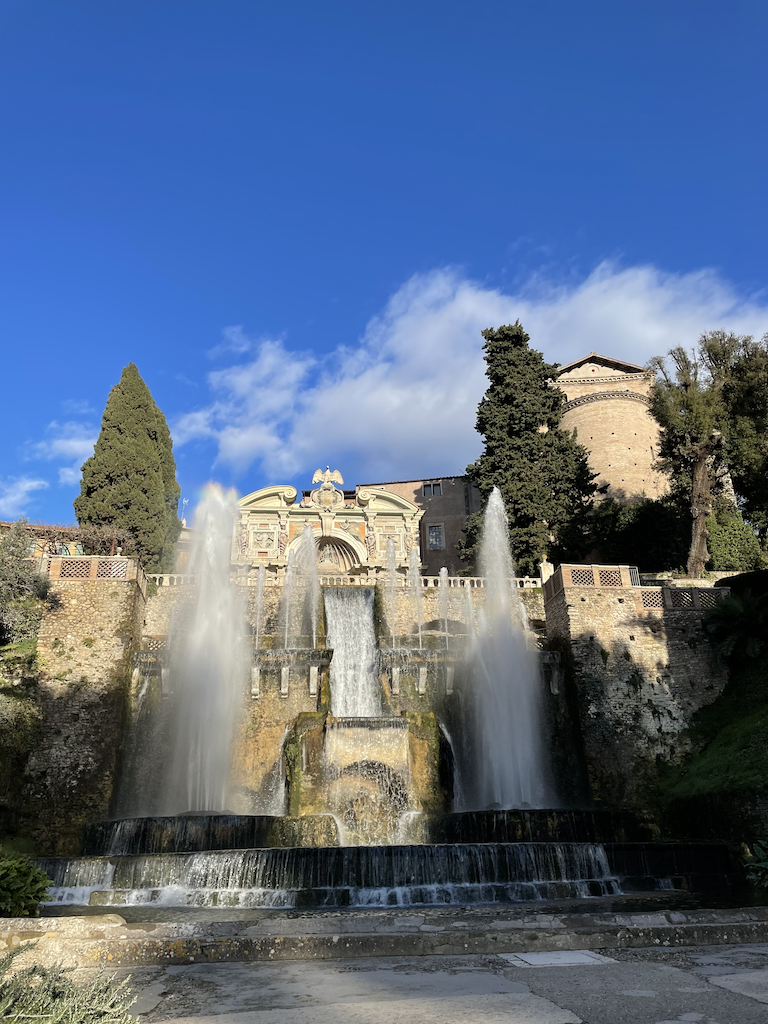
 

The fountains, the Garden, and the elevated view of the valley down below the terrace combined to quickly turn this destination into my favorite part of the trip! Truly a day to remember

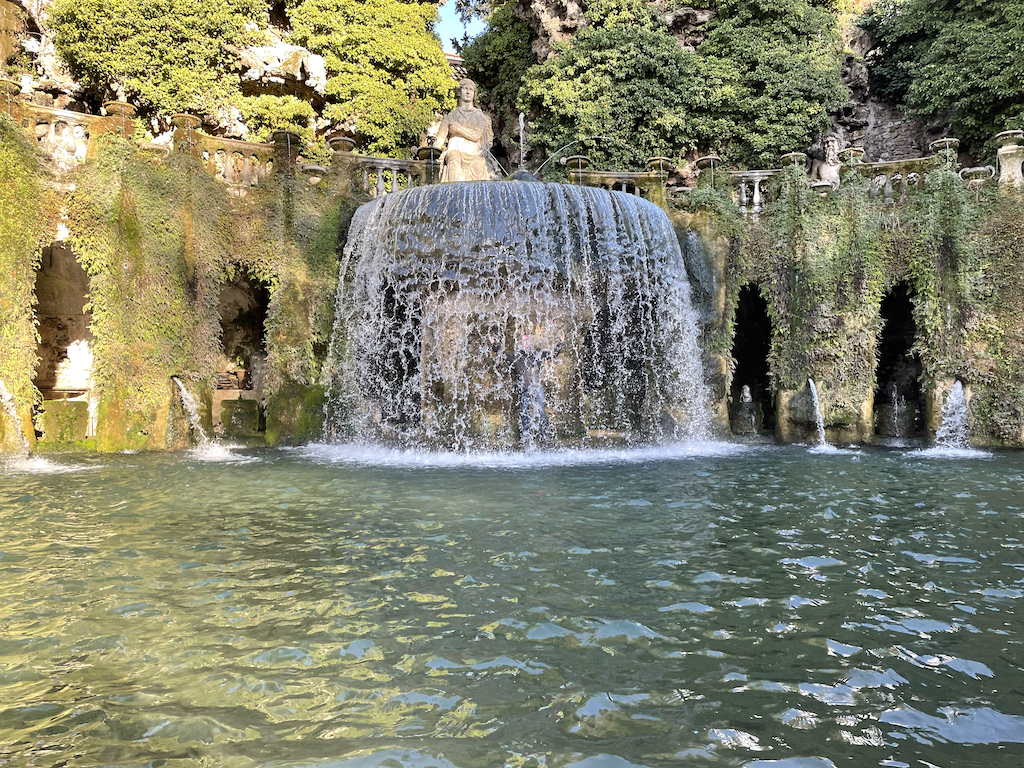
I’ll leave you with one more picture of the oval fountain, named for its oval shaped pool. If you look very closely I’m hidden in the picture below!
Ciao!

-Alex

Field Trips!

Borghese and Monte Mario

The day started as a typical Sunday morning, by sleeping in. It was decided by a few people to attend mass at the Vatican once again at 10:30. However, unbeknownst to all, the Pope had a special mass of his own that started an hour before ours at 9:30. The wait was unknown to those who planned on 10:30 mass. After an hour and a half came and went, and the special mass had ended, the Pope came out and did his weekly Angelus speech. Enjoyed that for the duration it was.

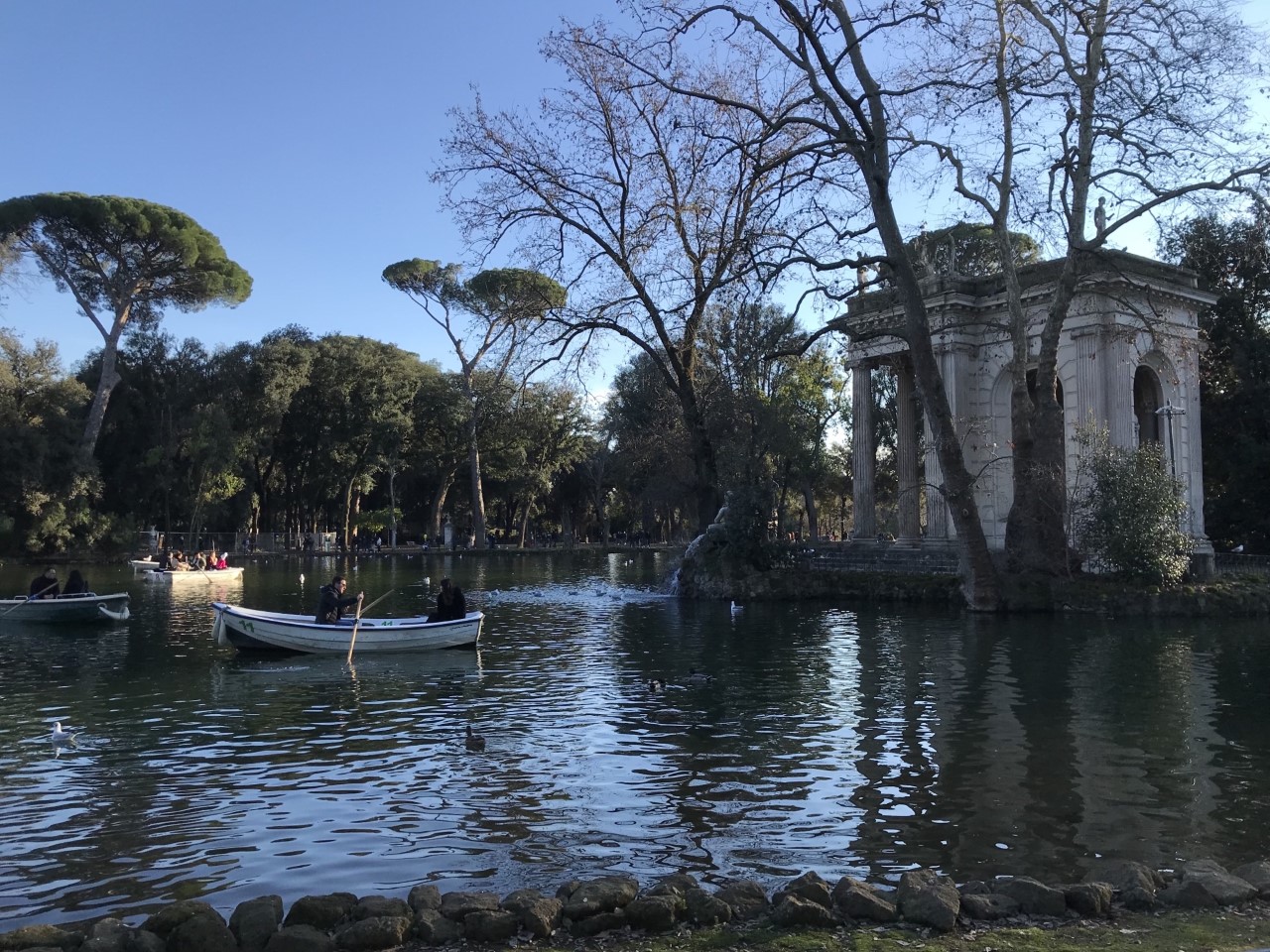
Then, the Borgo Angelico apartment with a few others went and journeyed to the park of Borghese to the Giarino del Largo. An artificial pond where we could rent rowboats for 20 minutes for only four euros. The lake was small, complete with ducks, geese, seagulls, and the Temple of Asclepius in the center. Unfortunately, the line for the boats was too long so we decided to hang around, watch and feed the ducks, walk around the pond and enjoy the scenery.

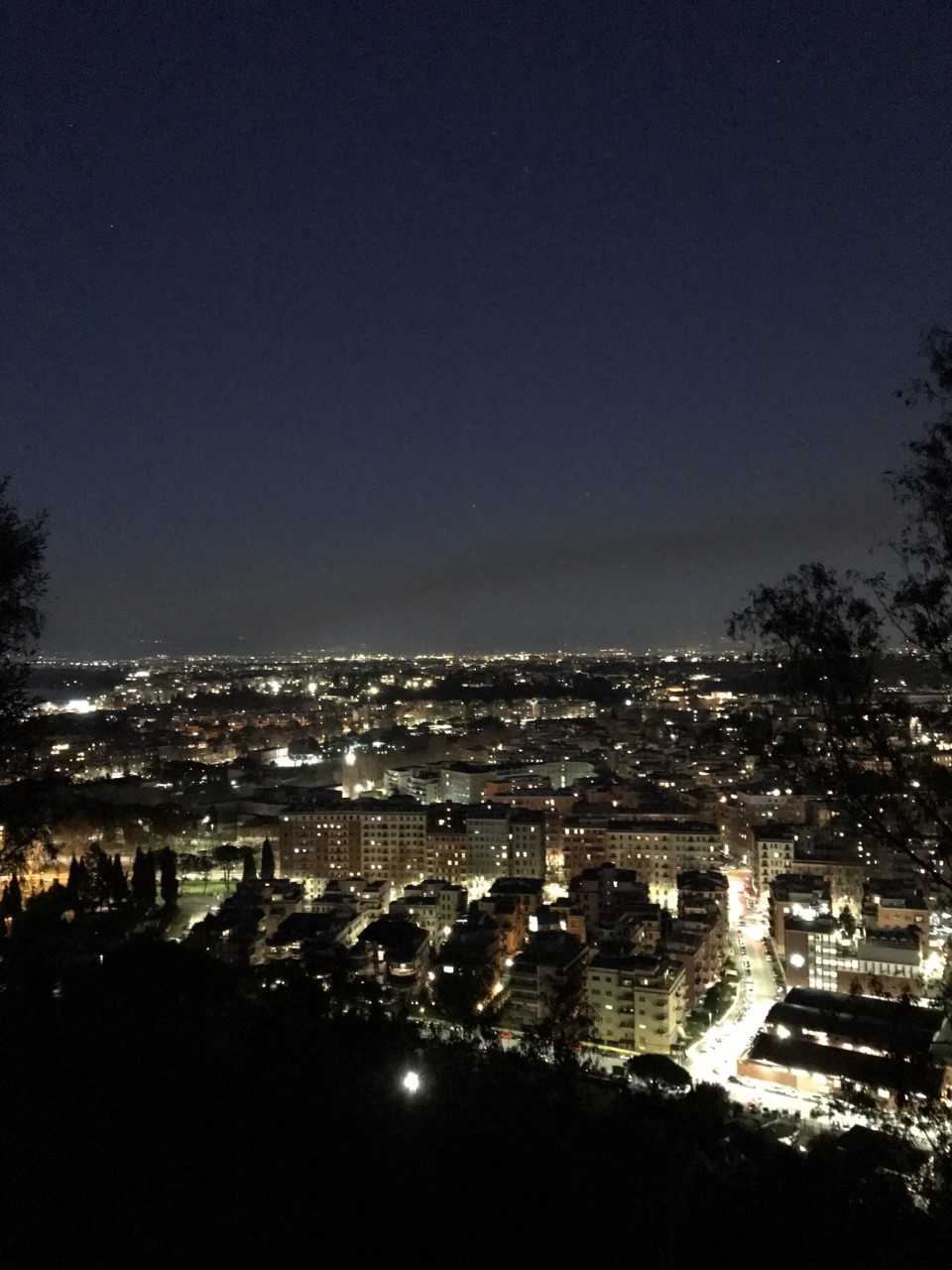
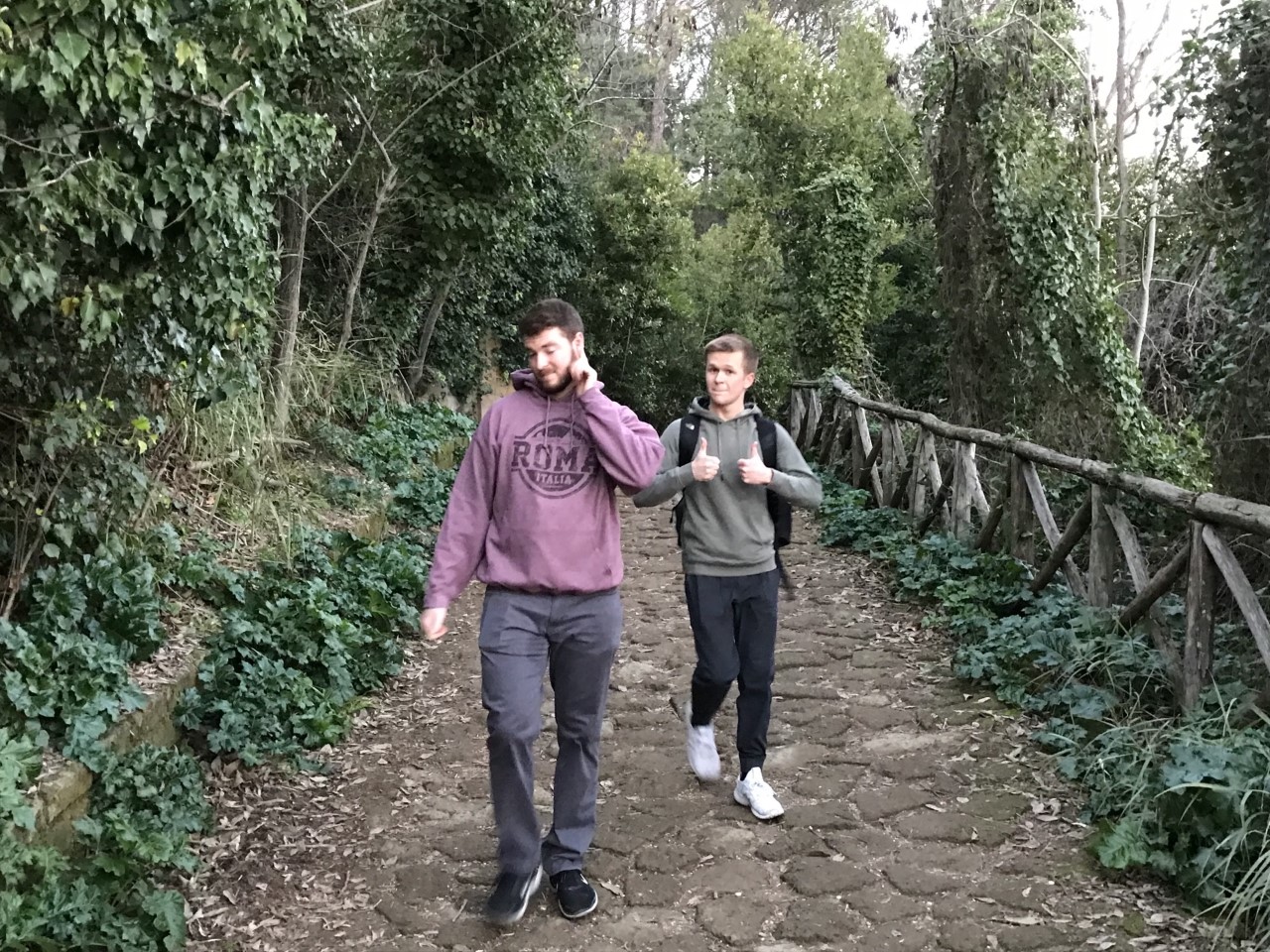
After the pleasant walk around Borghese, we wanted to go on a hike to Monte Mario, a large hill located north of Vatican City with amazing scenery. The bus and metro lines were pretty much the same time to get to the hill so we chose to walk. Walking is better and we get to see a lot more on our way there. We ended up hiking the hill and getting to the top just as the sunset, so it was a perfect moment. Even when the sun went down, we stayed on the hill talking and enjoying the view of Rome.


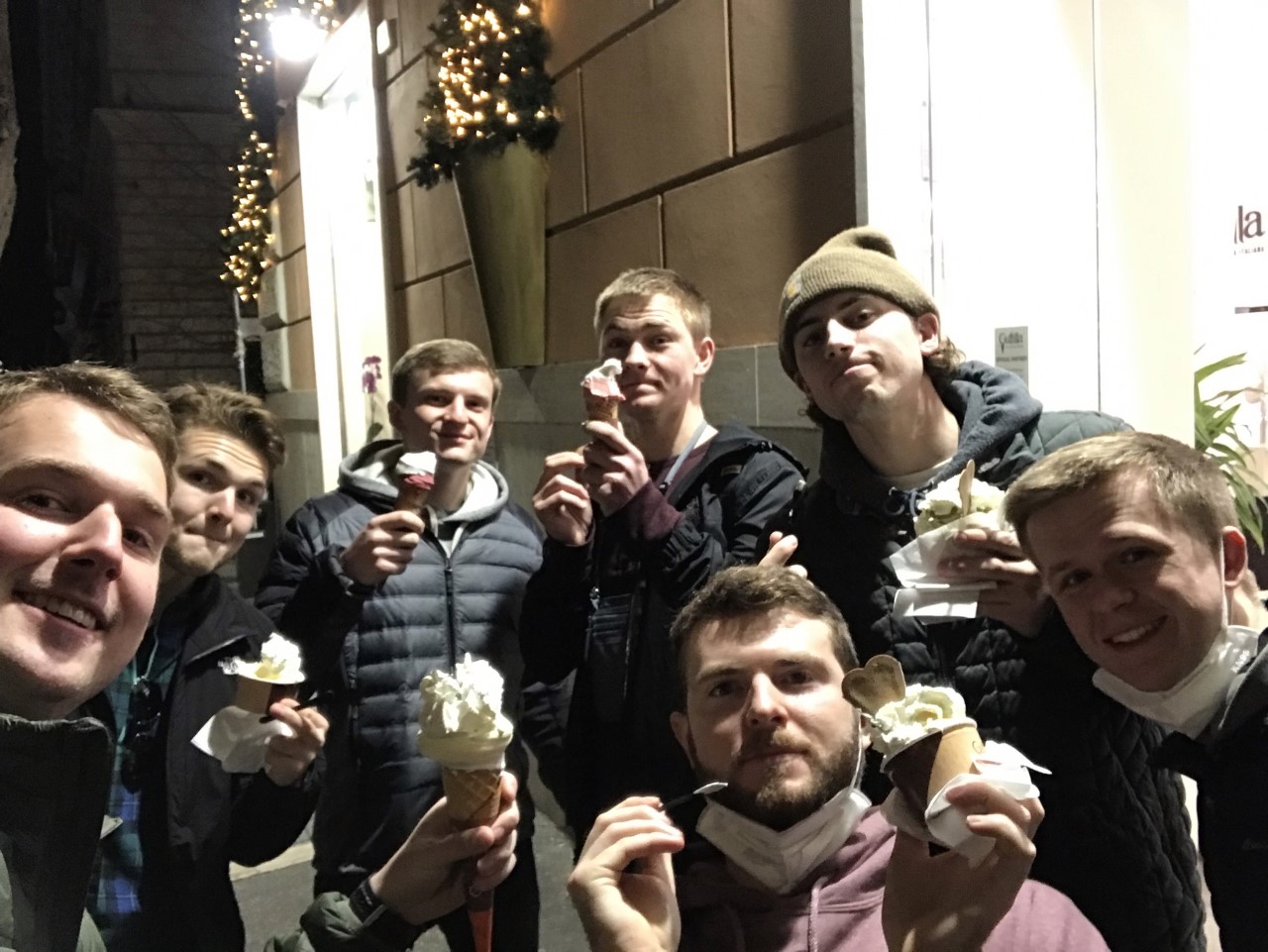
On our way back home, we stopped at an amazing Gelato place called Guttilla Alta Gelateria Italiana. With the small cone being 0.50 euros more than some other places, it was x100 better. It was a nice way to wrap up the fun-filled day of enjoying the wondrous culture and interesting places Italy has to offer.

Until next time,

Ciao!

-Tom

Field Trips!

Calcio and More Calcio

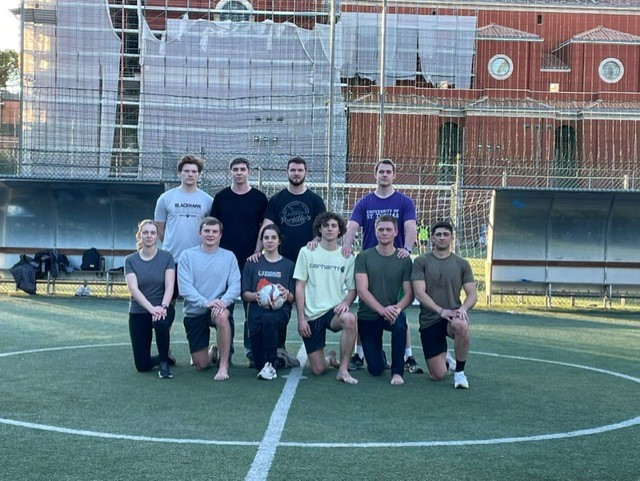
We got off to a late start in the morning after an exciting Friday night of great food and wine. After we got up and finished our homework for the day, many of us decided to go back to the Borghese Garden where they have soccer fields open to the public. We have been looking to play soccer for the whole trip (especially Jack) and today was finally the day. We bought an AS Roma soccer ball from a local vendor for 18 euros last night in anticipation of today. A bunch of us met up around 2 and made our way to the garden. We found an athletic center with a couple of fields. We got on the field, but a man came out to tell we had to pay. Since there was 11 of us, we agreed to pay the 50 euros for an hour, but an hour turned into almost two and he never came back to kick us off! We played some 6 on 5 for a while until Hergie started feeling the wine from last night a little too much to keep playing. We played a game for more than an hour before we finished off with some world cup. Team Spain (Max and Jack) won the ship.


After soccer we walked back to our apartments and a few people stopped for kebabs at Istanbul Kebab. The spicy sauce on the kebabs was all the rage. After some dinner, 8 of us made our way to Stadio Olimpico, the home of AS Roma and Lazio. We were there to watch Lazio play Atalanta. The stadium was awesome, but it was only 20% full (maybe even less) because of covid. Even at only 20% full, the stadium was electric. Before the game started, we listened to 2 or 3 Lazio songs being sung by fans and countless chants. The fans were chanting constantly, but it wasn’t enough to will Lazio to victory, or even a goal. The game ended disappointingly at 0-0. Even without a goal it was entertaining enough to watch the intense reactions of the fans and try to understand what they are saying. Soccer fans are as intense as you’d expect.

Another great day in Rome, full of all the soccer we could take.

Connor

Field Trips!

Infrastructure Engineering

Hello! Today the Roman Engineers focused on infrastructure engineering. We started the day with a lesson and presentation on how they built the Appian Way, the first Roman road that led to and from Rome. After we gained some background knowledge on some of the first infrastructure work done by the Romans, we had an activity focused on the lessons we’ve learned from our experience and how we will apply it to our future engineering careers!

Then we hopped on a bus for our tour of the day. We drove through Rome towards the Appia Antica (original/first Appian Way) with our tour guide, who pointed out important sights along the way. Once we left the old city walls, we saw the first mile markers that were ever used on a road. When we got to the Appian Way, we walked along it for a while looking at the ruins and villas along the road. Many parts of the road are still in use today, although it is made of large basalt stones that probably aren’t good for the cars.

After exploring the road, we stopped at an old mafia villa that the government seized and excavated. The grounds included the ruins of a private thermal bath. The class enjoyed the wild rosemary that was growing near the villa, as well as the four cats. On the way back to the bus, we stopped at the Mausoleum of Cecilia Metella, which is the third largest mausoleum in Rome and acted as a castle during the Middle Ages.

Continuing our tour, we drove to Aqueduct Park. Though Rome had 11 aqueducts, this park is special because five of them pass through its boundaries. In one place, three aqueducts were stacked on top of each other. Another area of the park included a classic aqueduct that used arcades to transport it over the ground.

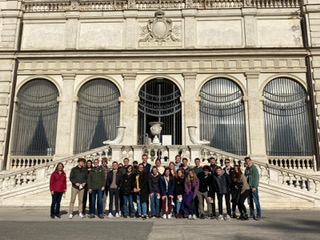
The class took a group picture and then it was time to head back. We are preparing for our last few days in Rome, and there is still plenty to do before we leave.

Ciao!

Elise


Field Trips!

Florence!!

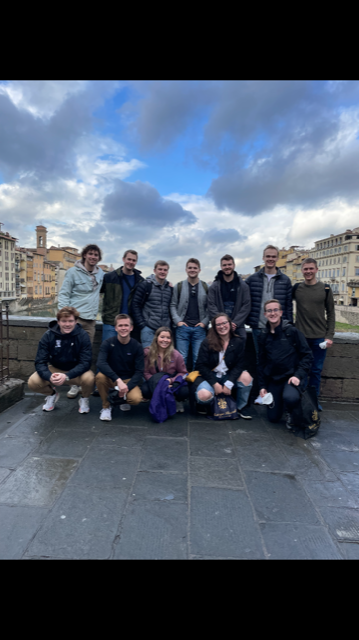
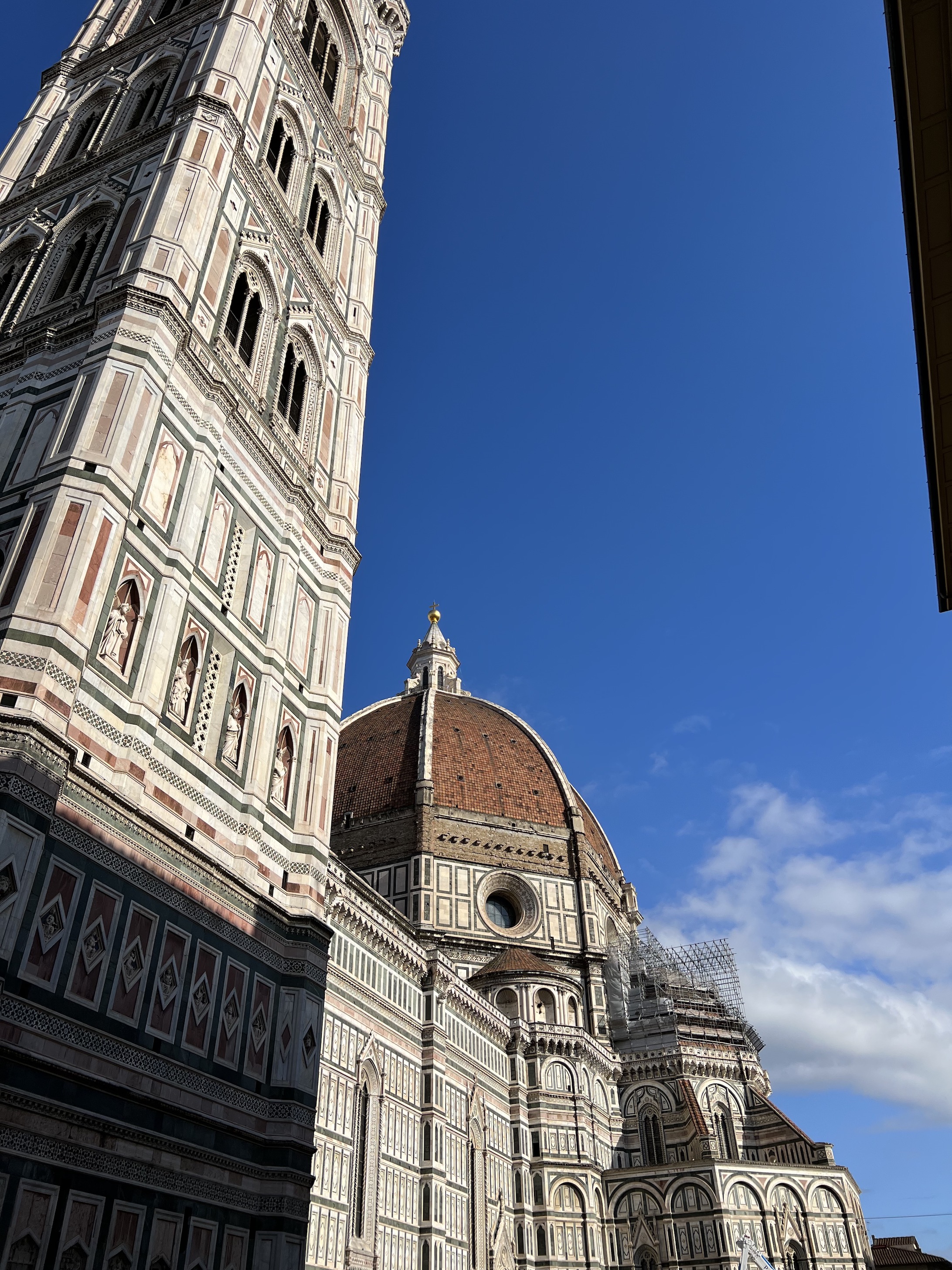
In the morning some of us went exploring the streets of Florence. We walked down to the river and saw this historic bridge, the Ponte Vecchio. There are jewelry shops lining the sides of the bridge selling all sorts of necklaces and watches. We took a picture along the river and met in the square in front of the Santa Maria del Fiore, the Duomo.

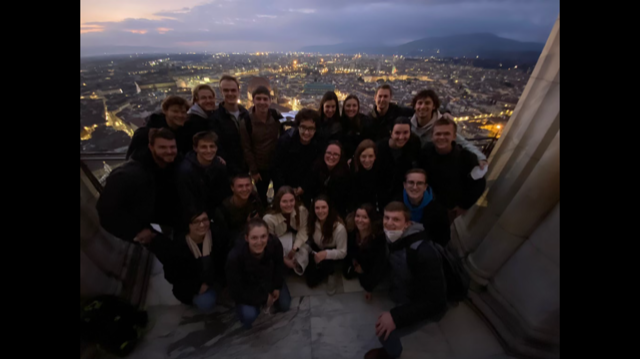
After our tour of the Santa Maria del Fiore we ventured to the Duomo museum where we watched a video of the dome construction and saw some of the rigging and posts that were used. We had a short break where some of us grabbed paninis, and then we returned to the Duomo to climb the top to the cupola! It was interesting to climb between the inner and outer shell of the dome, and to see where the bracing used in construction would have been as well as more rigging examples. Climbing the 463 steps to the top of the Duomo was the crowning achievement of an awesome day. We arrived just in time, as the city came alive with lights as the sun set. We took some pictures before hurrying back down to the ground and then to the train station.

+

Field Trips!

Florence

Ciao! My name is Emma Rae, and I am a Junior studying Civil Engineering.

Today our group traveled to Florence, Italy. Our day started right away with a 9 am train from Roma Termini to Florence. Riding the train was a very unique experience. It is similar to a plane, yet some seats face each other with a table in between, allowing for fun conversations and games to be played, along with gorgeous views of the Tuscan countryside.

Engineering and Artwork

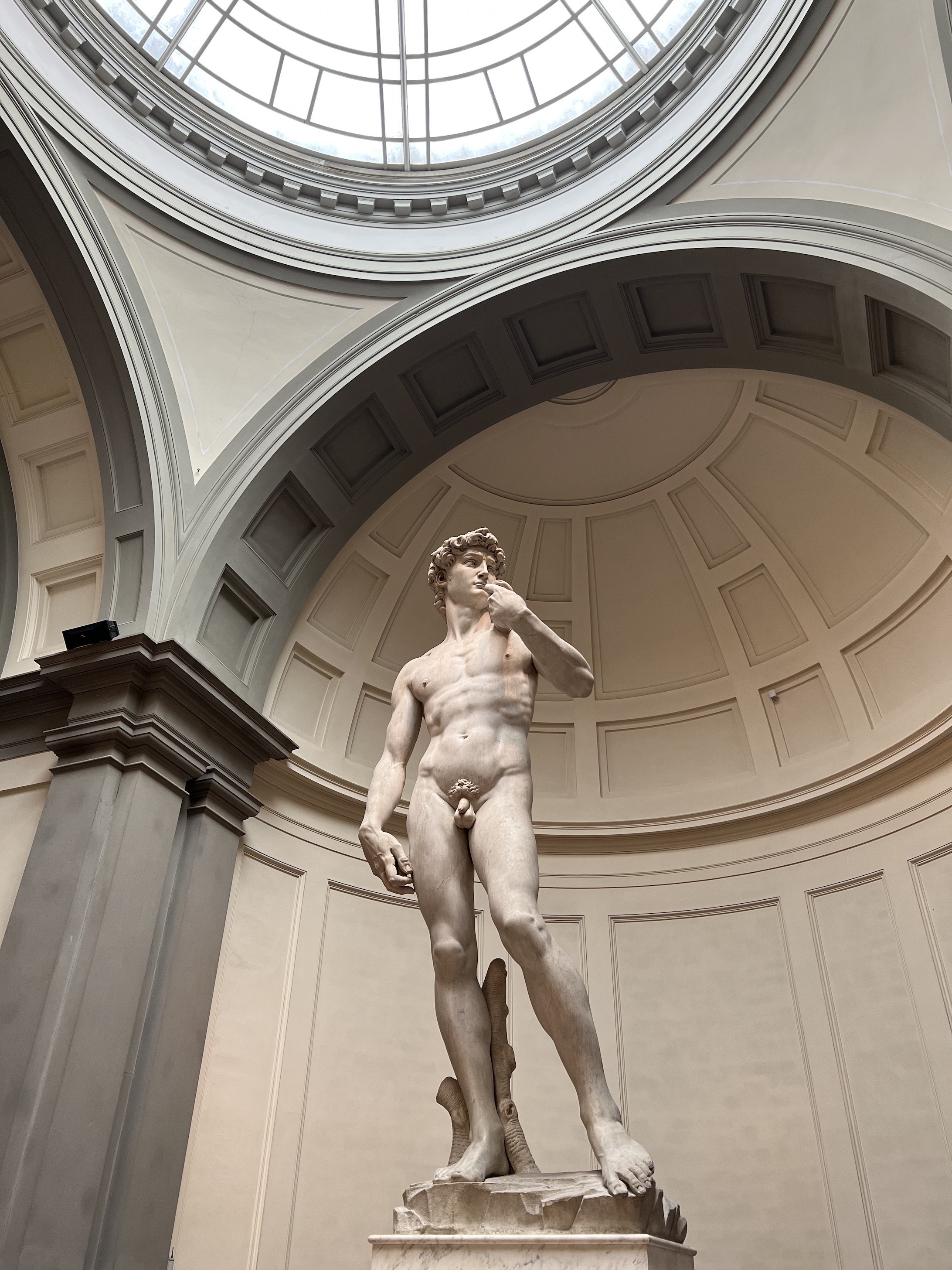
When we arrived in Florence, we saw beautiful works of art and engineering. First, we saw Michelangelo’s sculpture, David. David is a 17-foot-tall sculpture made of marble, and it was created in the 1500s. Next, we toured the Florence Cathedral. It was engineered by Filippo Brunelleschi in the 1400s. The dome on the cathedral is the largest masonry dome in the world. Next, we visited one of the oldest buildings in Florence, The Baptistry of St. John. The baptistry has an octagonal shape which represents the Octave of Easter also known as the eight-day period that begins on Easter and ends on the following Sunday.

Michelangelo’s David

Florence Cathedral

Shopping

Florence has many great places to shop. Today, I shopped at was a jewelry store called Torrini that has been open in Florence since 1369. Torrini is my mom’s maiden name, so I had to check it out. They had many beautiful pieces of jewelry to choose from and so much history to share!

Viaggi sicuri!

Field Trips!

Buongiorno Papa Francesco!

Kaitlyn Peterson – Senior Civil Engineer

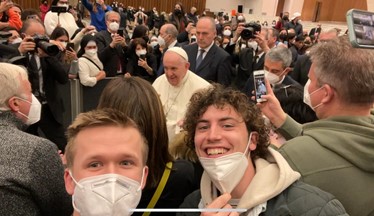
Today was a little bit of an earlier start, meeting at 8 AM, but we did not have class. Instead, we had the privilege to attend the Papal Audience. We got there and seated a bit earlier than the event started so some of us played 20 questions. An older nun sitting nearby must have been listening in on us and the questions we were asking and joined the game guessing that the thing was a sheep (this kind of made us all giggle). She was so close; it was a donkey! One thing that I noticed was that the auditorium that we were in was only about half filled which I expected to be packed. During the introduction of the event, us University of Saint Thomas students were recognized for attending along with a group of seminarians that were also there from St. Thomas which was cool. The majority of it was spoken in Italian by Pope Francis and then summaries of what was said was given in other languages including English. The Pope discussed the importance of Joseph. Some students brought items like rosaries to get blessed by Pope Francis. A couple of lucky students (Jack M. and Jack H.) got a nice selfie with Pope Francis.

Selfie featuring Jack2 with Pope Francis

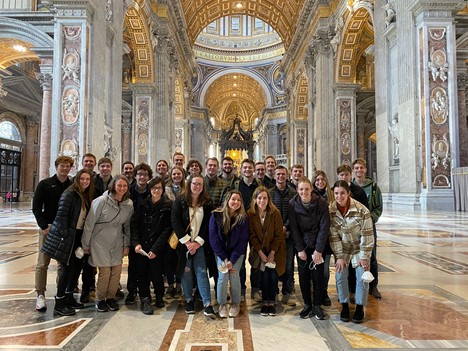
After the Papal Audience, the group reconvened, and we joined a guided tour of St. Peter’s Basilica. I think that I can speak for every one that has visited St. Peter’s Basilica more than once so far and each time it is still astounding how grand, detailed, and beautiful it is. I found that it was extremely beneficial to have a guide because so much information was received about the basilica that one can’t get from a self-guided tour. The basilica took over 120 years to construct and was passed between the hands of many architects. A fun fact that really stuck with me is that the Statue of Liberty can fit in the area of the basilica’s main dome.

The class in St. Peter’s Basilica

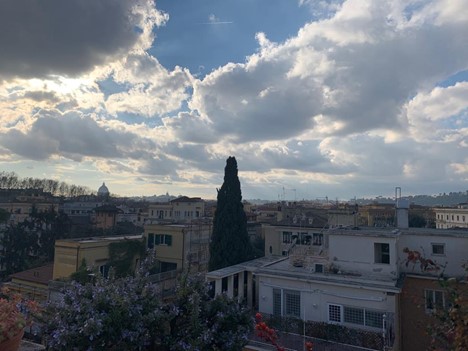
Some of us were curious about the University of Saint Thomas – Bernardi Campus in Rome so Dr. Besser set up a tour of it for us. It was a quick tour as it was a lot smaller than I had expected – mostly dorm style rooms for the visiting students and a few common areas. It was very pretty and there was access to the rooftop terrace which had a gorgeous view. On the campus, we found some lemon trees and ate some (VERY sour) lemons from them. After visiting the Bernardi Campus, we all went our own ways – most of us back to our apartments to nap and do homework and to prepare for our early start tomorrow to visit Florence tomorrow.

Gorgeous view from Bernardi Campus terrace – you can see St. Peter’s Basilica in the middle left of the picture!

Ciao!

Field Trips!

Borghese Gallery

Ellie Nodland – Senior Civil Engineer 

Returning to our normal 9 AM class time today there were some Cappuccino breaks throughout the day’s activities. After the morning class session, we set off to take the metro bus together to the Borghese Gallery. I am sure the locals on their morning commute were surprised to see all 26 of us students, Dr. Besser, and two guides load onto the bus at once – it was a tight squeeze! Arriving at what was once Casino Borghese we were met with the sight of the greatest amount of green grass I think any of us have yet to see in Rome. After checking our bags, we entered the gallery in two groups with English-speaking guides to explain the history and significance of some key pieces of the collection.  

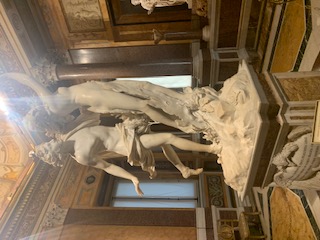
The Borghese Gallery was once a private collection of the prominent Borghese family started by Scipione Caffarelli Borghese, the cardinal nephew of Pope Paul V. When the cardinal past, it was in his will that the collection must be kept together which is why in 1902 the complete collection along with the estate was able to be sold to the Italian Government for public use. My favorite pieces we saw in the gallery today were sculptures done by Gian Lorenzo Bernini. The display of both movement and emotion in Bernini’s sculpted Rape of Proserpine and Apollo and Daphne were stunning along with their respective Roman mythological stories. 

Rape of Proserpine by Bernini


Apollo and Daphne by Bernini

Following the hour-and-a-half gallery tour (the perfect length for many of us students!) The scheduled daily activities were completed, and we split into groups to grab some food. Around 9 of us joined Dr. Besser for sandwiches (and some more cappuccinos!) at a café within the Borghese park. The café we stopped at happened to be near a small pond on the property were there were paddle boat rentals, and we could not resist. For twenty minutes, in two boats, we paddled and laughed around the pond struggling to navigate the water with the large wooden ores.  

Paddling on the Pond

Outside of the gallery

Looking forward to another fun day of adventures tomorrow!  

Field Trips!

Vatican Scavi

Today we returned to Vatican City to explore the necropolis under St. Peter’s Basilica.

We began the day a bit later than usual with class starting at 12:30 rather than the usual 9:00am since we weren’t able to get into the necropolis until 3:00. So, we had some extra time to sleep in, eat breakfast, and explore some more of the city before we met for lecture and the day’s presentations.

Once we got to the Vatican and through security, we were split off into three separate groups as only groups of twelve are allowed in at a time due to the lack of space and preservation precautions.

As our tour guide led us through the narrow passages we were able to look in on several of the tombs enclosed by glass preserving the ancient remains and relics within. She described to us the history of the necropolis and basilica above. Originally an open-air burial ground of the Romans built on the slope of Vatican hill, it was leveled and the ruins buried by emperor Constantine in order to construct the Old St. Peter’s Basilica. The old basilica has since been replaced by the basilica standing today and the necropolis and mausoleums were uncovered during excavations to find the remains of St. Peter, who was assumed to be buried there.

We then ended the tour at the tomb of St. Peter and were able to see his remains and the wall of graffiti claiming it to be his resting place.

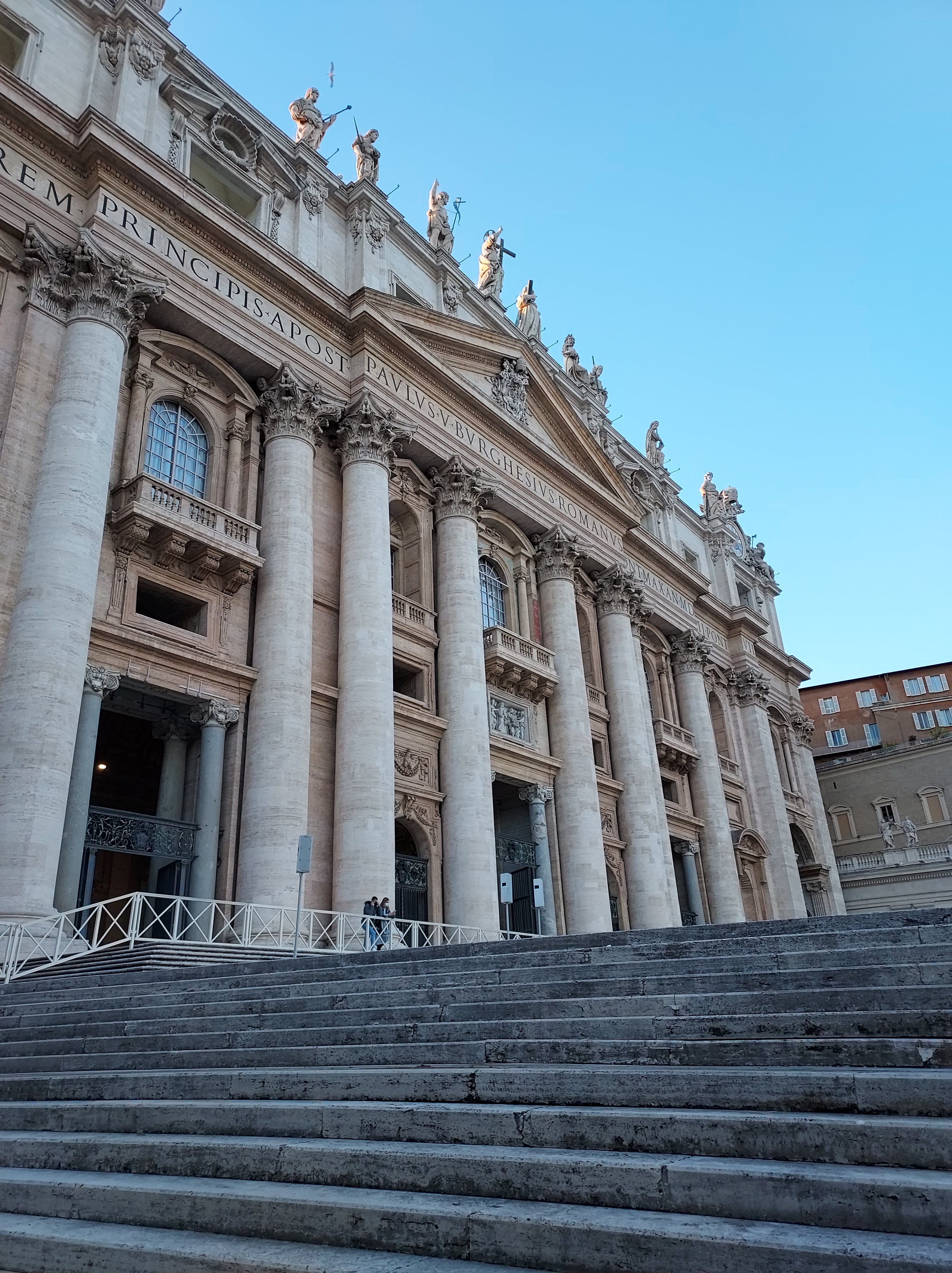
Unfortunately taking photos is not allowed inside the necropolis, so here’s a picture of the exit.

And St. Peter’s Basilica.


Maddie

Field Trips!

Vatican Scavi

Max Meves – Senior Mechanical Engineer

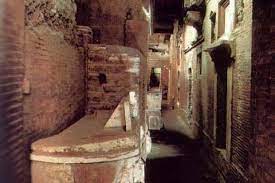
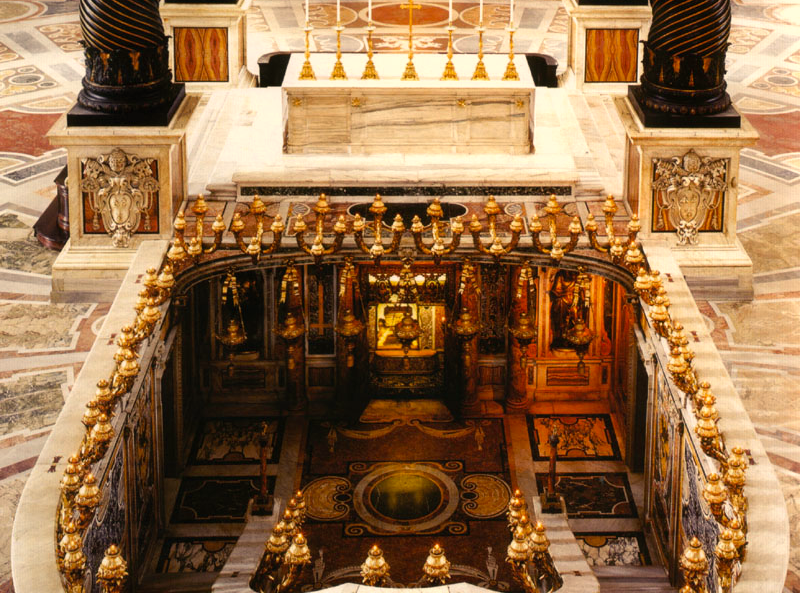
Today we got to adventure under St. Peters Basilica in the Vatican Scavi. This is where the famous tomb of St. Peter is located. There was a lot to learn on this tour but unfortunately we were unable to take pictures. However, thanks to Google I have added some photos of what we saw.  Before we got to go into the Scavi we had to get passed the Swiss Guard in their interesting colorful uniforms. The Vatican Scavi only allows 250 visitors a day in groups of 12 to preserve this historical archeological site, so we split into three groups. We also had to wear plastic gloves to keep our germs to ourselves. 

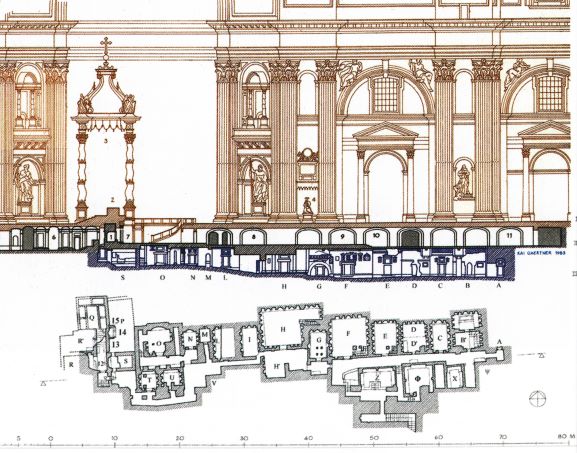
To start the tour our guide explained the history of St. Peter and the basilica. She informed us that St. Peter’s Basilica is built on top of the previous basilica that was built in 300 AD. This is also the location of where St. Peter was executed and where his tomb is located. Below St. Peter’s Basilica is also home to many other mausoleums and tombs, most of which hold wealthy or important people. Before they leveled the ground for the Basilica to be built, this area was on a hill as you can see in the image below. This was cool to see as we entered the Scavi from the right of the image below, we were at the bottom of the slope. As we walked through the Scavi towards St. Peters tomb we walked up an incline that showed how the land was a long time ago. Inside the Scavi we were standing on the original ground when these mausoleums were built. It was cool to see that the original ground was solid, almost like pavement from all of the pressure and compression that it has experienced over thousands of years. This ground was home to streets that ran up and down the original hill.

As we continued to walk through, it was like were were in an Indiana Jones movie walking through small ancient corridors with trap doors that would slide open and close at any moment. These glass doors were used to control the atmosphere inside the Scavi. It was warm and very humid. We walked passed many tombs and mausoleums as we made our way towards St. Peters tomb. It was cool to see the old foundations of the ancient brick buildings and how they are still supporting loads from St. Peters Basilica above. It was very intriguing to learn that there are most likely many more mausoleums and tombs in the area under the Basilica but they can not uncover any more because the land is supporting the load of the Basilica. At one point we were standing next to a wall that was surrounding the tomb of St. Peter but was also the foundation of one of the massive columns that stands next to the Popes alter as seen in the left of the picture above. Just passed this wall was an opening where we could see part of a tomb. This area was once an open forum that was home to hundreds of tombs that were buried around the tomb of St. Peter. The picture below shows the small hallways of the Scavi.


Throughout our tour leading up to St. Peters tomb, our tour guide told us the story of the tomb and how it was discovered. When the tomb was discovered they found it empty. They did not inform the people that they found the tomb because they were unsure if it was St. Peter’s. They also found a solid marble wall built next to the tomb of St. Peter to protect it from pillagers. They found that this wall was secretly hollow so they opened it up and found human remains inside. They eventually had the remains analyzed and found that they were most likely the remains of St. Peter. What was really interesting about this experience was how they approached this scientifically. Even though the Vatican is the capital of Catholicism, they deliberately made this open to visitors of all religions and used science to analyze these archeological sites. 

The picture below shows below the Papal alter where only the pope is allowed to go and is also where St. Peters Remains are. On our tour we were able to see St. Peters remains by going behind the wall seen in the picture below.