Max Meves – Senior Mechanical Engineer
Today we got to adventure under St. Peters Basilica in the Vatican Scavi. This is where the famous tomb of St. Peter is located. There was a lot to learn on this tour but unfortunately we were unable to take pictures. However, thanks to Google I have added some photos of what we saw. Before we got to go into the Scavi we had to get passed the Swiss Guard in their interesting colorful uniforms. The Vatican Scavi only allows 250 visitors a day in groups of 12 to preserve this historical archeological site, so we split into three groups. We also had to wear plastic gloves to keep our germs to ourselves.

To start the tour our guide explained the history of St. Peter and the basilica. She informed us that St. Peter’s Basilica is built on top of the previous basilica that was built in 300 AD. This is also the location of where St. Peter was executed and where his tomb is located. Below St. Peter’s Basilica is also home to many other mausoleums and tombs, most of which hold wealthy or important people. Before they leveled the ground for the Basilica to be built, this area was on a hill as you can see in the image below. This was cool to see as we entered the Scavi from the right of the image below, we were at the bottom of the slope. As we walked through the Scavi towards St. Peters tomb we walked up an incline that showed how the land was a long time ago. Inside the Scavi we were standing on the original ground when these mausoleums were built. It was cool to see that the original ground was solid, almost like pavement from all of the pressure and compression that it has experienced over thousands of years. This ground was home to streets that ran up and down the original hill.
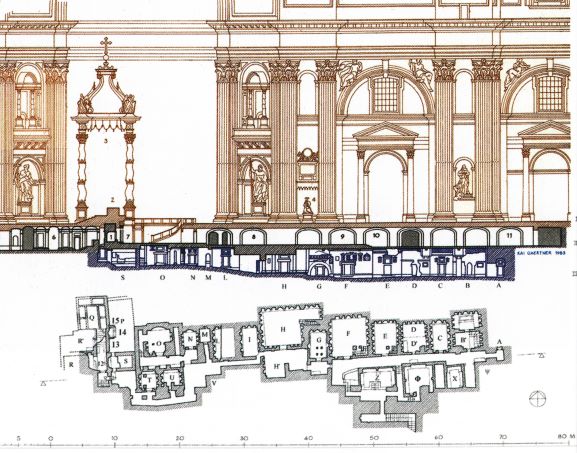
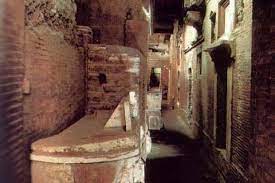
As we continued to walk through, it was like were were in an Indiana Jones movie walking through small ancient corridors with trap doors that would slide open and close at any moment. These glass doors were used to control the atmosphere inside the Scavi. It was warm and very humid. We walked passed many tombs and mausoleums as we made our way towards St. Peters tomb. It was cool to see the old foundations of the ancient brick buildings and how they are still supporting loads from St. Peters Basilica above. It was very intriguing to learn that there are most likely many more mausoleums and tombs in the area under the Basilica but they can not uncover any more because the land is supporting the load of the Basilica. At one point we were standing next to a wall that was surrounding the tomb of St. Peter but was also the foundation of one of the massive columns that stands next to the Popes alter as seen in the left of the picture above. Just passed this wall was an opening where we could see part of a tomb. This area was once an open forum that was home to hundreds of tombs that were buried around the tomb of St. Peter. The picture below shows the small hallways of the Scavi.
Throughout our tour leading up to St. Peters tomb, our tour guide told us the story of the tomb and how it was discovered. When the tomb was discovered they found it empty. They did not inform the people that they found the tomb because they were unsure if it was St. Peter’s. They also found a solid marble wall built next to the tomb of St. Peter to protect it from pillagers. They found that this wall was secretly hollow so they opened it up and found human remains inside. They eventually had the remains analyzed and found that they were most likely the remains of St. Peter. What was really interesting about this experience was how they approached this scientifically. Even though the Vatican is the capital of Catholicism, they deliberately made this open to visitors of all religions and used science to analyze these archeological sites.
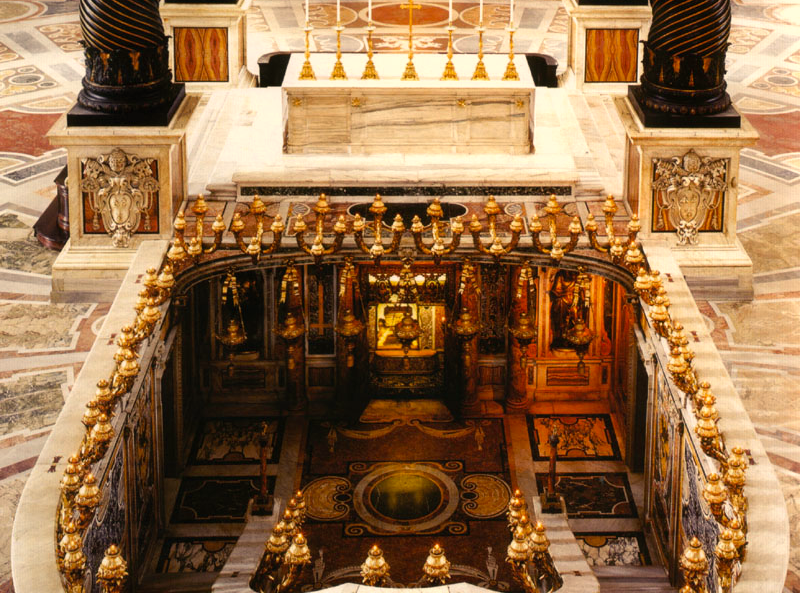
The picture below shows below the Papal alter where only the pope is allowed to go and is also where St. Peters Remains are. On our tour we were able to see St. Peters remains by going behind the wall seen in the picture below.

No Comments